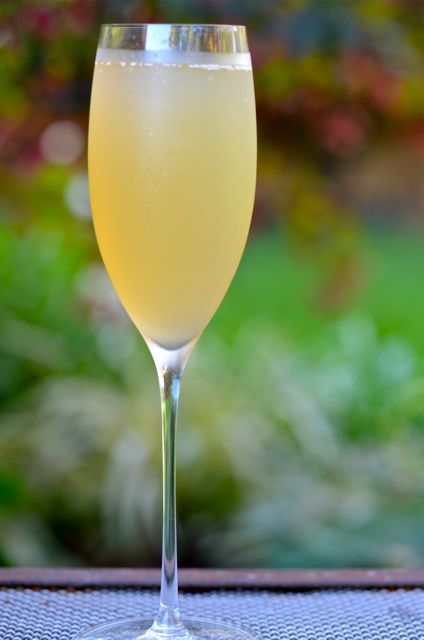
Death In The Afternoon (Hemingway Champagne)
Time for another Mixology Monday, the online cocktail party. This month the party is hosted by Wordsmithing Pantagruel (thanks!) and the theme is: (it’s not easy) Bein’ Green. Here is the breakdown:
 With the warm days of summer now fading off into the distance in our rear view mirrors, let’s pay one last tribute to the greens of summer before the frosts come and our outdoor herb gardens give up the ghost for the winter. For our theme for this month, I have chosen: (it’s not easy) “Bein’ Green.” (Perchance due in no small part to my predilection for Green Chartreuse.) I’m giving you a wide berth on this one, anything using a green ingredient is fair play. There’s not only the aforementioned Chartreuse; how about Absinthe Verte, aka the green fairy. Or Midori, that stuff is pretty damn green. Crème de menthe? Why not? Douglas Fir eau de vie? Bring it! Apple schnapps? Uh…well…it is green. I suppose if you want to try to convince me it makes something good you can have at it. But it doesn’t have to be the liquor. Limes are green. So is green tea. Don’t forget the herb garden: mint, basil, cilantro, you name it – all fair game. There’s also the veritable cornucopia from the farmers market: green apples, grapes, peppers, olives, celery, cucumbers…you get the idea. Like I said, wide berth. Base, mixer, and or garnish; if it’s green it’s good. Surprise me. Use at least one, but the more the merrier.
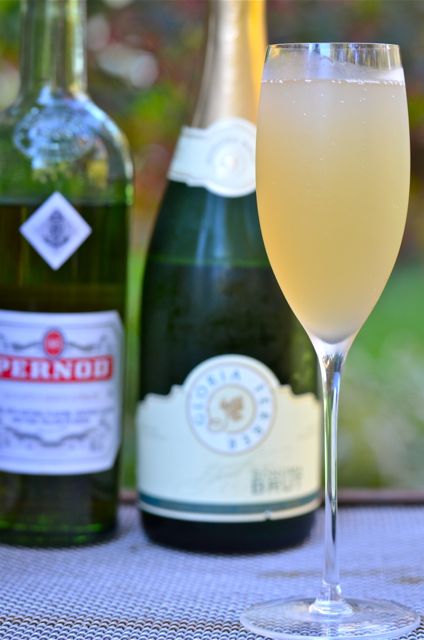 We certainly like “green” themes here at the farm and had a few drinks in mind, so we decided to do both. The first drink is the Death In The Afternoon (also known as the Hemingway Champagne). It combines Champagne and Absinthe, one of the “greener” cocktail ingredients. The drink itself is a lot like many Hemingway novels, spare in construct, but perhaps a bit indulgent, bombastic and even decadent as a whole. We are Hemingway fans, but recognize that there were a lot of “OK” books along with the classics (Death in the Afternoon may be more in the “OK” category).
As for the cocktail, there are things to like. The absinthe and champagne to offer a yeasty, anise aroma and the flavor is bright, even bracing. A good drink for a brunch when you are a bit “bleary” (Death Warmed Over might be a better name for the cocktail). If you are a fan of strong flavors, the Death In The Afternoon is certainly worth a try. And Hemingway did create the cocktail (first published in a 1930’s cocktail book with recipes from famous authors), so you do get to experience some of the history and “share” a drink with Hemingway. But we are pretty sure you can “share” many classic cocktails with Hemingway. Say what you will about the man and his work, he was smart enough to enjoy his cocktails…
 The other cocktail we made, The Silent Order, needs no excuses or qualifications, it is a favorite here. And it is the most green cocktail we know of. We are a bit sheepish to include the drink, as it comes from Fred Yarm (Mixology Monday’s Manager) of Cocktail
 Virgin Slut and his cocktail book “Drink And Tell“. But the Silent Order is so good, we couldn’t resist.
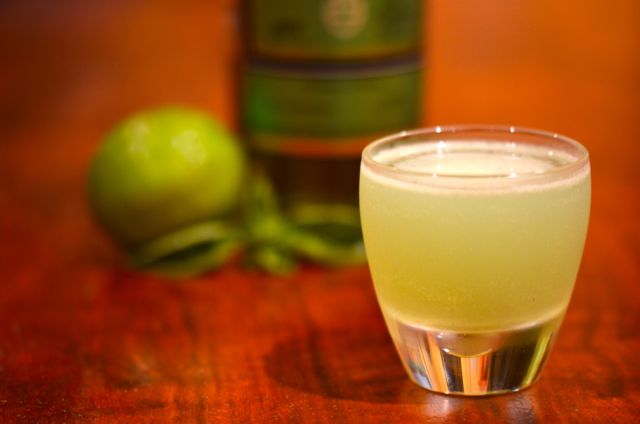
The Silent Order Cocktail
Created by Ben Sandrof in Boston, the Silent Order combines Green Chartreuse, lime juice, sweet basil leaves and water. It is an interesting recipe and there is a detailed breakdown here. But the main thing we like are the flavors. The sweet, herbal (and boozy) Chartreuse and the sour, acidic lime juice are a good combination in a number of drinks. But the extra sweet and anise notes of the basil take this cocktail to another level. Green Chartreuse is a somewhat esoteric cocktail ingredient, but once you get a taste for it, it’s hard to resist. And it is very, very green. Continue reading










 Putney Farm