
Roasted Dungeness Crab. Yum.
Here on the west coast we get a special treat every holiday season, Dungeness crab. Starting in November and running through the winter, good fish markets will have chill cases full of big, bright red, cooked crabs. And they don’t go to waste, people out here love their crabs. And Dungeness crab is a truly lovely dish. The flesh is white, tender and sweet. And while it does take some work to get at all the meat, the cracking and picking is all part of the fun.
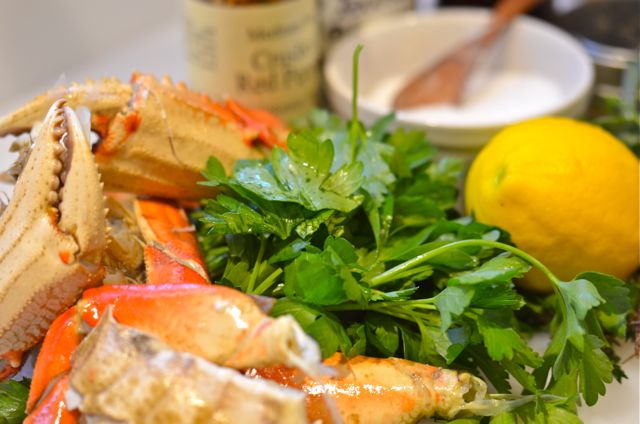
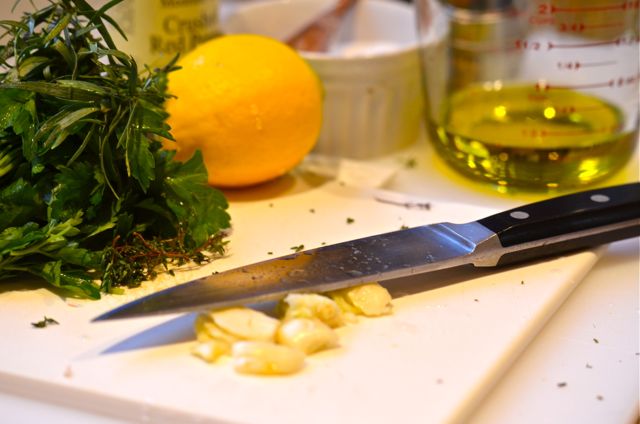 Most folks out here simply serve the crab with some lemon and mayonnaise. But roasting crab with herbs and spices is a popular way to add some flavor and develop a quick “sauce”. There are many good recipes for roasting crab with homemade curry sauce (so good, recipe soon) but that takes a little extra shopping and work. For a quick, but tasty, roast crab we use a marinade of oil, herbs, garlic and red pepper. Combine these flavors with a quick roast and some lemons and you have a very fun, flavorful meal.

 To say the crab in the recipe is “roasted” is a bit of a misnomer. You really marinate the crab in the herb and oil mixture for a few hours and then warm the crab and sauce in the oven for about ten minutes. The marinade and extra heat bring out more flavor from the crab. With the added flavor and rich texture of the oil, this dish feels more like a main dish than appetizer, so it is a perfect family meal. And you do get the bonus of a great smelling kitchen while you roast the crab. This dish smells as good as it tastes.
 So if you have a chance to get your hands on Dungeness crab, we suggest you buy a few. Have them cracked and cleaned and bring ’em home. You can certainly serve the crab by itself, but you can make a true meal of the crabs with a tiny bit of extra work. And the extra work, which really isn’t much, is certainly worth it. Few dishes give you so much flavor for so little effort.
Roasted Dungeness Crab:
Notes Before You Start:
- Cooking and cleaning Dungeness crabs yourself isn’t fun. Most good fish mongers have quality, freshly cooked crabs they will crack and clean for you. We are all for DIY projects, but this isn’t one of them. Have your fish monger do the work.
- Dungeness crab is pretty specific to the west coast of the US. But this basic recipe will work with any meaty, cooked crab.
What You Get: Dungeness crab with some extra flavor. A fun, messy meal.
What You Need: Assuming you have the fish monger clean and crack the crabs, no special equipment required.
How Long? About 2 and a half hours, but only 5 minutes of active time, most of the time is spent marinating the crab.
Ingredients:
(Serves 4-6)
- 1 cup Italian parsley, chopped
- 2 teaspoons fresh thyme leaves, chopped
- 1 teaspoon tarragon, chopped
- 2 cloves garlic, peeled and minced
- 1 tablespoon red pepper flakes
- 1/2 cup good olive oil
- Salt and freshly ground black pepper (to taste, but we suggest you season liberally)
- 2, 2-pound. Dungeness crabs, cooked, cleaned and cracked
- 2 lemons, quartered
Assemble:
1. Combine parsley, thyme, tarragon, garlic, red pepper flakes and oil and then finely chop using an immersion blender or food processor.
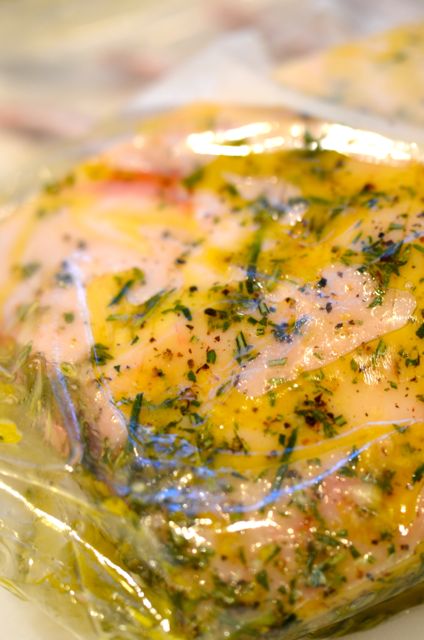
2. Place the crab pieces in a shallow baking pan, pour marinade over crabs and toss, cover and refrigerate for 2 hours.
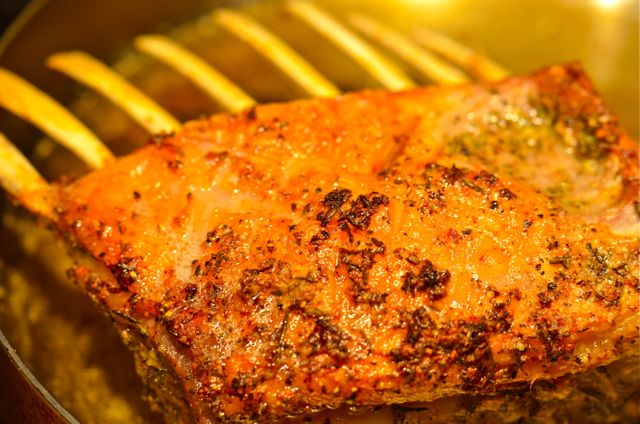
3. Preheat oven to 400°. Roast crabs, uncovered, until golden brown, about 10 minutes. Garnish with lemon quarters (squeeze some lemon over the crab, if you like). Serve
Related articles
- Fresh Dungeness Crab, Garlic Noodles (therobotmusteat.com)
- Steamed Dungeness crab (vietnamesefoods102.wordpress.com)
- Dungeness crab season begins in California (photos.mercurynews.com)
- Dungeness Crab Season is Here! How to Buy It, Enjoy It, and What to Drink with It (jvineyards.blogspot.com)








 Putney Farm