• Green Olive-Lemon Relish (With Sous-Vide Halibut)

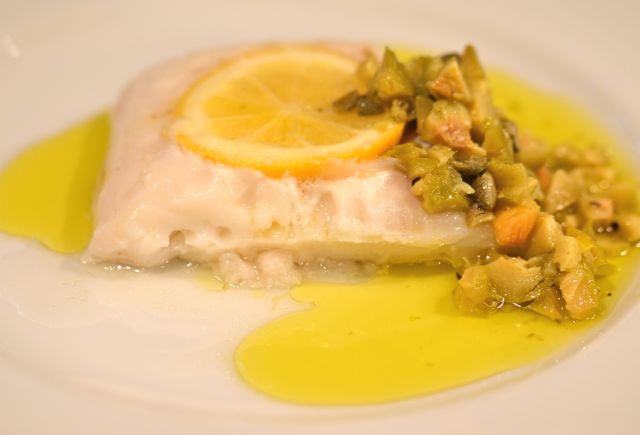
    Green Olive-Lemon Relish With Sous-Vide Halibut.

    Please pardon the somewhat strange title. Usually we would lead with the fish, but this dish really is all about the relish.

    We are big fans of salsa verde here at the farm, it works on veggies, chicken and fish- particularly during the summer. But we are always looking to branch out and discover new flavors, and we happened to find this recipe for green olive-lemon relish from Judy Rodgers of the Zuni Cafe in San Francisco. And Judy Rodgers notes that this relish works on fish, chicken, pork and grilled vegetables and is easy to make. So we gave it a try.
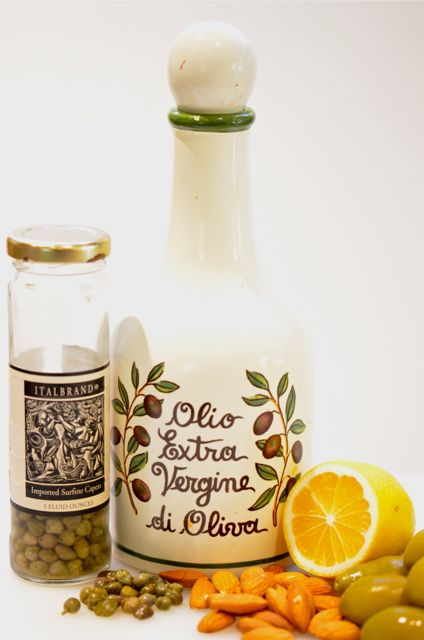
    Few ingredients, but lots of flavor.

    And we are glad we did. This relish is a simple mix of firm green olives (Lucques or Ceregnola are good), diced lemon, chopped almonds, a touch of capers, lemon juice and olive oil. The flavor profile is very similar to salsa verde but the olives, almonds and lemon pieces give the relish more body and heft. The relish has a nice balance of sour and briny notes from the olives, lemon and capers, while the almond and olive oil add nutty and sweet notes.

    We served the relish with sous-vide halibut at 122 degrees using our basic method for sous-vide fish (here is a link to a good oven-based method) and it was a lovely summer meal. This relish would work very well with any firm white fish- so we suggest you use whatever cooking method you like and then simply add the relish. And if you grill eggplant, squash or zucchini, this relish will be a great partner.
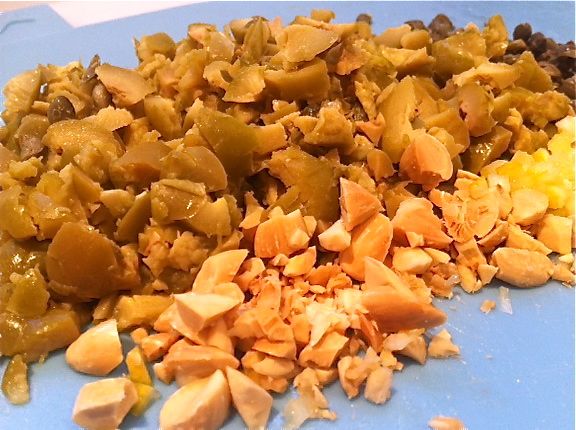
    Pit and chop the olives. Add chopped lemon, almonds and capers.
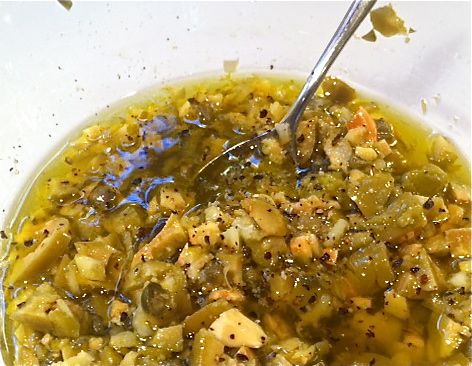
    Combine with olive oil and lemon juice.
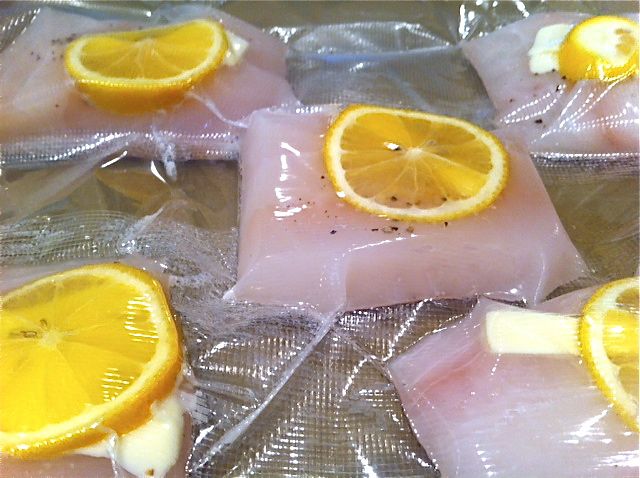
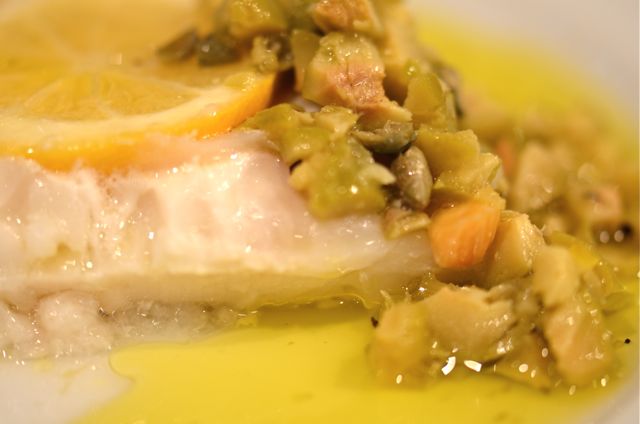
    The relish goes with fish, chicken, pork or grilled vegetables. We made sous-vide halibut.

    Making the relish couldn’t be easier. Skin, roast and chop some almonds (or use store-bought roasted almonds, unsalted Marconas would be very good), dice 1/4 of a lemon, pit and chop the olives, add some capers and a bit of extra lemon juice and then add the olive oil. A neat trick here is that you can add varying amounts of olive oil and still have a good relish. If you want the relish chunky, add less oil, if you want to use it more like a sauce (good with fish) add a little more oil. Both versions taste great. So if you like salsa verde in your summer meals, give this relish a try, it will be a very tasty change of pace (you might even like it better than salsa verde).
    Green Olive-Lemon Relish:

    (Adapted from Judy Rodgers’ Zuni Cafe Cookbook)

    Notes Before You Start:

    • Rodgers suggests a few types of olives for the relish including Lucques, Ceregnola, Ascolane and Picholine. But she notes that if the Picholines (or any of the olives) seem extremely briny to blanche them for 2 minutes to soften their flavor.
    • If you want to skin and roast your almonds, simply blanche raw almonds in boiling water for 10-15 seconds, then cool and skin (the skin will come off easily). Then roast the almonds in a 300 degree oven for about 15 minutes, or until they color slightly. Make extra- freshly roasted almonds are very tasty on their own.

    What You Get: A bright, tasty relish for fish, chicken, pork or vegetables.

    What You Need: No special equipment required.

    How Long? 5-10 minutes of chopping. And extra 15 minutes if roasting your own almonds. Anytime dish.

    Ingredients:

    (Makes about 1 – 1 and 1/2 cups)

    • 12 roasted, skinned almonds (see above if you want to DIY)
    • 1 cup good green olives like Lucques, Ceregnola, Ascolane or Picholine
    • 1/4 of a lemon
    • 2 tablespoons capers, rinsed
    • 1-2 tablespoons fresh lemon juice
    • 1/4 to 1/2 cup of good olive oil
    • Salt and pepper
    Continue reading

  • Simple Garden Recipes With Cherries And Berries

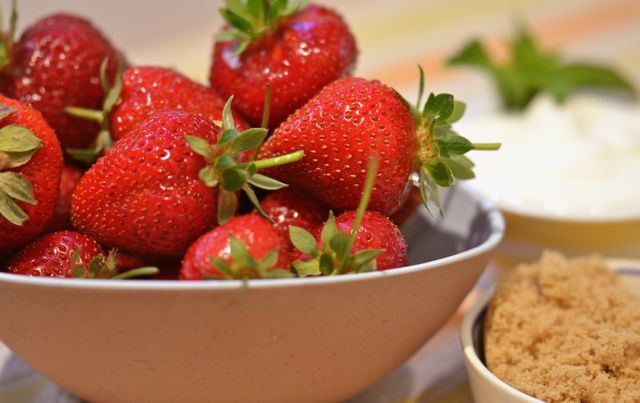
    Strawberries with sour cream and brown sugar.

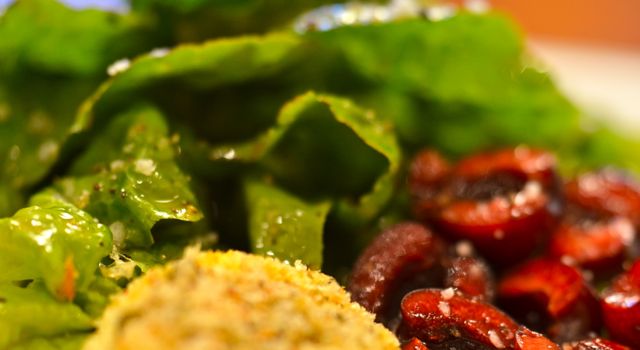
    Baked goat cheese and lettuce salad with cherries.

    When eating seasonally, the garden often dictates our menu. Right now we have cherries, strawberries and lettuces in full swing, and while we will preserve some of the fruit, we try to eat it at its peak. We also try not to do much with the main ingredient, if we grew lettuces or berries, that what we want to enjoy. So with that in mind, here are the first of a series of quick, simple recipes that highlight fresh produce straight from the garden or farmers market. This is also what we tend to have for lunch these days.

    Our first recipe is a simple combination of strawberries, sour cream and brown sugar. That’s all. You just clean the strawberries and put out some sour cream and light brown sugar. Just dip the strawberry in a bit of sour cream and then the brown sugar. The flavor is sweet, sour and tangy- with just a touch of molasses from the brown sugar. Instant dessert. And pretty, too.

    Simple, but very tasty.

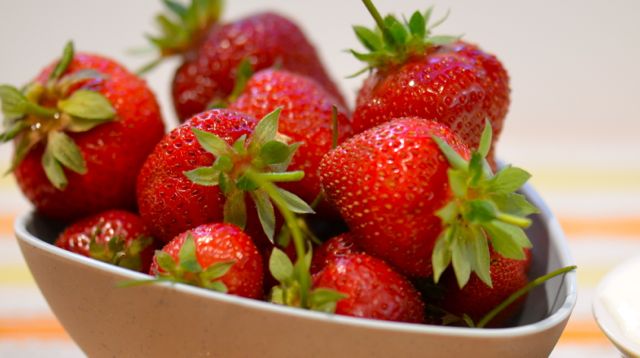
    It is worth noting that this is our second crop of strawberries this season. And we do see a pattern emerging. The first crop is tasty, but often somewhat aesthetically challenged, with misshapen fruit. The second crop comes in with more consistent shape and color- so these kind of easy preparations look very appealing at the table. We put these strawberries out and they get eaten, quickly.

    Some strawberries from our second crop, these look better than the first crop.

    Our other simple recipe is a baked goat cheese, lettuce and cherry salad. Baked goat cheese salads have been around for a while, but they are still a great lunch or starter salad and a lovely meat-free dish. And the same basic recipe applies to most stone fruit or berries. If you have strawberries or blackberries or even peaches, you can use this recipe. One key is to taste your goat cheese and then select the fruit that best matches the flavor. Goat cheese ranges widely from creamy to chalky and sweet to very tart. Tart cheese tastes good with sweet stone fruits, while sweeter cheese tastes best with tart strawberries or blackberries (to us, at least). But these are fun experiments, try what you like. In this case we used a creamy, but tart, local goat cheese from Harley Farms to match our very sweet cherries, and it was delicious.

    Ingredients for baked goat cheese, lettuce and cherry salad.

    Baking the goat cheese and breadcrumbs.

    As for making the salad, it is easy, but has a few steps. Firstly cut the cheese into disks and sprinkle with fresh herbs and olive oil. Then make (or buy) some breadcrumbs and lightly coat the cheese with the breadcrumbs. Then bake in a 400 degree oven for 5-6 minutes. Meanwhile wash and dry your greens (remember the dryer the greens, the better the salad), make a quick vinaigrette and prepare your fruit. When ready to serve, dress the salad and then arrange greens, a disk or two of the cheese and some fruit on a salad plate. Simple, tasty and beautiful. There’s a reason you see this dish at restaurants, it works.

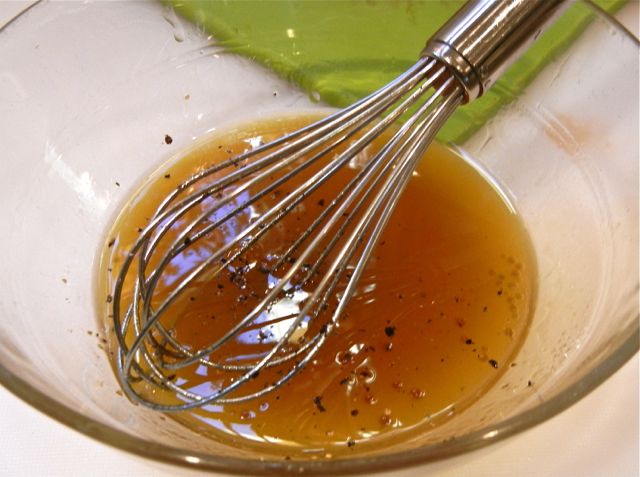
    Make a quick, flavorful vinaigrette.

    Arrange on the plate, season and serve.

    Continue reading

  • Grilled Eggplant With Salsa Verde (And A One Lovely Blog Award!)

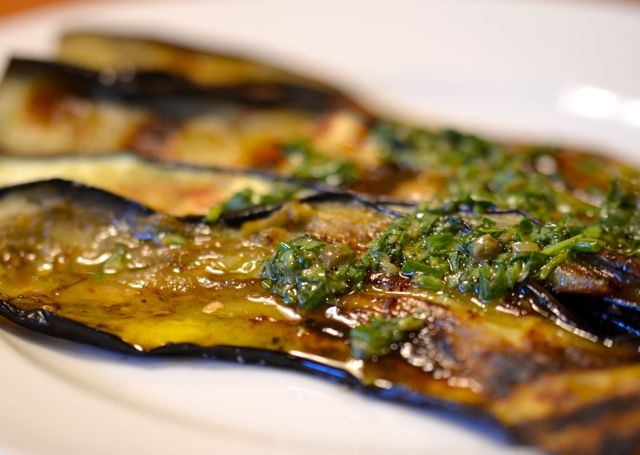
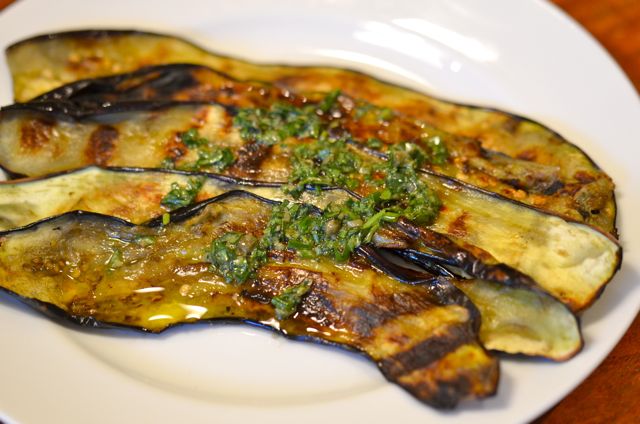
    Grilled eggplant with salsa verde.

    Recipe below, but please read on..

    We recently received a nomination for the One Lovely Blog award from our friend Erin at Erin’s DC Kitchen. We are big fans of Erin’s take on simple, tasty food and the overall positive spirit of her blog. Check out her site, it will be a pleasant visit. Thanks Erin!

    So now we must pass the award along to one lovely blogger and tell you seven things about ourselves (not sure there is much left, but we will try..;-). As for the nomination, we nominate Cooking in Sens, a blog about cooking and life in Burgundy. If we cook and take photos half as good, we would be thrilled. We love the blog and have made a few of the recipes with great success. Please check them out.

    So here are seven more things about us:

    1. We do read cookbooks for fun. And our kids are starting as well. Now we need to put them to work.
    2. As noted before, we have less success with zucchini than we should. Somewhat embarrassing.
    3. We buy too much kitchen gear, but are getting better…a little. Sort of. Maybe.
    4. Sometimes we cook simple food because we don’t want extra dishes.
    5. Once we got to 40, wine started giving us the occasional headache. Cocktails and beer took over at the farm.
    6. Sometimes there are so many gophers we (I) feel like Bill Murray in Caddyshack (and want to “solve” the problem with similar measures).
    7. We can’t wait for tomatoes and fresh corn…like it really bothers us it’s not here yet.

    Now back to cooking. The Grilled Eggplant with Salsa Verde recipe is a simple one, but worth sharing simply because it answers the question of what to do with eggplant. Such a beautiful vegetable (technically a berry, btw), but often many cooks just put it in Eggplant Parmesan or Baba Ghanoush. Both great dishes, but we like quick preparations and grilling the eggplant does the trick. As for extra flavor, salsa verde packs a big punch from the herbs and oil. It is great on many dishes and we use it often on fish, like this dish. But it is great on almost any grilled vegetable.

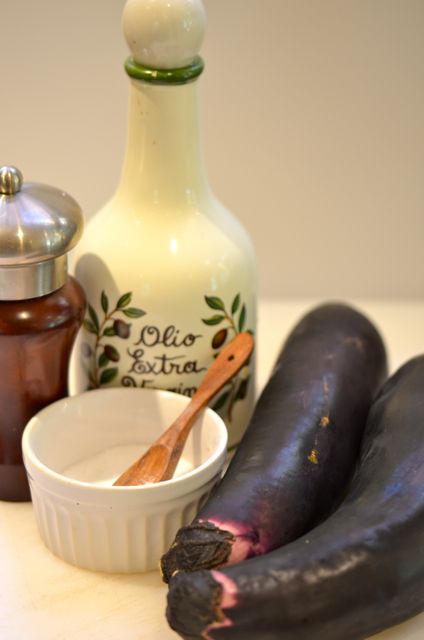
    Just a few ingredients for the eggplant.

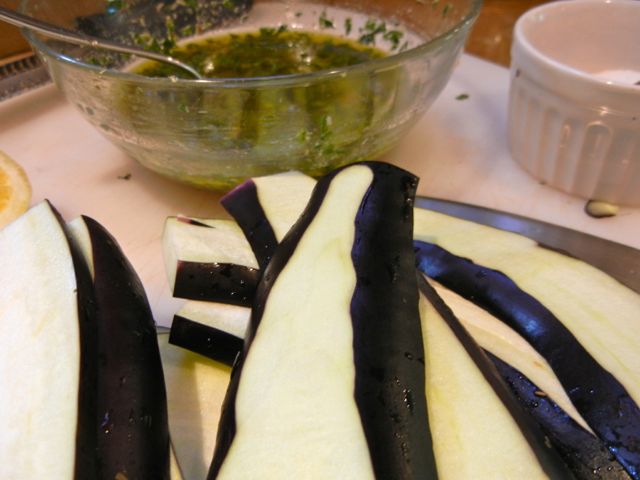
    Make your salsa verde and slice the eggplant.

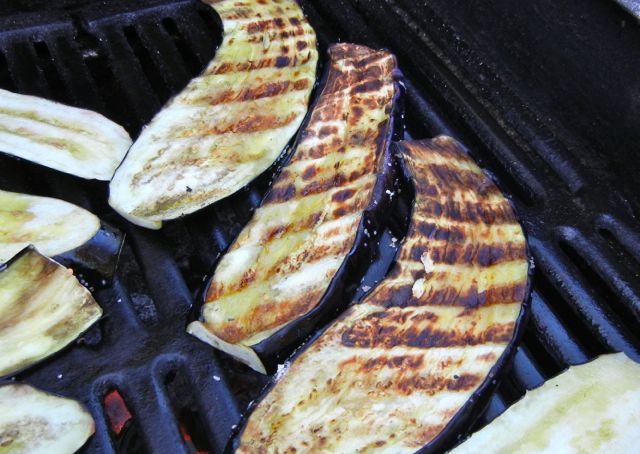
    Brush oil on the eggplant, sprinkle with salt and pepper and cook on a medium grill.

    Assembling and cooking this dish is as simple as it gets.  Most of the work with salsa verde is in chopping the herbs and then adding the oil and other ingredients. For the eggplant, simply slice it lengthwise into 1/4 inch slices and brush with olive oil and then sprinkle with salt and pepper. Cook on a medium grill until browned on the outside and soft in the center. The temperature here is key, if the fire is too hot the outside will burn before the center is soft. Lower the heat a bit and take your time. A grill pan indoors will also work, again use medium heat and take your time. You will still need less than 10 minutes. And then you can enjoy one lovely dish.

    Continue reading

  • Sushi Balls: Sushi At Home

    Sushi balls. Fun sushi at home.

    When we started writing this blog, one of the promises we made ourselves was to use the blog as motivation to cook new things at home. And so far we are making progress, but mostly with new tools like sous-vide and using “molecular gastronomy” ingredients in baking. But the next step was for us to explore new cuisines, and we went right for Japan.

    We love Japanese food and have a favorite local sushi bar and are even members in a Sake tasting club (great fun), but rarely cook anything other than tempura at home. But we decided that needed to change. So we bought Debra Samuels’ “My Japanese Table”, a cookbook with Japanese recipes adapted for the American kitchen. Samuels is a well-regarded food writer for the Boston Globe and lived /cooked in Japan for ten years, so we took the plunge. So far the cookbook is a good read, with plenty of simple recipes for Japanese basics like teriyaki and tempura. But we know what we wanted to do at home, sushi. And this recipe is why we bought the cookbook. Sushi balls are very pretty sushi that you can make at home. And its fun…really.

    Smoked salmon, salmon roe, seared ahi, shrimp, cucumber and shiitake mushroom.

    Usually the big issue with making sushi at home is actually constructing the rolls. Sushi rice is super-sticky and the shaping tools are uncommon for most home cooks. Without constant practice, home sushi can look like a train wreck. And while the flavor of the sushi can be good, the presentation is a big part of the dish. One way to handle this challenge is to simply prepare the rice and ingredients and then present them with nori as a buffet for hand-rolls. But with Sushi balls, anyone can make an attractive individual piece of sushi. You can even have fun and experiment with presentation.

    The trick is to simply place the fish or veggie on a square of plastic wrap, then place a tablespoon or so of rice on top (be sure to keep your hands moist with water when handling the rice).  Then bring up all the corners of the plastic wrap and twist tightly into a ball. When it unwinds, you have a well-shaped sushi ball. It only takes a few tries to get the hang of it, and then you can experiment with different combinations of ingredients. Samuels suggests cooked shrimp, lightly salted cucumbers and smoked salmon. We added some seared ahi, salmon roe and browned shiitake mushrooms. Cooked crab or scallops would also be very good additions. But feel free to experiment based on taste and budget (and this is an inexpensive dish).

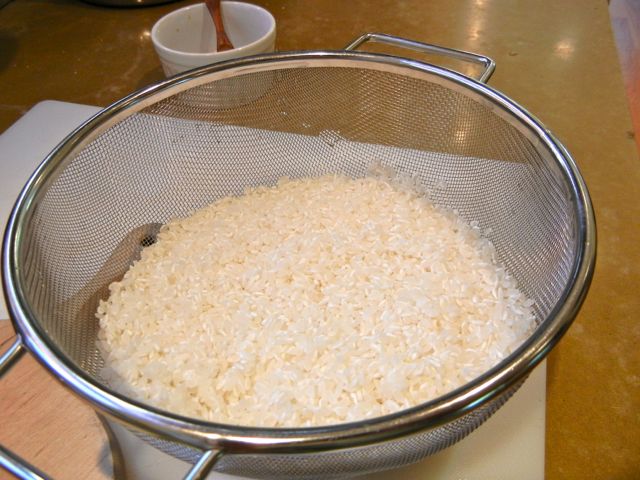
    Rinse the rice and drain.

    Ingredients for Sushi-zu seasoning

    Cooked rice, sprinkled with Sushi-zu seasoning.

    Now that shaping the sushi is less of a challenge, the real effort goes in making the sushi rice. While in sushi bars “mastering” the rice can take years, it is something you can do well at home- on the first try. The trick is to buy the correct rice and follow all of the steps. For the rice you need short grain japonica rice, which is available in most supermarkets. Don’t substitute long grain rice. As for the steps, you must rinse the rice and then either soak it for cooking or use a rice cooker- the recipe deals with both. While the rice is cooking you make the Sushi-zu seasoning of rice vinegar, sugar, salt and mirin. When the rice finishes cooking, you place it in a bowl and then gently sprinkle and mix the Sushi-zu seasoning with the rice. Then fan the rice to cool it down. The rice should stick together but not be mashed or “gluey”.  But if you use the right rice and follow each step you will get consistent, tasty, results.

    Slice cucumbers, sprinkle with salt, wait for 5 minutes and drain. Done. Continue reading

  • Radishes With Butter And Salt (And Moments Of Perfection)

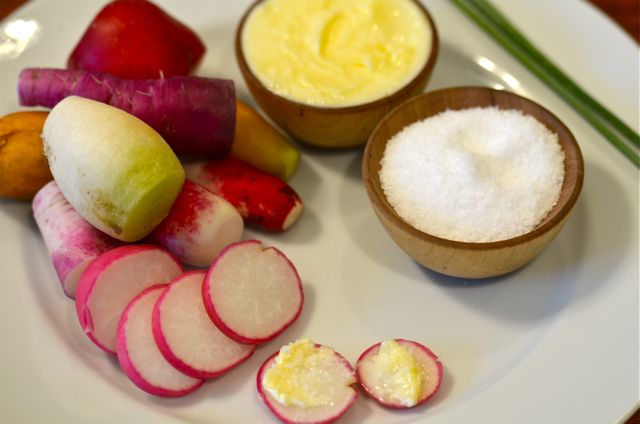
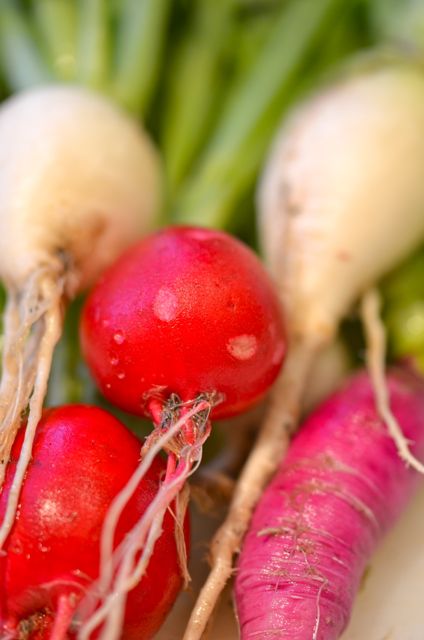
    Radishes with butter and salt, a perfect trio.

    Late post today. Our eldest and I went to the Giants game last night and stayed late to watch Matt Cain pitch the franchise’s first perfect game in 130 years. As we occasionally hint in the blog, all of us are lifelong Giants fans. We have seen Bonds’ home runs, All-Star games, Timmy’s Cy Youngs, World Series losses and (glorious) victory and everything in between. And there was nothing quite like the perfect game. Everything comes together in one game. A brief, brilliant spark of pure joy and surprise. And for the players it was the moment when the orchestra is perfectly in tune and the conductor is at his best. A sweet reward for a lifetime of effort.

    But in baseball, it is a lifetime of effort that is always filled with failure. Even the best baseball players fail, in some way, in almost every game. The best learn to accept failure and build more towards a lifetime body of work. That is what makes perfect games or championships so special. Not simply that you were the best on “X” day, but because the players must overcome failure to get there. Success is all the sweeter when reached through failure. You grow, you improve, you build.

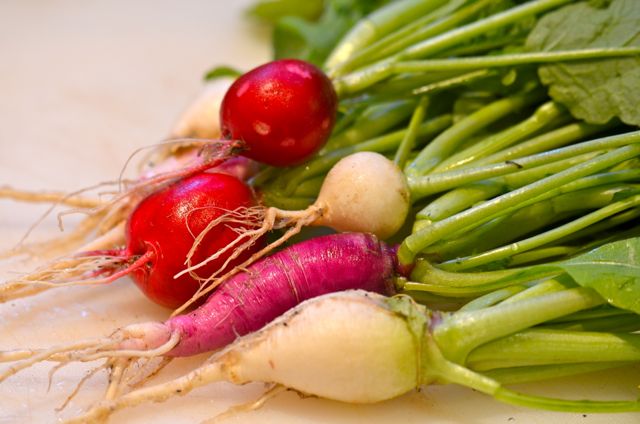
    Mixed radishes, fresh from our garden.

    If you garden or cook (or simply raise a family) this should ring true. While you may not toil in the spotlight, gardening and cooking are a lifetime of successes and failures. And some you simply cannot control. The beds were perfect, you checked the soil, picked the right seeds and watered on time. But the blight or frost came anyway. Green became brown. Fail. You picked the perfect recipe, shopped on time, did your prep and cooked like a pro. But the guests came late, one of the kids sprained an ankle and the roast stayed in the oven too long. Medium-burnt. Fail.

    But after a few well-placed “words”, you start again. There is always the next meal, day, week, season and year. And when the successes come they are sweet, and they are shared with those you love. When the cocktail is tasty and the guests are happily chatting, the kids eat the (perfect) fish and the dessert made from the fruit that you grew has been totally devoured, then you have it. A perfect meal, a perfect day, a perfect moment. And well-earned. And well-remembered. Think of those moments, and we bet you have a few that stick with you, and those you love, to this day. Brief, brilliant sparks of love, joy and content. The glow from those sparks lasts a long time.

    In the garden, harvest is often that special moment. This week we have cherries, berries and radishes. More on the fruit soon, but as for the radishes we will give you a “perfect” recipe to enjoy any time. Fresh radishes with butter and salt. How do we know it’s perfect? Because pretty much every celebrity cook, cookbook author and blogger has posted a version of this recipe at some time or other. But since we actually grew these radishes, we (selfishly) think we can post on it too. And it is a very tasty, and easy, dish.

    And we are big fans of radishes, both as cooks and gardeners. In the home garden radishes are a great crop. They grow to harvest in 3-4 weeks (the name comes from the Greek Raphanus meaning “quickly appearing”), work in many climates and compliment many cuisines. Radishes grow in spring and fall, so we stagger our crop over a few weeks to get radishes though most of both seasons. And, frankly, they are hard to mess up. While gardening is filled with failures, crops like zucchini and radishes do offer the opportunity for a few “quick wins”- and there is absolutely nothing wrong with that.

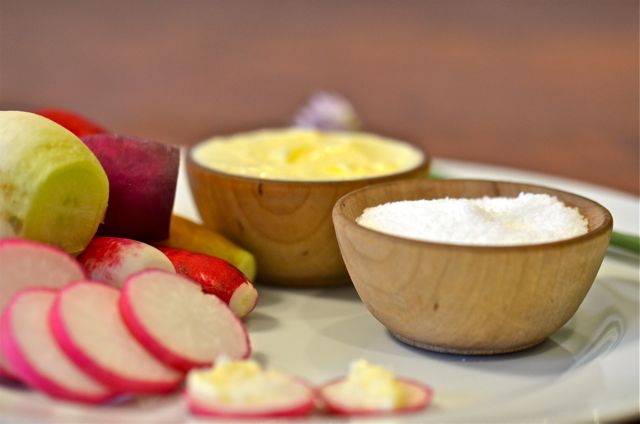
    While we like quick-pickling radishes or using them for crunch and heat in salads, we usually just eat them out of hand. We enjoy their crunch and light, peppery heat (the kids like them too, so that is a big bonus). Serving radishes with butter and salt simply creates a more balanced dish. The sweet, creamy butter and the salt add more dimension to the radish. And all you need to do is slice some radishes and put some butter and salt into a few bowls and serve. This is a great summer dish- easy, but full of flavor.

    Continue reading

  • Morels With Asparagus and Cream (and Bacon)

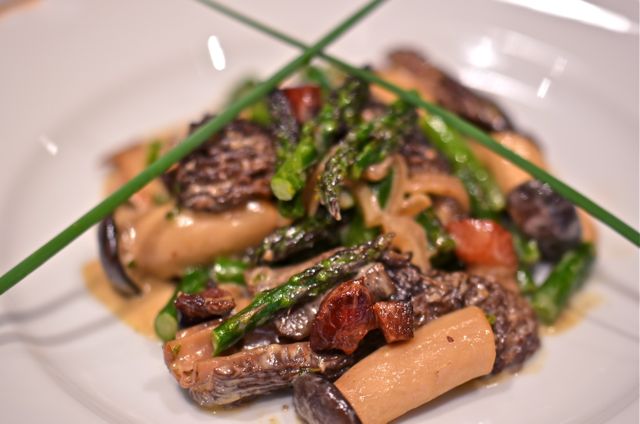
    Morels with asparagus and cream (and bacon).

    This is a very good dish, but no need to avoid the obvious, this is not a particularly healthy dish. The photo says it all. Morels and asparagus bathed in a sauce of cream and bacon. We do offer some notes on how to make a lighter version of the recipe, but we view morels as “special occasion” food around here. When we get them, we don’t hold back. We just love morels. And rather than try to explain the flavor profile in great detail, we will share a description from our eldest child; “ooh, morels, yum- they taste like meat”. Yup, they do. Rich, and indeed “meaty” in flavor, morels have a great texture when cooked and taste like the umami-bombs they are.

    Morels are from the Morchella genus of mushrooms and are common in the United States and enjoyed in Europe and Asia. Morels are found in many forest environments, but on the west coast the Gray Morels are most associated with wildfires. The morels thrive in forest areas after a burn and in areas of “controlled burns”. As controlled burns and wildfires are common throughout the west in most years, we get our share of morels. Most go to restaurants or are dried for sale, but we do get fresh morels at the farmers market- and when we do, we grab them. But even in good years they are not cheap. Dried morels are a more affordable (and off-season) substitute.

    Ingredients, note the mix of morels and king trumpet mushrooms.

    As for the morels themselves, they are usually 1-3 inches in size and have a unique “sponge-like” cap and a hollow core. This makes cleaning the morels a challenge. Frankly, morels are dirty, buggy mushrooms. And as they often come from pine forests, a few pine needles may be stuck in there as well. While it may sound like sacrilege to purists, we suggest that morels be cut in half and thoroughly rinsed in water. The water will cook out with some extra time in the pan, but no one likes mud, bugs and pine needles in their food. It is also a good idea to inspect and clean each morel by hand before you cook them. This is time-consuming work, but since morels will be a special treat for most, it is worth the extra effort.

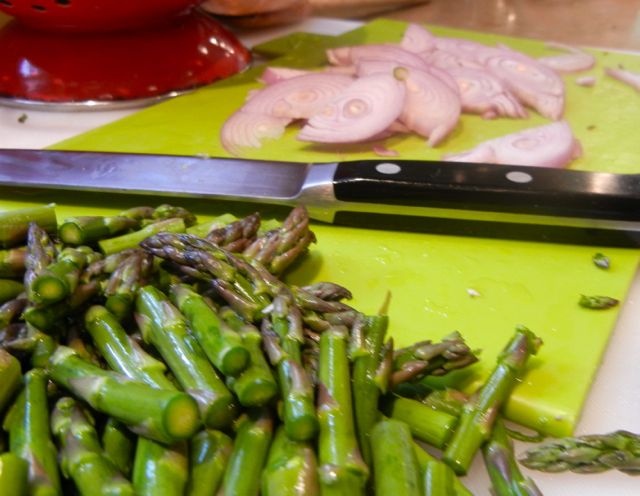
    Prepare your veggies.

    Now some will say that the morels should be served simply, with minimal additions, and that is great. But the morels play very well with other flavors, particularly earthy, sweet green vegetables like asparagus (fiddleheads are also good, if you can get them). And why not add some home-cured bacon, a touch of shallot, cream and some fresh thyme? And morels are really expensive, so we add some other meaty mushrooms (we use king trumpets) to the recipe to as well. And in a pinch, you can just use other mushrooms altogether. The flavors will still be good.

    Wash the mushrooms, you will be much happier.

    Bacon adds extra flavor, but you can substitute olive oil.

    Reserve the bacon pieces, but cook the mushrooms in the bacon fat.

    Making this dish is a simple one-pan operation. Most of the work is in prep. Clean and slice the mushrooms, asparagus and shallots and set aside. Cut some bacon into cubes or strips and brown, remove the bacon pieces and reserve, but keep the bacon fat in the pan. (You could skip the bacon and just use olive oil). Add the shallots and mushrooms and cook until they give up their liquid and it is mostly reduced. Add the thyme, then deglaze with some white wine and then add the asparagus. Cook the asparagus for a few minutes then add the cream, reduce for another minute, add the bacon and then check seasoning. Adjust seasoning as needed and serve. Continue reading