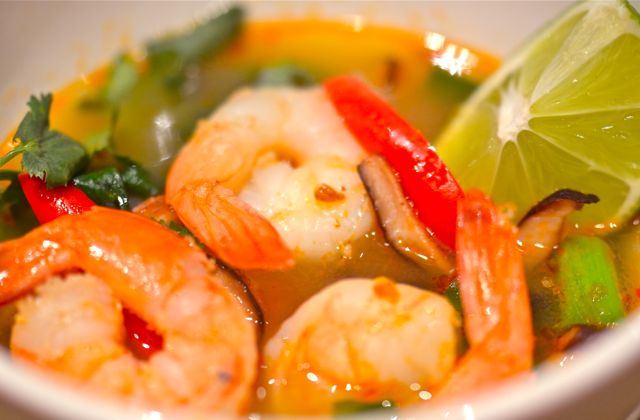
Tom Yum Goong: Thai Hot and Sour Shrimp Soup
Sometimes cooking with the season or from the garden takes you to surprising places. California isn’t Thailand, but we do have a Kaffir lime tree and it was time to use those tasty leaves. Kaffir lime leaves are a key ingredient in southeast Asian cooking and no dish shows off their bright citrus flavor like Tom Yum Goong, Thai hot and sour soup with sweet shrimp. This dish packs a ton of flavor and takes just a few minutes to make (pretty healthy, too). The only real challenge is in the shopping, rather than the cooking.


Kaffir lime leaf.
The problem is that Kaffir lime leaves are not an easy ingredient to find, and neither is lemongrass, another key ingredient. We are lucky enough to have a Kaffir lime tree (it gets too cold here for other limes), but otherwise you will need to order the leaves or find them fresh or frozen in specialty markets (BTW- the Kaffir lime fruit is generally considered too bitter and acidic for culinary uses). The same goes for lemongrass, although that may be a bit more readily available. If you must substitute, lime zest and lemon zest are your best options. But Kaffir lime leaves and lemongrass really are worth looking for, their bright citrus notes are a key to many popular southeast Asian dishes, and their flavors just pop. If you want “restaurant-quality” flavor in your cooking, these are the kind of ingredients you need.

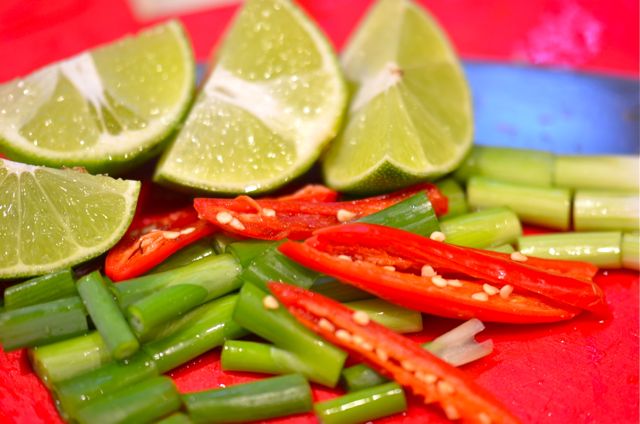
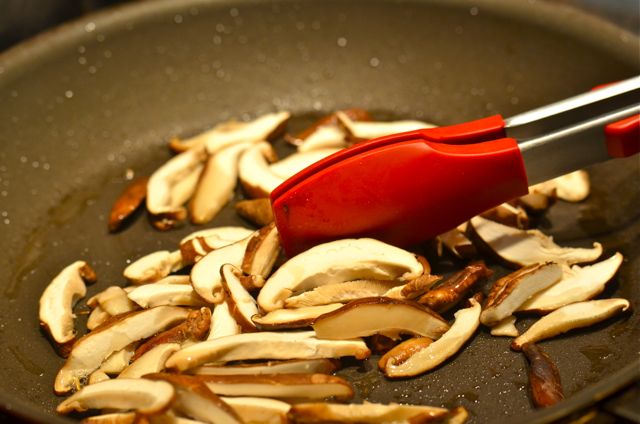 And as we noted, once you have the ingredients for Tom Yum Goong, you are well on your way to making an easy, tasty dish. The basics are simple; heat some chicken stock, simmer some crushed lemongrass and Kaffir lime leaves in the broth for 5-6 minutes and them remove then from the broth, as they are inedible. Then add some mushrooms and chili paste to the broth and simmer for a minute before adding some shrimp and fish sauce and cooking another minute or so. Take the pot of the heat and let the shrimp finish cooking in the hot soup. Taste and adjust seasoning, add some lime juice, chilies and cilantro. Serve.

 We do tweak the traditional recipe somewhat. Some versions of the recipe call for fresh or canned straw mushrooms. While the recipe will taste fine with the straw mushrooms, we prefer to use sliced fresh shiitake mushrooms for a meatier flavor and texture. We brown them lightly before adding them to the soup. It adds a few minutes of work, but since this dish takes less than twenty minutes, we think it is time well spent. Our final adjustment to the recipe is the level of spice, we start with just a few tablespoons of chili paste and add more to taste. You can use more chili paste than you might think, but it is easier to add than subtract. This soup has so many good flavors you don’t want to drown them out with too much heat. We serve this dish with coconut rice and the sweet rice matched with the hot and sour soup make for a lovely meal.





















 Putney Farm