• Coconut – Curry Cabbage

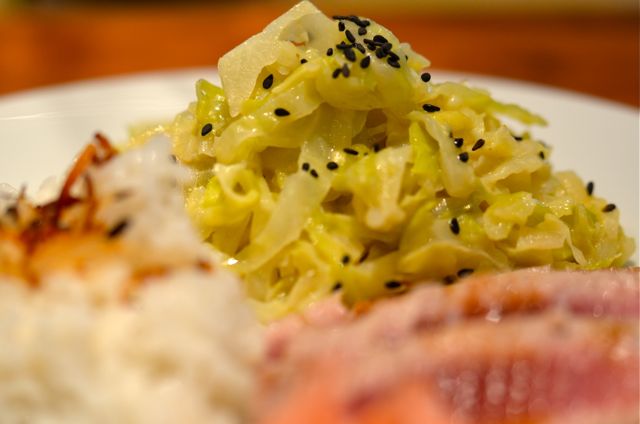
    Coconut-Curry Cabbage, served with seared ahi and coconut rice.

    As we mentioned a few posts ago, we made a Hawaiian-themed meal for some friends last week and it featured this cabbage dish. And since we liked it so much, we decided to make it again and post it. This cabbage recipe takes just a few minutes to make, but the mixture of bright, crispy cabbage with rich coconut milk and “funky” curry paste (and, optionally, fish sauce) is a real winner and a great compliment to tropical or Asian-influenced dishes.

    Basic ingredients that are available in most grocery stores.

    The recipe itself is easy, but very tasty. It comes from Bev Gannon’s Hali’imaile General Store Cookbook. This is a restaurant cookbook that often features very ornate and complicated preparations. But the flavor combinations in Gannon’s dishes are always original and intriguing, so usually we use the cookbook for inspiration and adapt the recipes, but this recipe only has minor revisions. It is one of the simplest recipes in the cookbook, and perhaps not surprisingly, one of the best (IMHO).

    Slice the cabbage and dice the onion.

    Saute the onion and the curry paste.

    You start by dicing a small onion and then thinly slicing a medium green cabbage. Then, in a large skillet, add some oil and then soften the onion over medium-high heat. Add a few tablespoons of green (or yellow) curry paste and some salt and cook for a few more minutes. Add the sliced cabbage and cook for a minute or two and then add about a cup of coconut milk. Simmer the cabbage for 6-8 minutes, or until the coconut milk reduces. Then add a splash of fish sauce (if you like it, we do), taste for seasoning, sprinkle on a few black sesame seeds and serve.

    Add cabbage and coconut milk and briefly simmer. Season with fish sauce and salt.
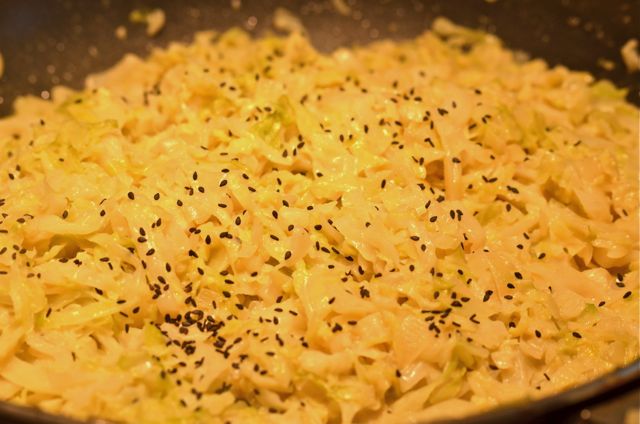
    Garnish with black sesame seeds.

    Another bonus to this dish is that it is easy to scale up/down the recipe to match the number of guests. Expect that 1 medium cabbage will feed 4 guests. So use an overall ratio of 1 cabbage / one tablespoon cooking oil / one-half of a small onion / 1-2 tablespoons of curry paste / 1 cup of coconut milk / 1 tablespoon salt / 1 tablespoon black sesame seeds / fish sauce to taste. You can simply increase or decrease the recipe to match your needs. And as you can make this dish ahead, and then reheat it before service, this is a great side dish for entertaining.

    So far, we enjoyed this dish as a side with sesame-crusted opah and with seared ahi. In both cases, the cabbage added a bit of crunch, pleasant richness and that touch of curry “funk” to the overall dish. As we really like coconut, we serve the cabbage along with coconut rice, and rather than being “too much” we find they are an excellent compliment to each other.

    A great compliment to fish and rice.

    As Californians, and living near the “Cadillac Desert”, we get cabbage year-round. We love making cole-slaw for summer barbecues and putting shredded cabbage in our tacos. But this dish takes cabbage to another level and is worth making at any time of year. And if you live in an area where cabbage is a fall / winter crop, we suggest you try this dish when cabbage is in season- it will give you a quick taste of the tropics.

    Coconut-Curry Cabbage:

    (Adapted from Beverly Gannon)

    Notes Before You Start:

    • You can use green or yellow curry paste in this dish. Curry paste varies, so make sure to add a little, taste and adjust the first time you make this dish.

    What You Get: A tasty, sweet cabbage dish. A particularly good side with tropical or Asian-influenced fish dishes.

    What You Need: No special equipment required.

    How Long? About 20 minutes. The only real “work” is slicing the cabbage and onion.

    Ingredients:

    (serves 4)

    • 1 medium green cabbage, thinly sliced- 3-4 cups
    • 1/2 small white onion, diced
    • 1 tablespoon canola or other vegetable oil
    • 1 to 2 tablespoons green or yellow curry paste
    • 1 cup coconut milk
    • 1/2 tablespoon salt (or to taste)
    • 1/2 teaspoon fish sauce (or to taste- optional)
    • 1-2 tablespoons black sesame seeds, for garnish (optional)

    Assemble:

    1. Slice the cabbage and dice the onion.
    2. Place a large skillet over medium-high heat. Add the oil and then the onion and curry paste and saute for 3-4 minutes, or until the onion is soft. Add the cabbage and cook for 1-2 minutes, until it just starts to wilt. Add the coconut milk and simmer for 6-8 minutes, or until the coconut milk reduces and the cabbage is tender, but retains some crunch. Taste and season with salt and fish sauce, if using. Sprinkle with black sesame seeds and serve.
  • Simple Garden Recipes: Maraschino Cherries And Sweet Refrigerator Pickles

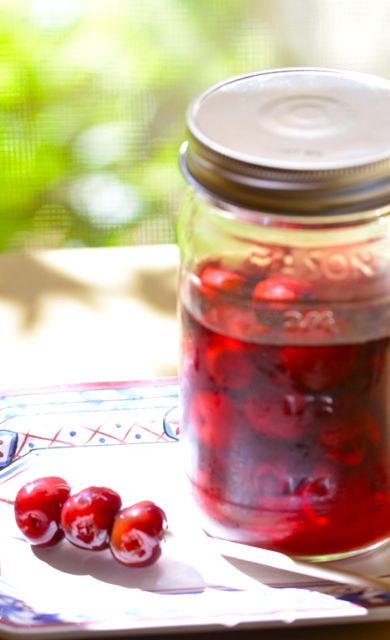
    Homemade maraschino cherries.

    Sweet refrigerator pickles.

    The bounty of summer often comes with a vexing question that basically boils down to, “what am I supposed to do with all of this stuff?!?” Wether you garden, join a CSA, shop the farmers market or simply succumb to the temptations of a roadside fruit stand, when we get summer fruits and veggies we tend to get a lot of them. All at once.  And not all produce stays fresh for very long. Abundance can have a (very slight) downside.

    Now possibly the best answer to this “challenge” is to share with friends, assuming they aren’t already overwhelmed with their own produce. But when generosity fails, preservation is the next step. Now if you want to get serious about preservation, we suggest you visit Wifemeetslife for an intro to canning- Alison has some great posts. And if you want to add some booze into the mix, then we suggest a visit to Boozed + Infused, where Alicia makes incredible fruit-based infusions.

    We can’t keep up with Alison and Alicia (although we are trying) but we do often use some short-term preservation techniques to extend our produce. For our cherries we make quick “maraschino” cherries and for cucumbers we make refrigerator pickles. Both are easy to make and extend the life of our produce by a few weeks. Oh, and both taste great.

    Just cherries and Maraschino liqueur.

    Just a quick simmer, then jar and chill for two days.

    As for the maraschino cherries, we take our end-of season cherries, lightly cook them in maraschino liqueur and then pop them in the fridge and let them macerate for two days and then the are ready and will last for a few weeks. While sour cherries may be the ideal, we use Bings or Vans and they are very tasty. Contrary to the bright pink, overly sweet store-bought maraschinos, home-made maraschino cherries are just a touch sweet with a bit of tartness and some crunch. The liqueur adds some lovely nutty flavors to the cherries. And they are not particularly boozy. We put the cherries in cocktails, on top of ice cream, between layers of cakes (yum) and simply eat them out of hand. Good stuff and a good excuse to buy one more basket of cherries (and add some maraschino liqueur to your bar).

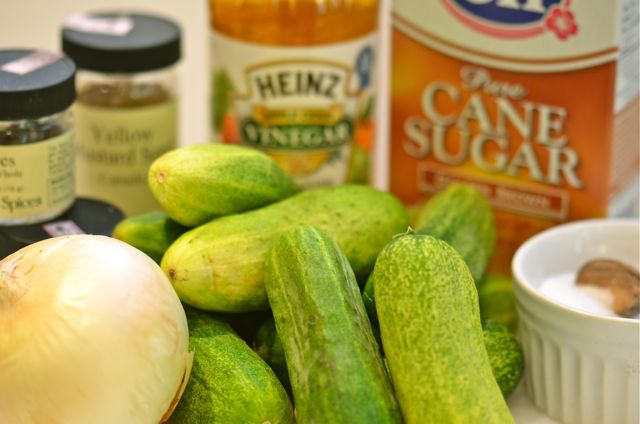
    Cucumbers, onion, vinegar, sugar, salt and spices. Simple.

    As for the sweet refrigerator pickles, we love our cucumbers fresh, or in quick pickles, but we like this recipe so much it is one of the main reasons we grow cukes and buy a lot at the farmers market. Making these pickles is a snap. Simply cut up some pickling cucumbers (Kirbys are good here) and a bit of onion and then quickly/lightly cook in a solution of brown sugar, vinegar, salt and spices. Let the mixture cool and then put it in the fridge, the pickles will keep for about 10 days, but they won’t last that long. The pickles are sharp, sweet and crunchy with just a touch of spice. We eat them out of hand but also put them on sandwiches or serve them with burgers and hot dogs at cookouts. We also chop the pickles up into a quick relish- so good. And our kids love them, so it is a good way to get a few more veggies in their diet. Continue reading

  • Chad’s Squid With Frying Peppers

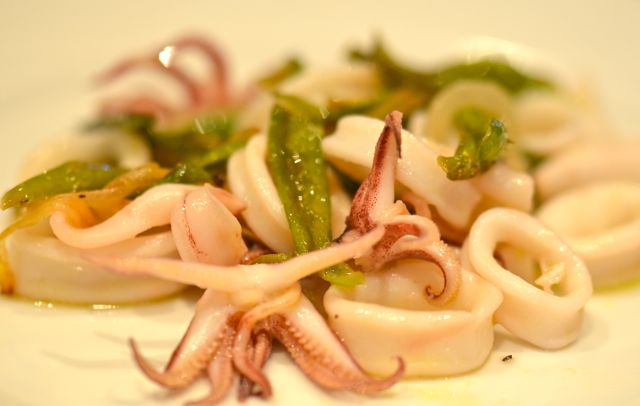
    Chad’s squid with frying peppers.

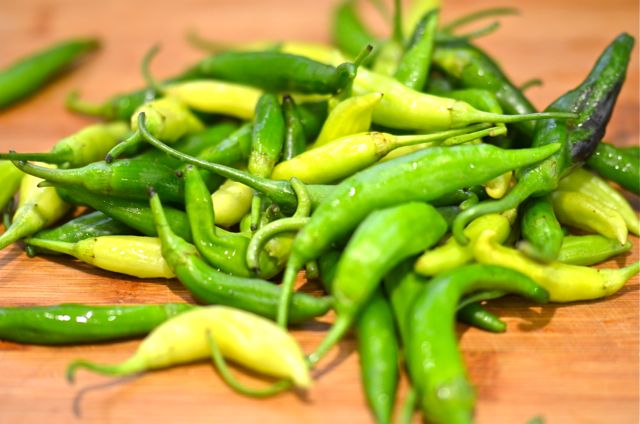
    As we move deeper into summer our garden and the farmers market start to show an abundance of small “frying peppers”. Frying peppers make up a family of small, usually sweet, thin-skinned, peppers that start with a lovely pale green but will move to a deep red over time. While they have a variety of names (Jimmy Nardello, Shisito, Cubanelle, Italian frying, or Padron) most frying peppers are best served in simple preparations that highlight their sweet, grassy flavor. Many recipes simply suggest a quick, high-temperature fry in some olive oil and a touch of seasoning. That is a good way to enjoy frying peppers, and we do, but we also want to include them in main courses.

    Frying peppers, a real summer treat.

    Happily, our friend Chad (the professional chef and all-around good guy) made a simple, but incredibly tasty, recipe that combines squid and frying peppers. Chad made this last summer when peppers were in season and we couldn’t wait to try it again. The recipe combines sweet, buttery squid with the more herbal sweetness of the peppers, a dash of lemon and wine (if needed) provide some acidity and suddenly you have a light, balanced and very addictive dish. And a dish you can serve as an appetizer or a main course. And it takes just a few minutes to make.

    Simple ingredients but great flavors and textures.

    And this weekend our peppers came in, and the farmers market was full of early frying peppers (we had to augment our Jimmy Nardellos, we will plant more next year). And in a stroke of good luck, the fish guy at the farmers market had frozen, cleaned squid available. So we decided to go ahead and make the dish. A few quick text messages from Chad (thanks!) to confirm the basics of the recipe and we were off to the races.

    But first, a quick note on preparing and cooking the squid / calamari. Squid are affordable, widely available and quite tasty, but can be intimidating, particularly when you have to clean them yourself. Our advice is very simple. Don’t clean them yourself. Buy them cleaned or have your fish monger do it, squid are still inexpensive even when sold cleaned. If you must do it yourself, here is a good link on how.

    Saute the peppers and onions in a bit of olive oil.

    Otherwise, the key to cooking squid is that it either cooks very quickly over high heat, or low and slow in a braise. This recipe is a quick / high-heat recipe. But this means that it helps to cut the squid into pieces that are the same size so they cook evenly. If you have uneven pieces, the small pieces will be tough by the time the large pieces cook. The squid are done when the pieces are opaque and the edges curl. The best way to be sure the squid is done is to simply try a piece after a minute of cooking and keep testing. If tender and buttery, it’s done, take the squid off the heat. The squid will still cook a bit more from residual heat.

    Quickly cook the squid with olive oil and a dash of lemon and wine.

    As for making the dish, it is a very simple preparation. Clean the peppers, slice and the remove the seeds. Sauté the peppers with a few slivers of sweet onion in some olive oil until the skins slightly blister, about 6-8 minutes, and lightly season. Meanwhile slice the squid and then fry, over very high heat, in some olive oil for just 1-2 minutes.The squid will release liquid that provides the base for a light sauce. Add a dash of wine, a squeeze of lemon and then add the peppers and onion to the squid. Taste for seasoning and add salt, black pepper and some red pepper flakes if you like a touch of heat. Serve with rice, pasta or some crusty bread.

    Combine the peppers and squid, season and serve.

    We enjoyed this dish as much as the first time we tried it. The squid was buttery and sweet and the peppers added incredibly fresh flavors. It simply tasted like summer. And it is a light and healthy dish as well. So if you have frying peppers this summer, the first thing to do is just fry and eat them. But if you want to use the peppers in something more, try this dish out, it’s a winner. Thanks Chad!

    Chad’s Squid With Frying Peppers:

    (Adapted from Chad Callahan)

    Notes Before You Start:

    • There are many varieties of frying peppers, but you want small, thin-skinned peppers. Taste them for heat before you start the dish. Red or green varieties both work.
    • Frozen squid are not only fine for this dish, but preferred. Freezing helps tenderize squid. Continue reading
  • Simple Garden Recipes: Zucchini and Sugar Snap Peas

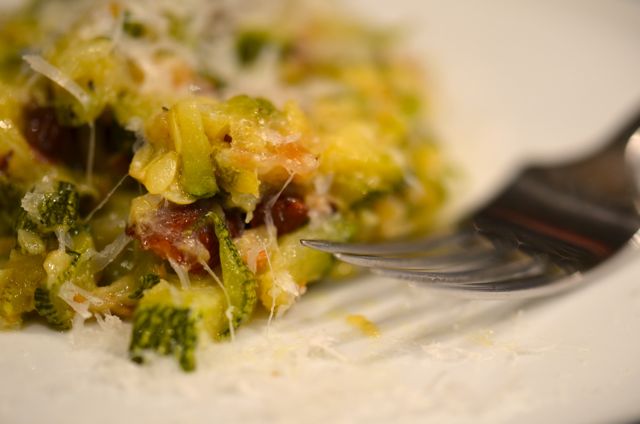
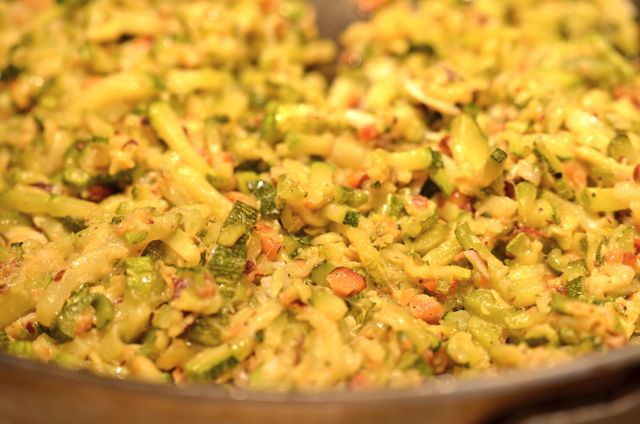
    Red Cat Zucchini. Zucchini, almond, pecorino- so good.

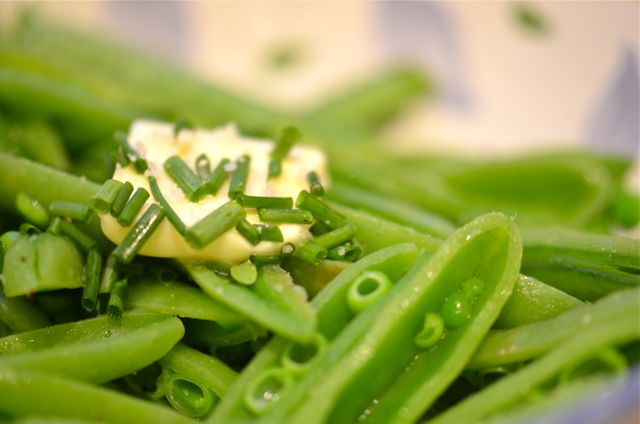
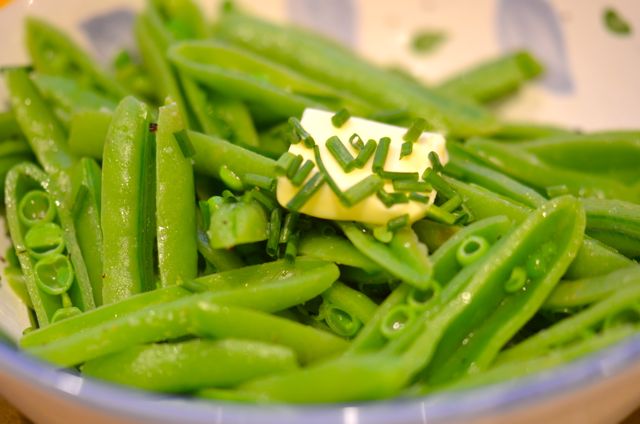
    Sugar Snap Peas With Butter And Chives. Simple, but delightful.

    Many good crops here at the farm this week. And, happily, many guests to feed. We shared our crop of sugar snap peas, and that was an easy sell. But we also served zucchini, and our guests loved it. Some of the best veggies they ever had. Seriously.

    How do we know the zucchini was such a hit? We made the “famous” Red Cat Zucchini for the Red Cat restaurant in New York City. And we can say the recipe is famous because we have never been to the restaurant or read the Red Cat Cookbook, but the recipe made it to us anyway. And we are glad it did. There are few vegetable recipes more delicious, and few easier to make than this zucchini dish.

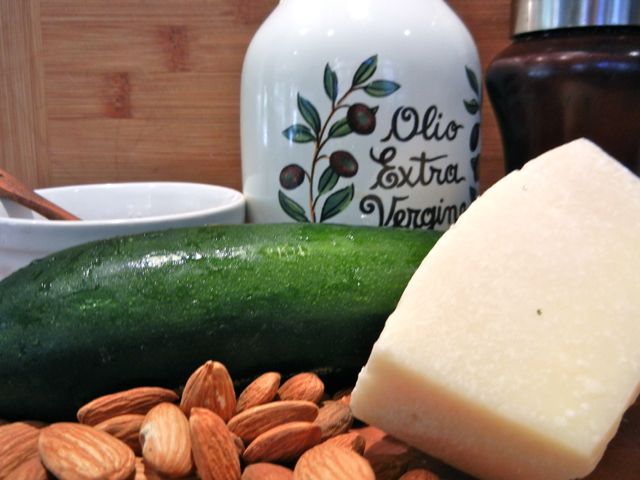
    Simple ingredients.

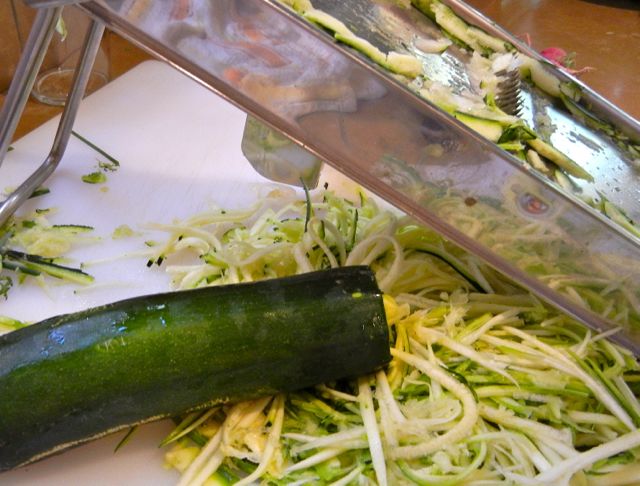
    Slice your zucchini.

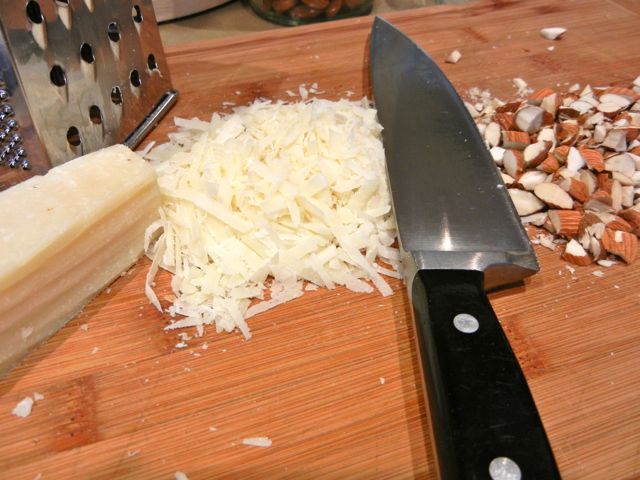
    Grate your cheese and chop your almonds.

    Cook and serve.

    The Red Cat Zucchini combines thinly sliced zucchini, almonds, pecorino romano cheese, olive oil, salt and pepper. It is a basic list of ingredients but the final dish absolutely sings. The sweetness of the zucchini goes perfectly with the nutty almonds and is balanced by the salty pecorino. Each bite is a delight.  And it only takes 10-15 minutes to make. This dish is so good you will actually want your neighbors to offload share their excess zucchini. And you can serve this recipe with almost any summer meal. Great stuff.

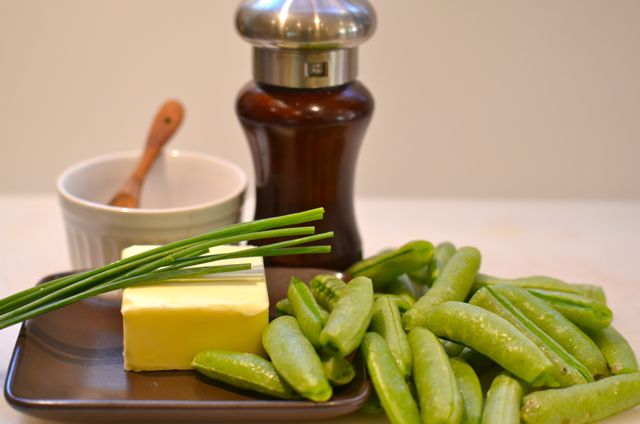
    Five simple ingredients.

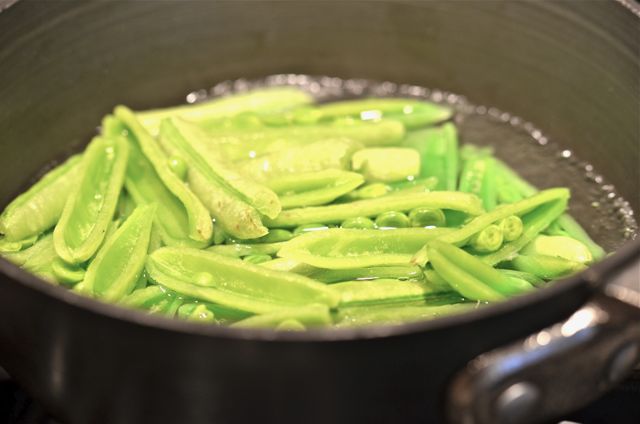
    Quickly cook in a medium saucepan.

    Add butter and chives and season…or….

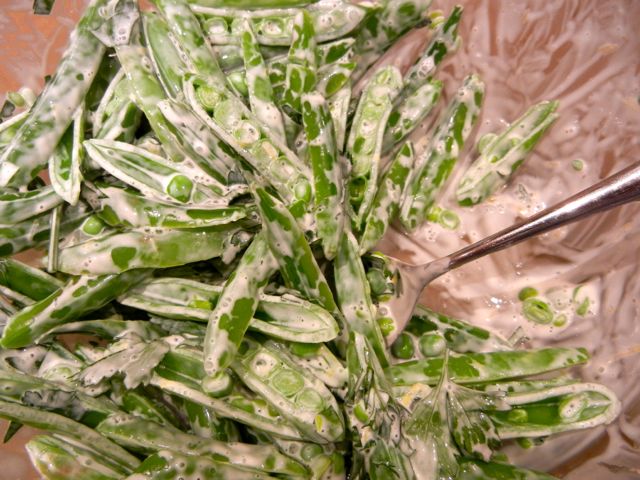
    ..or add some crème fraîche, lemon zest, parsley and salt.

    Continue reading

  • Green Olive-Lemon Relish (With Sous-Vide Halibut)

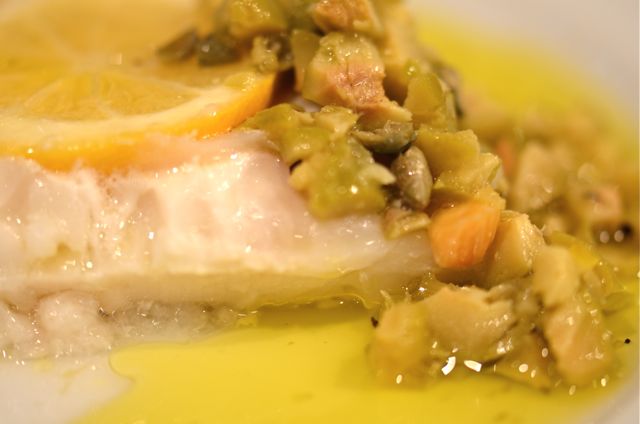
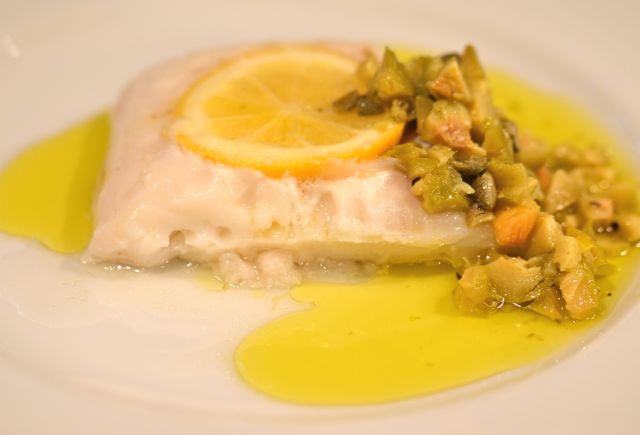
    Green Olive-Lemon Relish With Sous-Vide Halibut.

    Please pardon the somewhat strange title. Usually we would lead with the fish, but this dish really is all about the relish.

    We are big fans of salsa verde here at the farm, it works on veggies, chicken and fish- particularly during the summer. But we are always looking to branch out and discover new flavors, and we happened to find this recipe for green olive-lemon relish from Judy Rodgers of the Zuni Cafe in San Francisco. And Judy Rodgers notes that this relish works on fish, chicken, pork and grilled vegetables and is easy to make. So we gave it a try.

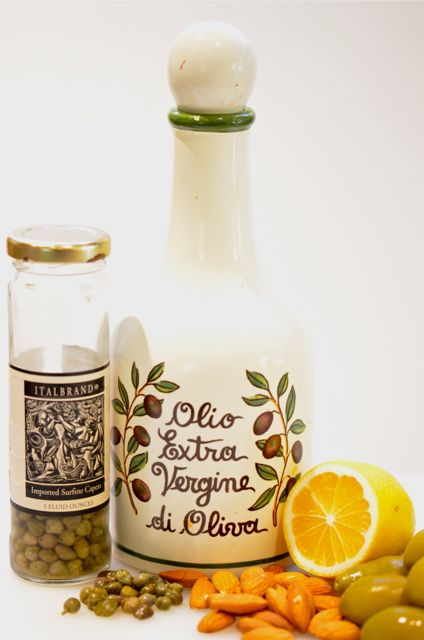
    Few ingredients, but lots of flavor.

    And we are glad we did. This relish is a simple mix of firm green olives (Lucques or Ceregnola are good), diced lemon, chopped almonds, a touch of capers, lemon juice and olive oil. The flavor profile is very similar to salsa verde but the olives, almonds and lemon pieces give the relish more body and heft. The relish has a nice balance of sour and briny notes from the olives, lemon and capers, while the almond and olive oil add nutty and sweet notes.

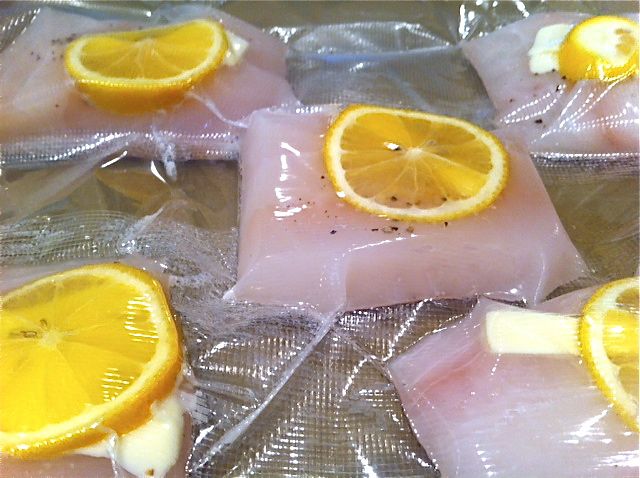
    We served the relish with sous-vide halibut at 122 degrees using our basic method for sous-vide fish (here is a link to a good oven-based method) and it was a lovely summer meal. This relish would work very well with any firm white fish- so we suggest you use whatever cooking method you like and then simply add the relish. And if you grill eggplant, squash or zucchini, this relish will be a great partner.

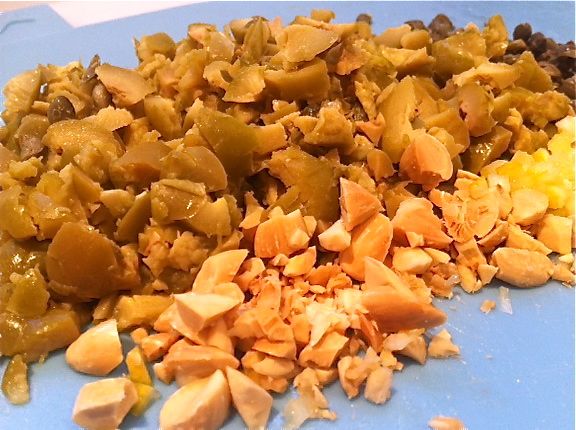
    Pit and chop the olives. Add chopped lemon, almonds and capers.

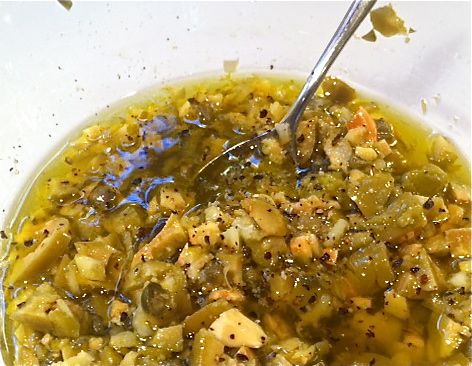
    Combine with olive oil and lemon juice.

    The relish goes with fish, chicken, pork or grilled vegetables. We made sous-vide halibut.

    Making the relish couldn’t be easier. Skin, roast and chop some almonds (or use store-bought roasted almonds, unsalted Marconas would be very good), dice 1/4 of a lemon, pit and chop the olives, add some capers and a bit of extra lemon juice and then add the olive oil. A neat trick here is that you can add varying amounts of olive oil and still have a good relish. If you want the relish chunky, add less oil, if you want to use it more like a sauce (good with fish) add a little more oil. Both versions taste great. So if you like salsa verde in your summer meals, give this relish a try, it will be a very tasty change of pace (you might even like it better than salsa verde).

    Green Olive-Lemon Relish:

    (Adapted from Judy Rodgers’ Zuni Cafe Cookbook)

    Notes Before You Start:

    • Rodgers suggests a few types of olives for the relish including Lucques, Ceregnola, Ascolane and Picholine. But she notes that if the Picholines (or any of the olives) seem extremely briny to blanche them for 2 minutes to soften their flavor.
    • If you want to skin and roast your almonds, simply blanche raw almonds in boiling water for 10-15 seconds, then cool and skin (the skin will come off easily). Then roast the almonds in a 300 degree oven for about 15 minutes, or until they color slightly. Make extra- freshly roasted almonds are very tasty on their own.

    What You Get: A bright, tasty relish for fish, chicken, pork or vegetables.

    What You Need: No special equipment required.

    How Long? 5-10 minutes of chopping. And extra 15 minutes if roasting your own almonds. Anytime dish.

    Ingredients:

    (Makes about 1 – 1 and 1/2 cups)

    • 12 roasted, skinned almonds (see above if you want to DIY)
    • 1 cup good green olives like Lucques, Ceregnola, Ascolane or Picholine
    • 1/4 of a lemon
    • 2 tablespoons capers, rinsed
    • 1-2 tablespoons fresh lemon juice
    • 1/4 to 1/2 cup of good olive oil
    • Salt and pepper

    Continue reading

  • Grilled Eggplant With Salsa Verde (And A One Lovely Blog Award!)

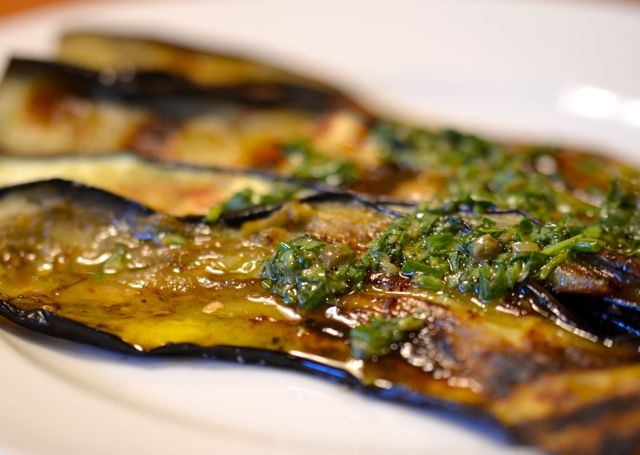
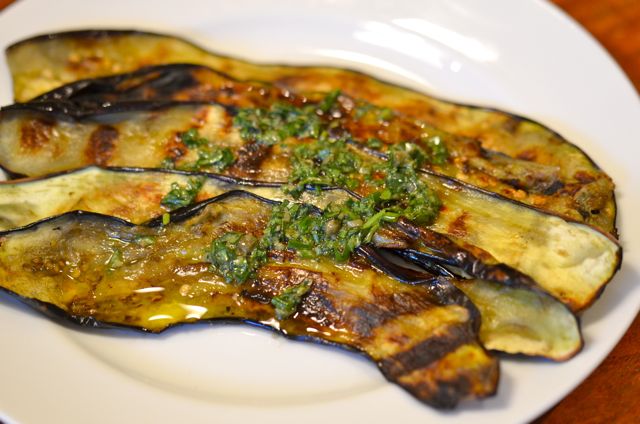
    Grilled eggplant with salsa verde.

    Recipe below, but please read on..

    We recently received a nomination for the One Lovely Blog award from our friend Erin at Erin’s DC Kitchen. We are big fans of Erin’s take on simple, tasty food and the overall positive spirit of her blog. Check out her site, it will be a pleasant visit. Thanks Erin!

    So now we must pass the award along to one lovely blogger and tell you seven things about ourselves (not sure there is much left, but we will try..;-). As for the nomination, we nominate Cooking in Sens, a blog about cooking and life in Burgundy. If we cook and take photos half as good, we would be thrilled. We love the blog and have made a few of the recipes with great success. Please check them out.

    So here are seven more things about us:

    1. We do read cookbooks for fun. And our kids are starting as well. Now we need to put them to work.
    2. As noted before, we have less success with zucchini than we should. Somewhat embarrassing.
    3. We buy too much kitchen gear, but are getting better…a little. Sort of. Maybe.
    4. Sometimes we cook simple food because we don’t want extra dishes.
    5. Once we got to 40, wine started giving us the occasional headache. Cocktails and beer took over at the farm.
    6. Sometimes there are so many gophers we (I) feel like Bill Murray in Caddyshack (and want to “solve” the problem with similar measures).
    7. We can’t wait for tomatoes and fresh corn…like it really bothers us it’s not here yet.

    Now back to cooking. The Grilled Eggplant with Salsa Verde recipe is a simple one, but worth sharing simply because it answers the question of what to do with eggplant. Such a beautiful vegetable (technically a berry, btw), but often many cooks just put it in Eggplant Parmesan or Baba Ghanoush. Both great dishes, but we like quick preparations and grilling the eggplant does the trick. As for extra flavor, salsa verde packs a big punch from the herbs and oil. It is great on many dishes and we use it often on fish, like this dish. But it is great on almost any grilled vegetable.

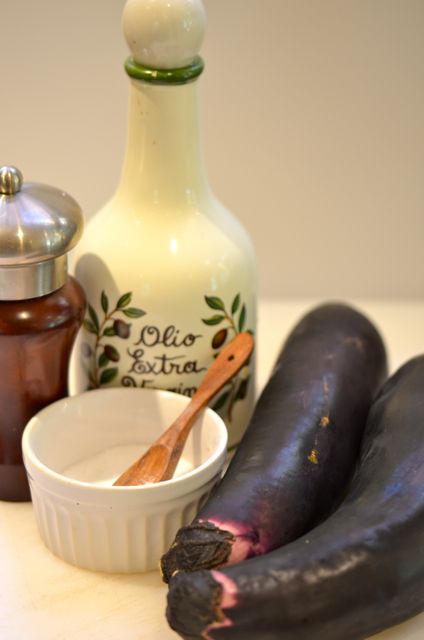
    Just a few ingredients for the eggplant.

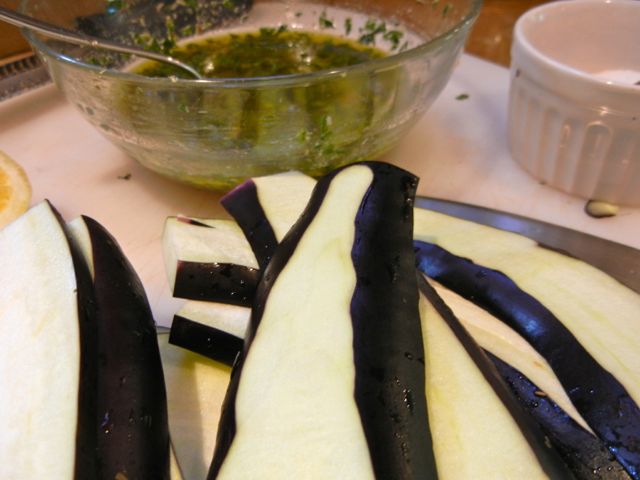
    Make your salsa verde and slice the eggplant.

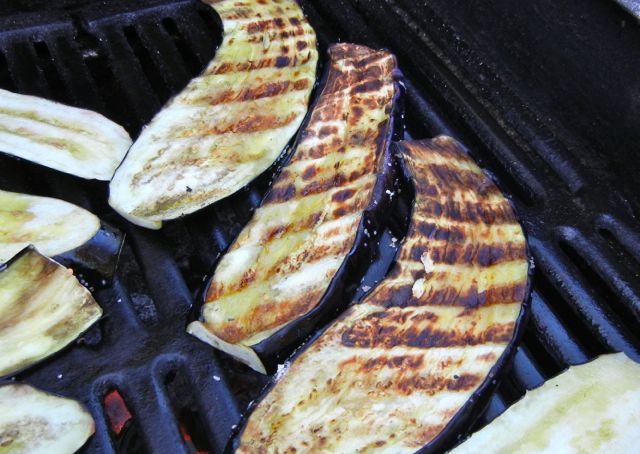
    Brush oil on the eggplant, sprinkle with salt and pepper and cook on a medium grill.

    Assembling and cooking this dish is as simple as it gets.  Most of the work with salsa verde is in chopping the herbs and then adding the oil and other ingredients. For the eggplant, simply slice it lengthwise into 1/4 inch slices and brush with olive oil and then sprinkle with salt and pepper. Cook on a medium grill until browned on the outside and soft in the center. The temperature here is key, if the fire is too hot the outside will burn before the center is soft. Lower the heat a bit and take your time. A grill pan indoors will also work, again use medium heat and take your time. You will still need less than 10 minutes. And then you can enjoy one lovely dish.

    Continue reading