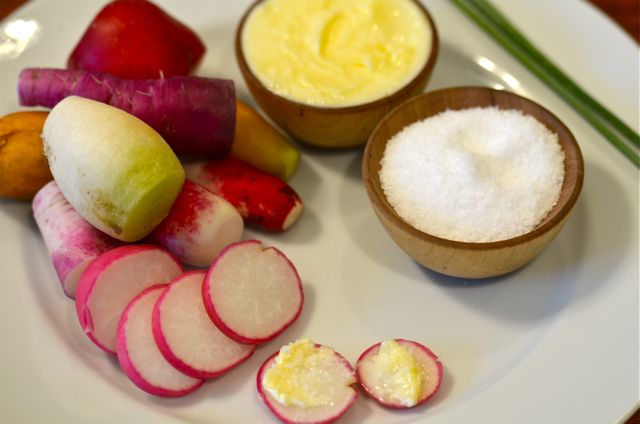
Radishes with butter and salt, a perfect trio.
Late post today. Our eldest and I went to the Giants game last night and stayed late to watch Matt Cain pitch the franchise’s first perfect game in 130 years. As we occasionally hint in the blog, all of us are lifelong Giants fans. We have seen Bonds’ home runs, All-Star games, Timmy’s Cy Youngs, World Series losses and (glorious) victory and everything in between. And there was nothing quite like the perfect game. Everything comes together in one game. A brief, brilliant spark of pure joy and surprise. And for the players it was the moment when the orchestra is perfectly in tune and the conductor is at his best. A sweet reward for a lifetime of effort.
But in baseball, it is a lifetime of effort that is always filled with failure. Even the best baseball players fail, in some way, in almost every game. The best learn to accept failure and build more towards a lifetime body of work. That is what makes perfect games or championships so special. Not simply that you were the best on “X” day, but because the players must overcome failure to get there. Success is all the sweeter when reached through failure. You grow, you improve, you build.
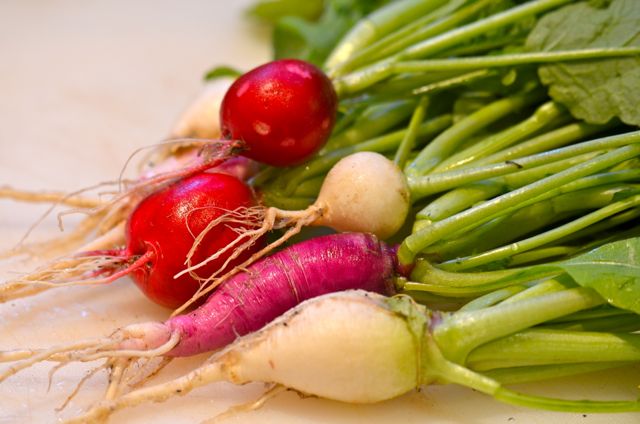
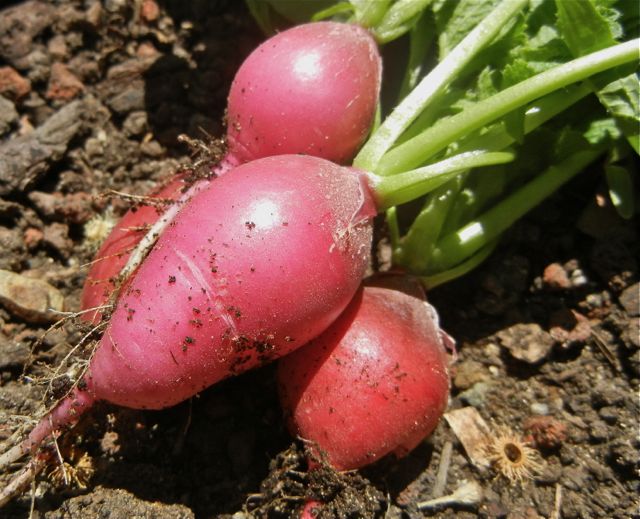
Mixed radishes, fresh from our garden.
If you garden or cook (or simply raise a family) this should ring true. While you may not toil in the spotlight, gardening and cooking are a lifetime of successes and failures. And some you simply cannot control. The beds were perfect, you checked the soil, picked the right seeds and watered on time. But the blight or frost came anyway. Green became brown. Fail. You picked the perfect recipe, shopped on time, did your prep and cooked like a pro. But the guests came late, one of the kids sprained an ankle and the roast stayed in the oven too long. Medium-burnt. Fail.
But after a few well-placed “words”, you start again. There is always the next meal, day, week, season and year. And when the successes come they are sweet, and they are shared with those you love. When the cocktail is tasty and the guests are happily chatting, the kids eat the (perfect) fish and the dessert made from the fruit that you grew has been totally devoured, then you have it. A perfect meal, a perfect day, a perfect moment. And well-earned. And well-remembered. Think of those moments, and we bet you have a few that stick with you, and those you love, to this day. Brief, brilliant sparks of love, joy and content. The glow from those sparks lasts a long time.
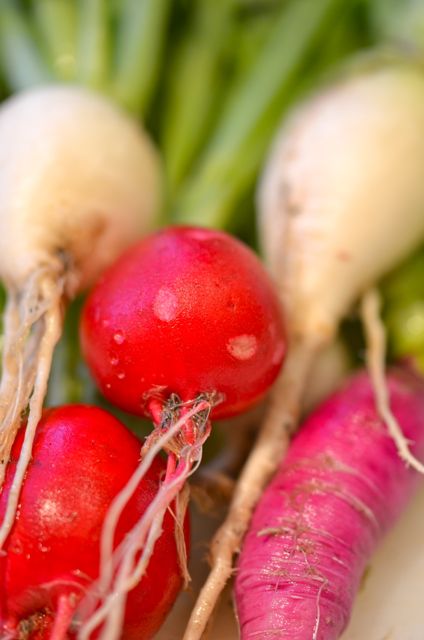 In the garden, harvest is often that special moment. This week we have cherries, berries and radishes. More on the fruit soon, but as for the radishes we will give you a “perfect” recipe to enjoy any time. Fresh radishes with butter and salt. How do we know it’s perfect? Because pretty much every celebrity cook, cookbook author and blogger has posted a version of this recipe at some time or other. But since we actually grew these radishes, we (selfishly) think we can post on it too. And it is a very tasty, and easy, dish.
And we are big fans of radishes, both as cooks and gardeners. In the home garden radishes are a great crop. They grow to harvest in 3-4 weeks (the name comes from the Greek Raphanus meaning “quickly appearing”), work in many climates and compliment many cuisines. Radishes grow in spring and fall, so we stagger our crop over a few weeks to get radishes though most of both seasons. And, frankly, they are hard to mess up. While gardening is filled with failures, crops like zucchini and radishes do offer the opportunity for a few “quick wins”- and there is absolutely nothing wrong with that.
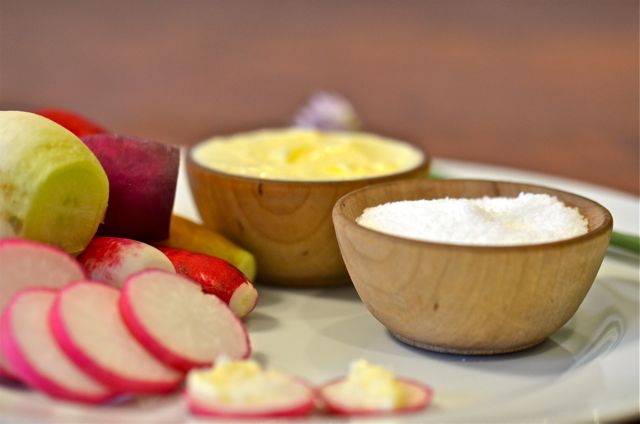
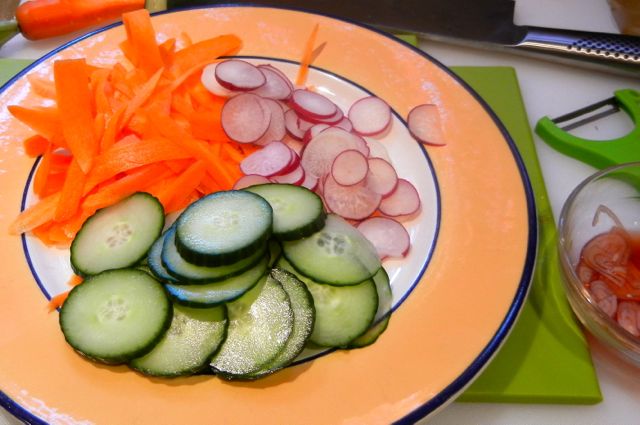
While we like quick-pickling radishes or using them for crunch and heat in salads, we usually just eat them out of hand. We enjoy their crunch and light, peppery heat (the kids like them too, so that is a big bonus). Serving radishes with butter and salt simply creates a more balanced dish. The sweet, creamy butter and the salt add more dimension to the radish. And all you need to do is slice some radishes and put some butter and salt into a few bowls and serve. This is a great summer dish- easy, but full of flavor.





 Putney Farm