• Simple Garden Recipes: Apricot Shrub (And a Bonus Cocktail)

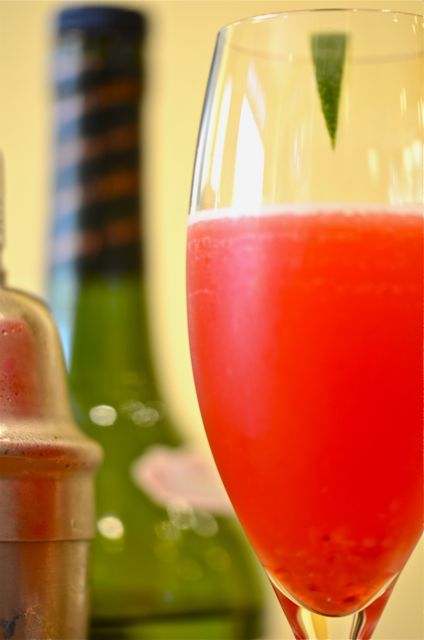
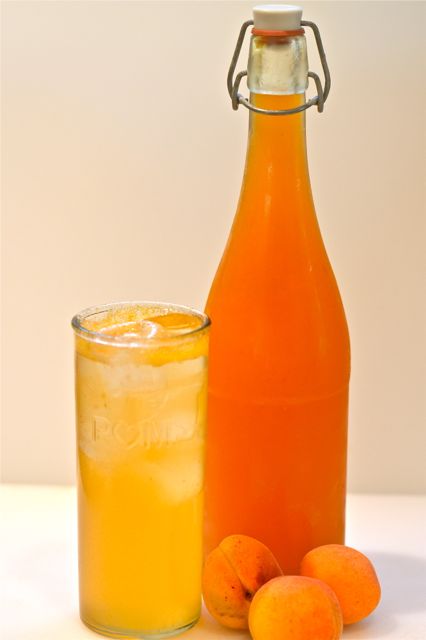
    Apricot shrub and apricot shrub soda.

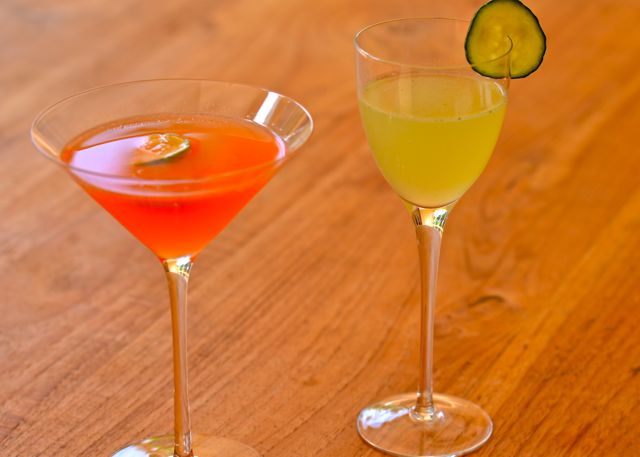
    Last Apricot On Earth Cocktail using apricot shrub.

    Let’s get right to it, a fruit shrub is basically an equal mixture of fresh fruit, sugar and vinegar. Yes vinegar. But shrubs are better than you might think (actually quite tasty) and were a very popular way to preserve fruit in the days before refrigeration. And rather than tasting of vinegar, shrubs are sweet and very tangy. The vinegar acts as a flavor enhancer, somewhat like salt on savory foods- you don’t  know it’s there, but everything tastes better. A cool trick, and one that works with most summer fruits. And if you like cocktails or home-made soda, you should know about shrubs. But first a little “back story”…

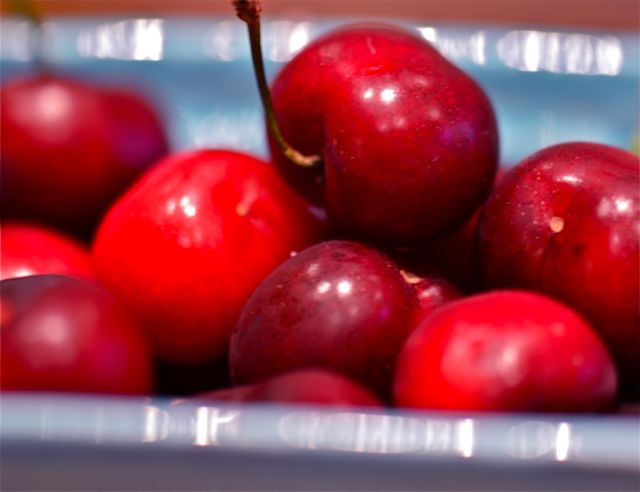
    Blenheim apricots. Yum.

    Last week Carolyn and I traveled to wine country and then, ironically, started drinking cocktails. Happily both Napa and Sonoma have a number of restaurants and bars that feature world-class drinks, as well as excellent wine lists. One of the best places we visited was Bar Terra, an extension of the very well-regarded Terra in St. Helena. Bar Terra features a less formal and more “bar-driven” menu of smaller plates, wine and hand-crafted cocktails in a very welcoming atmosphere. The food and service were very good, but we did go for the drinks, and Bar Terra did not disappoint.

    The best cocktail we had at Bar Terra (and our entire trip) was a creation that is a riff on the Last Word, that just happens to have apricot shrub. If you are unfamiliar with the Last Word it is a roughly equal combination of gin, lime juice, maraschino liqueur and green Chartreuse. It sounds like a train wreck, but the Last Word is real alchemy, all the flavors blend into a well-balanced, refreshing cocktail. And the recipe invites mixologist to play around. We often ask good bartenders to make a Last Word variant, and the team at Bar Terra struck gold. Their version of the Last Word included dry gin, apricot shrub, maraschino liqueur and yellow Chartreuse (and maybe a touch of lemon juice). The drink was an absolute winner with the apricot shrub supplying both sweetness and tang, the gin and Chartreuse herbal notes and the maraschino liqueur some nutty flavors. And if you didn’t know a shrub has vinegar, you would never place the flavor, you would just notice a lovely, palate-pleasing “zing”. You can’t wait for another sip. We didn’t get a name for the cocktail, but we have an adapted recipe below, and in honor of Bar Terra we will call it the Last Apricot On Earth.

    Rinse your apricots.

    Pit and quarter the apricots.

    We’ve known about fruit shrubs for some time, as they are popular in cocktail circles, but the cocktail at Bar Terra finally motivated us to make shrubs at home. And as we are near the end of apricot season, and there are Blenheim apricots available, we chose to make a “cold shrub” of the apricots before they were gone. Making the shrub is very easy. Simply mash and then macerate equal parts fruit and sugar, let a syrup form for a few days in the fridge and then strain and add an equal part of cider vinegar and mix. You can try the shrub immediately and it will be tasty, but it will “mature” and the flavors develop more with a few days / weeks. And it is not a vinegar, more like a preserved syrup. If you want a full breakdown on fruit shrubs Michael Dietsch of Serious Eats has a good article here.

    Macerate fruit with sugar in fridge for 12-48 hours. 48 hours is better.
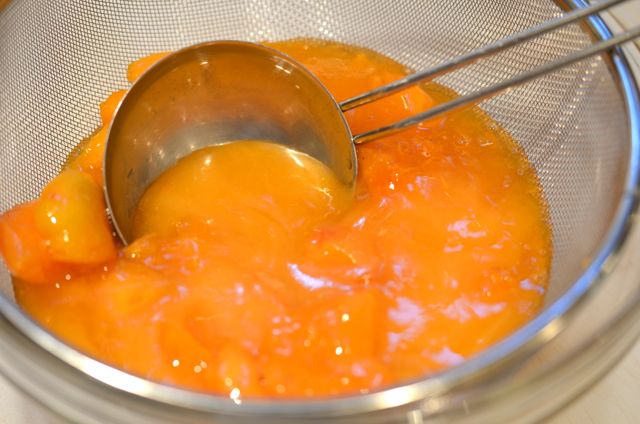
    Strain fruit syrup and add the vinegar.

    Continue reading

  • Weekly Cocktail #18: The Upside-Down Martini

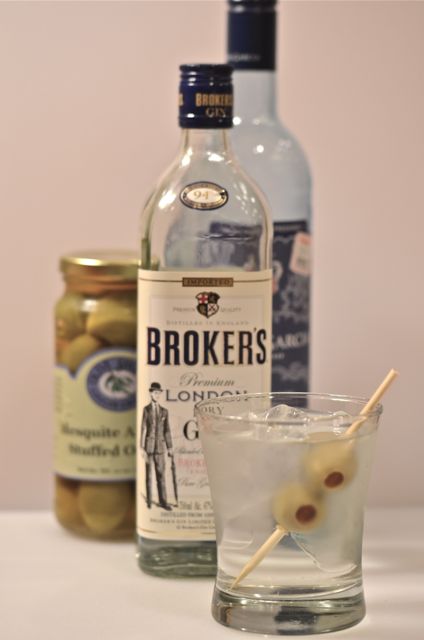
    Upside-down martini using vinho verde instead of vermouth.

    One of the cool things about the cocktail renaissance is that inspiration comes from pretty much anywhere. And while there are always a few mixologists, enthusiasts and bartenders with “attitude”, cocktails tend to live in a welcoming, open and happy place. After all, it is just fun with booze and friends. Why mess with it? If somethings sounds good, give it a try.

    And we bring this up because rather than try and hide it, we will ‘fess up and admit this cocktail comes directly from Martha Stewart (or at least her magazine). Martha probably doesn’t rate very cool in urban cocktail circles, but we are in the sticks country out here and will take whatever inspiration we can get ;-). To be fair, the upside-down martini has been around for quite a while. Basically a martini that is 3-1 vermouth-to-gin vs. 3-1 gin to vermouth, the upside-down martini is an attempt to lighten what is a very boozy, but excellent, drink. But even with a good dry vermouth like Dolin, the upside-down martini can sometimes be a bit cloying and lack character. However, Martha (or her drinks editor) adapted the traditional recipe to include white vinho verde, rather than dry vermouth, and suddenly you get a very good summer cocktail.

    So what is vinho verde? Vinho verde is light, young Portugese wine that translates into “green wine”. And that is a very good description. Vino verde is usually less than one year old, overtly tart with citrus notes, slightly fizzy, low-alcohol (usually 8%-10%) and cheap (less than $10 per bottle). Vino verde is a very tasty summer wine by itself, but when combined with a touch of gin and a few olives, you get something altogether different, and better.

    The trick with this cocktail is that you get a very light drink that still tastes like a martini. The vinho verde’s “green” flavors go well with the juniper of the gin and the briny notes of the olives, but the overall body of drink is very light from the low-alcohol and slight fizz of the wine. And if you are a martini drinker, this is a very good thing. Martinis rock, but as Dorothy Parker says…”two at the very most”. Summer is about long, lovely days- but regular dry martinis can make for short, blotto tipsy nights. The upside-down martini with vino verde is a great way to turn a martini into a light, “long”, refreshing drink. If you are not a fan of typical “fruity” summer drinks, this version of the upside-down martini may be for you. And if you are a gin-and-tonic fan, the upside-down martini is a fun diversion.

    Upside-down martini and ingredients.

    As for the recipe, we suggest a 3-1 ratio of vinho verde to London dry gin. Even if you don’t normally like the juniper in gin, we bet you will find it is a good foil for the citrus and tang of the vinho verde. We also suggest including olives or some other briny garnish. The touch of brine melds well with the drink, it will lack an extra dimension if you omit the olives (we also tried cornichons, and they worked quite well). We tried the recipe with just a lemon twist, but most vinho verde has overt lemony flavors and the twist gets lost. The olives do make a difference in this cocktail.

    So if you, or a friend, prefer traditional or classic cocktails more than the normal citrus-and-sugar drinks of summer, then the upside-down martini is worth a look. And if you just want a light summer cocktail, that also looks pretty cool,  then the upside-down martini with vinho verde certainly fits the bill. Thanks Martha!

    The Upside-Down Martini:

    (Adapted from Martha Stewart

    Ingredients:

    • 3 oz. vinho verde (we like Casal Garcia- tasty and cheap)
    • 1 oz. dry gin
    • Olives, caper berries or cornichons, for garnish

    Assemble:

    1. In a medium lowball (or highball, if you like) glass add the gin and vinho verde. Add ice to fill glass, stir until well-chilled. Add olives, stir a bit more and serve.
  • Bonus Cocktail: The Aviation

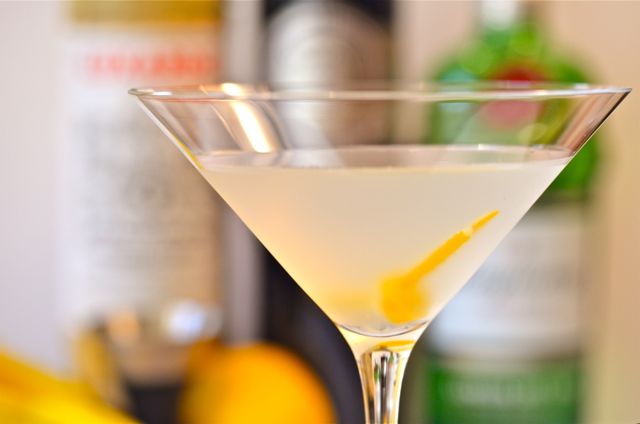
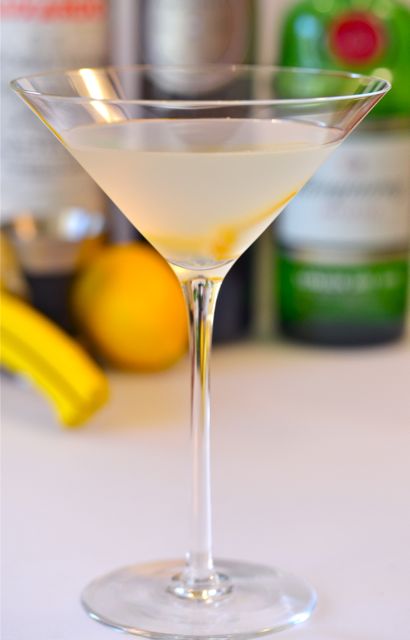
    Aviation Cocktail.

    This week’s bonus cocktail is a surprise to us. The drink itself is not a surprise, the Aviation is a classic cocktail. But we are surprised it took us so long to post it. We enjoy Aviations as one of our “go to” cocktails at home, and one of our local bars makes a great one. So I guess familiarity bred a touch of contempt.

    But there is nothing contemptible about the Aviation. One of the true masterpieces of pre-prohibition mixology, the Aviation combines dry gin, lemon juice, maraschino liqueur and (sometimes) Creme de Violette, a violet liqueur. The drink is the creation of Hugo Ensslin, a bartender at the Hotel Wallick in New York. He first published the recipe in 1916 in the book “Recipes for Mixed Drinks”. And the recipe has been published, and tweaked, ever since.

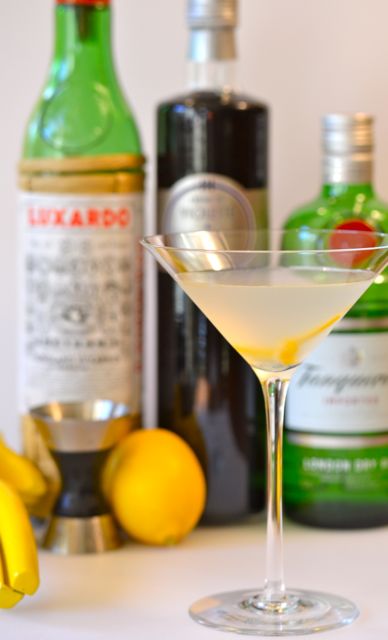
    Aviation cocktail and ingredients.

    The basics of the recipe, dry gin, lemon juice and maraschino have been constant, but the ratios vary. And then there is the issue of the Creme de Violette. Creme de Violette is a violet liqueur that tastes a lot like violet candies. If you remember violet candy, you may also remember that some people love them, and some hate them. “This tastes like soap” being a common refrain for those in the “hate” category. For a while, this was a non-issue as Creme de Violette was almost impossible to find in the US. But our friends at Haus Alpenz, revivers of all forgotten liqueurs brought it back to life with Rothman & Winter Creme de Violette (remember the Allspice Dram in the Ancient Mariner). And this “new” Creme de Violette is good, sweet, floral and depending on your point of view, perhaps a bit “perfumey” or just downright soapy.

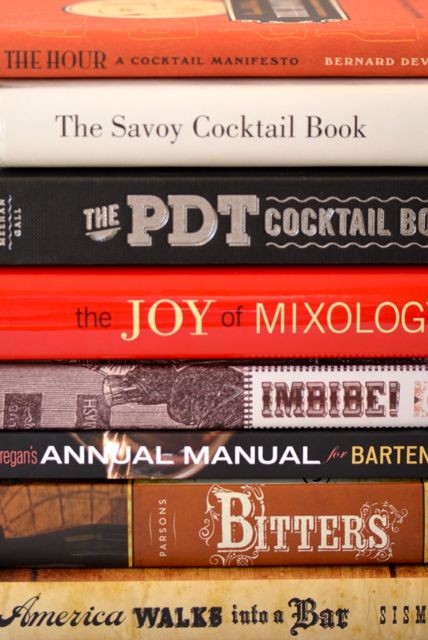
    The attraction of using the Creme de Violette is both the flavor and the light blue color it lends to the drink, if you use enough of it. The name of the drink, it is believed, comes from the pale sky-blue color that was so enticing in the early days of aviation. But this is where many mixologists differ.  The Savoy Cocktail book, David Wondrich and Gary Regan go without the Violette, the PDT cocktail book includes it. Paul Clarke suggests you simply make the Creme de Violette optional. As it is, we suggest you use the Creme de Violette very sparingly (just a dash, you will still taste it) or omit it altogether.

    Required summer reading.

    As a practical matter, very few people have access to Creme de Violette and there is no need to run out and buy it (of course, we did- but we are geeky that way). First, try the recipe without the Violette. You will lose the lovely color, but the botanical flavors of the gin, the bright, sour lemon juice and the sweet, earthy maraschino are a great combination on their own. This is a very tasty cocktail that works in any season and for almost any occasion. And most home bars have gin and lemon juice- and you should have Maraschino (Luxardo is fine) in your bar, as it is an ingredient in literally dozens of classic cocktails. So before you get the Violette, make sure you have maraschino liqueur.

    If you do have the Creme de Violette, you can add up to 1/4 ounce to the drink and the color will be quite beautiful. But unless you really like floral and perfumed flavors the drink might be soapy unpalatable. But a dash or two will add some pleasant flavor and aroma, if you like violets. One other note on the booze- the recipe specifically calls for dry gin. If you use a “modern” gin that features floral botanicals, like Nolet’s, the flavors may not play well together. Traditional London dry gin like Tanqueray, Beefeater or Gordon’s are the best choices for this drink.

    Few drinks look better in a cocktail glass than the Aviation.

    Continue reading

  • Cocktails for Memorial Day: The Pegu Club

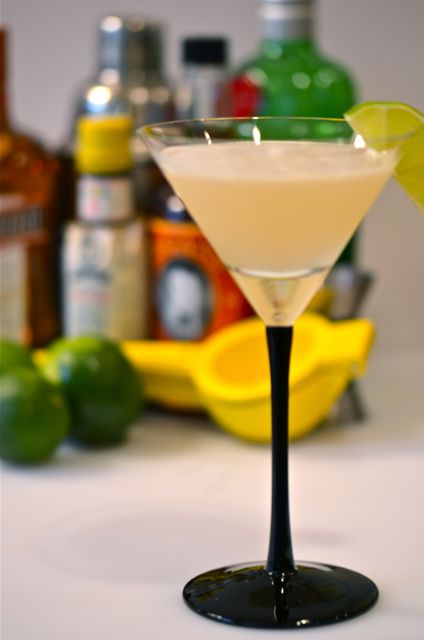
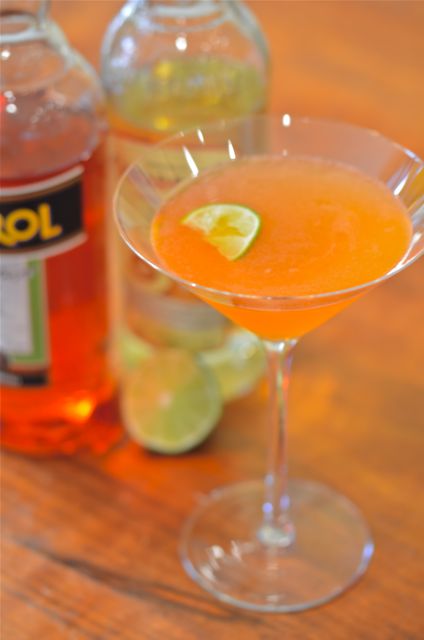
    Pegu Club Cocktail and ingredients.

    Another classic cocktail for the weekend. And after posting the Ancient Mariner, a tiki drink with a hard-to-find ingredient in allspice dram, we decided to go for a cocktail you can make almost anywhere. And the Pegu Club has been made and enjoyed just about everywhere.

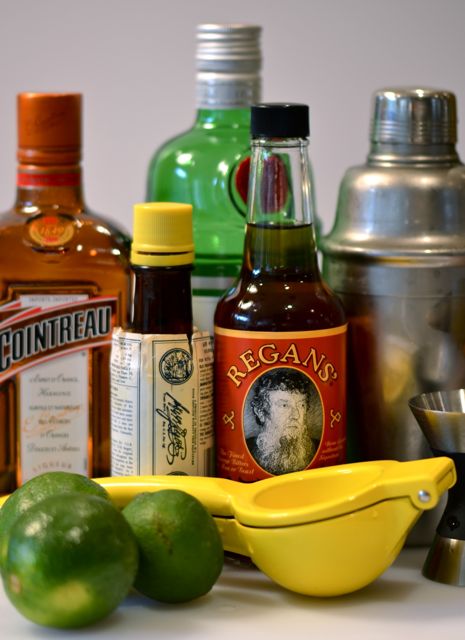
    The Pegu Club is named after an old-time (and now defunct) British colonial club in Rangoon, Burma Myanmar. As with many colonial clubs they had their own cocktail, in this case a mixture of London dry gin (the British need their gin), Cointreau (or orange curacao), lime juice and a few bitters. A simple drink, but a very good one. And if you just thought “margarita with gin”, you are onto something. The Sidecar begets the Pegu Club and soon enough you get a Margarita. Old recipe + new booze= new cocktail. And so it goes.

    Pegu Club Cocktail.

    Cocktail historians track the Pegu Club back to at least the 1920’s, when the drink became popular worldwide. It is listed as a popular cocktail in Harry Craddock’s Savory Cocktail Book from the 1930’s. Then after World War II, the Pegu faded from view as other cocktails emerged. But good cocktails never die, and sometimes they don’t fade away either. They re-emerge. Luckily the Pegu Club is making a comeback. It certainly helps that Audrey Sanders, widely considered one of the best bartenders in the world, opened her bar “The Pegu Club” in NYC many years ago and helped spur the cocktail revival. If you name your bar after a drink, it had better be good.

    And it is very good. Openly sour, but smooth and with enough sweetness from the Cointreau and spice from the bitters, the Pegu Club goes down almost too easy. But as it was a “club” drink, the Pegu Club is still an elegant creation. If you have to put on a collared shirt (or, god forbid, dress-up) this weekend, the Pegu Club would be an excellent companion. And if you are grilling and listening to baseball on the radio with your family, and we hope you are, the Pegu Club can hold its own.

    Pegu Club Cocktail ingredients.

    Continue reading