• Cocktail DIY (And Bonus Cocktails): Pineapple And Raspberry Syrups

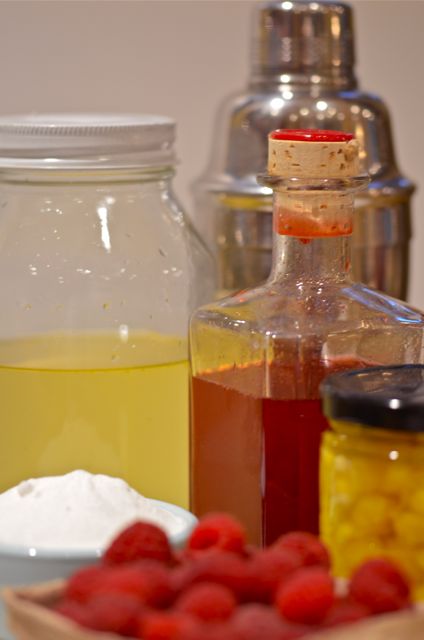
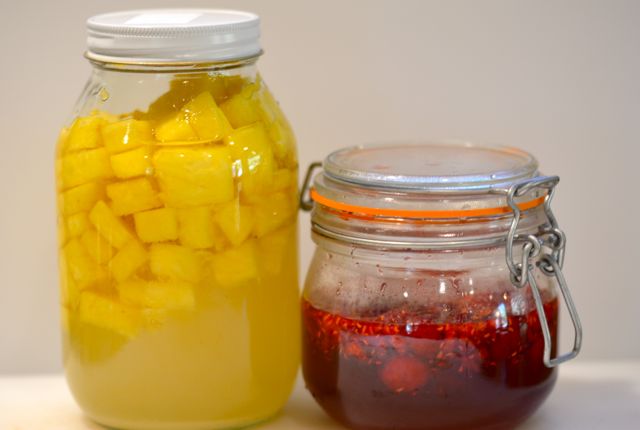
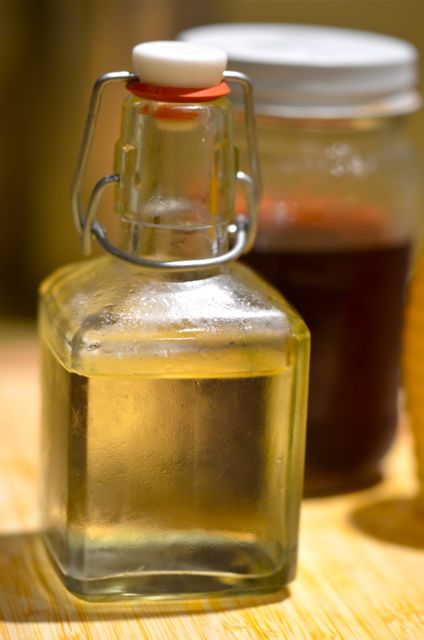
    Pineapple and raspberry syrups.

    One of the main things we enjoy about cocktails is how many ways we get inspiration to try new drinks. This week, Mixology Monday came back to life with an “Equal Parts” theme and we submitted a fun (and a little goofy) cocktail that we enjoyed, the Long Island Planters Punch. But what makes Mixology Monday really fun is trying other people’s creations. And now we have over 25 drinks to try (click here to see the lineup, very cool). One of our favorites, so far, is Shake, Strain and Sip’s Undiscovered Country a Corpse Reviver variant using pisco and Swedish Punch (it was a good excuse to finally buy some pisco). Another favorite is Chemistry of the Cocktail’s Shrunken Skull, a tiki drink with grenadine, but also works with raspberry syrup. Hmm….so now we have some pisco and a desire to make raspberry syrup. Anything else we can do?  Well, yes- since we had pisco, we had to make pineapple syrup to mix up some Pisco Punch, a true classic. (Like we said, “inspiration”, not necessarily “organized thinking”).

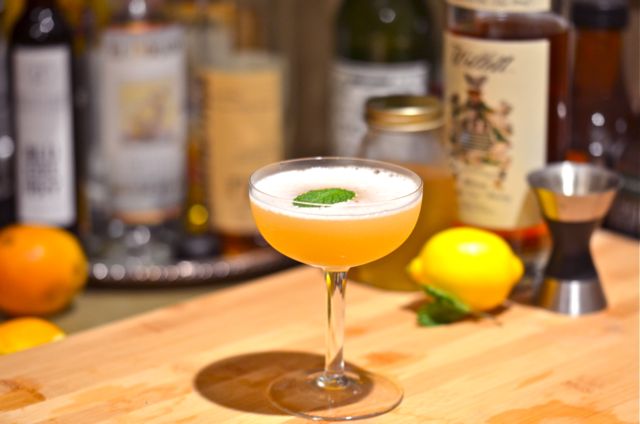
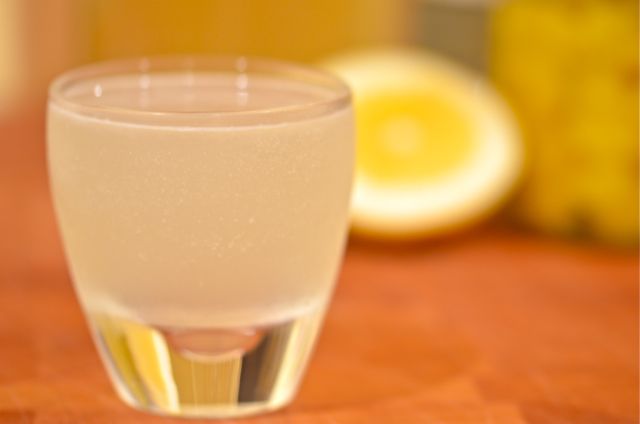
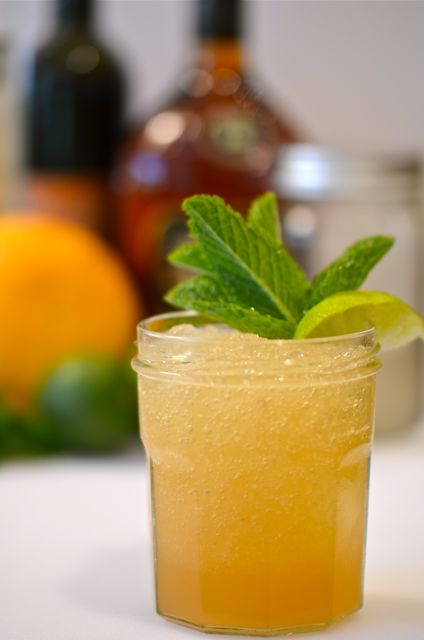
    Pisco Punch.

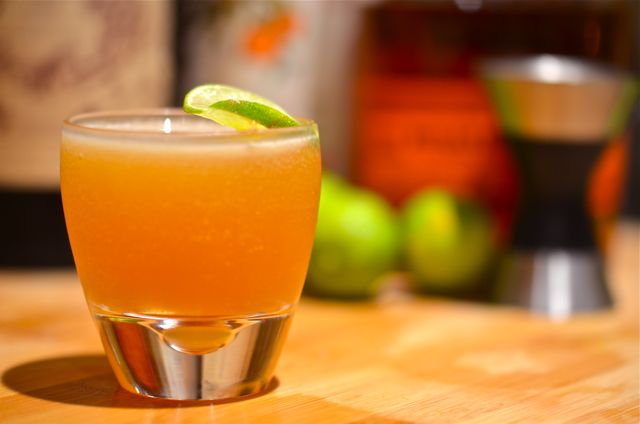
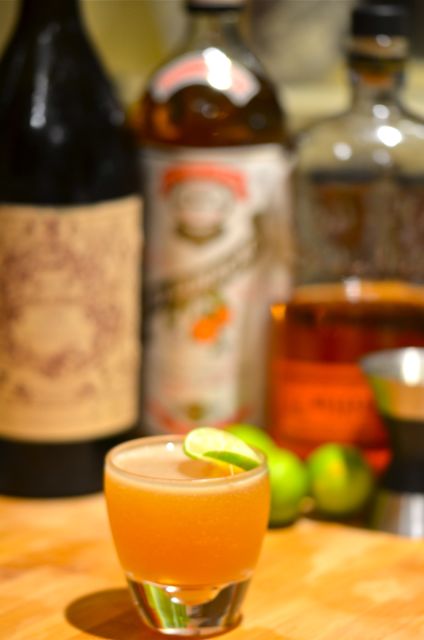
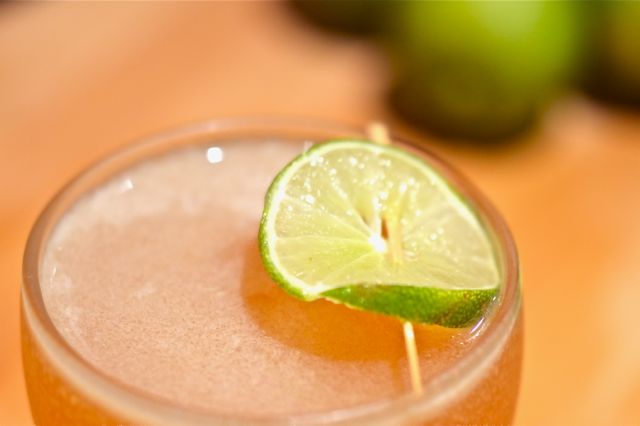
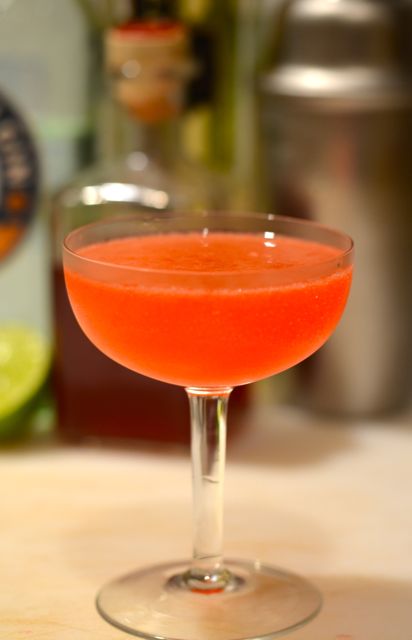
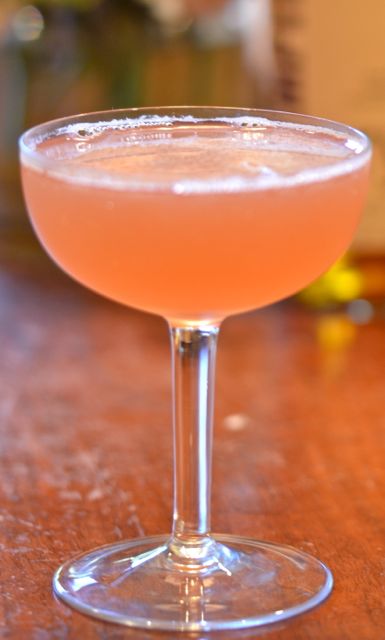
    Mountain Clover Cocktail.

    Unfamiliar with pisco and Pisco Punch? Pisco is brandy from Chile and Peru using local grapes from their wine industry. It is strong, a bit spicy and musky with hints or grappa (at least to our tastes). It is unique stuff and perhaps tough on its own, but very good in cocktails. And the most famous is the Pisco Punch, a simple combo of pisco, lemon juice and pineapple syrup. Cocktail historians have beaten the history of this drink to death (and beyond), but suffice it to say that in later 19th-Century San Francisco if you were blotto worse-for-wear, Pisco Punch had something to do with it. (Paul Clarke has a good, brief history piece here.) And there is a good reason the Pisco Punch was so popular, it’s really good. The musky notes of the pisco match with the sugar and funk of the pineapple and the lemon adds brightness and acidity. Pisco Punch is true cocktail alchemy, and it’s way-too-easy to throw these back…and a good reason to make pineapple syrup. And once you have pineapple syrup it works in other brandy drinks like the Brandy Fix or as a good substitute for simple syrup in Tiki drinks.

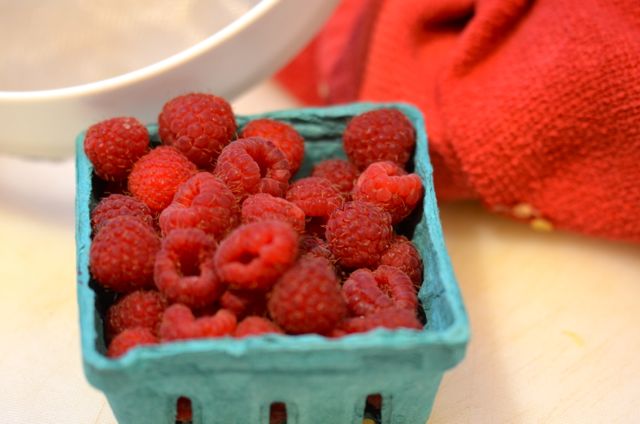
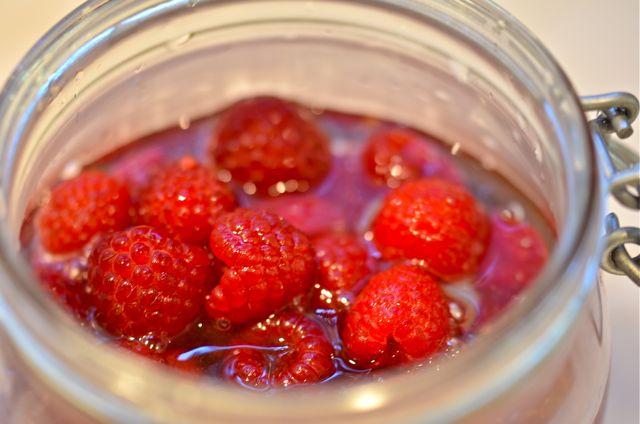
    As for the Raspberry syrup, it used to be a very popular cocktail sweetener, particularly before Prohibition. Used in dozens of drinks like the Clover Club, the Pink Lady and the Davis Cocktail, raspberry syrup adds great color and bright sweetness that’s lighter in flavor than grenadine. But, for whatever reason, grenadine took the place of raspberry syrup in many recipes during the later half of the 20th century. Happily, the cocktail renaissance brought raspberry syrup back from obscurity and there are plenty of DIY recipes, or you can buy it in stores. We decided to make our own, it’s easy and we still have raspberries. And after playing around with some classics, we made a Clover Club variant called the Mountain Clover with dry gin, lime juice, raspberry syrup and St. Germain. The light, bright sweetness of the raspberry syrup plays well with the gin and lime and makes for a very balanced sip. It looks like a grenadine-based cocktail, but is something very different. Worth a try.

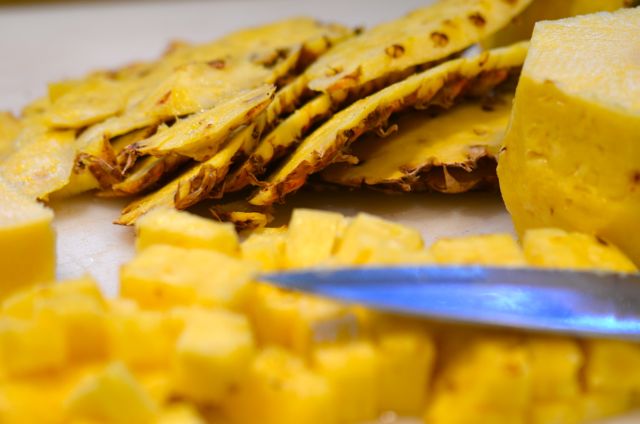
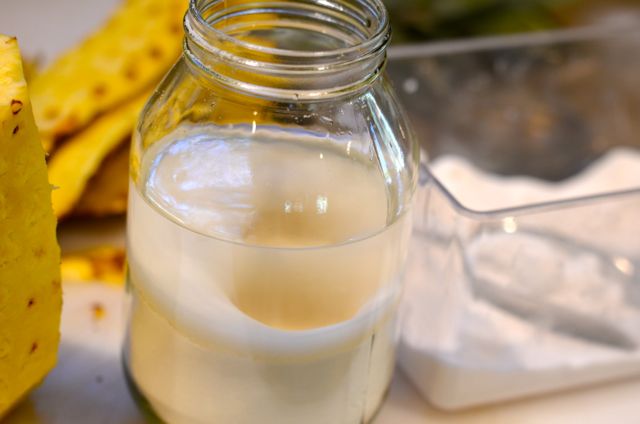
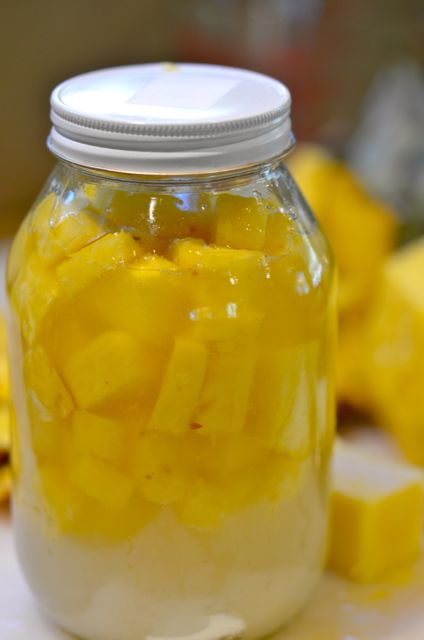
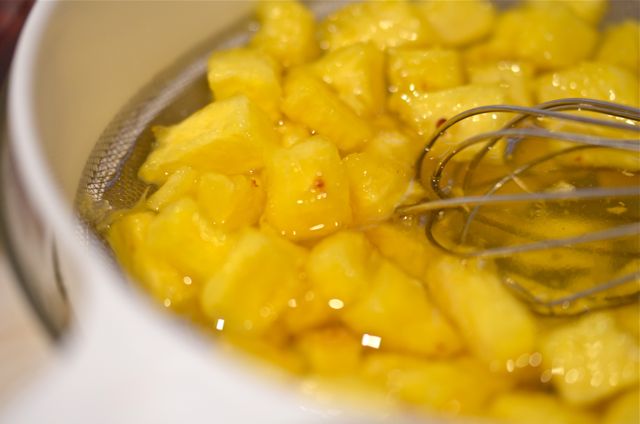
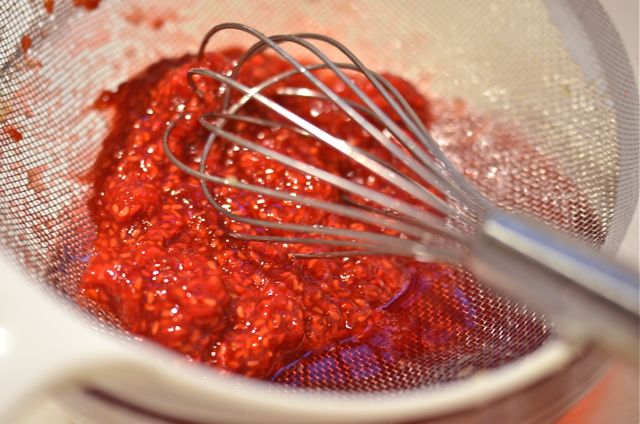
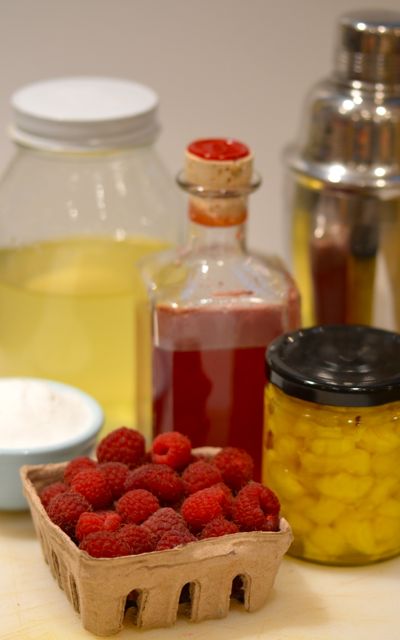
    Making both these syrups is very easy. Both use fruit, sugar and water. The pineapple syrup uses a “cold” method and the raspberry a “hot” method, but the process is basically the same. Cut or mash-up the fruit, cover with a simple syrup, put it in a jar, let it sit a day or two, strain out the fruit (mash in a bit more of the juice) and bottle the syrup. (And keep the left over pineapple pieces to put on ice cream or toast, good stuff). Top with a bit of vodka or Everclear to extend the life of the syrup, if you like. Store in a tightly lidded jar in the fridge. And then prepare to make awesome cocktails.

    Continue reading

  • Mixology Monday Cocktail: Long Island Planter’s Punch (LIPP)

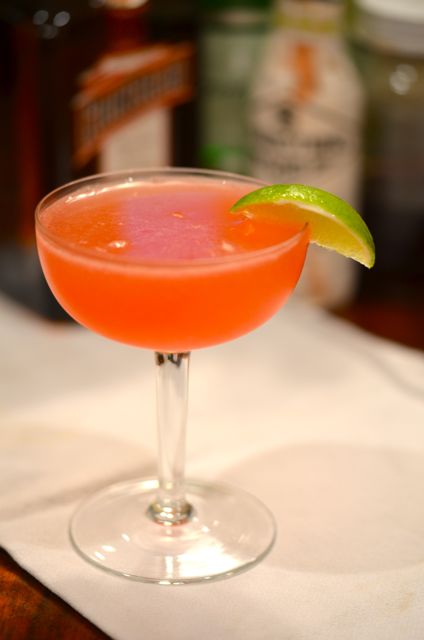
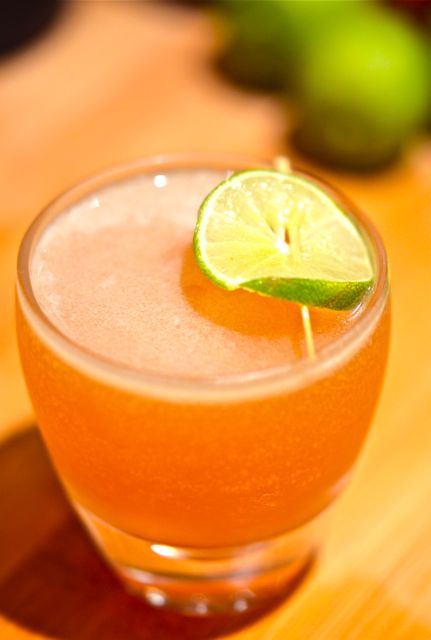
    Long Island Planter’s Punch.

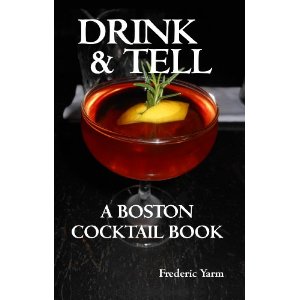
    One of the cooler things in the cocktail blogging world has to be Mixology Monday, an “online cocktail party” where cocktail enthusiasts submit and share cocktails to fit an ever-changing theme. Paul Clarke of Cocktail Chronicles and Imbibe! ran Mixology Monday for 6 years (Wow- thanks Paul!) and just handed off the reins to Frederic Yarm at Cocktail Virgin Slut. (BTW- a shameless plug for Frederic’s new Boston Cocktail book “Drink and Tell”- see here). So here is the theme:

    For this month, I have chosen the theme of equal part cocktails — those simple drinks where only one jigger is needed despite how many ingredients are added. These recipes have gained a lot of popularity as classics like the Negroni and Last Word have resurfaced, and variations of these equal part wonders have become abundant.

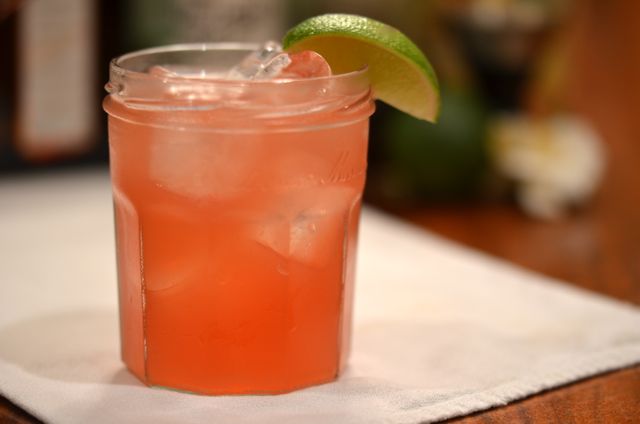
    LIPP as a “long” drink.

    Indeed they have. We have already posted on the Last Word and a very tasty variant with Apricot Shrub (that we made) based on a cocktail from Bar Terra. But seeing as how the Last Word has been revised dozens of times, we decided to look at other classic cocktails and see what we could do. We tried Corpse Reviver #2 variants with gin, grapefruit, Aperol and Lillet Rose’- good but better in unequal proportions. We also played with the Scofflaw, one of our recent faves, that included genever, rye, lemon, grenadine and dry vermouth. A very good drink, but the genever takes over so it was just a “genever scofflaw”. Ok, but not what we were after. But as a side bonus, we did make our own grenadine.

    Hard at “work” in the office…

    About that time, we decided that mining “classics” for ideas wasn’t going so well and perhaps another approach was in order. So if “classics” weren’t working, how about drawing inspiration from somewhat cheesier “less iconic” cocktails. And this very quickly brought us to the Long Island Iced Tea. We recently posted on the drink from Long Island, it is way better than it should be, and it uses roughly equal parts. But what to do with the homemade grenadine? Well, how about subbing the grenadine for Coke?  Kind of like Planters Punch (another semi-uncool cocktail) or a Bacardi Cocktail…and since the seasons are changing how about a little spice from a dash of bitters? (The rules allow it). And finally, the drink was boozy enough so we dropped the vodka, as we still had plenty of other spirits in the drink.

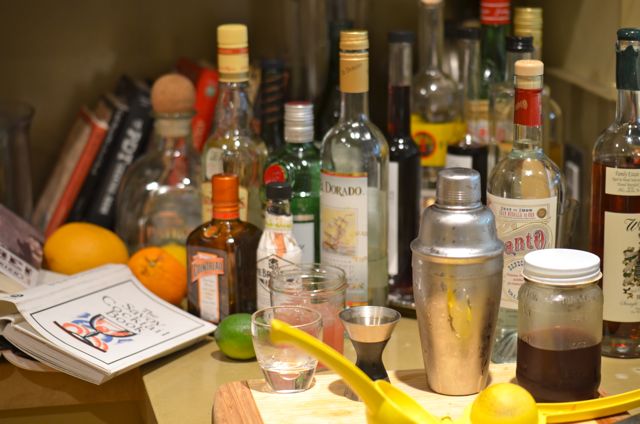
    Ingredients for Long Island Planter’s Punch

    And the Long Island Planters Punch was born. (And yes the LIPP is a riff on the L.I.R.R.- Long Island Railroad) The LIPP combines equal amounts of white Demerara rum (El Dorado), reposado tequila (Cazadores), dry gin (Tanqueray) , Cointreau (or another triple-sec), lime juice and grenadine, with a dash of Fees Old Fashion Aromatic Bitters (you can sub Angostura). And we garnish with a lime wedge for a little aroma and extra presentation. And one last note, if you can’t make your own grenadine, a “real pomegranate” grenadine will be much better, as the corn-syrup based versions are way too sweet.

    And the flavor of the cocktail? We like it very much. You get the lime juice, tequila and Cointreau up front and then the herbal flavors of the gin and sweet rum and grenadine fill-in and finally you get the spice of the bitters. A good sip, and just like the Long Island Iced Tea, it tastes much less boozy than it really is. And you can serve the LIPP as a cocktail or a long drink, it works either way. The LIPP is so tasty, we wondered if we should rename it and not mention its less-than-stellar cocktail forebears. But just as we still love our Dads, even though they mowed the lawn every Sunday in khaki shorts, black socks and sandals, we will proudly acknowledge the LIPP’s heritage.

    The Long Island Planter’s Punch (LIPP)

    Ingredients:

    (For 1 cocktail, double for a “long” version of the drink)

    • 1/2 oz. White rum (El Dorado Demerara)
    • 1/2 oz. Reposado tequila (Cazadores)
    • 1/2 oz. Dry gin (Tanqueray)
    • 1/2 oz. Triple-sec (Cointreau)
    • 1/2 oz. Fresh lime juice
    • 1/2 oz Grenadine (homemade- see below, or “real pomegranate”)
    • 1 dash Fee’s Old Fashion Aromatic Bitters
    • Lime wedge, for garnish

    Assemble:

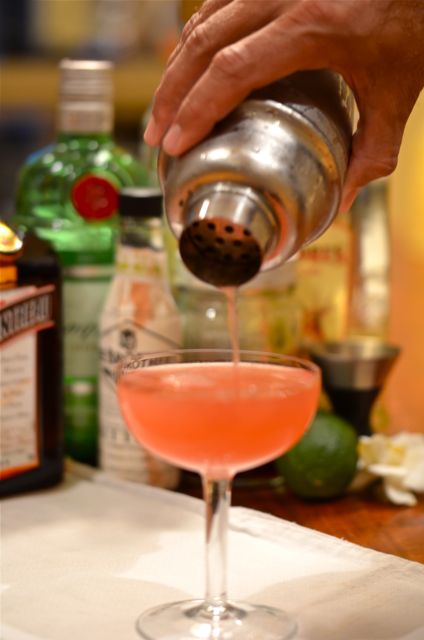
    1. Combine all the liquid ingredients in a cocktail shaker with ice. Shake thoroughly and strain into a chilled cocktail glass, coupé or flute. Garnish with lime wedge. Serve.

    -or-

    1. For a “long version” of the drink. Double the recipe and combine all the liquid ingredients in a cocktail shaker with ice. Shake thoroughly and strain into a large tumbler, highball or pint glass filled with ice. Garnish with lime wedge.

    —-

    Grenadine:

    (Adapted from Cocktail Chronicles and David Wondrich)

    Notes:

    • This is a “cold-process” version of Grenadine. There are also boiled versions, but we prefer the fresher flavors of the cold version.
    • You can use superfine sugar to be sure the sugar will dissolve in the pomegranate juice. You will get a bit more sugar, by weight, so check the flavor of the grenadine after the first mixing before adding any more sugar.

    Ingredients:

    • 1 part white sugar
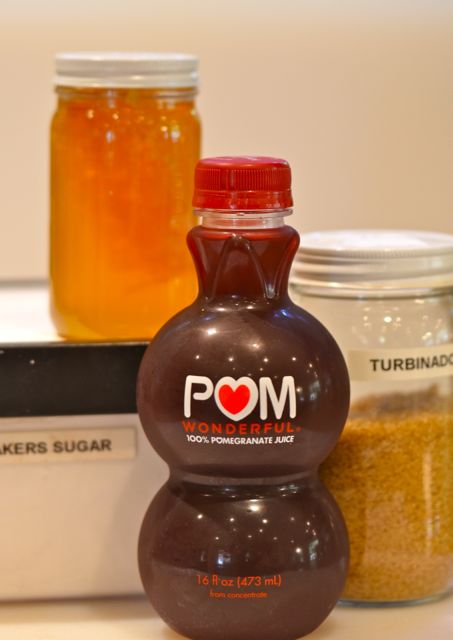
    • 1 part pure, unsweetened pomegranate juice
    • 1 tablespoon of vodka or grain alcohol per cup of syrup (optional)

    Assemble:

    1. Place the juice and sugar in a jar with a good lid and seal. Shake well until sugar dissolves in the juice. Taste and add sugar, by tablespoon, to balance flavor.
    2. Add the vodka or grain alcohol, if using. Store in the fridge.
  • Cocktail DIY: Grenadine, Simple Syrups, Honey Syrup

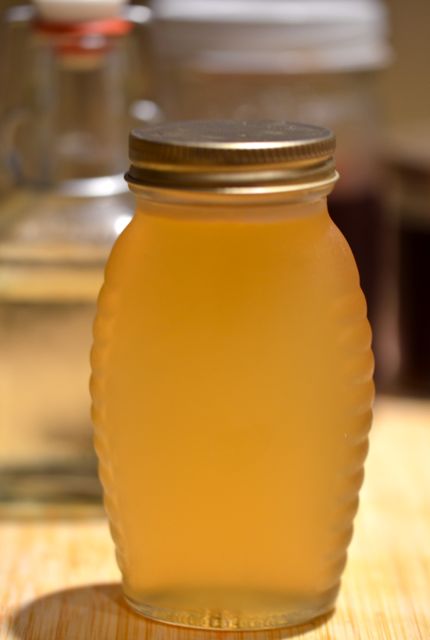
    If you like to “Do-It-Yourself”, then you might want to explore the world of cocktails. Besides making classic drinks from scratch, you can create your own cocktail recipes, boozy infusions, flavored syrups, brandied fruit garnishes, fat-washes (don’t ask) and even your own tinctures and bitters. And many of these DIY products will be way better than anything you buy in the store (a few won’t, btw). And if you want to explore the boundaries of cocktail DIY we suggest visits to Cocktail Chronicles, Boozed + Infused and Serious Eats, all have a wealth of detailed DIY recipes. But before you take the full plunge into cocktail DIY esoterica, we suggest a few basic syrups that cover many classic cocktails and Tiki drinks: Grenadine (pomegranate and sugar syrup), simple syrup ( white sugar or Demerara “raw” sugar syrup) and honey syrup.

    This is all you need to impress your party guests…;-)

    What makes these syrups so special? Firstly, you can make hundreds of snazzy cocktails with these syrups as the primary sweeteners (and they dissolve better in cold drinks than honey or granulated sugar- nobody likes gummy or gritty cocktails). Second, you can find all the ingredients at the grocery store. Third, you can make these syrups in under 15 minutes….combined. And finally, they keep in the fridge for weeks. So if you invest just a little time, you get a big payoff. And the payoff is in the cocktails. What cocktails? Here are just a few examples:

    Scofflaw with Grenadine.

    Grenadine: Planter’s Punch, Scofflaw, Tequila Sunrise, Jack Rose and Bacardi Cocktail (and the Shirley Temple / Roy Rodgers for the kids).

    Daiquiri’s use simple syrup (Demerara will make for a very different sip).

    Simple Syrup: Daiquiris, Mojitos, Collins, Sours, Juleps, French 75, and the Long Island Iced Tea (use Demerara syrup for a richer, molasses-tinged flavor).

    Lots of Tiki drinks use Honey Syrup.

    Honey Syrup: Air Mail, Bee’s Knees, Bebbo, Navy Grog, Tiki Bowl, Rum Barrel and the Missionary’s Downfall.

    And as we noted, making these syrups is very, very easy. You only need two basic cooking methods; mixing and boiling. Grenadine and honey syrup are the “mixers”. Just combine 1/2 sweetener and 1/2 liquid in a container and shake  (just use really hot water for the honey syrup). After a few minutes of shaking, you’re done.  The simple syrups require a brief boiling time to incorporate the sugar and water, but it only takes a few minutes.

    Finally, these syrups can keep for a while. Honey syrup, if kept in the fridge, will last up to a month. Both the Grenadine and simple syrup will last 1-2 weeks in the fridge, but adding a tablespoon of vodka or grain alcohol for every cup of syrup will extend their life a few weeks more. And once you make these syrups, you may find yourself using them quite often- your cocktails will be very tasty and have smooth, “professional” texture. Continue reading

  • Weekly Cocktail #28: The Sazerac

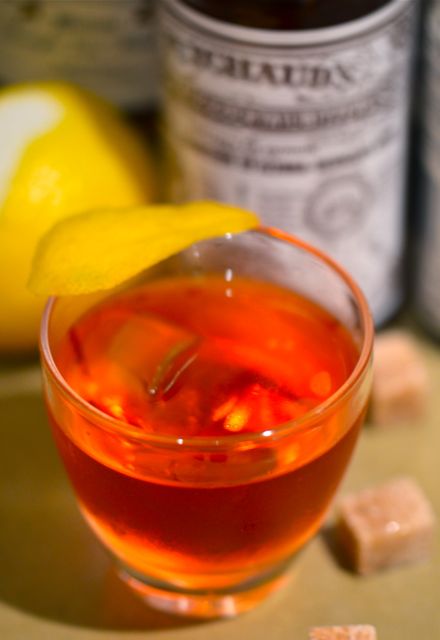
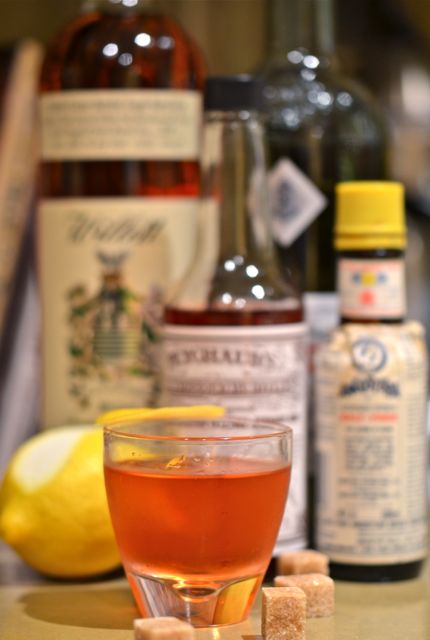
    The Sazerac Cocktail.

    As we noted all week, fall is almost here. And for us, fall means we get to break out the “brown” drinks. And we don’t mean to be derisive, but these are darker, heavier, and often sweeter, than most cocktails. Perfect for fall and winter, but perhaps a bit heavy for spring and summer. But as the weather starts to change, we occasionally crave a good brown drink; Old Fashioned, Manhattan, Vieux Carre’ and the Sazerac.

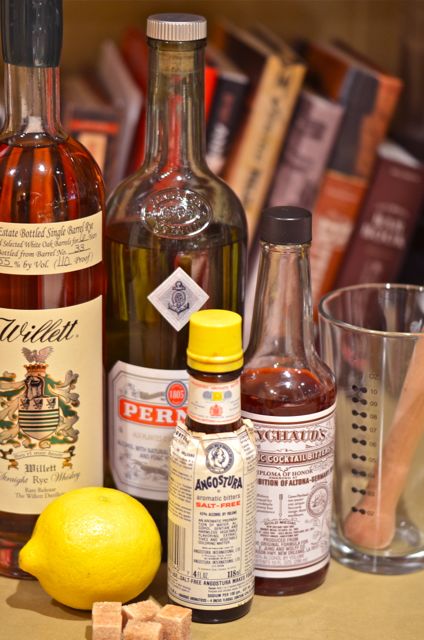
    And if we are drinking a strong whiskey cocktail, it’s very likely the Sazerac, the classic cocktail of New Orléans.  The Sazerac combines rye whiskey (yes we are on a rye kick), sugar, Peychaud’s and Angostura bitters with a touch of ice, served in an absinthe-rinsed glass and a lemon twist. We think of the Sazerac as an old-time Whiskey Cocktail (whiskey, sugar, bitters ice/water) with a few extra touches. Those extra touches include more bitters (some recipes use only Peychaud’s, we like using both), an absinthe rinse for the glass and the lemon twist. It may not sound like much, but these small changes make for a big difference. Nothing tastes quite like a Sazerac. Sweet, spicy and herbal, the Sazerac is a cocktail you can linger over and enjoy.

    In fact, many versions of the Sazerac suggest using little or no ice. And this makes some sense, as the drink comes from New Orleans in the mid 1800’s and ice wasn’t always readily available. And even if the cocktail were chilled, it would get warm fast-best to have a cocktail that tastes good cold or at room temperature. And while the Sazerac will taste good without much chill, we still prefer it cold.

    As for the history of the Sazerac, it was “invented”  at the Merchant’s Exchange Coffee House in the 1800’s. At the time, the spirit was cognac (the name “Sazerac” comes from a brand of cognac), not whiskey, but the phylloxera outbreaks of the 19th century forced the move to whiskey. Some early recipes also use bitters other than Peychaud’s, but Peychaud’s is now standard ingredient (purists will not like the inclusion of Angostura). The absinthe (or herbsaint- a pastis from New Orléans) has been a constant part of the recipe. It is unclear when the lemon twist came into things- but it’s good- and was in the recipe when it was first published in the 1908 cocktail book, “The World’s Drinks and How to Mix Them“.

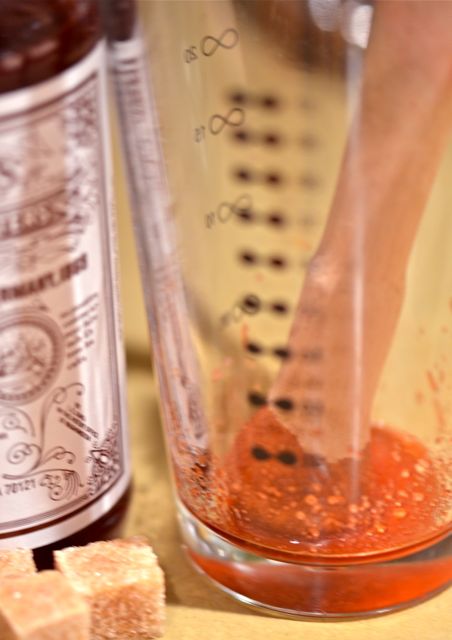
    Finally, making the Sazerac does require a few extra steps, but they are worth it. You need to muddle a sugar cube (you can use simple syrup, too) and the bitters before adding the ice and Rye. And you need to rinse the serving glass with absinthe. This seems fussy, but it does seem to give you the perfect amount of absinthe- it won’t overpower the other ingredients. And finally you need to do a thorough job with the lemon twist and get all of those tasty oils in the drink. When you’re done, you get a lovely, complex sip. As we said “nothing tastes quite like a Sazerac”, and since there is no place quite like New Orléans, we think that fits.

    The Sazerac:

    • 2 oz. rye whiskey
    • 1 sugar cube (Demerara sugar preferred)
    • 3 dashes Peychaud’s bitters
    • 2 dashes Angostura bitters
    • 1 teaspoon absinthe or pastis, for rinse
    • Lemon peel, for garnish

    Assemble:

    1. Muddle the sugar cube and bitters in a mixing glass. Add the rye and ice. Stir to chill.
    2. Meanwhile, coat the inside of a lowball or old-fashioned glass with the absinthe. Pour off any excess. Add one large ice cube to the glass and pour in the cocktail. Twist the lemon peel directly over the drink to extract the oils. Discard the used lemon peel. Serve.