• Weekly Cocktail #59: The Honeymoon…..And The Annulment

    The Honeymoon Cocktail.

    The Honeymoon Cocktail.

    Fall is here and it is time to get back to our weekly cocktails. And when we think autumn cocktails, we tend to look towards apples and Applejack, America’s apple brandy. We are big fans of Laird’s Bonded Applejack, with its dry apple flavor and strong (100 proof), spirituous core. Landing somewhere between the lighter spirits (gin, tequila) and darker spirits (bourbon, rye), Applejack is a natural for cocktails, as you can build a light, bright cocktail, or a dark, heavy drink, simply by playing with a few ingredients.hmoon4

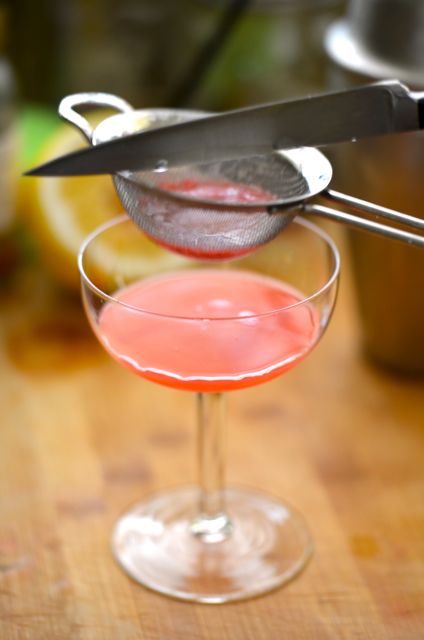
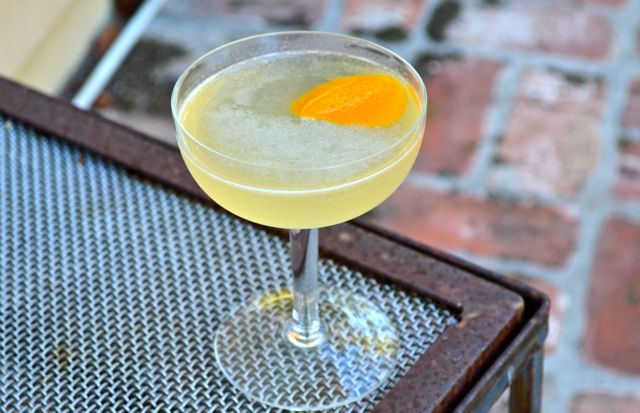
    hmoon2For a lighter Applejack drink we really enjoy the Honeymoon cocktail. A simple combination of Applejack (or Calvados, that French stuff), Cointreau, Benedictine and lemon juice. At first you might think this is a sweet drink, but with 2 ounces of Applejack and a light hand with the other ingredients, you get a strong boozy core accented by citrus and then spice from the Benedictine. There is more here than you would expect, and it is certainly better than your average “sour”.

    hmoon8hmoon5Originally a pre-prohibition cocktail, the Honeymoon has been discovered, forgotten and rediscovered a few different times. And cocktail writers from Jim Meehan to Ted Haigh to Fred Yarm all sing its praises for a reason, it is a delightful sip. And certainly a pleasant intro to Applejack and a good reason to get a bottle. Oh, and it’s inexpensive, too….

    hmoon3Along with being a good sip, the Honeymoon is a fun drink to play with. And one of our experiments gave us our next drink, the Annulment. One of our creations, the Annulment keeps the basics of the Honeymoon, but adds to the Benedictine’s slight herbal, bitter and spice notes through the use of Amaro and bitters. We basically doubled down on the heavier flavors.

    The Annulment Cocktail.

    The Annulment Cocktail.

    For the Annulment, we add a splash of Averna, an amaro known for sweet, herbal, bitter and spice flavors, and both Angostura and Tiki bitters for depth and added spice. What you get is an entirely different drink. Where the Honeymoon is light and bright, The Annulment is darker and spicier, with a clear bitter edge that reminds us of the tannic edge of apple skins. If you like spiced apple cider, you will enjoy the Annulment. As it is we enjoy both the Honeymoon and the Annulment to follow…hmoon6

    The Honeymoon Cocktail:

    Ingredients:

    • 2 oz. Applejack (Laird’s Bonded) or Calvados
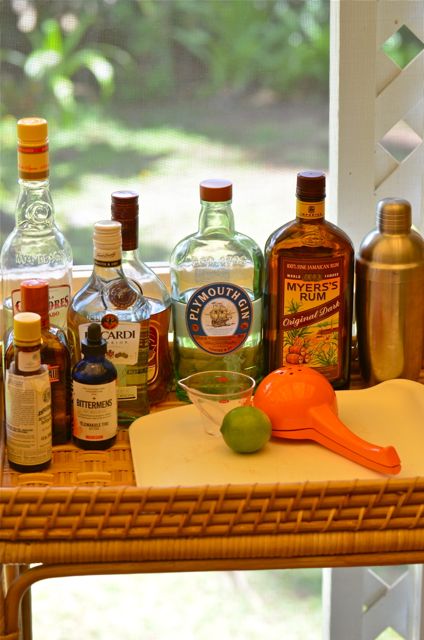
    • 1/2 oz. fresh lemon juice
    • 1/2 oz. Cointreau (or triple-sec)
    • 1/2 oz. Benedictine
    • Lemon twist, for garnish (optional, we omit)

    Assemble:

    1. Combine all the liquid ingredients in a cocktail shaker with ice. Shake until well-chilled and strain into a chilled cocktail glass or coupé. Garnish with lemon twist, if you like. Serve.

    —–

    The Annulment Cocktail:

    Ingredients:

    • 2 oz. Applejack (Laird’s Bonded) or Calvados
    • 1/2 oz. fresh lemon juice
    • 1/3 oz. Averna
    • 1/3 oz. Cointreau (or triple-sec)
    • 1/3 oz. Benedictine
    • 2 dashes Angostura bitters
    • 2 dashes Bittermens Tiki bitters (or sub more Angostura)

    Assemble:

    1. Combine all the liquid ingredients in a cocktail shaker with ice. Shake until well-chilled and strain into a chilled cocktail glass or coupé. Serve.
  • The Viveka Cocktail And Homemade Limoncello

    viv

    The Viveka Cocktail.

    Many months ago we asked for our readers to guess the location of a photo we took in Kauai. The winner would get a cocktail named after them. The winner was our friend Viveka from My Guilty Pleasures, a blog about life with all it’s humor, delights, food and travel. It is also a blog about friendship. Viveka seems to collect friends, both in the physical and virtual world, at a very steady clip. She has a big, warm, generous heart.

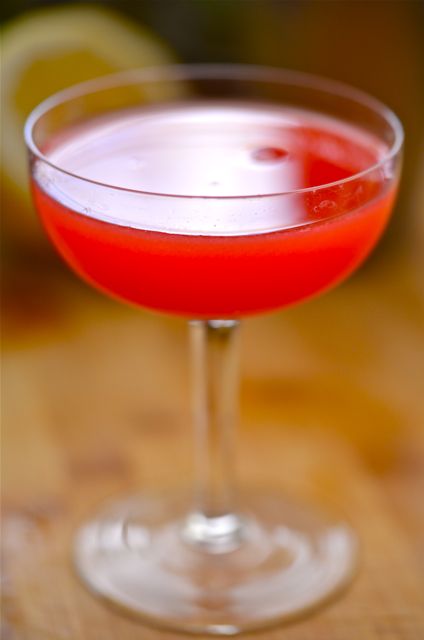
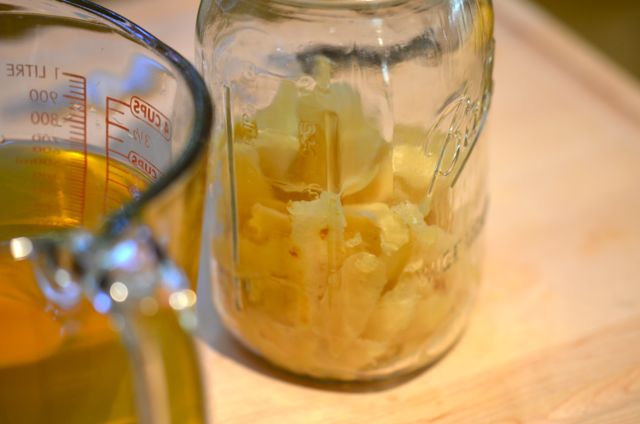
    viv4viv5viv6Viveka is also patient. Because once she won our little contest, we knew we had to use a special homemade ingredient in her cocktail; limoncello. The only problem was that limoncello, while easy to make, takes a while. Like a few months. But we warned Viveka of the impending wait. And then we waited. And waited. But finally the wait is over.

    viv7Limoncello is basically a liqueur of lemon zest (with as little white pith as possible) soaked in grain alcohol (or strong vodka), strained and then sweetened with sugar syrup. You get a sweet, lemony liqueur without any sour notes. It’s good stuff. While you can make limoncello in just a few days, an infusion of 30-45 days is generally considered the best method. The you need to strain and filter the zest from the very-strong booze and add some simple syrup to get to about 60 proof and age it again for another 45 days (most people shorten this step). But since we are making cocktails, we took a slightly different path.

    viv3viv2Our one issue with limoncello in cocktails is that it is a bit sweet and not strong enough to lead a cocktail. It is good as an accent, but we thought it could fully replace gin or vodka if our limoncello was stronger and dryer. So rather than use a mix of 50% or more simple syrup, we went with about 35-40% syrup. And since we were using 135 proof Everclear as our base, we ended up at about 90-100 proof. The limoncello is a bit strong on its own, but has the juice to carry a cocktail and gives a slight warming feel as you drink it. Not too hot or boozy, but you know it’s there.

    viv8And that was exactly what we wanted for our special cocktail. Our friend Viveka is not a fan of dark booze like rum or whiskey, so we wanted to use a “clear” booze. We do enough gin drinks around here, so that was out. And since Viveka is from Scandinavia, we figured she knows her vodka. Boozy limoncello seemed liked a good fit. And we even had a recipe in mind.

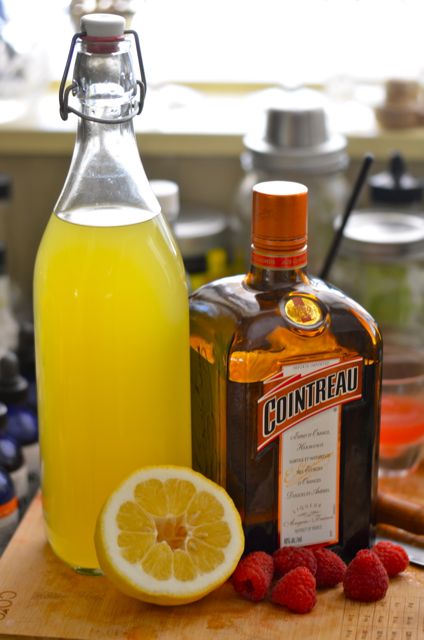
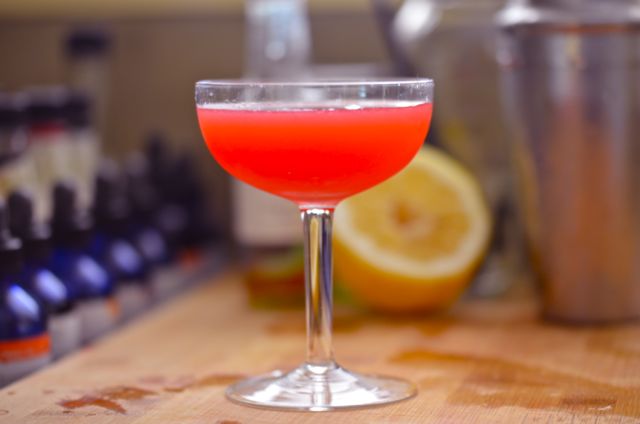
    viv9The Viveka combines, boozy limoncello, Cointreau, lemon juice and muddled raspberries (or raspberry syrup, if you must). The drink is a riff on the 1934 Cosmopolitan (an older,  lesser-known- but IMHO better- version of the Cosmo), with the boozy limoncello replacing gin and fresh raspberries rather than syrup. (If using lower-proof limoncello, just add 1/2 oz. good vodka and a touch more lemon juice). What you get is a bright lemon sip that isn’t particularly sour, mixed with sweet orange and raspberry notes that almost seem to dance around. On the finish you get a nice warm kick from the limoncello. This drink has a warm heart, just like Viveka…..Here you go Wivi!

    viv1 Continue reading

  • Weekly Cocktail #58: Embury’s Larchmont

    larch2Well, summer is “over”, at least in the family sense. Kids are back in school, work cranks up, and the holidays are already an insidious little whisper in your ear. So it starts again. Good thing Autumn also brings the harvest, the fall colors and (in Norcal) some good waves. And a few cocktails always help to re-acquaint oneself with “real life”.

    larch4But before summer was over I did get to do a full read of David A. Embury’s famous 1950’s cocktail book “The Fine Art of Mixing Drinks“. Embury’s book is unique for a few reasons: he was a lawyer not a bartender and rather than simply list recipes he tried to design a way to classify cocktails in a more orderly fashion. And the book does succeed in giving any home (or pro) bartender a foundation for creating thousands of drinks. (Just ignore the often hilarious heath and medical advice, unless you are the type who thinks smoking is still good for you, then by all means, listen to “Dr.Embury”).

    larch3Embury makes the case that almost any cocktail is simply a base (the spirits) and modifiers (sugar, citrus, aromatic wines, bitters, liqueurs, etc.). He also classifies most cocktails into two families. The first family is “aromatic” cocktails using spirits with aromatic wines (vermouth, quinquina, sherry) and bitters, think Martinis and Manhattans. The second family of cocktails are the “sours”, drinks with spirits, citrus (usually lemon or lime) and a sweetener (sugar, syrups, liqueurs), think Daiquiri, Whiskey Sour, or (these days) a Margarita.

    larch5This system certainly works for most cocktails and other writers, most notably Gary Regan in the “Joy of Mixology“, expanded on these basic concepts. Good ideas and tools do seem to travel through time. But some of Embury’s concepts (along with his medical advice) have not aged quite as well. And in this case, we mean the proportions of his cocktails.

    larch6You see, Embury liked his cocktails dry. And we mean dry. For aromatic cocktails, he often liked a 7 to 1 (base to modifier) ratio, which fits many current tastes. But for sours, Embury suggests 1 part sweet, 2 parts sour and 8 parts spirits. Embury, it seems, liked to taste the booze in his cocktails. And while most of the drinkers here at the farm agree, we usually go 1 part sweet, 1 part sour and 2 parts spirits (and we see some recipes suggesting 1:1:1). But before we wrote off Embury’s ratios, we gave them a try in a few recipes.

    larchHow did it go? Well, the drinks are very dry and we would prefer both a bit more sweet and sour. But we were surprised, particularly if big fans of the base spirit, how much we liked the drier cocktails. They don’t always work, but when experimenting with a recipe you like, we suggest trying an “Embury-esque” version, you may be surprised…..besides, you get to try another drink.

    larch1Interestingly, Embury has a recipe for one of his favorite sour cocktails, the Larchmont (a town in Westchester), that is a bit of a hack on his 1:2:8 ratio and is a good “gateway” into his style of mixing. The Larchmont, a Daiquiri variant,  combines 1/2 part simple syrup, 2 parts lime juice, 2 parts Grand Marnier and 6 parts white Cuban rum with an orange peel garnish. Since we think of Grand Marnier (not a common mixer) as mostly sweet, this recipe does balance sweetness with what is still a very spirit-forward cocktail.

    The Larchmont Cocktail.

    The Larchmont Cocktail.

    But a very, very good cocktail. Both Carolyn and I thought this was a truly well-balanced sip. We did use white Demerara rum and perhaps a few more drops of sugar than Embury would like, but the flavors were delightful. We got orange on the nose from the twist and Grand Marnier, a smooth lime sip with just a touch of heat from the rum and a slight cognac-ish note at the finish. The drink was sour, but had just enough sweet to let the other flavors lead. So if you want to try Embury’s dry style of sour cocktails, we suggest you first try the Larchmont. It softens the transition to come….

    The Larchmont:

    Ingredients:

    • 1 1/2 oz. white rum (El Dorado)
    • 1/2 oz. Grand Marnier
    • 1/2 oz. lime juice
    • Scant 1/4 oz. simple syrup
    • Orange twist, for garnish

    Assemble:

    1. Combine the liquid ingredients in a cocktail shaker with ice. Shake until well-chilled and strain into a chilled cocktail glass or coupé. Twist the orange peel over the glass and add to the cocktail. Serve.
  • Mixology Monday LXXVI Cocktail: Special-Ti’

    Special-Ti' Cocktail.

    Special-Ti’ Cocktail.

    ti2Time for another Mixology Monday, the monthly online cocktail party. Let’s start with thanks to Fred Yarm at Cocktail Virgin Slut for keeping the party going and to this month’s host, the Muse of Doom at Feu de Vie (another excellent cocktail blog). The theme, a fitting one in a very hot August, is “Fire!”. Here is the announcement post and the details:

    mxmofire_zps75bb9668Tiki-philes have their flaming spent lime shells and scorpion bowls. Classic cocktailers have the magic of a flamed orange zest. Molecular mixologists have their Smoking Guns. …You don’t have to go full Blue Blazer, not nearly — heck, you could go full Fireball Whiskey! (or Fire Rock Pale Ale, etc.) You could riff on the Old Flame or come up with an inventive name of your own. You could even use a good firewater or burned wine. (and if you’re grilling fruit, save some for me, will ya?) In essence, bring the heat! Bring the Fire! Bring your inspiration!

    ti3Great theme. At first we thought of making a flaming tiki drink, and even ran a few fun experiments with Lemon Hart 151 in all sorts of vessels (it lights easily, btw). But after a while, we figured that we would see plenty of flaming tiki, and in better tiki bowls and cups than we have at the farm (we are working on adding to the collection). We also looked at flaming citrus peels over classics, as the announcement post suggests, but nothing really popped. But then a few days ago we used a brulee torch to make Chocolate S’more-bet Sundaes and we decided to use the torch in our Mixology Monday cocktail. Might as well use the thing…

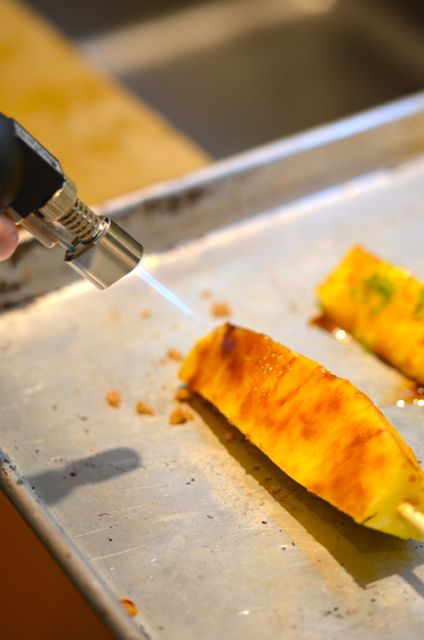
    ti4So what to make? This part was surprisingly easy. We decided to deconstruct one of our favorite summer desserts, pineapple with lime zest and molasses, into a cocktail. We started with the garnish. We cut wedges of pineapple, coated them with dark brown sugar (turbinado or muscovado would also work), caramelized the sugar with the brulee torch and then added lime zest. You could eat this on its own and it is quite good, but a bit one-dimensional.

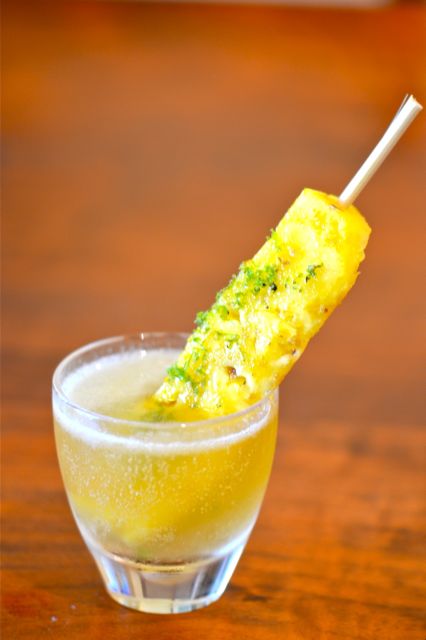
    ti5But we then made a hack of the standard Ti’ Punch (lime, cane syrup, rhum agricole) and dipped the caramelized pineapple wedges into the drinks and ate the pineapple. We tried a bunch of rums from dark to light, regular rum to a few types of rhum agricole. In the end, we liked Rhum Barbancourt 5-Star, an 8 year-old rhum from Haiti best. We also went light on cane syrup, as we learned that the caramelized sugar from the pineapple would mix into the drink and sweeten as we went along.

    ti6ti7So what did we get? A successful cocktail dessert. Both the cocktail and the garnish would be OK by themselves. But when combined, the sweet acidity of the pineapple, the intense (almost buttery) rum, sour lime and deep sugar flavor all play very well together. The extra texture of the pineapple and lime zest is also welcome. Great fun and something we will make again.

    ti8So thanks again to the Muse of Doom and Fred Yarm for another great Mixology Monday. We can’t wait to see he roundup.

    ti1Special-Ti’:

    Ingredients:

    Garnish:

    • Pineapple wedges
    • Dark brown sugar
    • Lime zest
    • Wooden or metal skewers

    Cocktail:

    • 2 oz. rum (Barbancourt 5-Star)
    • 1 oz. lime juice
    • 1/2 oz. cane syrup (or rich simple syrup)

    Assemble:

    1. Push the skewers lengthwise through the center of the pineapple wedges.
    2. Liberally sprinkle the pineapple wedges with the brown sugar and then caramelize the sugar with a brulee torch (or place on a baking sheet under a very hot broiler for about 30 seconds, or until brown). Quickly sprinkle on the lime zest before the caramelized sugar hardens.
    3. Place the pineapple wedges in the fridge for a few minutes to help the caramelized sugar harden.
    4. Meanwhile, combine the rum, lime juice and cane syrup in a cocktail shaker with ice. Shake until well-chilled and strain into a chilled cocktail glass or coupé.
    5. Garnish the cocktail with the pineapple wedge and serve.
    6. We suggest starting by dipping and eating the pineapple and then finishing the remaining cocktail. Enjoy.