• Cocktail DIY (And Bonus Cocktails): Pineapple And Raspberry Syrups

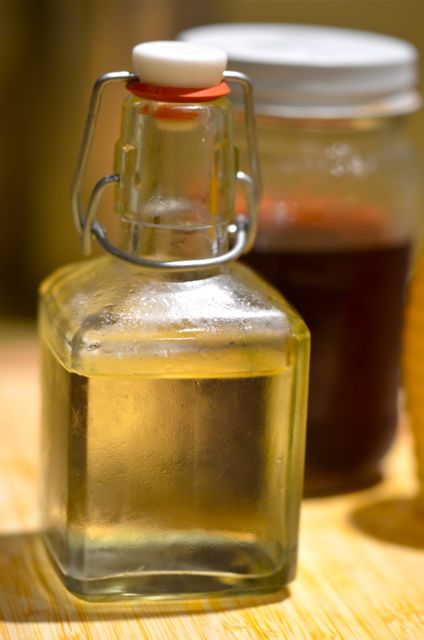
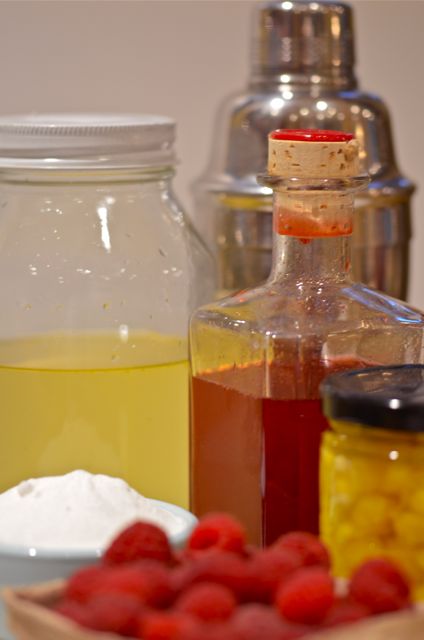
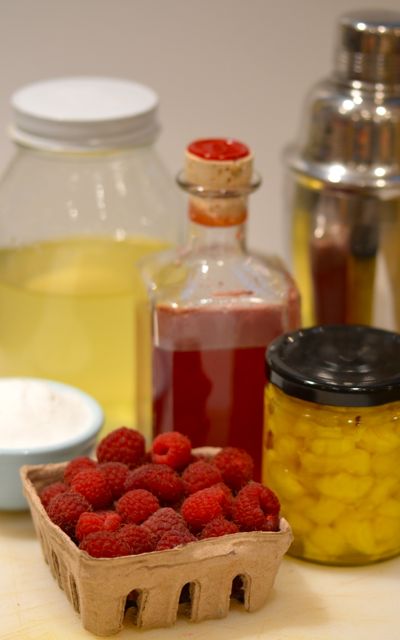
    Pineapple and raspberry syrups.

    One of the main things we enjoy about cocktails is how many ways we get inspiration to try new drinks. This week, Mixology Monday came back to life with an “Equal Parts” theme and we submitted a fun (and a little goofy) cocktail that we enjoyed, the Long Island Planters Punch. But what makes Mixology Monday really fun is trying other people’s creations. And now we have over 25 drinks to try (click here to see the lineup, very cool). One of our favorites, so far, is Shake, Strain and Sip’s Undiscovered Country a Corpse Reviver variant using pisco and Swedish Punch (it was a good excuse to finally buy some pisco). Another favorite is Chemistry of the Cocktail’s Shrunken Skull, a tiki drink with grenadine, but also works with raspberry syrup. Hmm….so now we have some pisco and a desire to make raspberry syrup. Anything else we can do?  Well, yes- since we had pisco, we had to make pineapple syrup to mix up some Pisco Punch, a true classic. (Like we said, “inspiration”, not necessarily “organized thinking”).
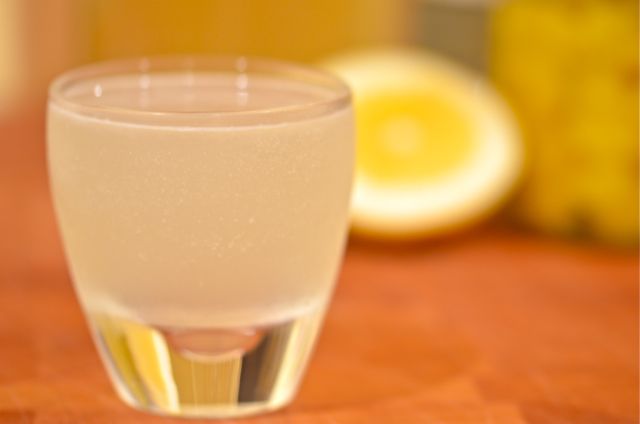
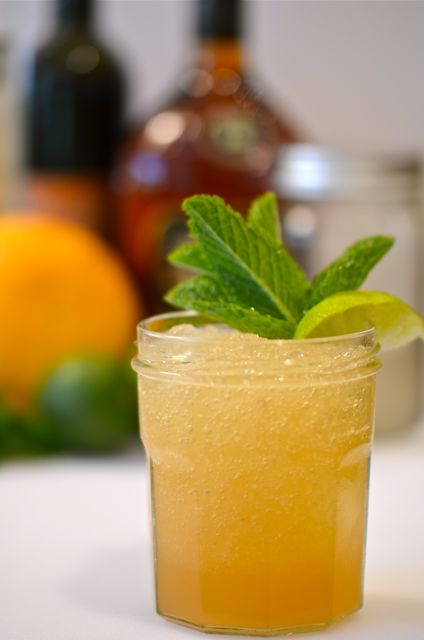
    Pisco Punch.
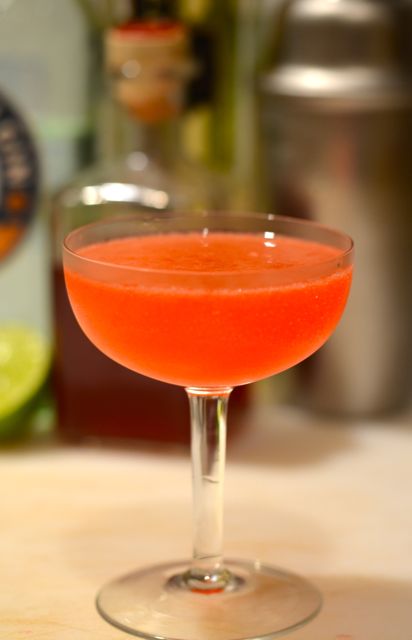
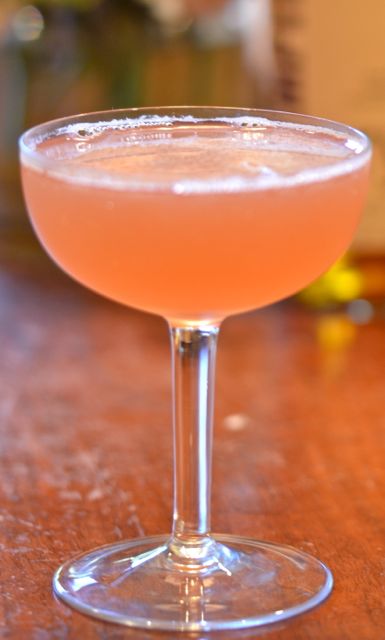
    Mountain Clover Cocktail.

    Unfamiliar with pisco and Pisco Punch? Pisco is brandy from Chile and Peru using local grapes from their wine industry. It is strong, a bit spicy and musky with hints or grappa (at least to our tastes). It is unique stuff and perhaps tough on its own, but very good in cocktails. And the most famous is the Pisco Punch, a simple combo of pisco, lemon juice and pineapple syrup. Cocktail historians have beaten the history of this drink to death (and beyond), but suffice it to say that in later 19th-Century San Francisco if you were blotto worse-for-wear, Pisco Punch had something to do with it. (Paul Clarke has a good, brief history piece here.) And there is a good reason the Pisco Punch was so popular, it’s really good. The musky notes of the pisco match with the sugar and funk of the pineapple and the lemon adds brightness and acidity. Pisco Punch is true cocktail alchemy, and it’s way-too-easy to throw these back…and a good reason to make pineapple syrup. And once you have pineapple syrup it works in other brandy drinks like the Brandy Fix or as a good substitute for simple syrup in Tiki drinks.
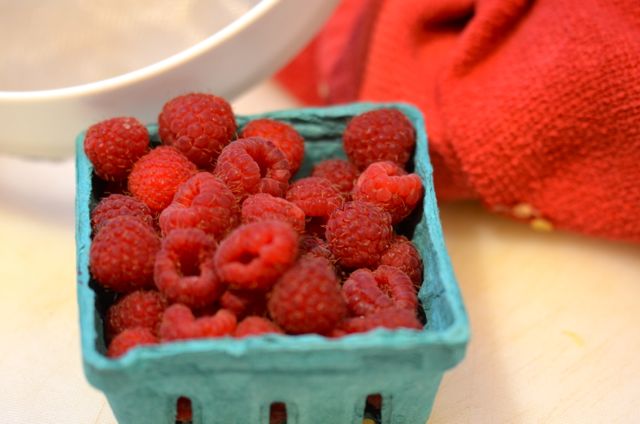
    As for the Raspberry syrup, it used to be a very popular cocktail sweetener, particularly before Prohibition. Used in dozens of drinks like the Clover Club, the Pink Lady and the Davis Cocktail, raspberry syrup adds great color and bright sweetness that’s lighter in flavor than grenadine. But, for whatever reason, grenadine took the place of raspberry syrup in many recipes during the later half of the 20th century. Happily, the cocktail renaissance brought raspberry syrup back from obscurity and there are plenty of DIY recipes, or you can buy it in stores. We decided to make our own, it’s easy and we still have raspberries. And after playing around with some classics, we made a Clover Club variant called the Mountain Clover with dry gin, lime juice, raspberry syrup and St. Germain. The light, bright sweetness of the raspberry syrup plays well with the gin and lime and makes for a very balanced sip. It looks like a grenadine-based cocktail, but is something very different. Worth a try.
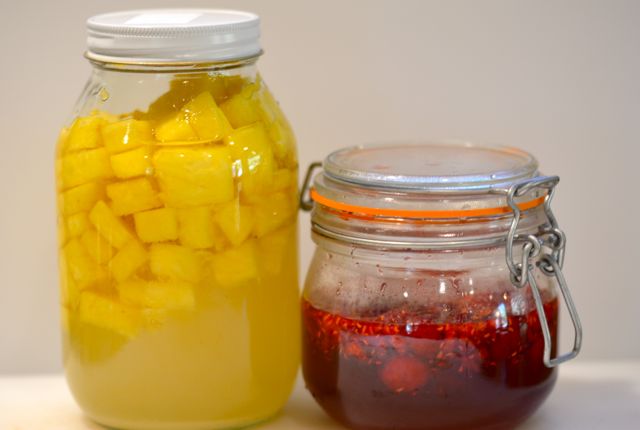
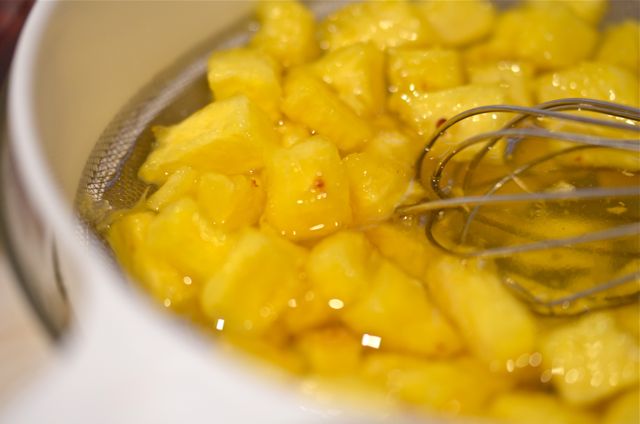
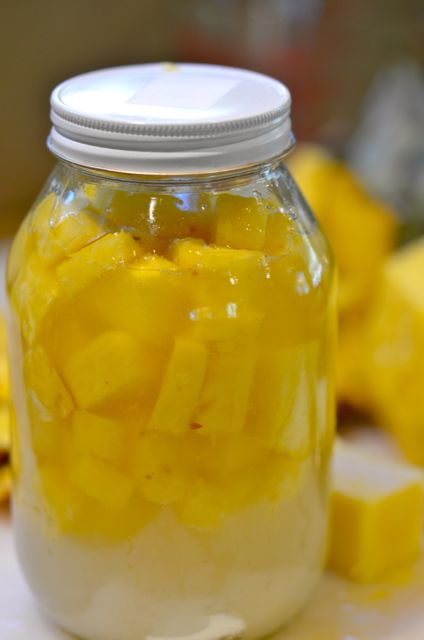
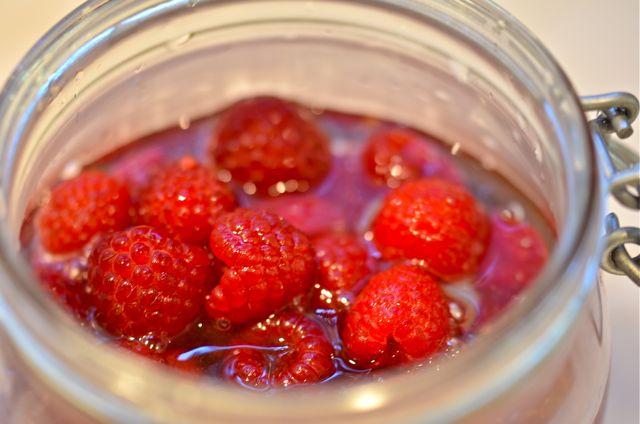
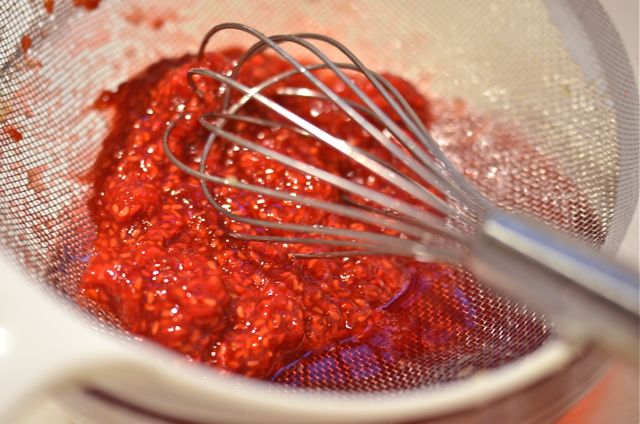
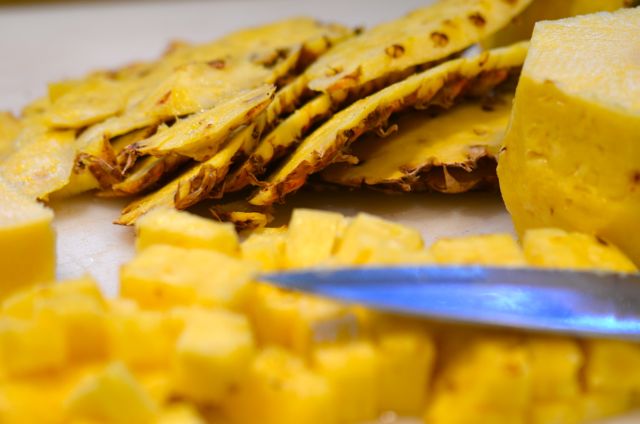
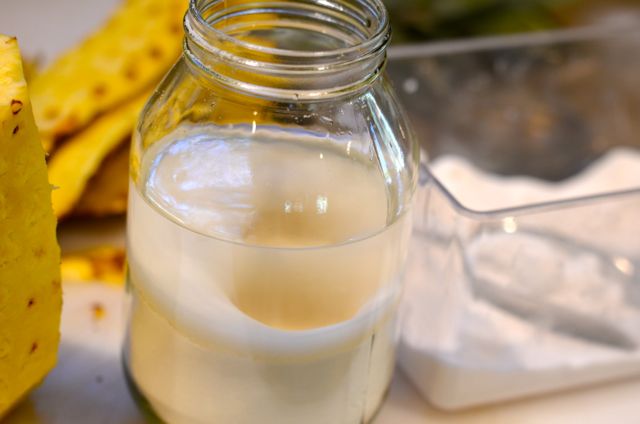
    Making both these syrups is very easy. Both use fruit, sugar and water. The pineapple syrup uses a “cold” method and the raspberry a “hot” method, but the process is basically the same. Cut or mash-up the fruit, cover with a simple syrup, put it in a jar, let it sit a day or two, strain out the fruit (mash in a bit more of the juice) and bottle the syrup. (And keep the left over pineapple pieces to put on ice cream or toast, good stuff). Top with a bit of vodka or Everclear to extend the life of the syrup, if you like. Store in a tightly lidded jar in the fridge. And then prepare to make awesome cocktails.
    Continue reading

  • Cocktail DIY: Grenadine, Simple Syrups, Honey Syrup

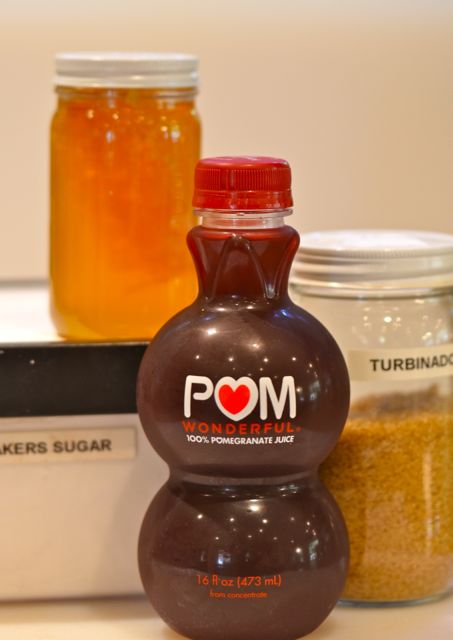
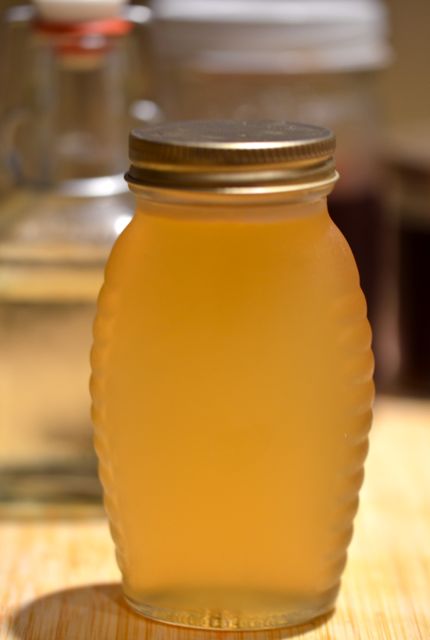
    If you like to “Do-It-Yourself”, then you might want to explore the world of cocktails. Besides making classic drinks from scratch, you can create your own cocktail recipes, boozy infusions, flavored syrups, brandied fruit garnishes, fat-washes (don’t ask) and even your own tinctures and bitters. And many of these DIY products will be way better than anything you buy in the store (a few won’t, btw). And if you want to explore the boundaries of cocktail DIY we suggest visits to Cocktail Chronicles, Boozed + Infused and Serious Eats, all have a wealth of detailed DIY recipes. But before you take the full plunge into cocktail DIY esoterica, we suggest a few basic syrups that cover many classic cocktails and Tiki drinks: Grenadine (pomegranate and sugar syrup), simple syrup ( white sugar or Demerara “raw” sugar syrup) and honey syrup.

    This is all you need to impress your party guests…;-)

    What makes these syrups so special? Firstly, you can make hundreds of snazzy cocktails with these syrups as the primary sweeteners (and they dissolve better in cold drinks than honey or granulated sugar- nobody likes gummy or gritty cocktails). Second, you can find all the ingredients at the grocery store. Third, you can make these syrups in under 15 minutes….combined. And finally, they keep in the fridge for weeks. So if you invest just a little time, you get a big payoff. And the payoff is in the cocktails. What cocktails? Here are just a few examples:

    Scofflaw with Grenadine.

    Grenadine: Planter’s Punch, Scofflaw, Tequila Sunrise, Jack Rose and Bacardi Cocktail (and the Shirley Temple / Roy Rodgers for the kids).

    Daiquiri’s use simple syrup (Demerara will make for a very different sip).

    Simple Syrup: Daiquiris, Mojitos, Collins, Sours, Juleps, French 75, and the Long Island Iced Tea (use Demerara syrup for a richer, molasses-tinged flavor).

    Lots of Tiki drinks use Honey Syrup.

    Honey Syrup: Air Mail, Bee’s Knees, Bebbo, Navy Grog, Tiki Bowl, Rum Barrel and the Missionary’s Downfall.

    And as we noted, making these syrups is very, very easy. You only need two basic cooking methods; mixing and boiling. Grenadine and honey syrup are the “mixers”. Just combine 1/2 sweetener and 1/2 liquid in a container and shake  (just use really hot water for the honey syrup). After a few minutes of shaking, you’re done.  The simple syrups require a brief boiling time to incorporate the sugar and water, but it only takes a few minutes.

    Finally, these syrups can keep for a while. Honey syrup, if kept in the fridge, will last up to a month. Both the Grenadine and simple syrup will last 1-2 weeks in the fridge, but adding a tablespoon of vodka or grain alcohol for every cup of syrup will extend their life a few weeks more. And once you make these syrups, you may find yourself using them quite often- your cocktails will be very tasty and have smooth, “professional” texture. Continue reading

  • Weekly Cocktail #28: The Sazerac

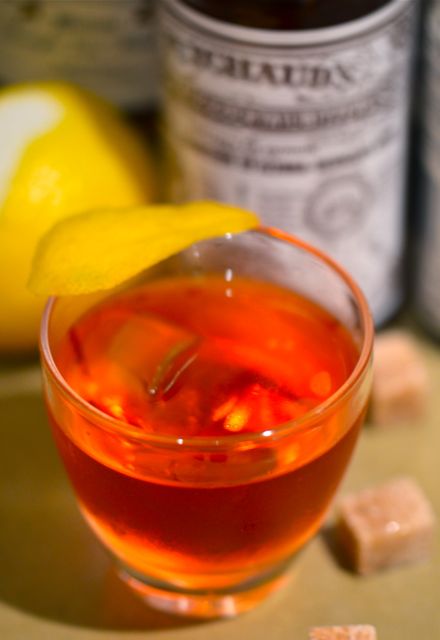
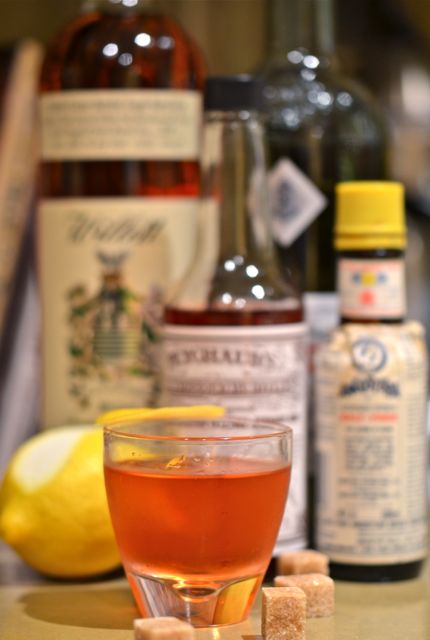
    The Sazerac Cocktail.

    As we noted all week, fall is almost here. And for us, fall means we get to break out the “brown” drinks. And we don’t mean to be derisive, but these are darker, heavier, and often sweeter, than most cocktails. Perfect for fall and winter, but perhaps a bit heavy for spring and summer. But as the weather starts to change, we occasionally crave a good brown drink; Old Fashioned, Manhattan, Vieux Carre’ and the Sazerac.

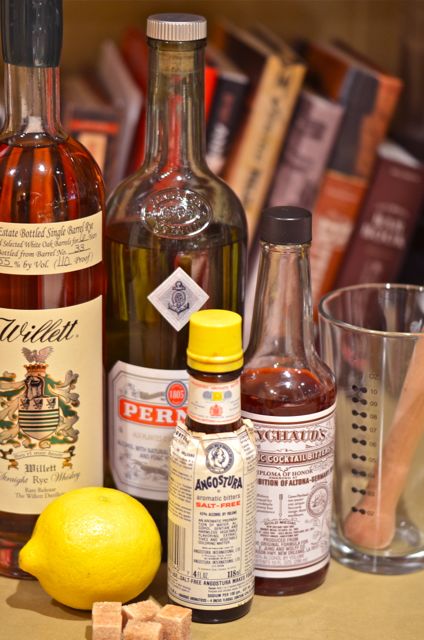
    And if we are drinking a strong whiskey cocktail, it’s very likely the Sazerac, the classic cocktail of New Orléans.  The Sazerac combines rye whiskey (yes we are on a rye kick), sugar, Peychaud’s and Angostura bitters with a touch of ice, served in an absinthe-rinsed glass and a lemon twist. We think of the Sazerac as an old-time Whiskey Cocktail (whiskey, sugar, bitters ice/water) with a few extra touches. Those extra touches include more bitters (some recipes use only Peychaud’s, we like using both), an absinthe rinse for the glass and the lemon twist. It may not sound like much, but these small changes make for a big difference. Nothing tastes quite like a Sazerac. Sweet, spicy and herbal, the Sazerac is a cocktail you can linger over and enjoy.

    In fact, many versions of the Sazerac suggest using little or no ice. And this makes some sense, as the drink comes from New Orleans in the mid 1800’s and ice wasn’t always readily available. And even if the cocktail were chilled, it would get warm fast-best to have a cocktail that tastes good cold or at room temperature. And while the Sazerac will taste good without much chill, we still prefer it cold.

    As for the history of the Sazerac, it was “invented”  at the Merchant’s Exchange Coffee House in the 1800’s. At the time, the spirit was cognac (the name “Sazerac” comes from a brand of cognac), not whiskey, but the phylloxera outbreaks of the 19th century forced the move to whiskey. Some early recipes also use bitters other than Peychaud’s, but Peychaud’s is now standard ingredient (purists will not like the inclusion of Angostura). The absinthe (or herbsaint- a pastis from New Orléans) has been a constant part of the recipe. It is unclear when the lemon twist came into things- but it’s good- and was in the recipe when it was first published in the 1908 cocktail book, “The World’s Drinks and How to Mix Them“.

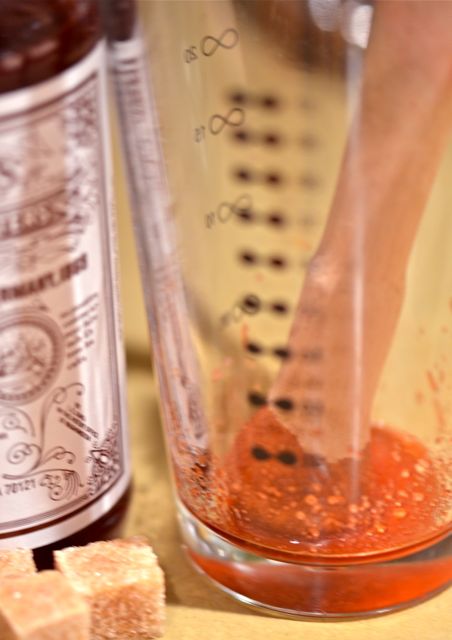
    Finally, making the Sazerac does require a few extra steps, but they are worth it. You need to muddle a sugar cube (you can use simple syrup, too) and the bitters before adding the ice and Rye. And you need to rinse the serving glass with absinthe. This seems fussy, but it does seem to give you the perfect amount of absinthe- it won’t overpower the other ingredients. And finally you need to do a thorough job with the lemon twist and get all of those tasty oils in the drink. When you’re done, you get a lovely, complex sip. As we said “nothing tastes quite like a Sazerac”, and since there is no place quite like New Orléans, we think that fits.

    The Sazerac:

    • 2 oz. rye whiskey
    • 1 sugar cube (Demerara sugar preferred)
    • 3 dashes Peychaud’s bitters
    • 2 dashes Angostura bitters
    • 1 teaspoon absinthe or pastis, for rinse
    • Lemon peel, for garnish

    Assemble:

    1. Muddle the sugar cube and bitters in a mixing glass. Add the rye and ice. Stir to chill.
    2. Meanwhile, coat the inside of a lowball or old-fashioned glass with the absinthe. Pour off any excess. Add one large ice cube to the glass and pour in the cocktail. Twist the lemon peel directly over the drink to extract the oils. Discard the used lemon peel. Serve.
  • Bonus Cocktail: The Applejack Rabbit

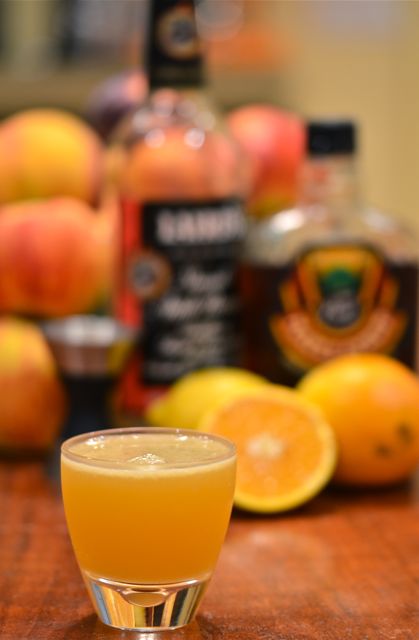
    The Applejack Rabbit.

    Fall is here! Well…kinda…sorta…almost…spiritually…uh, whatever. Labor Day is gone, the kids are back in school, and now we feel free to post “fall-themed” cocktails. And when we think autumn, we think apples. And if you like eating (and drinking) with the season, there is nothing quite like Applejack, the great American brandy. And there is no better Applejack cocktail than the Applejack Rabbit.

    Unfamiliar with Applejack? It is the first great American spirit. Way before Americans fell in love with whiskey, we turned our apples into cider and then let that cider turn to apple brandy. How? In the “old” days of the 18th century thirsty Americans would leave out their “hard” apple cider in winter, and as it froze they would remove chunks of ice. The ice was mostly water, as the alcohol has a lower freezing point, so what was left over became ever-stronger apple brandy.  And it was usually potable, but quality could be spotty (and perhaps just short of lethal).

    Laird’s “Bonded” Applejack, really good stuff.

    But soon enough, American’s started to distill their Applejack and it has been a consistently tasty, tangy brandy ever since. And as late as the 1920’s, Applejack was a popular cocktail spirit. But prohibition almost killed Applejack distillation. Only Laird & co. of New Jersey survived as a real business. And this is somewhat fitting, as the Laird’s distillery, founded in 1780, is possibly the longest continuously operated distillery in the country. And their Applejack is very, very tasty- and affordable.

    But one quick note, if buying Applejack, you want the Laird’s “Bonded” Applejack- this version is pure apple brandy and will run you between $20-$30. And what you get is a smooth brandy that has the body of bourbon and the apple flavor of Calvados, but with an extra apple “tang” similar to a green apple Jolly Rancher candy (sorry, but that is what it tastes like). Great stuff and you can use it as a substitute for both whiskey and Calvados in cocktails. If you find it, we suggest you add Applejack to your bar, you can use Applejack in Old Fashioneds or in classics like the Jack Rose. You can even use it in apple desserts….more on that soon.

    As for the cocktail, the Applejack Rabbit combines Applejack, orange juice, lemon juice and maple syrup. Maple syrup is not a common cocktail sweetener, but it works wonders with the Applejack. The citrus adds a sour balance and more depth, but make no mistake, this is an apple cocktail. Most recipes suggest grade B maple syrup, but any good maple syrup will work. And as this cocktail has been around a while, there are many recipes. We use a version from the PDT cocktail book, as Jim Meehan’s recipes usually work well with current tastes. And the Applejack Rabbit is a perfect drink for the season, the apple and maple syrup almost scream out that the seasons are changing…and while we always miss summer, a little Applejack certainly eases the transition…

    The Applejack Rabbit:

    Ingredients:

    • 2 oz. Applejack (Laird’s Bonded Apple Brandy)
    • 3/4 oz. fresh lemon juice
    • 3/4 oz. fresh orange juice
    • 1/2 oz. real maple syrup

    Assemble:

    1. Combine all the ingredients in a cocktail shaker with ice. Shake thoroughly and strain into a chilled cocktail glass, flute or coupe’. No garnish. Serve.
  • Weekly Cocktail #27: The Junior (and the Frisco Sour)

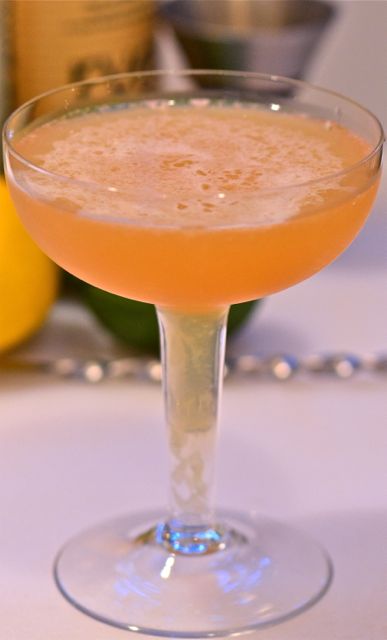
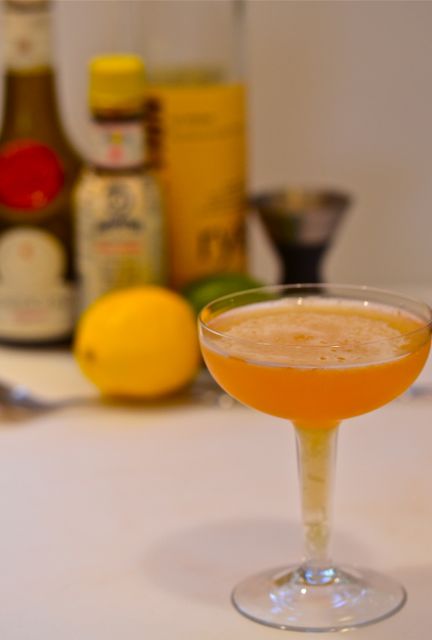
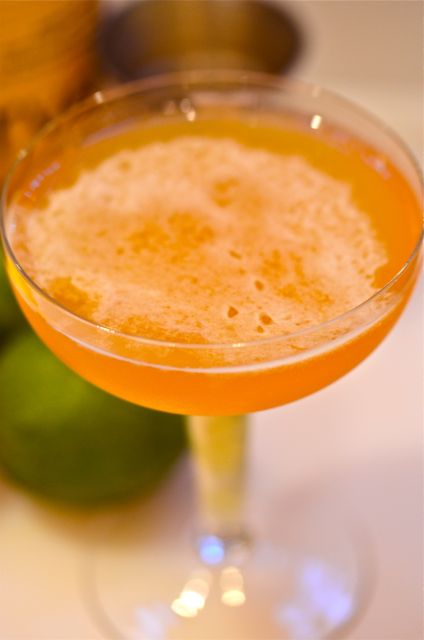
    The Junior Cocktail

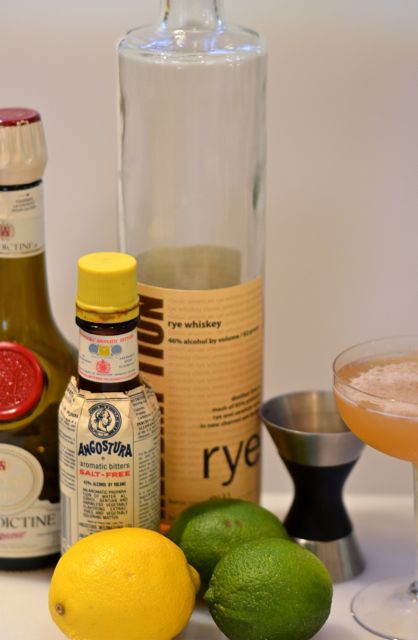
    With the labor day weekend coming up we decided to give you an extra cocktail…. In reality, the Junior and the Frisco Sour are both great drinks but serve to illustrate just how different you can make a cocktail by just changing a key ingredient. In this case, both the Junior and Frisco Sour include rye whiskey and Benedictine, but the Junior includes lime juice and a dash of bitters while the Frisco Sour includes the more traditional lemon juice.

    And we say “more traditional” because most citrus drinks that include whiskey or cognac use lemon juice. Meanwhile, most gin and tequila cocktails include lime juice. (Rum plays well with anything and everything, it seems). But rules or traditions are meant to be broken, particularly in the world of food and spirits- so it is fun to play with aberrations like the Junior. And the Junior is a good cocktail. The spice of the rye goes well with the sour lime and herbal flavors of the Benedictine and bitters. But it is a tart sip- we like it, some may not. If you like a smoother and sweeter cocktail, the Frisco Sour with its lemon juice and no bitters might be the best choice. Basically, the Frisco Sour is a more complex (and much better IMHO) version of the Whiskey Sour. But since its pretty easy to make both of these cocktails, try them and decide for yourself.

    As for the spirits in these cocktails, any good rye whiskey will do. Both Bulleit and Rittenhouse are good and inexpensive rye. We also like the High West rye and Redemption, but they are a bit of a step-up in price. And as our exploration of rye continues, we very much recommend it as a key spirit in any home bar. From Scofflaws to Manhattans, we think rye makes great cocktails. And there is no real substitute for Benedictine, but since we already have some for Lani-Honis (very similar to a Frisco Sour, btw) we like to use it. But Benedictine is a good classic cocktail ingredient, and a little goes a long way- so worth seeking out.

    As for the names and provenance of both drinks, their origins are lost to history. But as any long time Bay Area resident can tell you, nobody says “Frisco” to describe San Francisco, but maybe they did 100 years ago, who knows? Regardless, there is a good New York Times article on the Frisco Sour here that describes how murky cocktail recipes and history can be. Unfortunately, there is even less information on the Junior cocktail out there. Even cocktail historian David Wondrich has little to offer other than saying the Junior is a tasty, if somewhat off-beat drink. But, in the end, a tasty drink is more than enough for us.

    The Junior Cocktail:

    Ingredients:

    • 2 oz. rye whiskey
    • 1/2 oz. lime juice
    • 1/2 oz. Benedictine
    • 1 dash Angostura bitters

    Assemble:

    1. Combine all ingredients with ice in a cocktail shaker. Shake thoroughly and strain into a chilled cocktail glass, flute or coupé. Serve.

    —–

    The Frisco Sour Cocktail:

    Ingredients:

    • 2 oz. rye whiskey
    • 1/2 oz. lemon juice
    • 1/2 oz. Benedictine

    Assemble:

    1. Combine all ingredients with ice in a cocktail shaker. Shake thoroughly and strain into a chilled cocktail glass, flute or coupé. Serve.
  • Bonus Cocktail: Reagan Meets Gorbachev

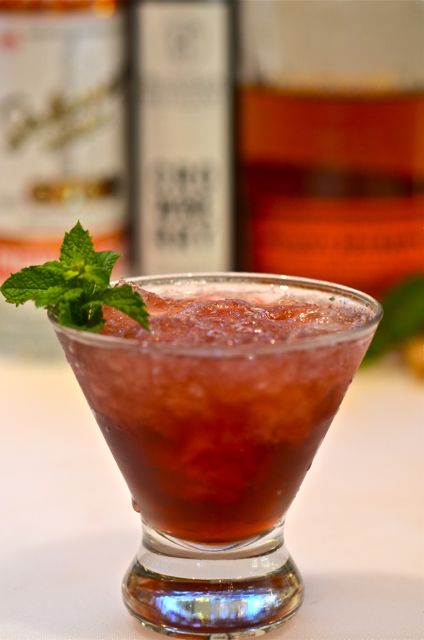
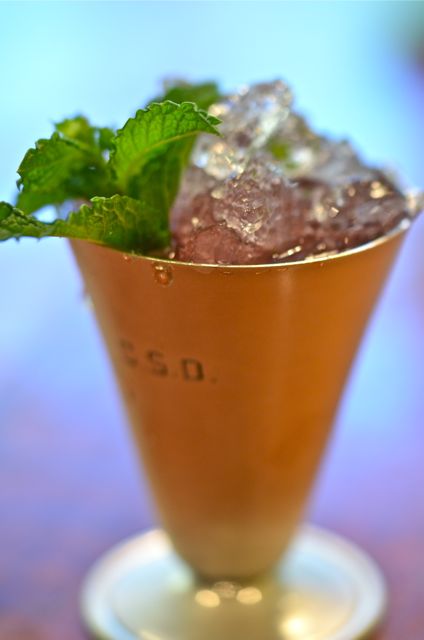
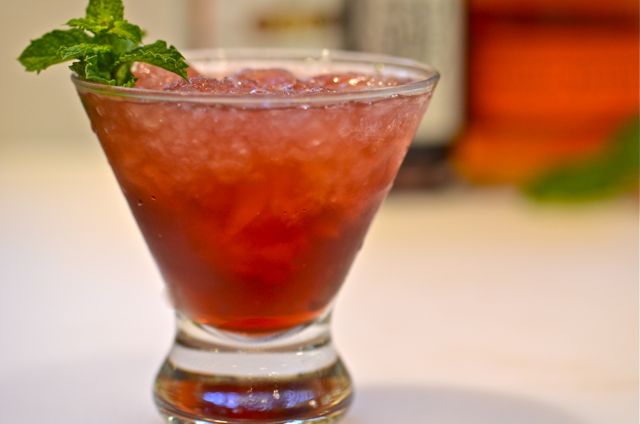
    Reagan Meets Gorbachev cocktail.

    NOTE: Sorry for the strange name, we will explain more below. But please read on, this cocktail is basically a Mint Julep variant that combines bourbon, vodka, simple syrup, mint and crowberry liqueur (substitute blackberry liqueur or crème de Cassis).

    Meanwhile, one of the unexpected (but positive) surprises of cocktail blogging is our friends’ willingness to bring us fun, and sometimes rare, spirits to play with. Booze is always welcome here at the farm. And last week Carolyn’s Dad, and my good friend, Bill brought us two liqueurs from Reykjavík Distillery in Reykjavík Iceland (thanks Bill!). The first liqueur was a very tasty blueberry cordial. But the second was a crowberry liqueur, and we had never heard of crowberries. So we decided almost immediately that a crowberry cocktail was in order. Challenges are good, it means we get to experiment.

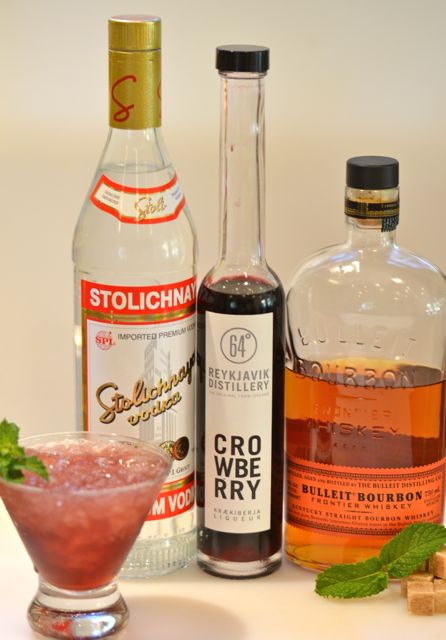
    East-meets-west ingredients…

    And after a few minutes of internet research we had at least some information on crowberries. Crowberries are the fruit of a dwarf evergreen shrub found in temperate and sub-arctic regions- basically they grow where it gets cold. Not surprisingly, they are a common food of the Sami in Finland and are also widely found in Iceland. Crowberries have lots of vitamin C and antioxidants, but are often lightly flavored. Their flavor is often described as watery blueberry with some tannic or black currant notes. But while the fresh fruit might be watery, fermentation and distillation concentrate flavors. So we were hopeful the liqueur would be tasty.

    A little fun with antique julep cups…

    Happily, the crowberry liqueur is quite good and tastes somewhat like a sweet mix of blueberries, blackberries and a little currant. So now that we had a good flavor to work with, we needed the cocktail. And since the liqueur is from Reykjavík, we wanted a theme based on the city. But the only thing we know about Reykjavík is that it was the location of the 1980’s meeting between Reagan and Gorbachev where they negotiated some of the IBT, but got hung up on SDI and the delayed approval of SALT II and then zzzzzzzzzzzz….. Let’s just say it was where Reagan and Gorbachev realized that both sides were open to broad concessions and they developed a personal relationship. This led to some good things; Soviet collapse, walls coming down, Maseratis in Moscow, etc….

    Adding dark fruit liqueur to Mint Juleps is a winner. The vodka helps the fruit show in the drink.

    As for the cocktail, we wanted to include both American and Russian spirits with the crowberry liqueur. Bourbon and vodka were the obvious choices. And as for the julep variant, there are many good blackberry juleps out there, so using crowberries isn’t a stretch. The vodka is not only Russian, but it lightens the bourbon without diluting the alcohol and helps the mint and crowberries shine through. Sometimes we think the bourbon overwhelms in Mint Juleps, but the vodka brings a sense of, ummm…detente (ugh, eye-roll).

    Overall this is a lighter, fruitier version of a Mint Julep that still has plenty of flavor. And you can substitute any dark fruit liqueur for the crowberry. So while we don’t expect many people to have crowberry liqueur, give this version of the Mint Julep a try, it may lead to good things.

    Reagan Meets Gorbachev:

    Ingredients:

    • 1 oz. bourbon
    • 1 oz. vodka
    • 1/2 oz. crowberry liqueur (or substitute dark fruit liqueur like blackberry or crème de Cassis)
    • 1/3 oz. Demerara or simple syrup
    • 6 mint leaves
    • Sprig of mint, for garnish
    • Crushed ice

    Assemble:

    1. Place the mint and simple syrup in a cocktail shaker and lightly muddle. Then add the bourbon, vodka, crowberry liqueur and ice to the shaker. Shake thoroughly and strain into a lowball glass or Julep cup filled with crushed ice.
    2. Stir and top with extra crushed ice, if needed. Garnish with the mint sprig. Serve.