• Cocktail DIY (And Bonus Cocktails): Pineapple And Raspberry Syrups

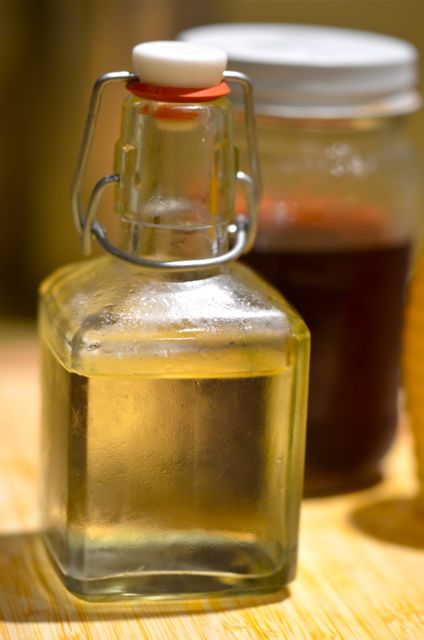
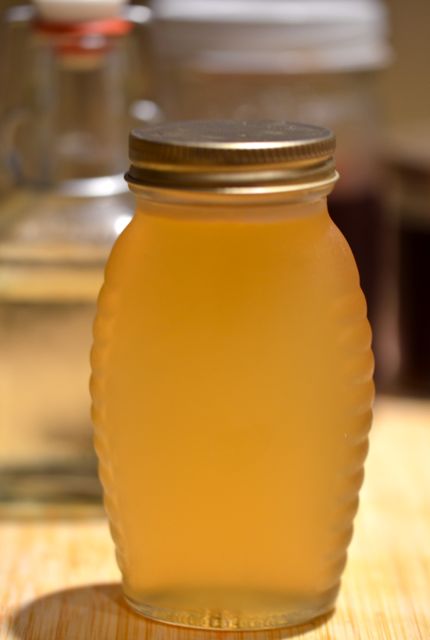
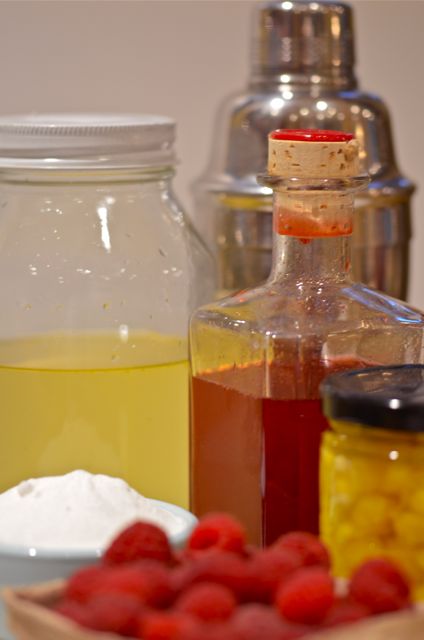
    Pineapple and raspberry syrups.

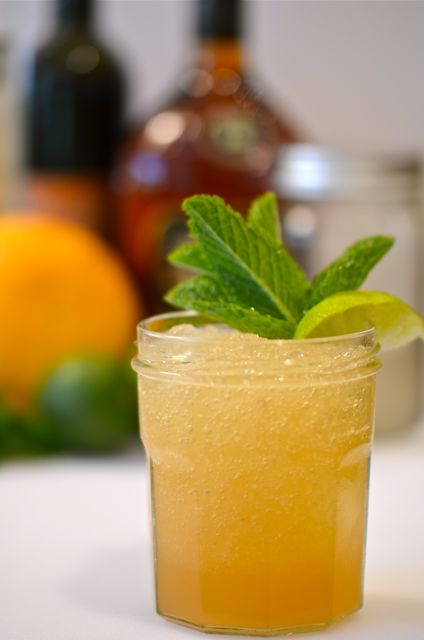
    One of the main things we enjoy about cocktails is how many ways we get inspiration to try new drinks. This week, Mixology Monday came back to life with an “Equal Parts” theme and we submitted a fun (and a little goofy) cocktail that we enjoyed, the Long Island Planters Punch. But what makes Mixology Monday really fun is trying other people’s creations. And now we have over 25 drinks to try (click here to see the lineup, very cool). One of our favorites, so far, is Shake, Strain and Sip’s Undiscovered Country a Corpse Reviver variant using pisco and Swedish Punch (it was a good excuse to finally buy some pisco). Another favorite is Chemistry of the Cocktail’s Shrunken Skull, a tiki drink with grenadine, but also works with raspberry syrup. Hmm….so now we have some pisco and a desire to make raspberry syrup. Anything else we can do?  Well, yes- since we had pisco, we had to make pineapple syrup to mix up some Pisco Punch, a true classic. (Like we said, “inspiration”, not necessarily “organized thinking”).
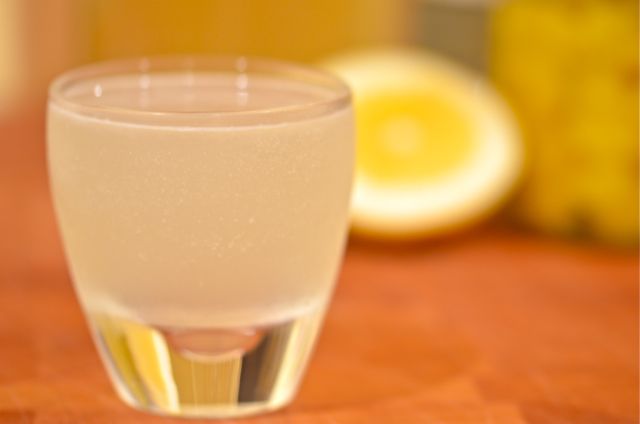
    Pisco Punch.
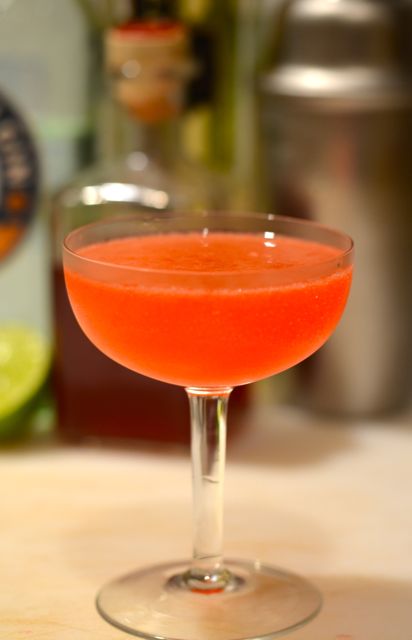
    Mountain Clover Cocktail.

    Unfamiliar with pisco and Pisco Punch? Pisco is brandy from Chile and Peru using local grapes from their wine industry. It is strong, a bit spicy and musky with hints or grappa (at least to our tastes). It is unique stuff and perhaps tough on its own, but very good in cocktails. And the most famous is the Pisco Punch, a simple combo of pisco, lemon juice and pineapple syrup. Cocktail historians have beaten the history of this drink to death (and beyond), but suffice it to say that in later 19th-Century San Francisco if you were blotto worse-for-wear, Pisco Punch had something to do with it. (Paul Clarke has a good, brief history piece here.) And there is a good reason the Pisco Punch was so popular, it’s really good. The musky notes of the pisco match with the sugar and funk of the pineapple and the lemon adds brightness and acidity. Pisco Punch is true cocktail alchemy, and it’s way-too-easy to throw these back…and a good reason to make pineapple syrup. And once you have pineapple syrup it works in other brandy drinks like the Brandy Fix or as a good substitute for simple syrup in Tiki drinks.
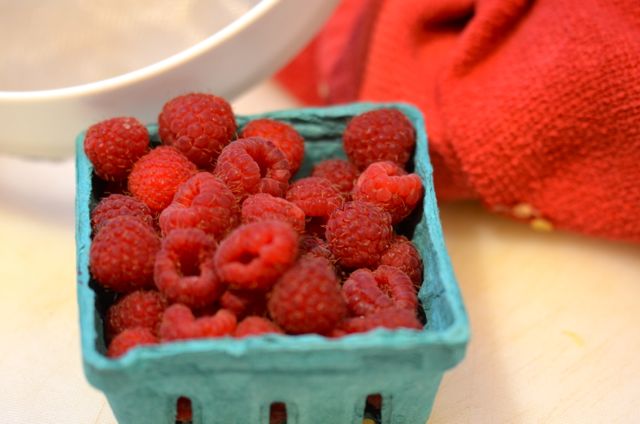
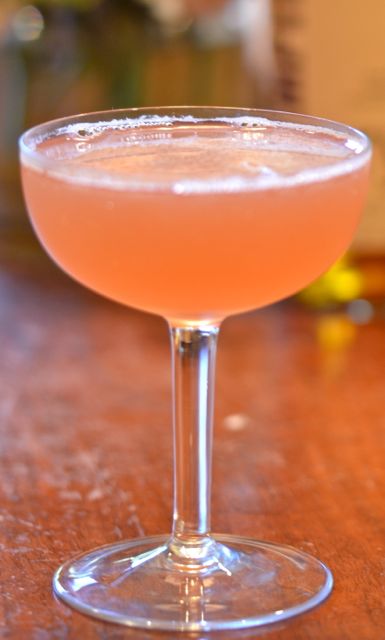
    As for the Raspberry syrup, it used to be a very popular cocktail sweetener, particularly before Prohibition. Used in dozens of drinks like the Clover Club, the Pink Lady and the Davis Cocktail, raspberry syrup adds great color and bright sweetness that’s lighter in flavor than grenadine. But, for whatever reason, grenadine took the place of raspberry syrup in many recipes during the later half of the 20th century. Happily, the cocktail renaissance brought raspberry syrup back from obscurity and there are plenty of DIY recipes, or you can buy it in stores. We decided to make our own, it’s easy and we still have raspberries. And after playing around with some classics, we made a Clover Club variant called the Mountain Clover with dry gin, lime juice, raspberry syrup and St. Germain. The light, bright sweetness of the raspberry syrup plays well with the gin and lime and makes for a very balanced sip. It looks like a grenadine-based cocktail, but is something very different. Worth a try.
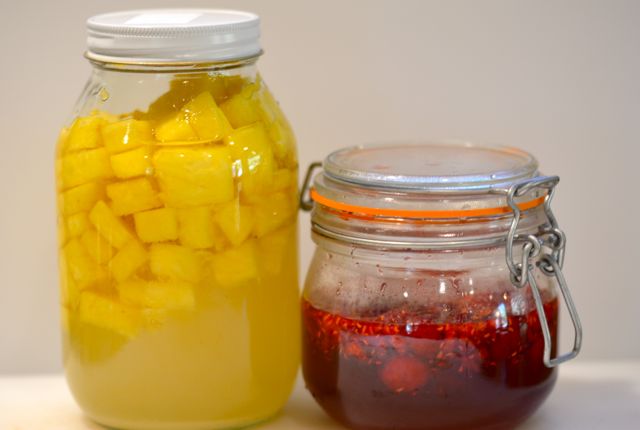
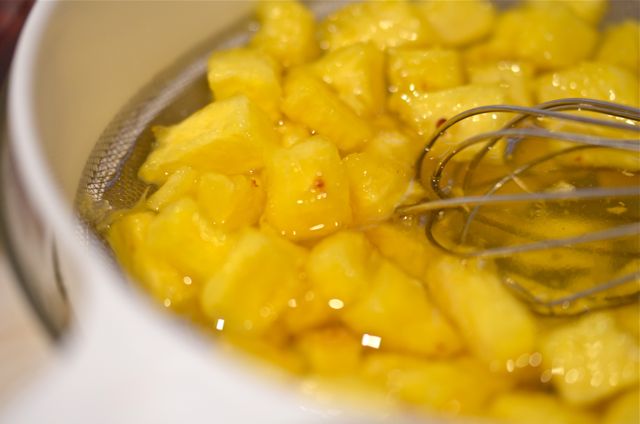
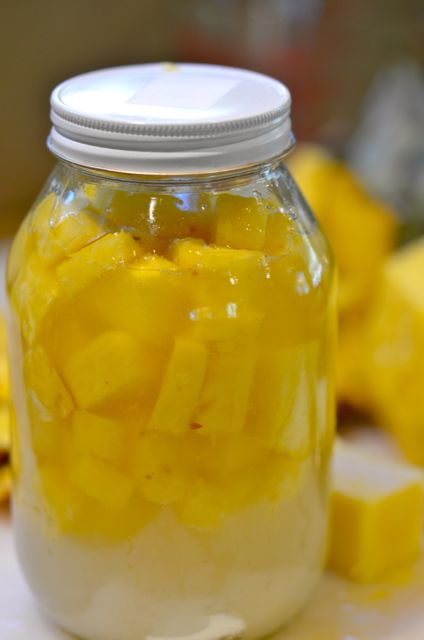
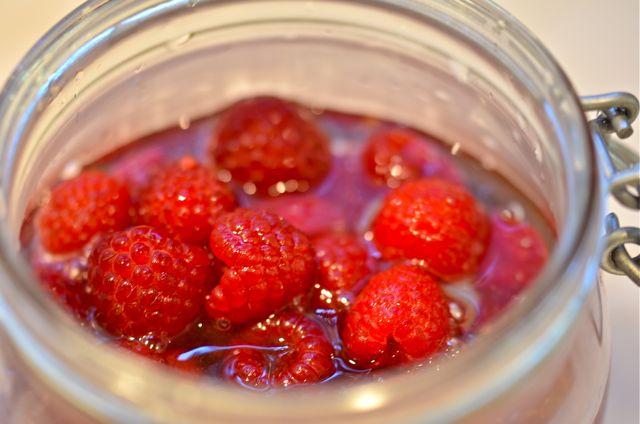
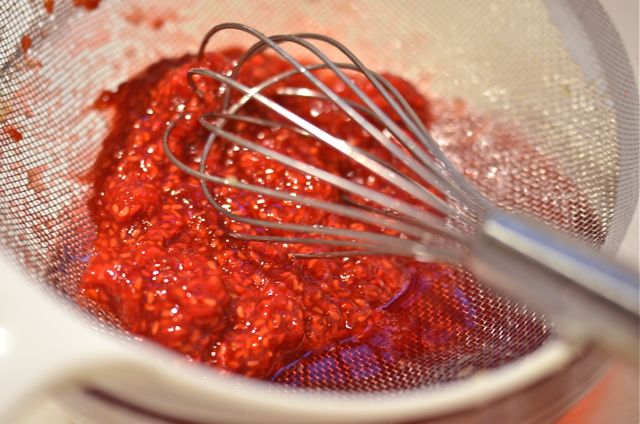
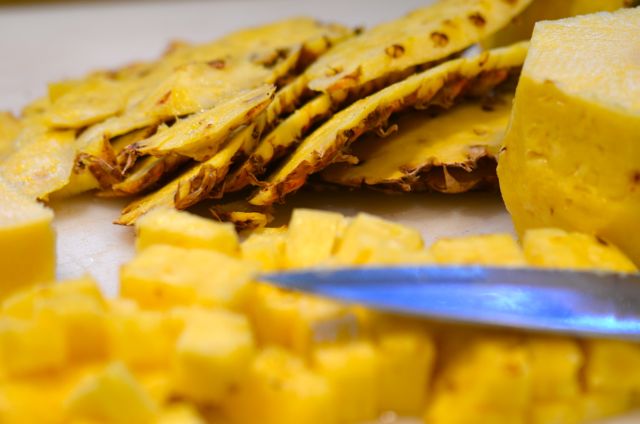
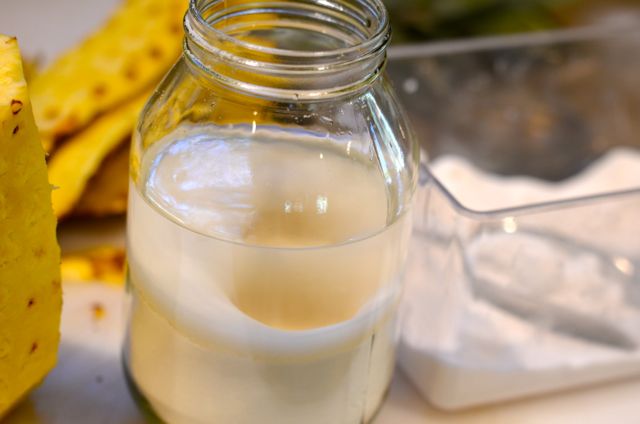
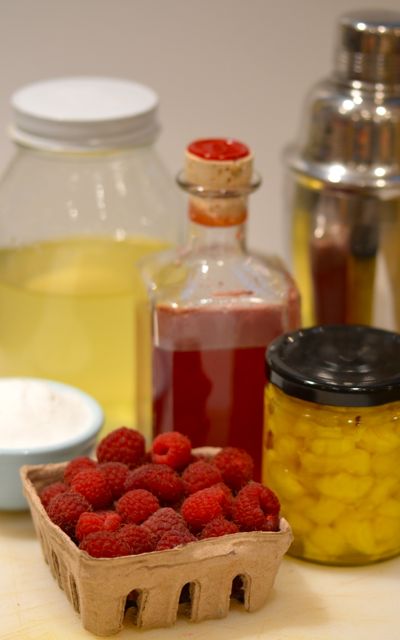
    Making both these syrups is very easy. Both use fruit, sugar and water. The pineapple syrup uses a “cold” method and the raspberry a “hot” method, but the process is basically the same. Cut or mash-up the fruit, cover with a simple syrup, put it in a jar, let it sit a day or two, strain out the fruit (mash in a bit more of the juice) and bottle the syrup. (And keep the left over pineapple pieces to put on ice cream or toast, good stuff). Top with a bit of vodka or Everclear to extend the life of the syrup, if you like. Store in a tightly lidded jar in the fridge. And then prepare to make awesome cocktails.
    Continue reading

  • Simple Garden Recipes: Cinnamon Applesauce

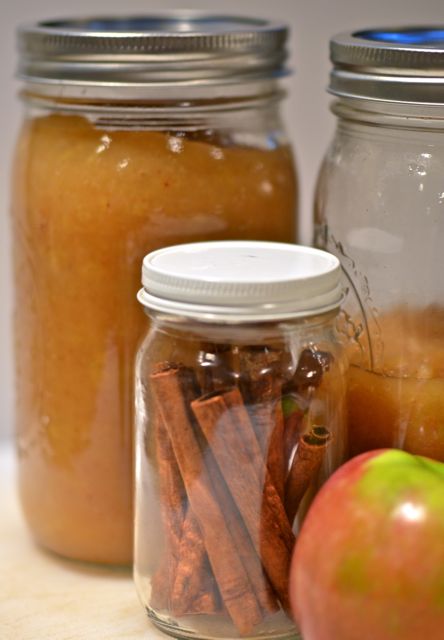
    Cinnamon Applesauce.

    One of the great things about cooking from the garden and orchard is a constant reminder to stick to the basics. If you just spent “x” months growing something (or waiting “x” months to buy it fresh and local), you want to taste what you’ve been waiting for. And most of the time when we stick to the basics the quality and flavor of seasonal produce really shines through. Now, we are still big fans of “brined-balsamic-glazed-sous-vide-nut-crusted-finished-in-a special-artisan-brick-oven” dishes. But sometimes the ingredient speaks for itself. And this is very much the case for apples. We use them all kinds of ways, but in our house the two best preparations are eating out of hand and making cinnamon applesauce.

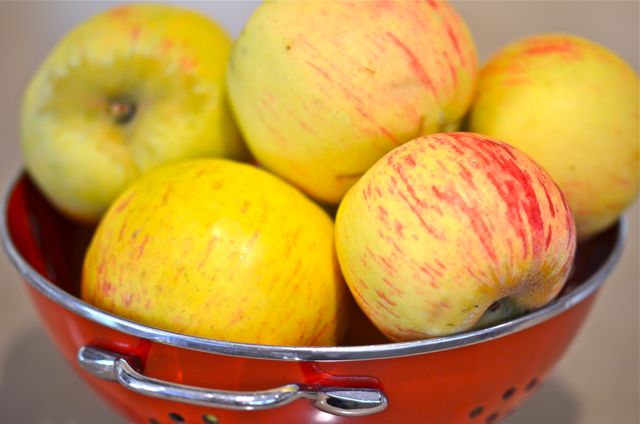
    And if you don’t think much of applesauce, we suggest you make some of your own (and be ready to change your mind). Homemade applesauce rocks. Good by itself, applesauce is great with pancakes or on toast, and is a common ingredient in many healthy desserts. And applesauce is easy to make (particularly if you have a food mill- more on that later, see Notes). also, if you buy in season, apples are tasty, plentiful and cheap. As for the varieties to use, Gala, Fuji, Jonagold, Jonathan, Golden Delicious and Melrose are all recommended, but most apples will work. We use our Gravensteins…we have a lot of them.

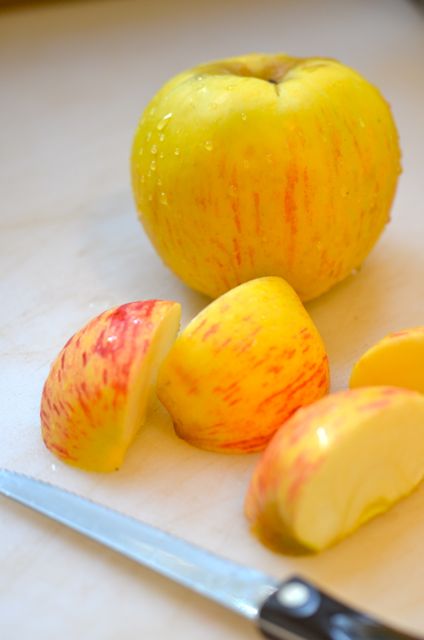
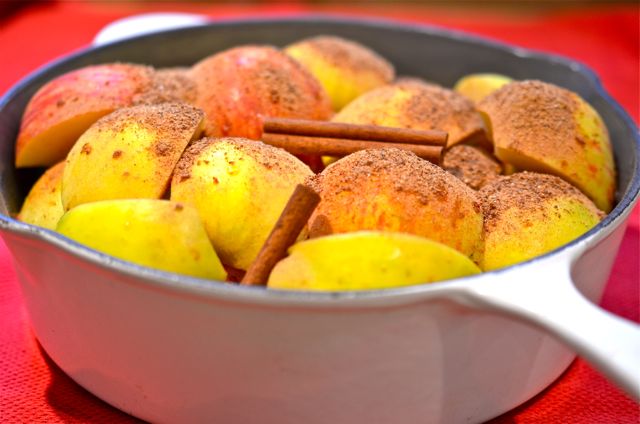
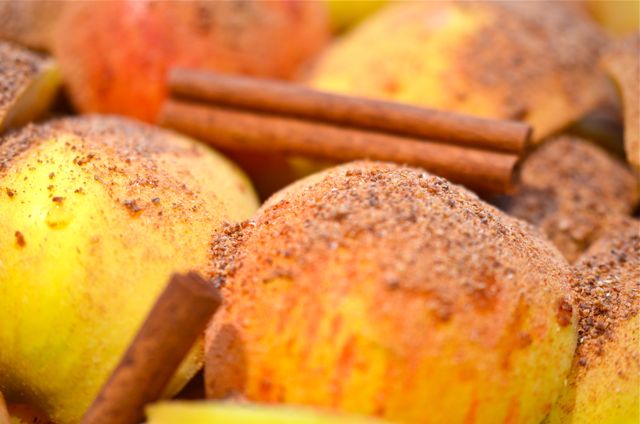
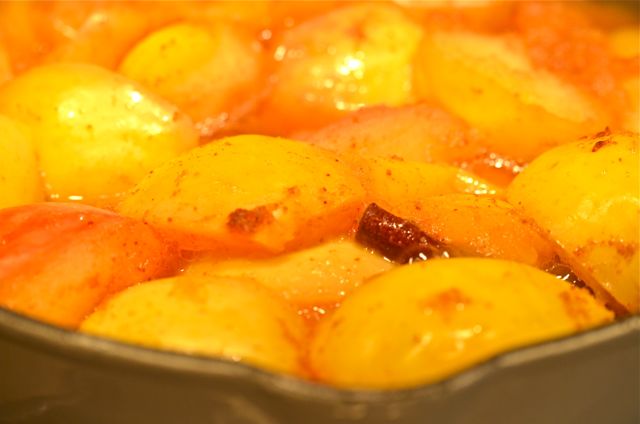
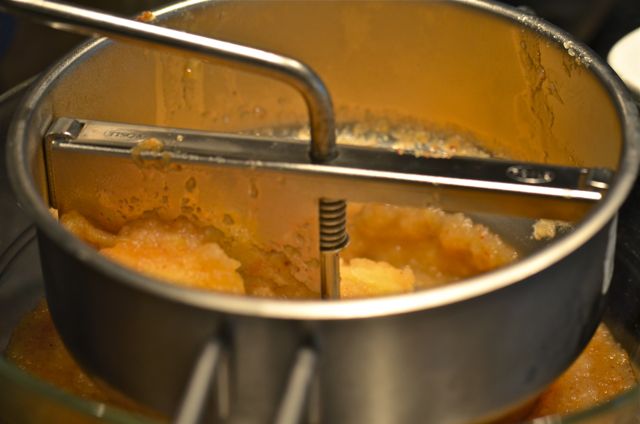
    Making applesauce is a simple process. Cut and core apples, add to a pot with water, sugar and spice, cook, mash, taste, adjust sugar/spice and serve. There are a few tools and tricks that do help, a food mill makes it easy to mash the apples with the skins on, otherwise you need to do it manually with peeled apples (not a big deal, but a time-saver). We also use date sugar for deeper sugar flavor, but white sugar works just fine. And, of course, we put cinnamon in our applesauce for extra spice to balance the sweet apples (and the kitchen smells great when cooking). And once the applesauce cools you have a tasty, healthy snack that will keep in the fridge for about a week.

    So how do we serve our applesauce? As we mentioned, it’s great on toast and pancakes and even better served with roast pork (yes, recipe coming). But mostly, our kids (bless them) will just grab some out of the fridge, pour it in a bowl and eat it. And then they ask, “are these our apples?” and when we say “yes”, they say “cool” and get back to eating. It may not sound like much, but for a home cook and gardener, it doesn’t get much better. Like we said, sometimes it’s best to stick to the basics.

    Cinnamon Applesauce:

    Notes Before You Start:

    • Most apple varieties will work for applesauce, but ask at your grocer or farmer’s market for best available varieties.
    • We use date sugar for a slightly richer, “darker” flavor, but white sugar works just as well.
    • A food mill is a tool worth having for all sorts of uses, but really makes applesauce a snap. They are cheap and available at most kitchen stores. If you don’t have one, peel the apples and then simply mash them in the pot. The texture will be a bit more rustic, but the flavor will be just as good.

    What You Get: One of the best ways to enjoy apples. A great dessert and/or side dish.

    What You Need: A food mill is a big help, but not required. No other special gear needed.

    How Long? About 90 minutes total, with about 10 minutes of active time. Most of the time is to allow the applesauce to cool. This can be an “anytime” dish, but mostly a fun weekend or evening project.

    Ingredients:

    (Makes 3-4 cups)

    • 4 pounds apples, cored and cut into quarters (peel the apples if not using food mill)
    • 1 cup water
    • 1/4 cup date sugar (or white sugar)
    • 2, 3-inch cinnamon sticks (or 1/4 teaspoon ground cinnamon)

    Assemble:

    1. Combine the apples, water, sugar  and cinnamon sticks in a large dutch oven or lidded pot. Cover and cook, over medium-low heat, stirring occasionally until the apples break down. About 15-20 minutes.
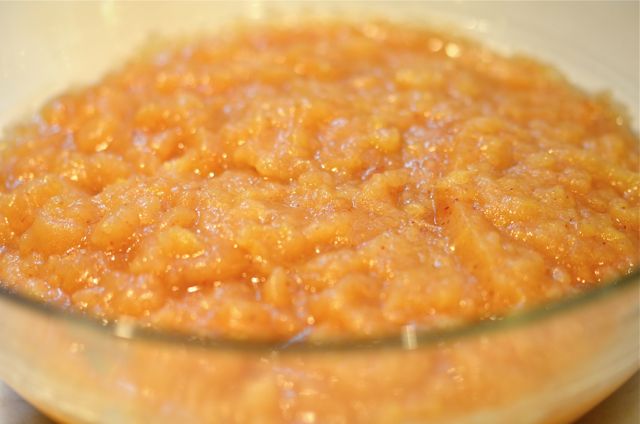
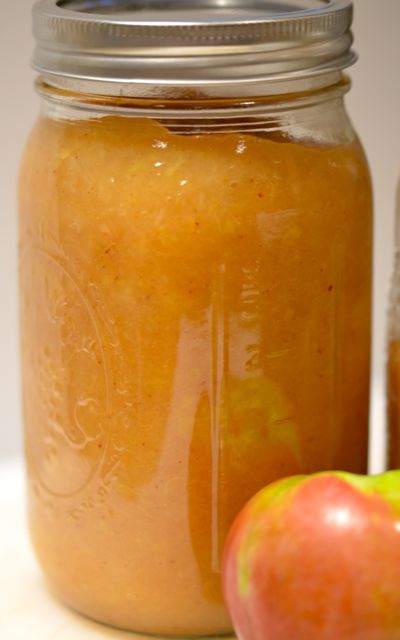
    2. Place the apples, in batches, into the food mill and process into a large bowl. Taste. Add sugar and/or water to adjust flavor and consistency (add ground cinnamon, if using). Serve warm, or allow to cool for one hour and store in jars. Will keep in the fridge for a week.
  • Surprises From The Orchard

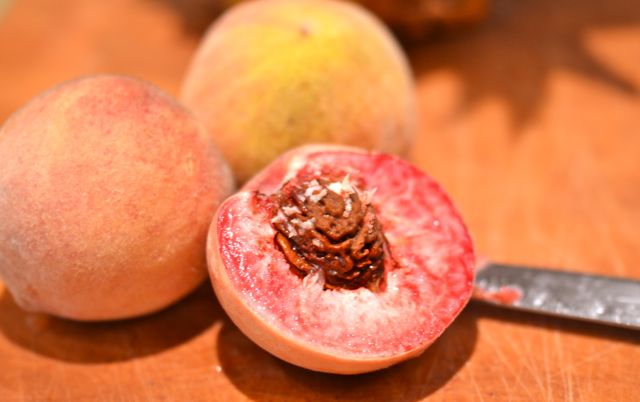
    Indian Free peaches. Yum.

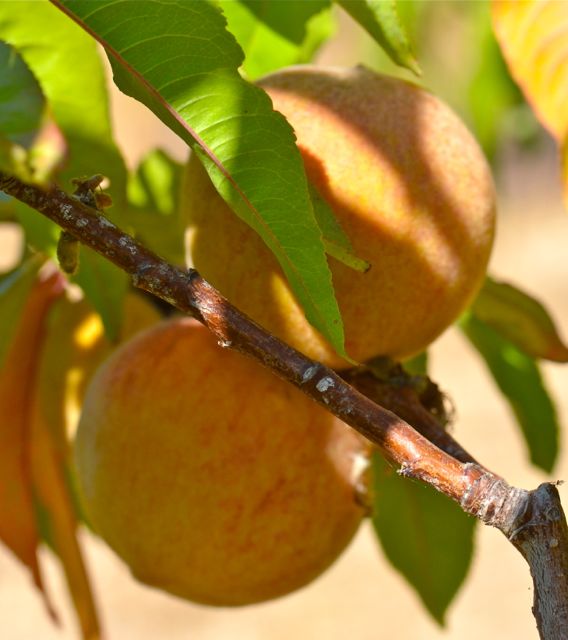
    Sometimes (all the time?) the garden and orchard throws you some surprises. We just spent months, with only middling results, fighting off the varmints from our peaches and nectarines (only passive measures, but one does get tempted to go “active”). Meanwhile, in the corner of the orchard one of our smaller trees had some peaches, but they seemed destined to stay hard and green forever. In fact, these were our Indian Free peaches, and they are a real treat.

    The Indian Free peach is a late-season heirloom peach, common in the northwest and known for resistance to leaf curl. It’s been a popular peach for centuries, Thomas Jefferson even had them at Monticello. And as Jefferson was quite a gourmet, we aren’t surprised, the Indian Free peach is incredibly tasty and very beautiful. Actually we should say the insides are beautiful, with lovely variegated red and white color. The outsides are somewhat less attractive with less blush tones and more dark patches. But beauty often really is skin deep.

    While the Indian Free’s appearance is somewhat undesirable (this and need for a pollinator make it perhaps a less popular commercial variety), the flavor is among of the best of any stone fruit we’ve tried. The Indian Free’s flesh is similar in color and flavor to a blood orange, with more tangy and “berryish” flavors than most peaches. And since we are big fans of blood oranges (see our early posts from last winter) we are instant fans of our Indian Free peaches. And while we could use them in cocktails or put up a few, we are just eating them…..quickly…

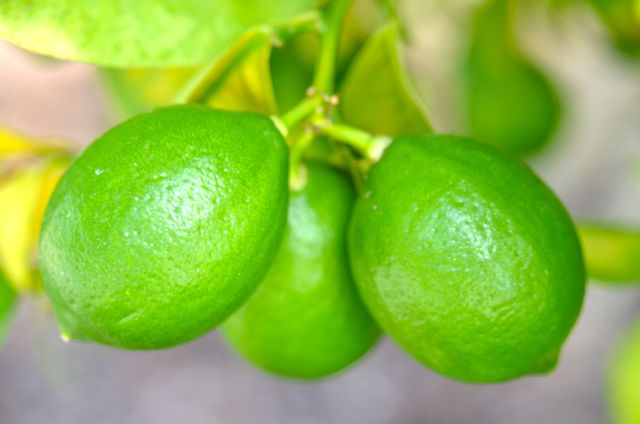
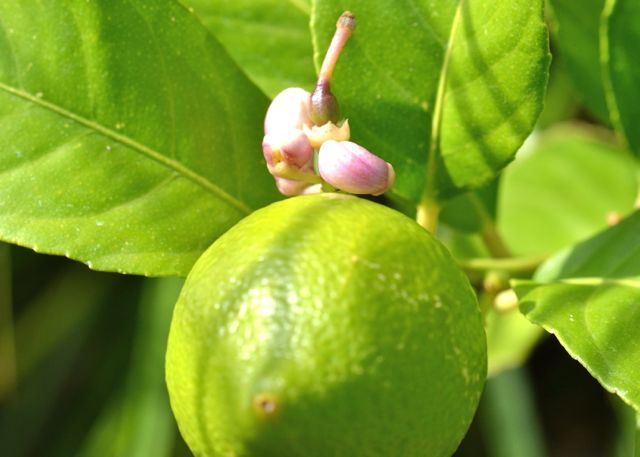
    Early Meyer lemons.

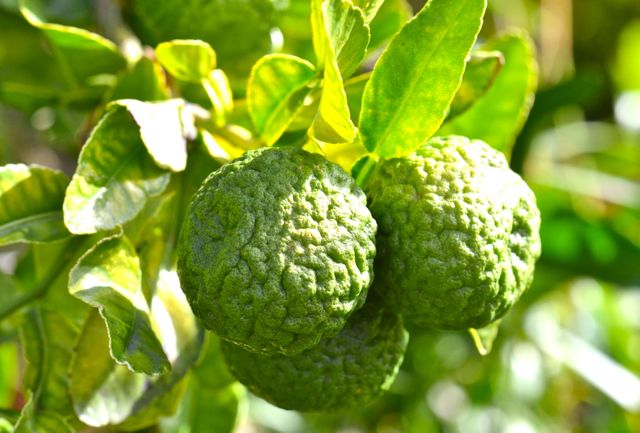
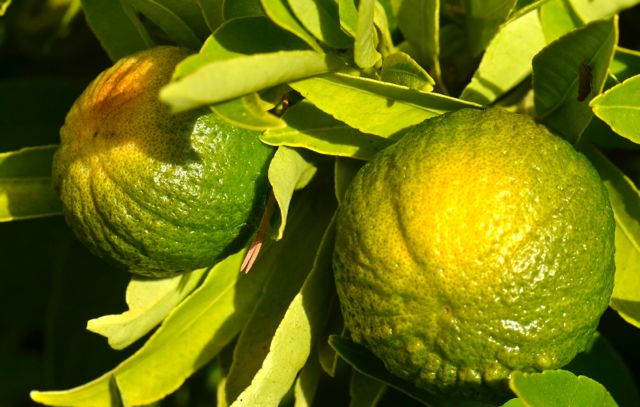
    Kaffir limes.

    Why didn’t the squirrels and wood rats go after the Indian Free peaches? We have no idea. We didn’t reinforce or weight the nets, and we waited until they were ripe (the varmints tend to go after the fruit a few days before we would pick). We could come up with any number of plausible explanations, but we have no real evidence of any changes in the orchard. We will chalk it up to dumb luck. Go figure.

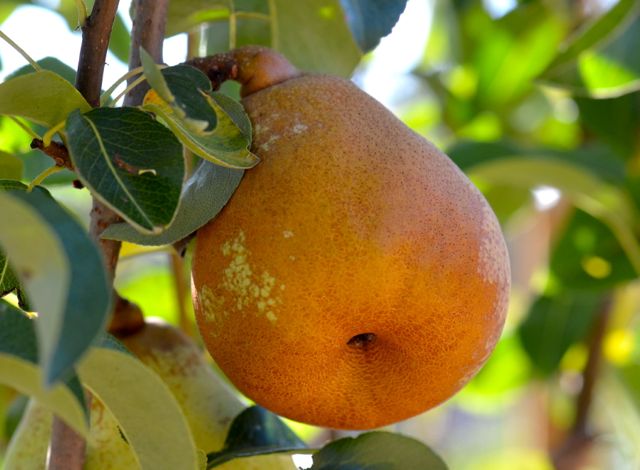
    As for the rest of the orchard, the pears and figs are coming soon, and we are very excited. The Comice pears and the figs should be ready in a week or two (some concern that what we thought was a Black Mission Fig is a different fig variety, more on this later). And the “mystery” heirloom pears that grow on the side of the house are still at least a month or two out- these take a while. But once they are done, a new season begins.

    And that means citrus! Our Meyer and Eureka lemons, Kaffir limes and Cara-Cara oranges are off and running. Meyer lemon-based punches for the holidays are already coursing though our minds. And sorbet, and preserved lemons, and lemon curd….you get the idea.

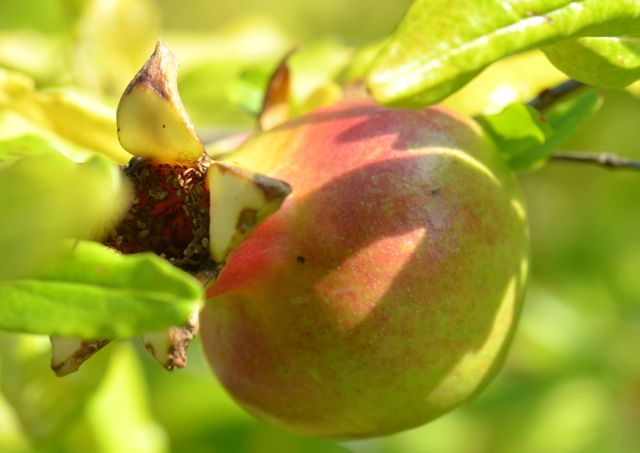
    And as a last pre-holiday bonus, we leave you with pomegranates. We get just a few every year. Not enough to call it a crop, but just enough for a snack and some smiles….

  • Teriyaki Chicken in Lettuce Cups

    Teriyaki Chicken.

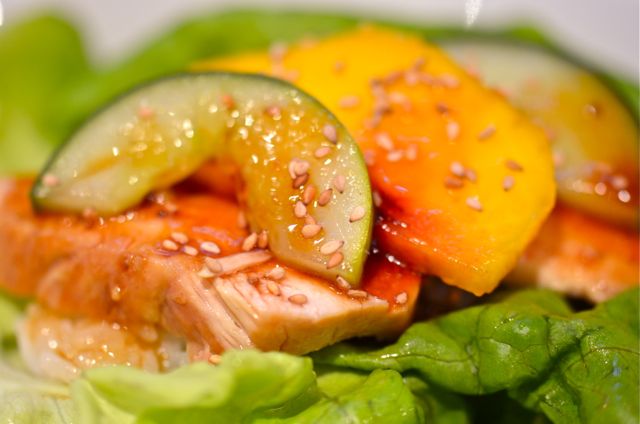
    Teriyaki Chicken in Lettuce Cups.

    If there is one thing we know about cooking, it is the “80/20 rule”. And in the case of cookbooks, this is almost doubly true. We tend to get more than 80% of our recipes from just 10%-20% of our (ever-growing collection of) cookbooks. So when we get a new cookbook and we find a bunch of good recipes, it is cause for a small celebration, or at least some extra cooking. And it looks like we have a winner with Debra Samuels’ “My Japanese Table“, her book on simple Japanese home cooking. So far we’ve made a number of recipes like Sushi Balls (good stuff and good fun) but often it is the simple recipes that define a good cookbook, and Samuels’ recipe for Teriyaki Chicken is a great example.

    Samuels describes Teriyaki sauce as “the Swiss-Army knife” of Japanese sauces, and that description is spot-on. Sweet, salty and tangy, Teriyaki goes well with chicken, beef, fish, veggies and rice. It just works, and we use it often, particularly as a glaze for fish. But, somewhat shamefully, we never made it ourselves. Happily, Samuels has an easy recipe and we decided to make it, and we are unlikely to ever buy store-bought Teriyaki again, homemade is much better. The homemade sauce has bright flavor with just enough ginger, glossy color and smooth texture.

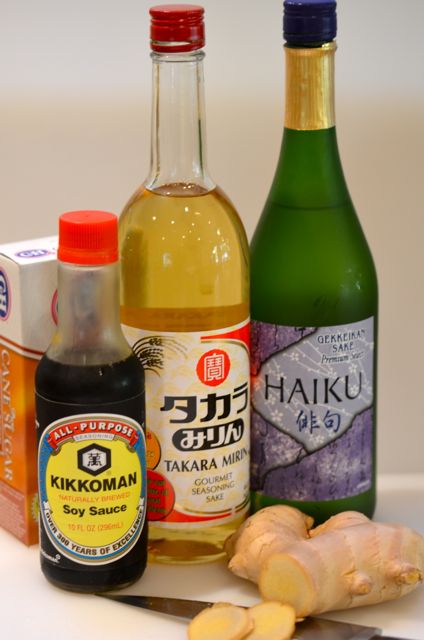
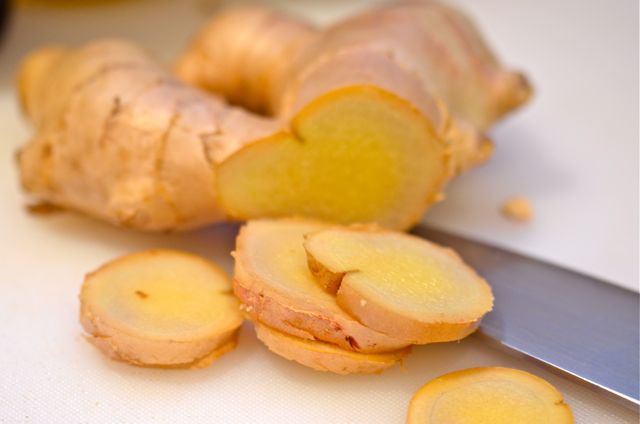
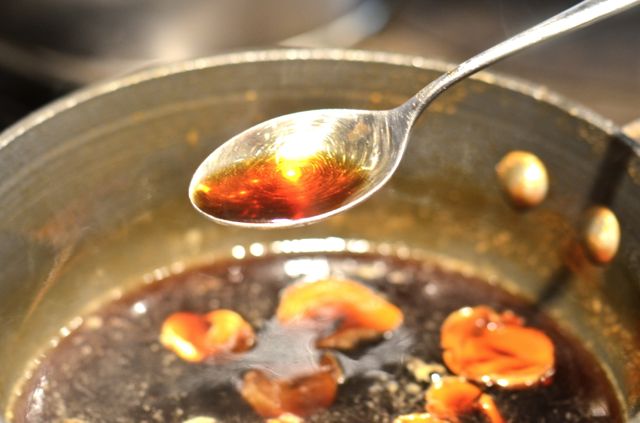
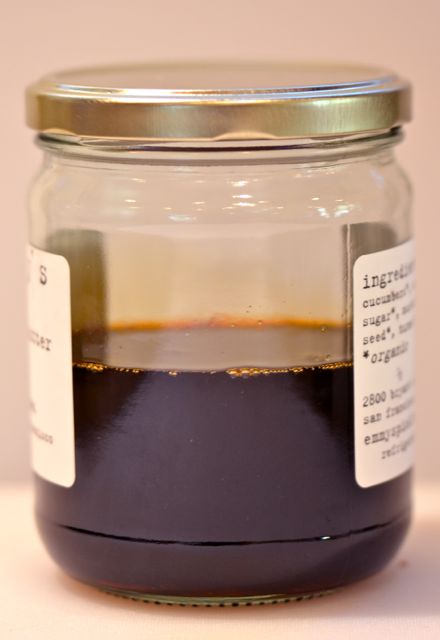
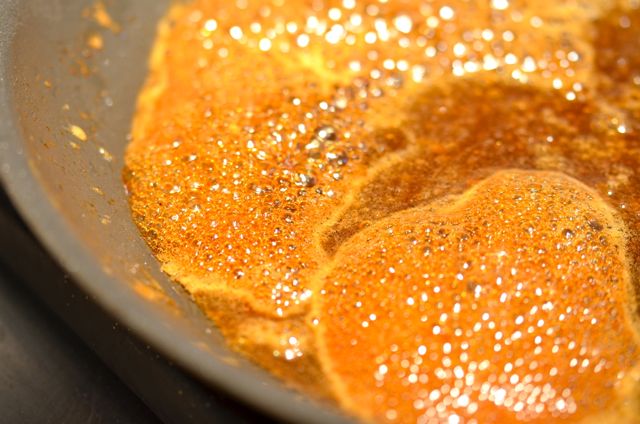
    Making the Teriyaki sauce is simple. Just combine, simmer and reduce mirin (Japanese cooking wine), sake, brown sugar, soy sauce and fresh ginger. It takes about 45 minutes. but you can make Teriyaki in large batches and it will keep in the fridge for at least a month. But unless you make a very big batch, we doubt it will last that long- you can use Teriyaki on pretty much anything. Basically, you can put this on a shoe and it will taste good…but why not try Teriyaki Chicken, instead?

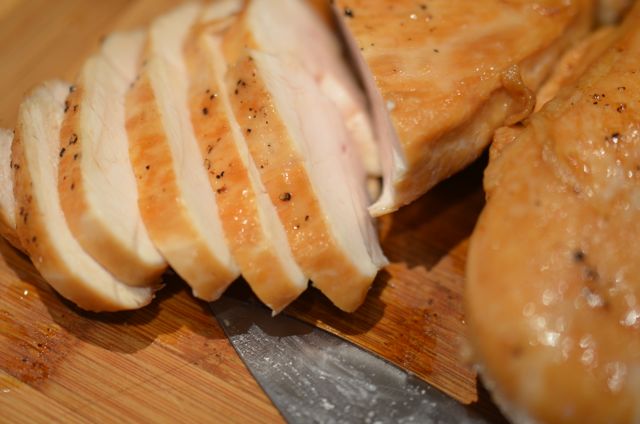
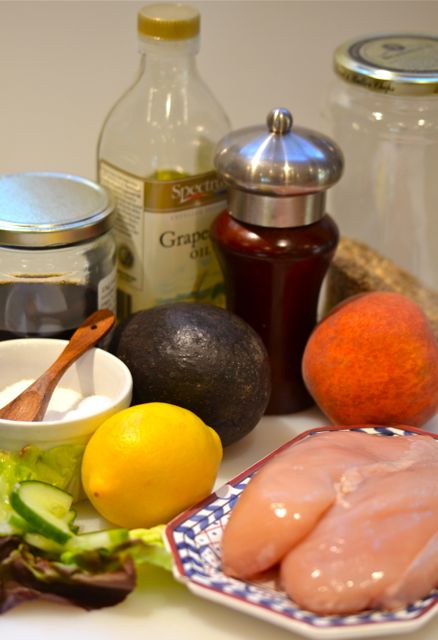
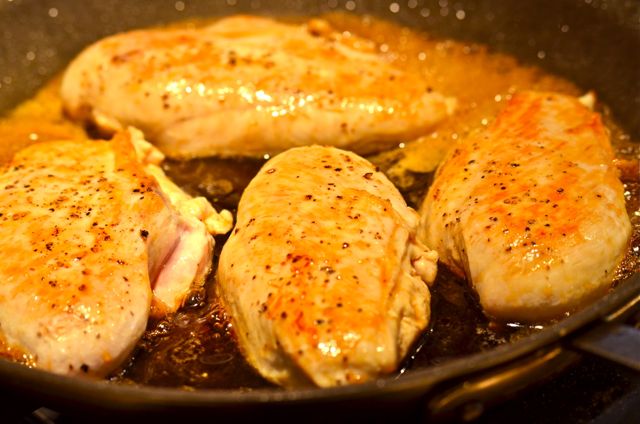
    And while it seems so “old-school”, good homemade Chicken Teriyaki is incredibly tasty, and a reminder of why many of us fell in love with Japanese cooking in the first place. And it’s easy to make. Simply season and brown chicken breasts (skin on or off) then add some of the Teriyaki sauce and simmer the chicken, turning often, until done. Then, while you rest the chicken, reduce the remaining Teriyaki and chicken juices into a thick glaze. Coat the chicken with some of the Teriyaki glaze, slice and serve.

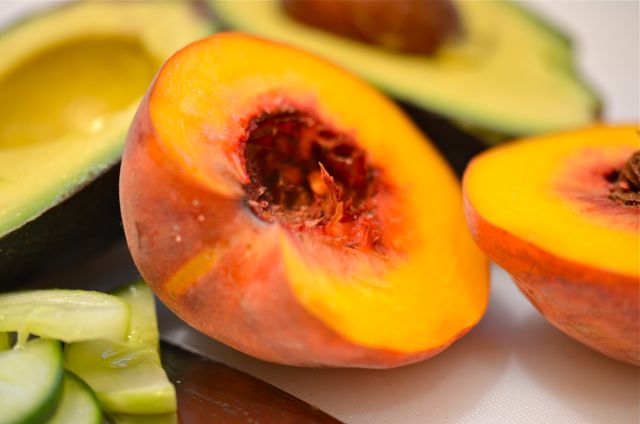
    And how do you serve Chicken Teriyaki? Samuels suggests with rice, shredded lettuce, some toasted sesame seeds, and a squeeze of lemon, and that will be very good. But we suggest making lettuce wraps (like ssam) with the sliced Teriyaki chicken, Japanese rice (or coconut rice), toasted sesame seeds with a variety of sliced fruits and veggies. In this case we used sliced peaches, quick pickles and avocado. Tasty, and a pretty complete meal. (And while perhaps not traditional, a few drops of Sriracha also work pretty well.) But however you serve Teriyaki, the bright big flavors and beautiful color will remind you this is a dish you should make more often… Continue reading

  • Cocktail DIY: Grenadine, Simple Syrups, Honey Syrup

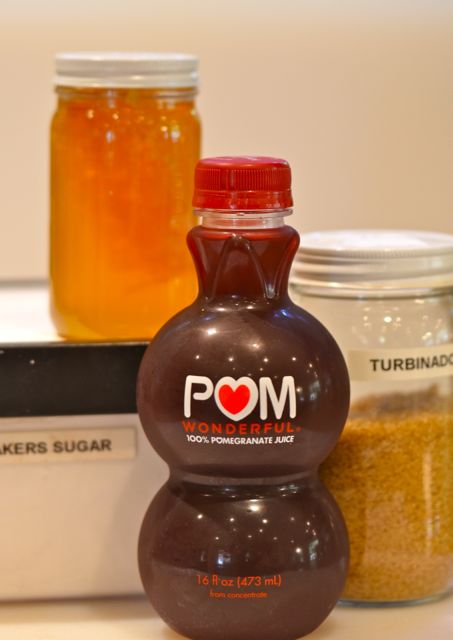
    If you like to “Do-It-Yourself”, then you might want to explore the world of cocktails. Besides making classic drinks from scratch, you can create your own cocktail recipes, boozy infusions, flavored syrups, brandied fruit garnishes, fat-washes (don’t ask) and even your own tinctures and bitters. And many of these DIY products will be way better than anything you buy in the store (a few won’t, btw). And if you want to explore the boundaries of cocktail DIY we suggest visits to Cocktail Chronicles, Boozed + Infused and Serious Eats, all have a wealth of detailed DIY recipes. But before you take the full plunge into cocktail DIY esoterica, we suggest a few basic syrups that cover many classic cocktails and Tiki drinks: Grenadine (pomegranate and sugar syrup), simple syrup ( white sugar or Demerara “raw” sugar syrup) and honey syrup.

    This is all you need to impress your party guests…;-)

    What makes these syrups so special? Firstly, you can make hundreds of snazzy cocktails with these syrups as the primary sweeteners (and they dissolve better in cold drinks than honey or granulated sugar- nobody likes gummy or gritty cocktails). Second, you can find all the ingredients at the grocery store. Third, you can make these syrups in under 15 minutes….combined. And finally, they keep in the fridge for weeks. So if you invest just a little time, you get a big payoff. And the payoff is in the cocktails. What cocktails? Here are just a few examples:
    Scofflaw with Grenadine.

    Grenadine: Planter’s Punch, Scofflaw, Tequila Sunrise, Jack Rose and Bacardi Cocktail (and the Shirley Temple / Roy Rodgers for the kids).

    Daiquiri’s use simple syrup (Demerara will make for a very different sip).

    Simple Syrup: Daiquiris, Mojitos, Collins, Sours, Juleps, French 75, and the Long Island Iced Tea (use Demerara syrup for a richer, molasses-tinged flavor).

    Lots of Tiki drinks use Honey Syrup.

    Honey Syrup: Air Mail, Bee’s Knees, Bebbo, Navy Grog, Tiki Bowl, Rum Barrel and the Missionary’s Downfall.

    And as we noted, making these syrups is very, very easy. You only need two basic cooking methods; mixing and boiling. Grenadine and honey syrup are the “mixers”. Just combine 1/2 sweetener and 1/2 liquid in a container and shake  (just use really hot water for the honey syrup). After a few minutes of shaking, you’re done.  The simple syrups require a brief boiling time to incorporate the sugar and water, but it only takes a few minutes.
    Finally, these syrups can keep for a while. Honey syrup, if kept in the fridge, will last up to a month. Both the Grenadine and simple syrup will last 1-2 weeks in the fridge, but adding a tablespoon of vodka or grain alcohol for every cup of syrup will extend their life a few weeks more. And once you make these syrups, you may find yourself using them quite often- your cocktails will be very tasty and have smooth, “professional” texture. Continue reading

  • Simple Garden Recipes: Panzanella

    Panzanella.

    As we move into Indian Summer, we often find ourselves torn. We start to see sign of fall and are tempted by fall flavors, but in reality our garden is still brimming with tomatoes, peppers and cucumbers. Happily there are plenty of good summer vegetable dishes to address this late-summer abundance. We already enjoy Caprese Salads and Gazpacho on regular basis. We make Ratatouille  (particularly to use up the eggplant). And whenever there is some country bread around we make Panzanella, a Florentine salad of bread, tomato, cucumbers, peppers, onions and a vinaigrette.

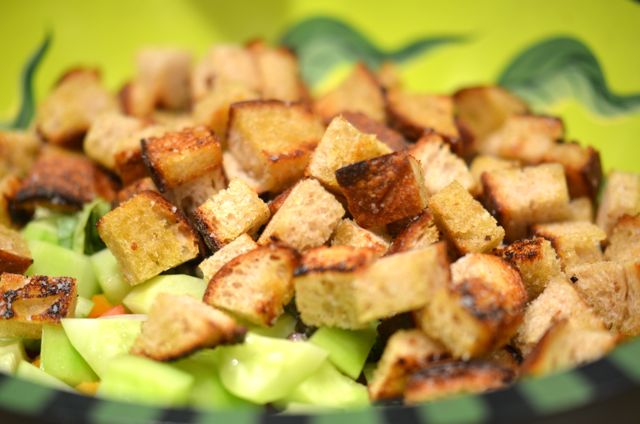
    Make some croutons.

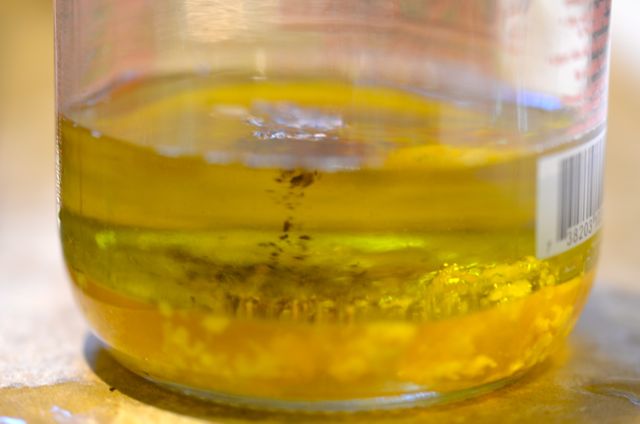
    Mix a quick vinaigrette.

    Now, if you just said to yourself “isn’t that just gazpacho that hasn’t been pureed?” you would be pretty close. And this makes some sense, the Spanish and Italians share a Mediterranean climate and cultivate similar summer vegetables. Odds are, you will see some similar seasonal dishes from these countries / regions (keep going east and you get a Greek salad) . And as we continue to cook from our garden, we see this pattern all the time. We have no doubt many recipes exist because seasonal ingredients often compliment each other and generations of cooks refined what became classic recipes. But we also have few romantic illusions about seasonal cooking, dishes like Gazpacho and Panzanella exist because they are a good way to pawn off use up all of those tomatoes and cucumbers. And usually when you get your tomatoes and cukes, you get a lot of them. Oh, and might as well use-up that old bread as well…

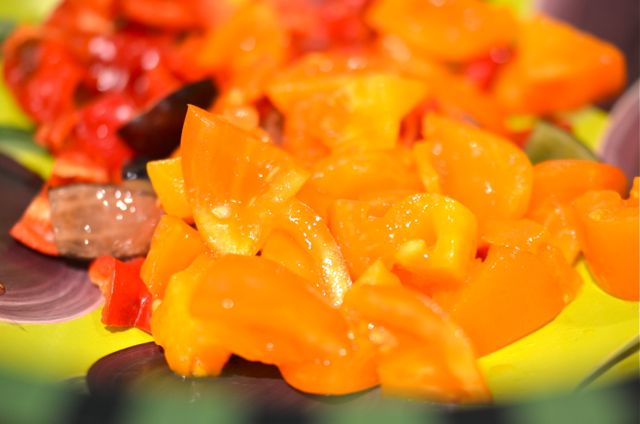
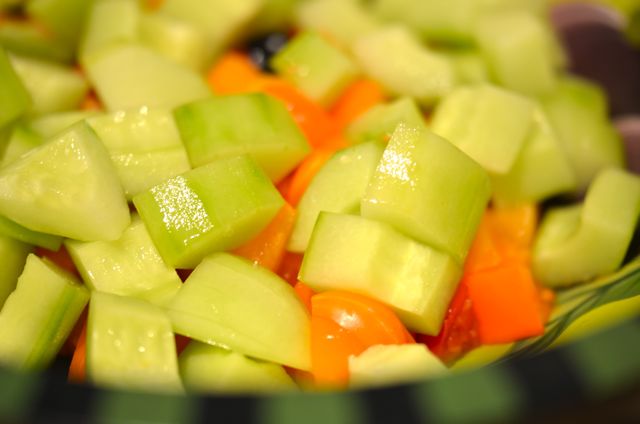
    Chop tomatoes and peppers.

    Add some chopped cucumber.

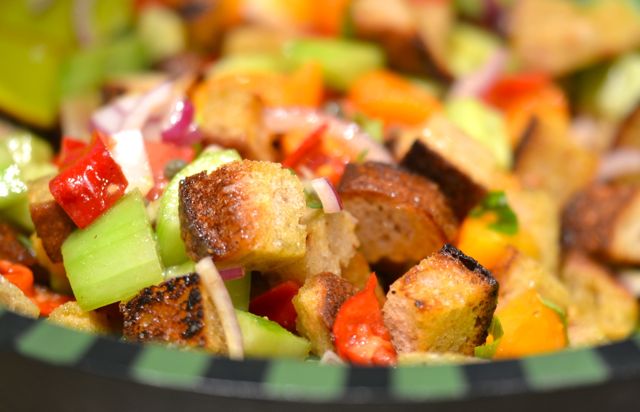
    And it does help if the dish actually tastes good, and Panzanella is often a delicious dish. But like many “classic” dishes there are plenty of recipes, not always good, and some details that make the most of the ingredients. We use an adapted recipe from Ina Garten that keeps things simple but has a lot of summer flavor (and uses up our veggies). The key step in this recipe is making croutons with the bread, and not just soaking stale bread. The warm, crunchy and salty croutons mix perfectly with the veggies, herbs and vinaigrette. And if you can chop vegetables and make vinaigrette, making the rest of this recipe is as easy as it gets. And if you have other ingredients you want to add, feel free- purists may cringe, but there are all sorts of Panzanella recipes out there. Find one you like.

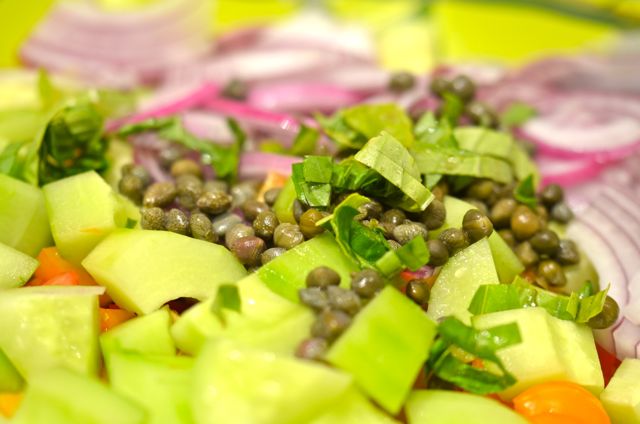
    Add some onion, basil and capers.

    Toss in the vinaigrette and add the croutons.

    As for the history of Panzanella, it’s been around in some form since the 16th century. Originally Panzanella combined bread, onions and vinegar. While this was probably “ok”, we think we can speak for most people and say adding tomatoes and peppers (and cukes) in the 19th and 20th centuries probably improved the dish. (Gazpacho has a similar history and improved with the addition of tomatoes, IMHO). As it often turns out, an abundance of tomatoes usually makes for better eating, particularly in summer. So if you can’t pickle one more cucumber of bottle one more jar of tomato sauce, take what you have left, grab some old bread, invite a few friends over and make Panzanella. Enjoy the bounty of summer while you can.

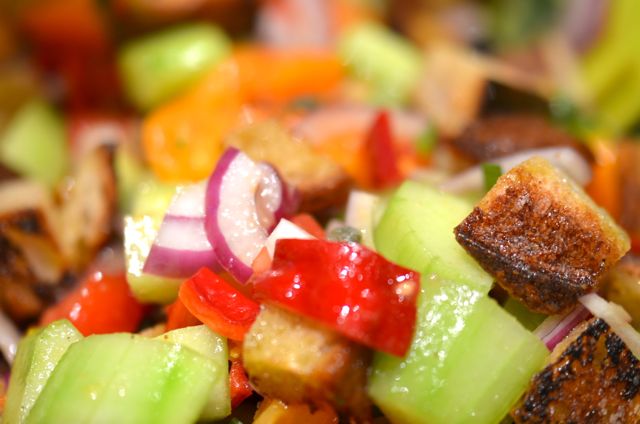
    Serve.

    Panzanella:

    (Adapted from Ina Garten)

    Ingredients:

    (Serves 8-12 as a salad)

    Salad:

    • 3 tablespoons olive oil
    • 6 cups country bread (1 small to medium loaf), cut into 1 inch cubes
    • 1 teaspoon kosher salt
    • 2 large ripe tomatoes, cut into 1 inch cubes
    • 2 sweet red and/or yellow peppers seeded and cut into 1 inch cubes
    • 1 cucumber, seeded and cut into 1 inch cubes
    • 1/2 medium red onion, cut in half and thinly sliced
    • 1/4 cup fresh basil leaves, coarsely chopped
    • 3 tablespoons capers, drained

    Vinaigrette:

    • 1 teaspoon garlic, finely minced
    • 1/2 teaspoon Dijon mustard
    • 3 tablespoons white wine or champagne vinegar
    • 1/2 cup good olive oil
    • 1/2 teaspoon kosher salt
    • 1/4 teaspoon freshly ground black pepper

    Assemble:

    1. To make the croutons, heat the 3 tablespoons of oil in a large sauté pan or skillet. Add the bread and salt. Cook over medium-low heat, tossing frequently, until browned. About 10 minutes. Set aside when done.
    2. To make the vinaigrette, whisk all the ingredients together in a small jar or bowl.
    3. Chop all of your vegetables add place into a large mixing or salad bowl. Add the basil and capers. Add the vinaigrette (don’t do it all at once, add half and see what you need to add) and toss thoroughly. Add the bread cubes and toss again. Taste for seasoning and add salt and pepper as needed. Serve immediately or let the flavors meld 15-30 minutes before service.