• Weekly Cocktail #26: The Polynesian Cocktail

    The Polynesian Cocktail. This is for you Viveka!

    This post marks a half-year of weekly cocktails at Putney Farm. And while it seems like a lot, there are so many more places to go with cocktails. We are certainly enjoying ourselves and hopefully our readers like the drinks, or at least the conversation (we know not everyone loves every drink). And with the “conversation” in mind, one of our blogging friends Viveka from My Guilty Pleasures mentioned she likes Vodka and Cherry Heering, so we decided to look for a cocktail with both ingredients. And as it turns out, a little research led us to the Polynesian Cocktail.

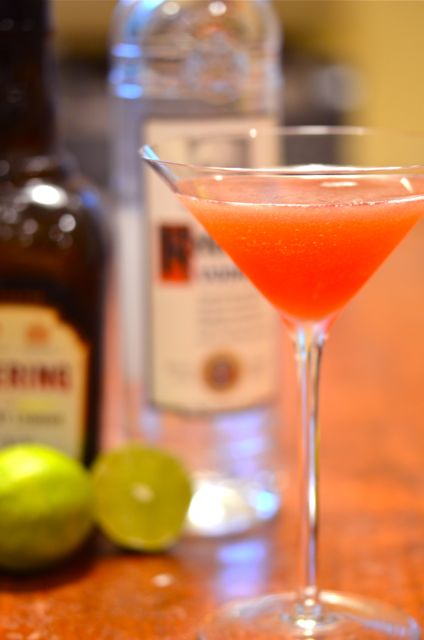
    The Polynesian combines vodka, Cherry Heering and lime juice. And some recipes include a little powdered or superfine sugar. It is easy to make and you can serve this cocktail “up” in a cocktail glass or on the rocks, it works either way. The flavor of the Polynesian comes across as cherry-limeade with a kick, and we are fans of cherry-limeade. This is a very easy drink to like.

    If you are unfamiliar with Cherry Heering, it is a Danish cherry liqueur, and in the opinion of many booze aficionados, one of the best fruit-based liqueurs in the world. Made from crushed cherries combined with neutral spirits and spices, and then aged in wood barrels, Cherry Heering has deep, developed flavors that work wonders in cocktails (and desserts). It’s been around with basically the same recipe since 1818, so you know it’s pretty good. And after Orange Liqueur, if you have one fruit liqueur in your bar, we suggest Cherry Heering. It works in all sorts of combinations, most famously the Singapore Sling and the Blood and Sand. But if you want to experiment, Cherry Heering is a very fun ingredient that blends well with both light and dark spirits.
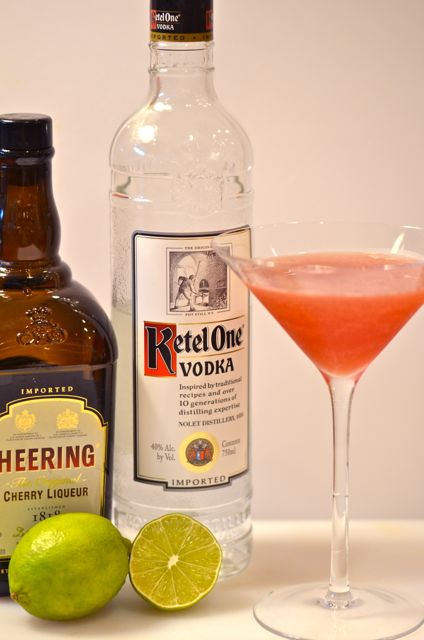
    Polynesian Cocktail and ingredients.

    And this gets us to the vodka. Some cocktail enthusiasts and mixologists/bartenders have issues with vodka. It has no (or very little) flavor by design and is sometimes a bit heavily marketed and abused (see: Whipped Cream Vodka). But we like vodka in drinks when we want the kick and slight heat of the booze but don’t want to outshine fruit flavors. Carolyn is a true fan of Lemondrops, and I like the vodka/gin mix in a Vesper. And regardless of any cultural over-exposure, a good Cosmo is a fine drink and a crowd-pleaser. And the cold, hard blast of a vodka martini is still a good thing every once in a while. Sometimes we think of the anti-vodka crowd as the cocktail equivalent of the ABC (anything but chardonnay) “movement” in wine. Yes its popular, yes there are other fine spirits, but it has its merits. We will relax and enjoy vodka for what it is. And in a drink like the Polynesian, where you want the lime and Cherry Heering to lead the drink, vodka is the perfect spirit.

    As for why this drink is called the Polynesian, we have no idea, and some internet and cocktail book research didn’t help. There is nothing Polynesian about it…other than maybe the color and that it’s a good warm-weather sip. But who cares? A good cocktail is a good cocktail. Especially when shared with friends. Viveka, we hope you like it!

    The Polynesian Cocktail:

    Ingredients:

    • 1 and 1/2 oz. vodka
    • 3/4 oz. Cherry Heering (or cherry brandy, in a pinch)
    • 3/4 oz. fresh lime juice
    • 1 teaspoon superfine or powdered sugar (optional, we omit)

    Assemble:

    1. Combine all ingredients in a cocktail shaker with ice and shake until cold. Strain into a chilled cocktail glass, flute or coupe’. Serve.

    -or-

    1. Combine all the ingredients in a highball glass with ice. Stir and serve.
  • Gazpacho Andaluz

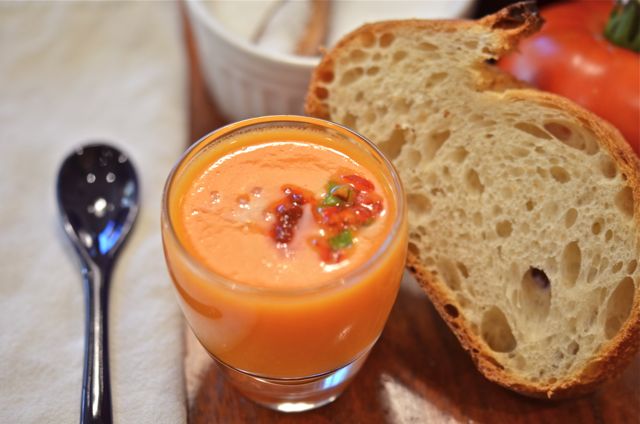
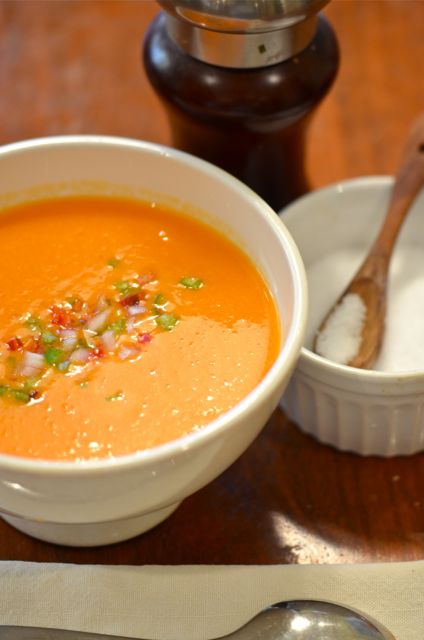
    Gazpacho Andaluz.

    More Gazpacho Andaluz.

    As we often note in the blog, this time of year the garden dictates much of what we cook. Happily, we have ripe tomatoes, cucumbers and peppers in the garden. And it’s hot, so we don’t want to spend too much time at the stove. So not surprisingly, we make gazpacho, the famous cold vegetable soup of Spain. But what may surprise is that we have mixed feelings on gazpacho. Carolyn loves almost any good gazpacho, but my feelings are sometimes mixed (I think the flavor is sometimes garlicky or muddy and the texture too chunky). But this recipe changes that, we both love this version of gazpacho.

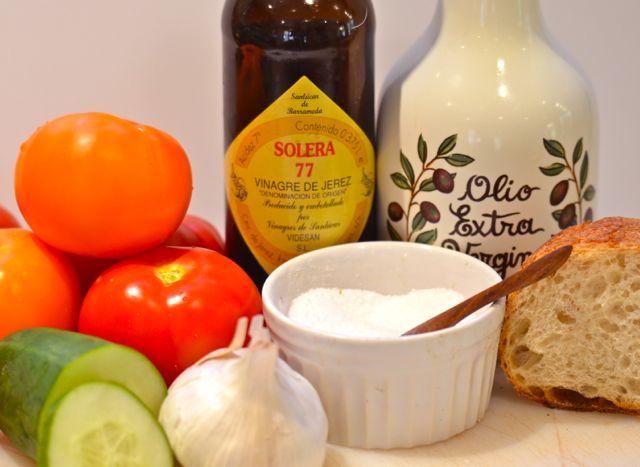
    Ingredients straight from the garden.

    Our recipe is adapted from Saveur, like most gazpacho recipes it includes ripe tomatoes, cucumbers, peppers, onion, garlic, bread, sherry vinegar, oil, water and salt (we also like a touch of smoked paprika). But unlike most recipes, it focuses on the tomato and cucumber, lightens the garlic and uses the onions and peppers for garnish. The recipe also calls for the gazpacho to be pureed in the food processor and then passed through a coarse sieve. While this is just a bit of extra work, what you get is a light, smooth gazpacho with very clean and bright tomato flavor. As a garnish, the peppers and onions add crunch and bright flavors, but without dominating. We think it looks good, too.

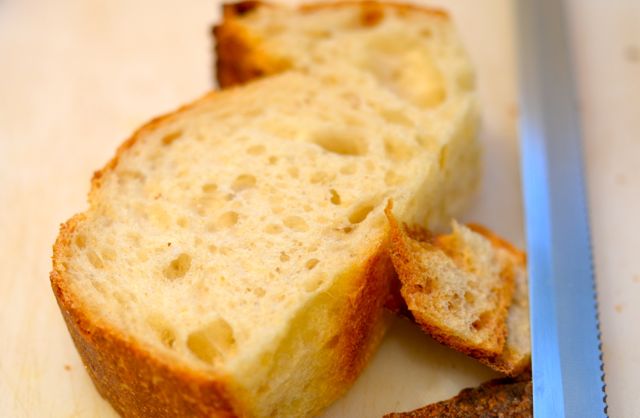
    Remove the crust and soak the bread.

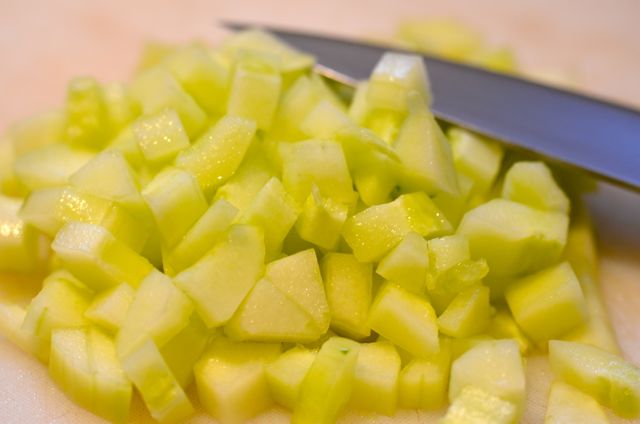
    Peel, core and chop the cucumbers.

    Slice the tomatoes crosswise and squeeze out the seeds.

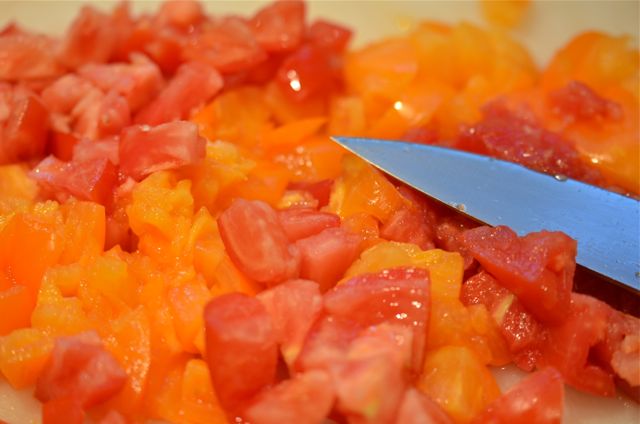
    Coarsely chop the tomatoes.

    And when the tomatoes are super-ripe and sweet, this dish really sings. As our friend, chef and Spanish food aficionado Chad says, “gazpacho is great when you need the vinegar to balance the sweetness of the tomatoes, instead of looking for sweetness to offset the vinegar”. We think Chad has it right. And one of the best things about this dish is that you can follow the base recipe and add vinegar, salt and smoked paprika to balance the flavors. And since there is just a touch of garlic in this version of the dish, you can actually enjoy the sweet tomatoes.

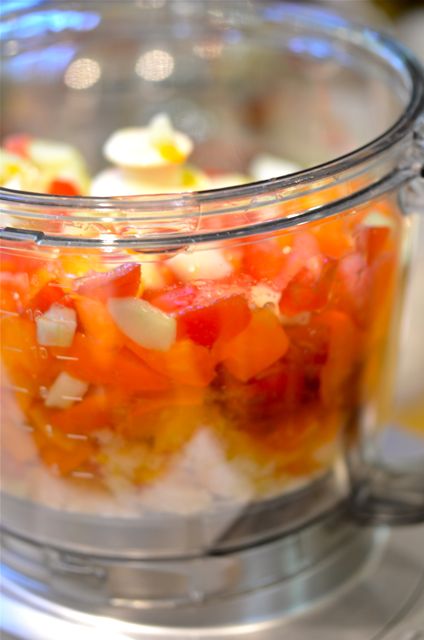
    Vegetables, bread, oil, vinegar and water into the food processor.

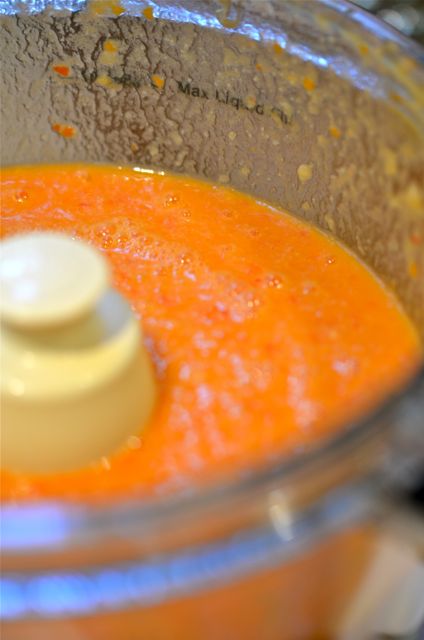
    Puree until very smooth. Continue reading

  • Bonus Cocktail: The Scofflaw

    The Scofflaw Cocktail.

    Scofflaw: a person who habitually flouts or violates the law.

    Well, we like this cocktail already… And of course, as you probably guessed, this drink is from the prohibition era. In fact, the word “scofflaw” was invented, in a 1920’s contest no less, to describe those proud and free souls who happily ignored the odious Volstead act. And in the spirit of the times, it didn’t take long to get a Scofflaw cocktail. Sadly, the word “scofflaw” now applies mostly to people who don’t pay parking tickets. Shameful.

    Scofflaw and ingredients. All are readily available.

    And it is a bit shameful that the Scofflaw isn’t a more popular drink. It’s a terrific, classic cocktail that gets a big thumbs-up from a wide array of professional tasters our friends. The scofflaw combines Rye whiskey, dry vermouth, lemon juice and grenadine, and some recipes include a dash of orange bitters. The result is a sip that starts with a pleasant sour note from the lemon, then sweetness from the rye and grenadine, and a dry finish from the vermouth- with a lovely spicy note from the rye. This drink is a crowd-pleaser. If you are a fan of whiskey or cognac-based cocktails, this is a light, but familiar sip. If you are a fan of gin, vodka or rum cocktails, the dry vermouth lightens the whiskey but keeps the sweet, spicy flavor. Good stuff. The Scofflaw is a fast favorite here at Putney Farm.

    The drink itself was created in 1924 at Harry’s New York Bar (in Paris). The original recipe, as noted in older cocktail books like the Savoy Cocktail Book and Cafe Royal Cocktail Book, suggests 2 parts each of rye (or Canadian) whiskey and dry vermouth, 1 part each of lemon juice and grenadine and then a dash of orange bitters. More recent versions of the recipe, like Ted Haigh’s from Vintage Spirits and Forgotten Cocktails, tend to specify rye whiskey, increase its amount above the vermouth and omits the orange bitters. We tried both recipes (included below) and they each work. In general, if you like rye- use the recipe with a bit more rye. If you prefer a lighter, dryer flavor, the original recipe might be the best bet. We tied a few tweaks to the recipe and the basic alchemy of the Scofflaw still holds. Like we said, a good drink.

    As for the spirits, we tried both rye and Canadian whiskey, and we prefer the overt spice of the rye. For the dry vermouth, we suggest a good one like Dolin- as the vermouth plays a big role in the overall balance of the drink. As for the grenadine, we should make our own (here is a good recipe) but get lazy sometimes. But we do try to use “real pomegranate” grenadines, as they simply taste better than artificially flavored versions. And fresh lemon juice is a must.

    But one of the best things about the Scofflaw is that all the ingredients are readily available. You can make this drink almost anywhere and anytime. So the next time “the man” has you down, go enjoy a Scofflaw, and join a proud tradition of civil (and somewhat trivial) disobedience… 😉

    The Scofflaw Cocktail (Original Recipe):

    (Adapted from the Savoy Cocktail Book)

    Ingredients:

    • 1 oz. rye or Canadian whiskey
    • 1 oz. dry vermouth
    • 1/2 oz. lemon juice
    • 1/2 oz. grenadine
    • 1 dash orange bitters (Regan’s)

    Assemble:

    1. Combine all the ingredients in a cocktail shaker with ice. Shake thoroughly and strain into a chilled cocktail glass or coupe’. Serve.

    The Scofflaw Cocktail (Updated Recipe):

    (Adapted from Vintage Spirits and Forgotten Cocktails)

    Ingredients:

    • 1 and 1/2  oz. rye or Canadian whiskey
    • 1 oz. dry vermouth
    • 3/4 oz. lemon juice
    • 3/4 oz. grenadine

    Assemble:

    1. Combine all the ingredients in a cocktail shaker with ice. Shake thoroughly and strain into a chilled cocktail glass or coupe’. Serve.
  • Weekly Cocktail #24: Long Island Iced Tea

    Long Island Iced Tea Cocktail.

    Well, “when in Rome…” And in this case, “when in Long Island….make Long Island Iced Tea”.

    While this cocktail is much tastier than you might think, there is no tea in this drink, and there is nothing “long” about it. “Long” drinks usually denote cocktails that are less boozy and often served in higher volumes, like a Pimms Cup or Dark n Stormy (a Diablo is also a good long drink). Long drinks often make for good summer cocktails, as you can sip them over a lazy afternoon. But with the Long Island Iced Tea, you can sip one over a full afternoon and still feel like you had a Three-Martini lunch…umm… make that a four-martini lunch.

    Many ingredients, but most are easy to find or are in your bar right now.

    The trick with the Long Island Iced Tea (Latin translation: needus designus driverus) is that most recipes suggest anywhere from four to seven ounces of high-proof spirits per drink (most cocktails have two ounces)- but you really don’t taste the booze. The Long Island Iced Tea tastes good (very good if you tweak the recipe), and goes down way to easy for its own (and your own) good.

    Most recipes suggest an ounce to an ounce-and-a-half each of gin, vodka, tequila, rum and triple sec, with some lemon, simple syrup and a splash of coke. We include that recipe below, but it is a bit sweet for most. And while it tastes good, most of the attraction is of the “I can’t believe this drink is smooth with so much booze” category. Our version lightens the drink somewhat (not much) but omits the triple sec and adds more lemon and coke. Usually we don’t mess with original recipes without changing the name of the cocktail. But there are literally dozens of variations on the Long Island Iced Tea (see here, if curious), so whats one more version of the recipe?

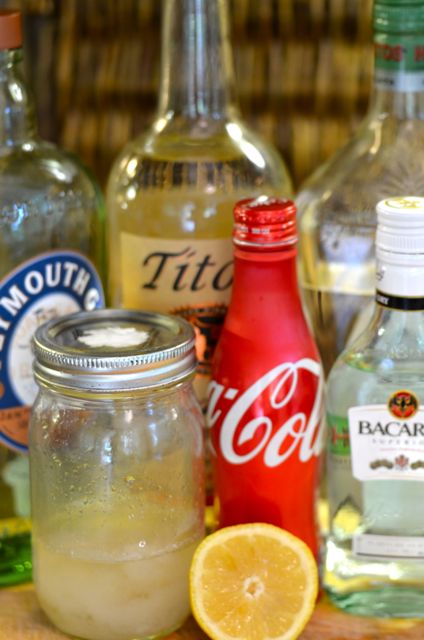
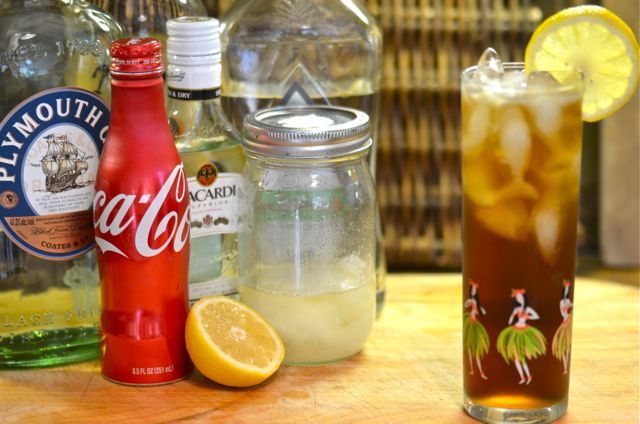
    Long Island Iced Tea and ingredients.

    As for the spirits used in the recipe, there is no need for anything special. Decent, inexpensive rum, gin, tequila and vodka will do fine. The real alchemy of the drink is how the spirits mesh, if you add something too good, or aged, it won’t help and may actually harm the drink- and why waste the money? If you do want the best result, fresh lemon juice and simple syrup will work better, but sour mix will work in a pinch. All recipes suggest Coke, and that’s what we use, but any decent cola should be fine. And serve with lots of ice, the dilution helps the drink, and softens the booze (a tiny bit). And in the end, you have a very tasty drink that is a good summer sip. Think rum and coke, but with more tartness, depth and complexity. Just be careful if you have more than one.

    A few too many and you may end up looking like this…

    As for the history of this drink, there are simply too many stories to know where it came from. TGI Fridays claims they invented it (doubtful), but bars from Long Island to Tennessee also claim to be the creators. And to make matters worse, the timeframe varies anywhere from the 1920’s to 1970’s. But since neither tequila or vodka were common in the states until the 1950’s, we suspect the Long Island Iced Tea is a more recent creation. But perhaps fittingly, after a few of these cocktails, no one would remember anyway… 😉

    The Long Island Iced Tea: (Our version)

    Ingredients:

    • 3/4 oz. white rum
    • 3/4 oz. blanco tequila
    • 3/4 oz. dry gin
    • 3/4 oz. vodka
    • 3/4 oz. lemon juice
    • 1/4 oz. simple syrup
    • 2-3 oz. cola
    • Lemon wheel, for garnish

    Assemble:

    1. Combine the spirits, lemon juice and simple syrup in a highball or Collins glass with lots of ice. Mix and then top with the cola. Add the lemon wedge and serve.

    Continue reading

  • Sushi Balls: Sushi At Home

    Sushi balls. Fun sushi at home.

    When we started writing this blog, one of the promises we made ourselves was to use the blog as motivation to cook new things at home. And so far we are making progress, but mostly with new tools like sous-vide and using “molecular gastronomy” ingredients in baking. But the next step was for us to explore new cuisines, and we went right for Japan.

    We love Japanese food and have a favorite local sushi bar and are even members in a Sake tasting club (great fun), but rarely cook anything other than tempura at home. But we decided that needed to change. So we bought Debra Samuels’ “My Japanese Table”, a cookbook with Japanese recipes adapted for the American kitchen. Samuels is a well-regarded food writer for the Boston Globe and lived /cooked in Japan for ten years, so we took the plunge. So far the cookbook is a good read, with plenty of simple recipes for Japanese basics like teriyaki and tempura. But we know what we wanted to do at home, sushi. And this recipe is why we bought the cookbook. Sushi balls are very pretty sushi that you can make at home. And its fun…really.

    Smoked salmon, salmon roe, seared ahi, shrimp, cucumber and shiitake mushroom.

    Usually the big issue with making sushi at home is actually constructing the rolls. Sushi rice is super-sticky and the shaping tools are uncommon for most home cooks. Without constant practice, home sushi can look like a train wreck. And while the flavor of the sushi can be good, the presentation is a big part of the dish. One way to handle this challenge is to simply prepare the rice and ingredients and then present them with nori as a buffet for hand-rolls. But with Sushi balls, anyone can make an attractive individual piece of sushi. You can even have fun and experiment with presentation.

    The trick is to simply place the fish or veggie on a square of plastic wrap, then place a tablespoon or so of rice on top (be sure to keep your hands moist with water when handling the rice).  Then bring up all the corners of the plastic wrap and twist tightly into a ball. When it unwinds, you have a well-shaped sushi ball. It only takes a few tries to get the hang of it, and then you can experiment with different combinations of ingredients. Samuels suggests cooked shrimp, lightly salted cucumbers and smoked salmon. We added some seared ahi, salmon roe and browned shiitake mushrooms. Cooked crab or scallops would also be very good additions. But feel free to experiment based on taste and budget (and this is an inexpensive dish).

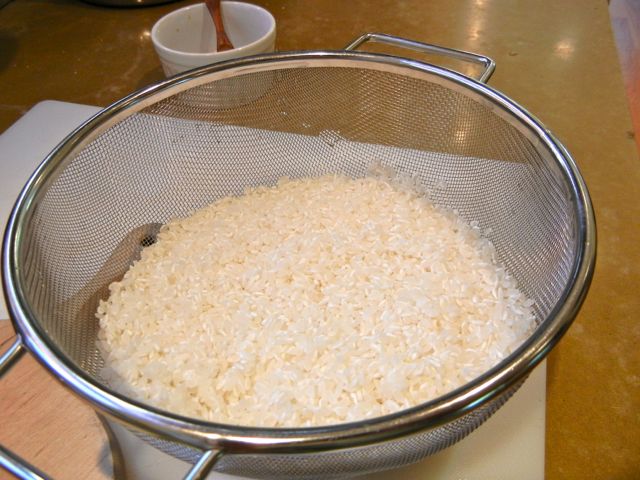
    Rinse the rice and drain.

    Ingredients for Sushi-zu seasoning

    Cooked rice, sprinkled with Sushi-zu seasoning.

    Now that shaping the sushi is less of a challenge, the real effort goes in making the sushi rice. While in sushi bars “mastering” the rice can take years, it is something you can do well at home- on the first try. The trick is to buy the correct rice and follow all of the steps. For the rice you need short grain japonica rice, which is available in most supermarkets. Don’t substitute long grain rice. As for the steps, you must rinse the rice and then either soak it for cooking or use a rice cooker- the recipe deals with both. While the rice is cooking you make the Sushi-zu seasoning of rice vinegar, sugar, salt and mirin. When the rice finishes cooking, you place it in a bowl and then gently sprinkle and mix the Sushi-zu seasoning with the rice. Then fan the rice to cool it down. The rice should stick together but not be mashed or “gluey”.  But if you use the right rice and follow each step you will get consistent, tasty, results.

    Slice cucumbers, sprinkle with salt, wait for 5 minutes and drain. Done. Continue reading