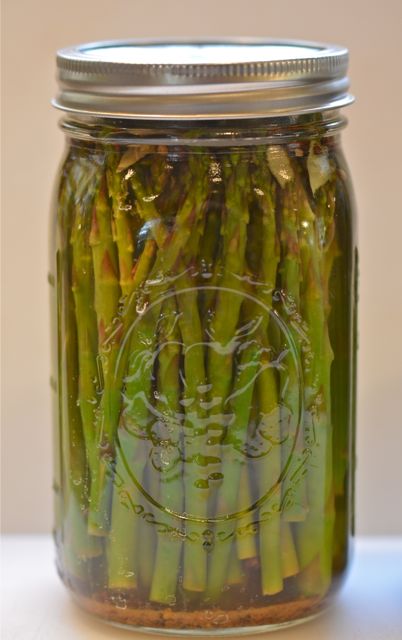
Pickled Asparagus.
We try to avoid too many shameless plugs here at the farm, but often sometimes I can’t resist. For the last few months I’ve worked with Edible Silicon Valley magazine on both the print and online editions. I do most of the blogging, which I love (and you can check out here), but there is still something special about seeing your words in print. And our Spring edition just came out and I wrote a few of the articles and took a number of the photos (Carolyn will have some photos in the summer edition). If you want to explore the amazing new form of indoor, sustainable, organic farming created by Ecopia Farms, try this article. And if you want to learn about an entire town that truly embraced gardening and local produce, you may want to peek at this article.
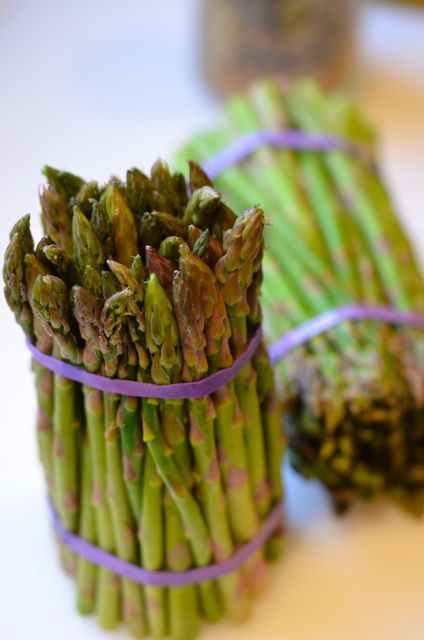
 But in the end of the day, we still like to cook, adapt and write recipes and take pictures. It’s kinda what we do here. Happily, we also got to do that for Edible Silicon Valley and this recipe for Refrigerator Pickled Asparagus (along with this quick pickle recipe) is in print for all to see. As gardeners we know it takes time for things to grow, but maybe a few articles in print will eventually lead to a cookbook. One can dream.
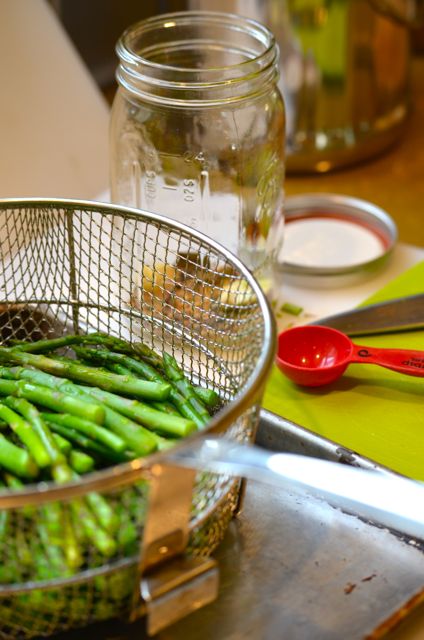 As for the recipe, asparagus is in season here in Norcal and few things taste better than pickled asparagus. Refrigerator pickles are a very easy way to keep the sweet, earthy flavor and crunch of the asparagus, but also add spice and acidity. And you don’t need a canning rig or anything complicated for refrigerator pickles. The only important tip here is to quickly blanch the asparagus so the pickling liquid can penetrate all the way through the stalks.
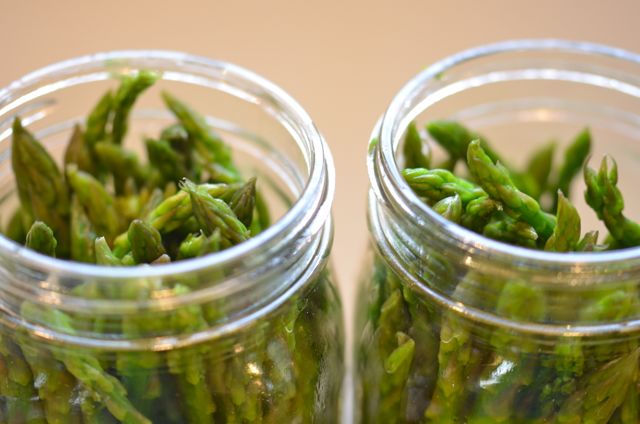
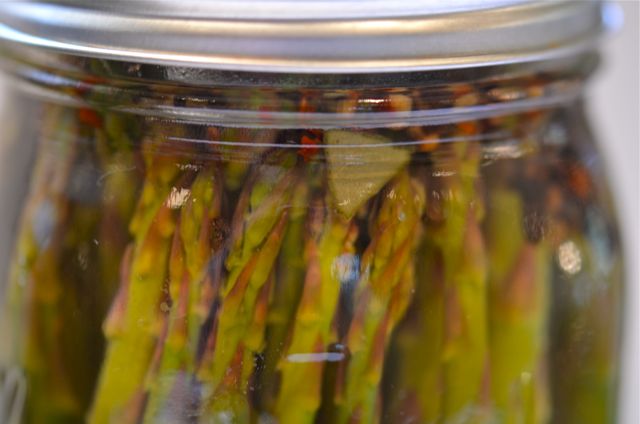 Otherwise, if you can boil some liquid and mix some spices, you can make refrigerator pickles with almost any veggie. The only bummer is that the pickles are best if you let them sit for at least a day (better at 2-3 days) in the fridge before you start snacking. We try to wait, but often fail. These asparagus pickles are hard to resist. Even the kids like them.
 Pickled Asparagus:
(From our recipe in Edible Silicon Valley)
Notes before you Start:
- You can use store-bought pickling spice, but it is easy to make at home. See below for a recipe.
- Blanching the asparagus before pickling is an extra step, but very much worth it, the flavor and texture will be much better.
What You Get: Very flavorful asparagus pickles. Yum.
What You Need: No special equipment required. Which is nice.
How Long? About 30 minutes to make the pickles, and then at least a day of waiting. Anytime dish.
Ingredients:
(Makes 2 (24-ounce) or 4 (12-ounce) jars)
- 3 pounds asparagus, washed and trimmed to fit your jars
- 1½ cups water
- 1½ cups white vinegar
- 2 tablespoons salt
- 2 tablespoons pickling spice (*To DIY, see recipe below.)
- 2 garlic cloves, peeled and lightly crushed
Assemble:
- Combine vinegar, water and salt in a saucepan over medium heat and bring to a boil. Set aside.
- Fill a large saucepan with water and bring to a boil over high heat. Add the asparagus to the pot and cook for exactly 1 minute. Transfer asparagus to a colander and run under cold water until chilled.
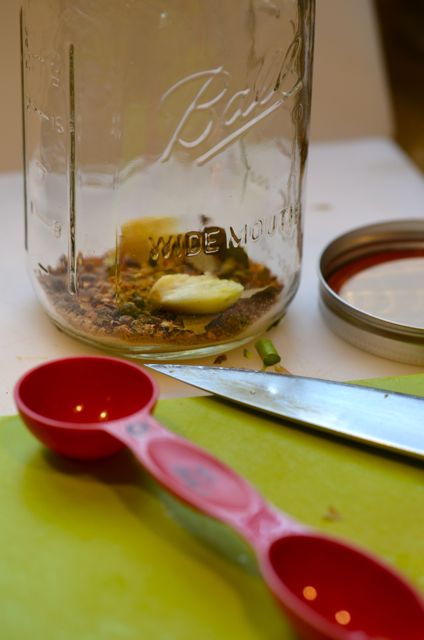
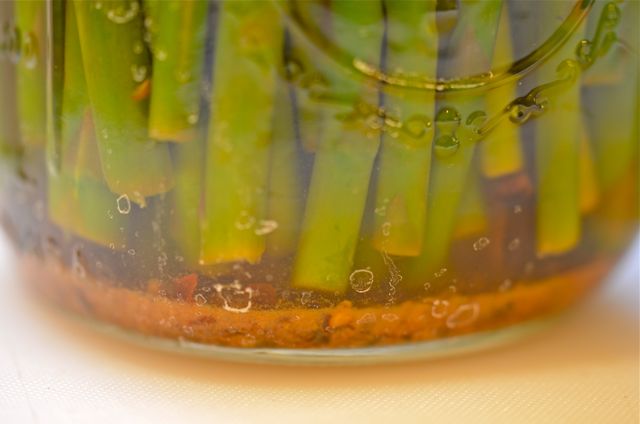
- Place 1 tablespoon of pickling spice and 1 garlic clove in the bottom of each jar (split the spice and garlic cloves if using 4 jars). Divide asparagus evenly between the jars. Pour pickling liquid over asparagus. Seal jars and let cool to room temperature, then store in the refrigerator.
- Let the pickles rest in the fridge at least 24, and preferably 72, hours before eating. The pickles will keep for 2 weeks.
—-
* Pickling Spice
(Makes 1 cup)
Ingredients:
- 2 tablespoons black peppercorns
- 2 tablespoons mustard seeds
- 2 tablespoons coriander seeds
- 2 tablespoons allspice berries
- 1 tablespoon red pepper flakes
- 1 tablespoon ground mace
- 1 small cinnamon stick, crushed into a few pieces
- 12 large, or 18 medium, bay leaves, crumbled
- 1 tablespoon whole cloves
- ½ tablespoon ground ginger
Assemble:
- Place a small pan over low heat and toast peppercorns, mustard seeds and coriander seeds until just fragrant. Remove pan from heat and gently pour spices onto a cutting board. Lightly crush spices using a heavy pan, the side of a knife or a very quick spin in a spice grinder.
- Combine the cracked spices with the rest of the spices in a medium bowl and mix until thoroughly combined. Store in an airtight container.
Related articles
- Pickle Time (primandprimal.wordpress.com)
- A pickle pictorial (sunshinescrapbook.wordpress.com)
- Recipe: Quick Fresh Pack Dill Pickles (mysanantonio.com)
- Spring is Asparagus Season! (tourismvernon.wordpress.com)
- How To Make Pickles, Lazy-Girl Style (refinery29.com)
- Roasted Asparagus with Lemon Vinaigrette (brookealbrechtstudio.blogspot.com)

















 Putney Farm