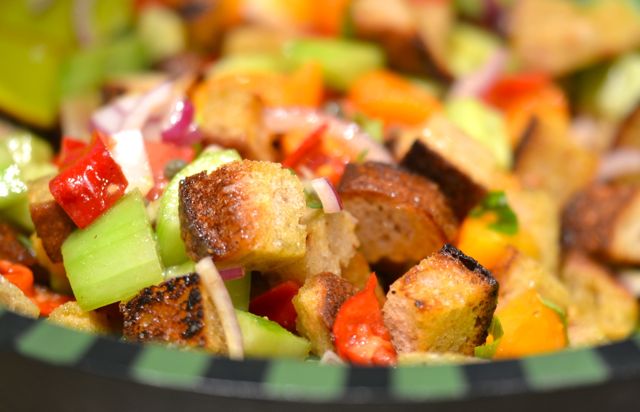
• Simple Garden Recipes: Panzanella

    Panzanella.

    As we move into Indian Summer, we often find ourselves torn. We start to see sign of fall and are tempted by fall flavors, but in reality our garden is still brimming with tomatoes, peppers and cucumbers. Happily there are plenty of good summer vegetable dishes to address this late-summer abundance. We already enjoy Caprese Salads and Gazpacho on regular basis. We make Ratatouille  (particularly to use up the eggplant). And whenever there is some country bread around we make Panzanella, a Florentine salad of bread, tomato, cucumbers, peppers, onions and a vinaigrette.

    Make some croutons.
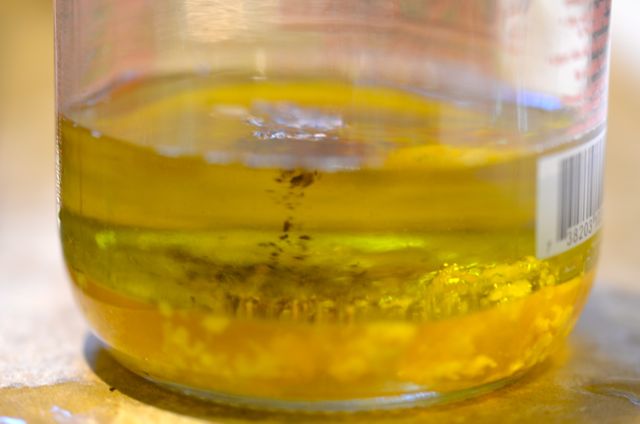
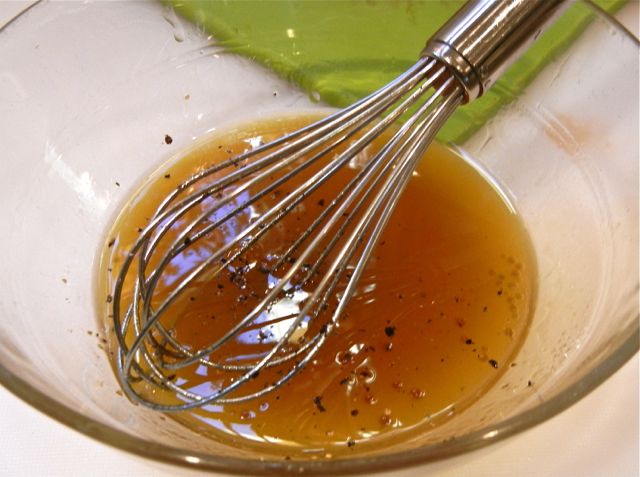
    Mix a quick vinaigrette.

    Now, if you just said to yourself “isn’t that just gazpacho that hasn’t been pureed?” you would be pretty close. And this makes some sense, the Spanish and Italians share a Mediterranean climate and cultivate similar summer vegetables. Odds are, you will see some similar seasonal dishes from these countries / regions (keep going east and you get a Greek salad) . And as we continue to cook from our garden, we see this pattern all the time. We have no doubt many recipes exist because seasonal ingredients often compliment each other and generations of cooks refined what became classic recipes. But we also have few romantic illusions about seasonal cooking, dishes like Gazpacho and Panzanella exist because they are a good way to pawn off use up all of those tomatoes and cucumbers. And usually when you get your tomatoes and cukes, you get a lot of them. Oh, and might as well use-up that old bread as well…
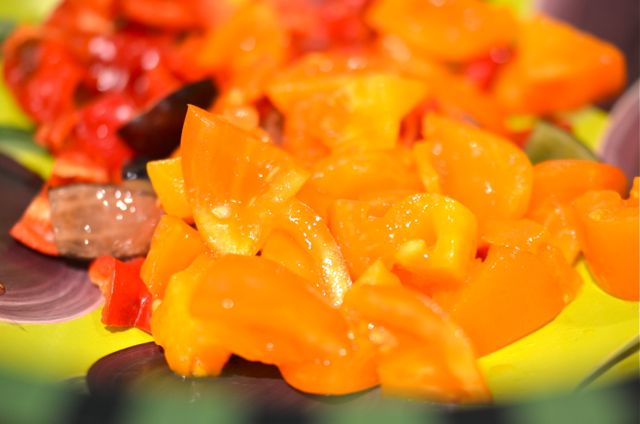
    Chop tomatoes and peppers.
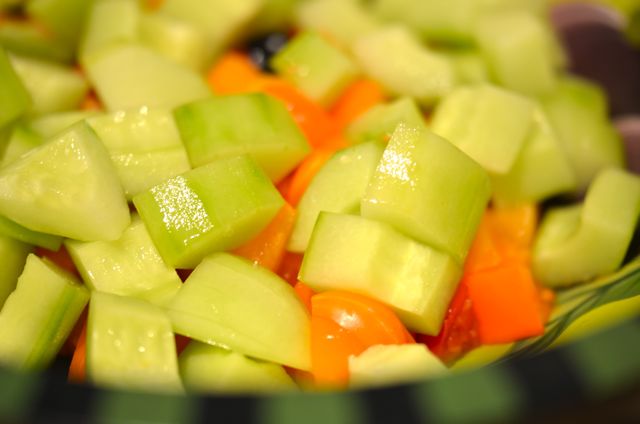
    Add some chopped cucumber.

    And it does help if the dish actually tastes good, and Panzanella is often a delicious dish. But like many “classic” dishes there are plenty of recipes, not always good, and some details that make the most of the ingredients. We use an adapted recipe from Ina Garten that keeps things simple but has a lot of summer flavor (and uses up our veggies). The key step in this recipe is making croutons with the bread, and not just soaking stale bread. The warm, crunchy and salty croutons mix perfectly with the veggies, herbs and vinaigrette. And if you can chop vegetables and make vinaigrette, making the rest of this recipe is as easy as it gets. And if you have other ingredients you want to add, feel free- purists may cringe, but there are all sorts of Panzanella recipes out there. Find one you like.
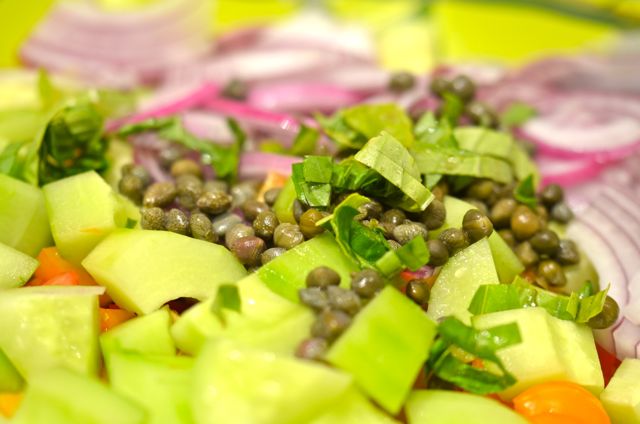
    Add some onion, basil and capers.
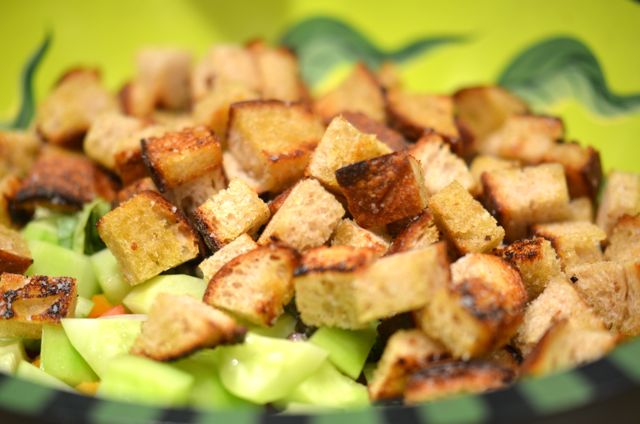
    Toss in the vinaigrette and add the croutons.

    As for the history of Panzanella, it’s been around in some form since the 16th century. Originally Panzanella combined bread, onions and vinegar. While this was probably “ok”, we think we can speak for most people and say adding tomatoes and peppers (and cukes) in the 19th and 20th centuries probably improved the dish. (Gazpacho has a similar history and improved with the addition of tomatoes, IMHO). As it often turns out, an abundance of tomatoes usually makes for better eating, particularly in summer. So if you can’t pickle one more cucumber of bottle one more jar of tomato sauce, take what you have left, grab some old bread, invite a few friends over and make Panzanella. Enjoy the bounty of summer while you can.
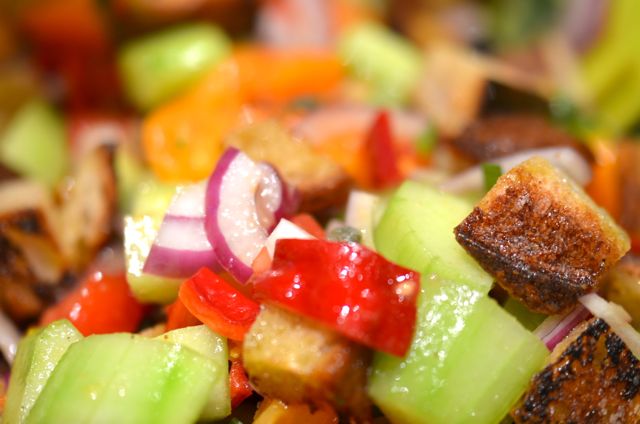
    Serve.

    Panzanella:

    (Adapted from Ina Garten)

    Ingredients:

    (Serves 8-12 as a salad)

    Salad:

    • 3 tablespoons olive oil
    • 6 cups country bread (1 small to medium loaf), cut into 1 inch cubes
    • 1 teaspoon kosher salt
    • 2 large ripe tomatoes, cut into 1 inch cubes
    • 2 sweet red and/or yellow peppers seeded and cut into 1 inch cubes
    • 1 cucumber, seeded and cut into 1 inch cubes
    • 1/2 medium red onion, cut in half and thinly sliced
    • 1/4 cup fresh basil leaves, coarsely chopped
    • 3 tablespoons capers, drained

    Vinaigrette:

    • 1 teaspoon garlic, finely minced
    • 1/2 teaspoon Dijon mustard
    • 3 tablespoons white wine or champagne vinegar
    • 1/2 cup good olive oil
    • 1/2 teaspoon kosher salt
    • 1/4 teaspoon freshly ground black pepper

    Assemble:

    1. To make the croutons, heat the 3 tablespoons of oil in a large sauté pan or skillet. Add the bread and salt. Cook over medium-low heat, tossing frequently, until browned. About 10 minutes. Set aside when done.
    2. To make the vinaigrette, whisk all the ingredients together in a small jar or bowl.
    3. Chop all of your vegetables add place into a large mixing or salad bowl. Add the basil and capers. Add the vinaigrette (don’t do it all at once, add half and see what you need to add) and toss thoroughly. Add the bread cubes and toss again. Taste for seasoning and add salt and pepper as needed. Serve immediately or let the flavors meld 15-30 minutes before service.
  • Coconut – Curry Cabbage

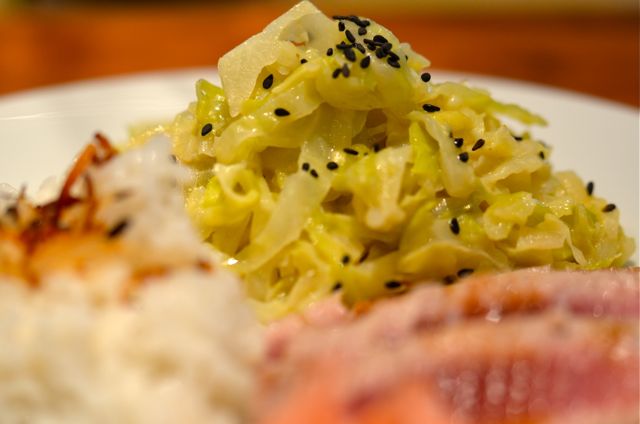
    Coconut-Curry Cabbage, served with seared ahi and coconut rice.

    As we mentioned a few posts ago, we made a Hawaiian-themed meal for some friends last week and it featured this cabbage dish. And since we liked it so much, we decided to make it again and post it. This cabbage recipe takes just a few minutes to make, but the mixture of bright, crispy cabbage with rich coconut milk and “funky” curry paste (and, optionally, fish sauce) is a real winner and a great compliment to tropical or Asian-influenced dishes.

    Basic ingredients that are available in most grocery stores.

    The recipe itself is easy, but very tasty. It comes from Bev Gannon’s Hali’imaile General Store Cookbook. This is a restaurant cookbook that often features very ornate and complicated preparations. But the flavor combinations in Gannon’s dishes are always original and intriguing, so usually we use the cookbook for inspiration and adapt the recipes, but this recipe only has minor revisions. It is one of the simplest recipes in the cookbook, and perhaps not surprisingly, one of the best (IMHO).

    Slice the cabbage and dice the onion.

    Saute the onion and the curry paste.

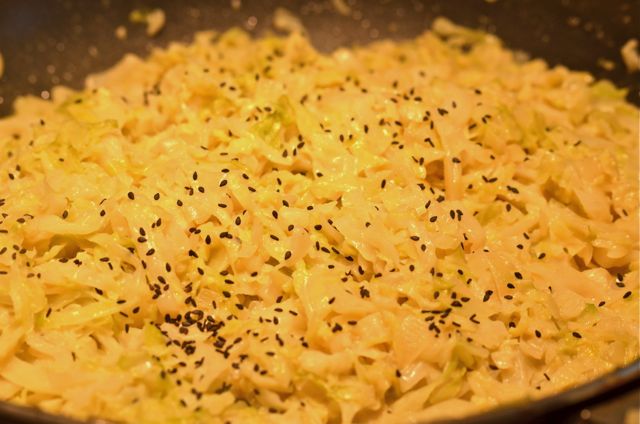
    You start by dicing a small onion and then thinly slicing a medium green cabbage. Then, in a large skillet, add some oil and then soften the onion over medium-high heat. Add a few tablespoons of green (or yellow) curry paste and some salt and cook for a few more minutes. Add the sliced cabbage and cook for a minute or two and then add about a cup of coconut milk. Simmer the cabbage for 6-8 minutes, or until the coconut milk reduces. Then add a splash of fish sauce (if you like it, we do), taste for seasoning, sprinkle on a few black sesame seeds and serve.

    Add cabbage and coconut milk and briefly simmer. Season with fish sauce and salt.

    Garnish with black sesame seeds.

    Another bonus to this dish is that it is easy to scale up/down the recipe to match the number of guests. Expect that 1 medium cabbage will feed 4 guests. So use an overall ratio of 1 cabbage / one tablespoon cooking oil / one-half of a small onion / 1-2 tablespoons of curry paste / 1 cup of coconut milk / 1 tablespoon salt / 1 tablespoon black sesame seeds / fish sauce to taste. You can simply increase or decrease the recipe to match your needs. And as you can make this dish ahead, and then reheat it before service, this is a great side dish for entertaining.

    So far, we enjoyed this dish as a side with sesame-crusted opah and with seared ahi. In both cases, the cabbage added a bit of crunch, pleasant richness and that touch of curry “funk” to the overall dish. As we really like coconut, we serve the cabbage along with coconut rice, and rather than being “too much” we find they are an excellent compliment to each other.

    A great compliment to fish and rice.

    As Californians, and living near the “Cadillac Desert”, we get cabbage year-round. We love making cole-slaw for summer barbecues and putting shredded cabbage in our tacos. But this dish takes cabbage to another level and is worth making at any time of year. And if you live in an area where cabbage is a fall / winter crop, we suggest you try this dish when cabbage is in season- it will give you a quick taste of the tropics.

    Coconut-Curry Cabbage:

    (Adapted from Beverly Gannon)

    Notes Before You Start:

    • You can use green or yellow curry paste in this dish. Curry paste varies, so make sure to add a little, taste and adjust the first time you make this dish.

    What You Get: A tasty, sweet cabbage dish. A particularly good side with tropical or Asian-influenced fish dishes.

    What You Need: No special equipment required.

    How Long? About 20 minutes. The only real “work” is slicing the cabbage and onion.

    Ingredients:

    (serves 4)

    • 1 medium green cabbage, thinly sliced- 3-4 cups
    • 1/2 small white onion, diced
    • 1 tablespoon canola or other vegetable oil
    • 1 to 2 tablespoons green or yellow curry paste
    • 1 cup coconut milk
    • 1/2 tablespoon salt (or to taste)
    • 1/2 teaspoon fish sauce (or to taste- optional)
    • 1-2 tablespoons black sesame seeds, for garnish (optional)

    Assemble:

    1. Slice the cabbage and dice the onion.
    2. Place a large skillet over medium-high heat. Add the oil and then the onion and curry paste and saute for 3-4 minutes, or until the onion is soft. Add the cabbage and cook for 1-2 minutes, until it just starts to wilt. Add the coconut milk and simmer for 6-8 minutes, or until the coconut milk reduces and the cabbage is tender, but retains some crunch. Taste and season with salt and fish sauce, if using. Sprinkle with black sesame seeds and serve.
  • Simple Garden Recipes With Cherries And Berries

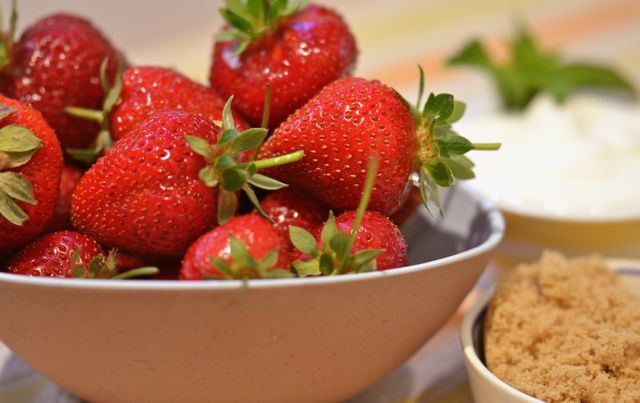
    Strawberries with sour cream and brown sugar.

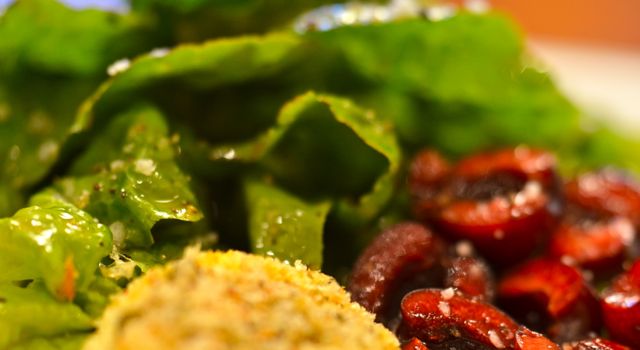
    Baked goat cheese and lettuce salad with cherries.

    When eating seasonally, the garden often dictates our menu. Right now we have cherries, strawberries and lettuces in full swing, and while we will preserve some of the fruit, we try to eat it at its peak. We also try not to do much with the main ingredient, if we grew lettuces or berries, that what we want to enjoy. So with that in mind, here are the first of a series of quick, simple recipes that highlight fresh produce straight from the garden or farmers market. This is also what we tend to have for lunch these days.

    Our first recipe is a simple combination of strawberries, sour cream and brown sugar. That’s all. You just clean the strawberries and put out some sour cream and light brown sugar. Just dip the strawberry in a bit of sour cream and then the brown sugar. The flavor is sweet, sour and tangy- with just a touch of molasses from the brown sugar. Instant dessert. And pretty, too.

    Simple, but very tasty.

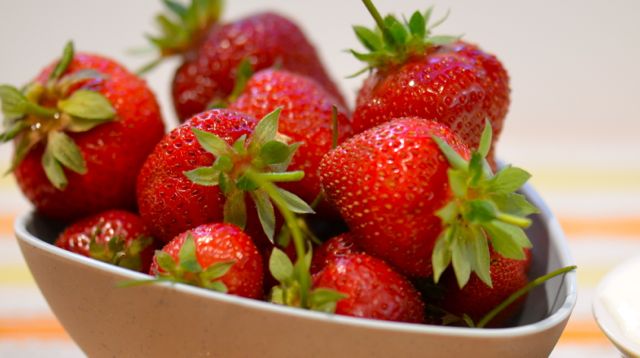
    It is worth noting that this is our second crop of strawberries this season. And we do see a pattern emerging. The first crop is tasty, but often somewhat aesthetically challenged, with misshapen fruit. The second crop comes in with more consistent shape and color- so these kind of easy preparations look very appealing at the table. We put these strawberries out and they get eaten, quickly.

    Some strawberries from our second crop, these look better than the first crop.

    Our other simple recipe is a baked goat cheese, lettuce and cherry salad. Baked goat cheese salads have been around for a while, but they are still a great lunch or starter salad and a lovely meat-free dish. And the same basic recipe applies to most stone fruit or berries. If you have strawberries or blackberries or even peaches, you can use this recipe. One key is to taste your goat cheese and then select the fruit that best matches the flavor. Goat cheese ranges widely from creamy to chalky and sweet to very tart. Tart cheese tastes good with sweet stone fruits, while sweeter cheese tastes best with tart strawberries or blackberries (to us, at least). But these are fun experiments, try what you like. In this case we used a creamy, but tart, local goat cheese from Harley Farms to match our very sweet cherries, and it was delicious.

    Ingredients for baked goat cheese, lettuce and cherry salad.

    Baking the goat cheese and breadcrumbs.

    As for making the salad, it is easy, but has a few steps. Firstly cut the cheese into disks and sprinkle with fresh herbs and olive oil. Then make (or buy) some breadcrumbs and lightly coat the cheese with the breadcrumbs. Then bake in a 400 degree oven for 5-6 minutes. Meanwhile wash and dry your greens (remember the dryer the greens, the better the salad), make a quick vinaigrette and prepare your fruit. When ready to serve, dress the salad and then arrange greens, a disk or two of the cheese and some fruit on a salad plate. Simple, tasty and beautiful. There’s a reason you see this dish at restaurants, it works.

    Make a quick, flavorful vinaigrette.

    Arrange on the plate, season and serve.

    Continue reading

  • Smoked Salmon Salad With Yogurt-Dill Dressing

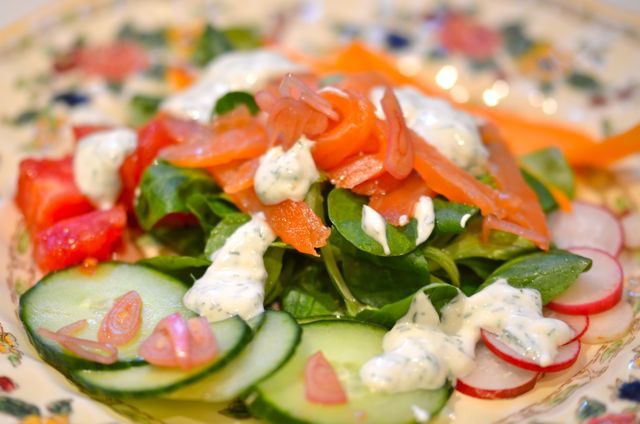
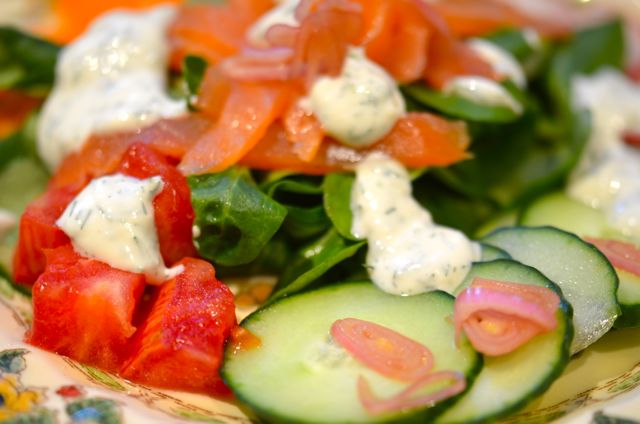
    Smoked Salmon Salad With Yogurt-Dill Dressing.

    Memorial Day wekend is always a treat, but after a few days of stuffing our faces over-indulging we start to look for lighter fare. The garden and the farmers market always supply inspiration (and ingredients) but we also find plenty of simple, tasty recipes from other bloggers. And this is how we found this salad.

    We recently discovered Danish Hygge, a blog about Danish life (we are big fans of Scandanavian design). It includes all sort of posts and photos about Danish design, people and culture, but also has some recipes. They had a post on salad with seasonal vegetables in a yogurt and dill dressing and it seemed light, healthy and flavorful, so we decided to give it a try.

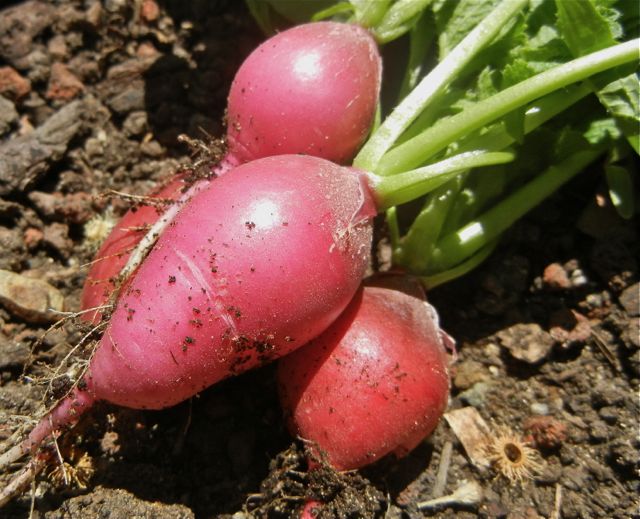
    Fresh radishes from the garden.

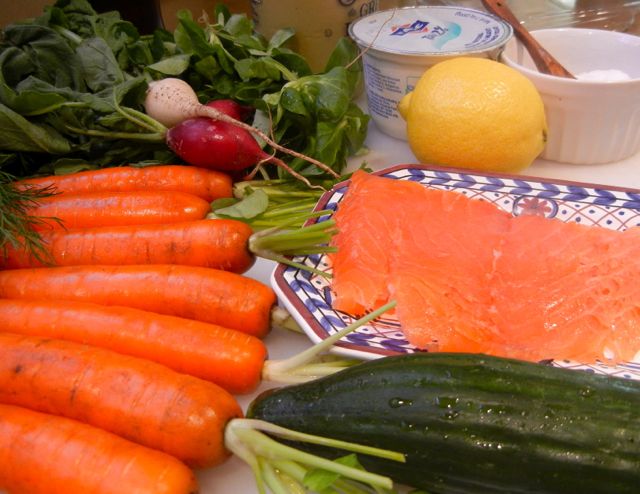
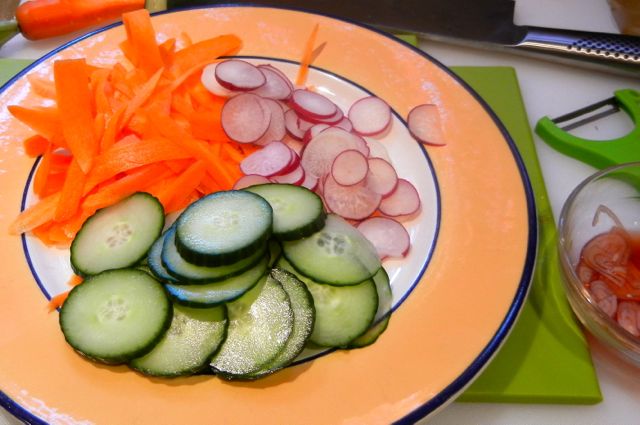
    The salad is a combination of greens, seasonal produce, smoked salmon and a “dressing” of dill and yogurt. Part of the fun of this salad is that you can add in almost any vegetable (even fruit) and get good flavors. In our case, we had radishes from our garden and early cucumbers and tomatoes from the farmers market and we always have carrots (ours still aren’t ready, sniff). As for the greens, our one recommendation is that you use sweet greens like butter lettuce, mache or even romaine rather than more bitter greens like arugula. The smoked salmon plays much better with sweet greens and the overall flavor of the salad is more harmonious.

    Ingredients. For the veggies, anything fresh will be good.

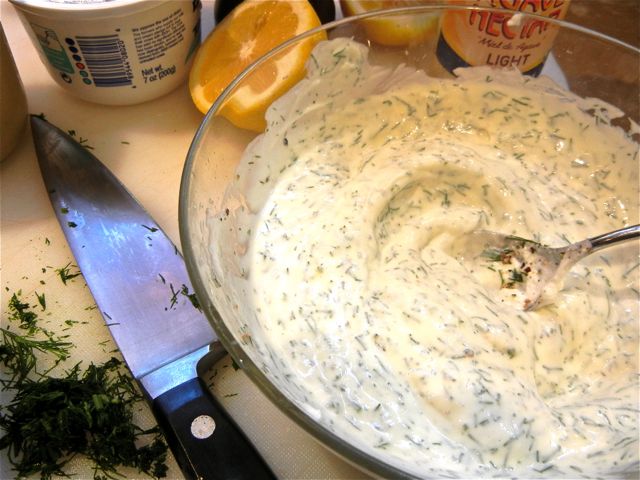
    We did tweak the recipe a bit to add more flavor. The dressing combines plain yogurt (nonfat or low-fat, we used low-fat), a bunch of fresh chopped dill, lemon juice, mustard, honey (or agave nectar), salt and pepper. We added a touch of hot sauce to the dressing to add a little heat and it worked very well. We also macerate a shallot in vinegar for a few minutes and then drizzle the slices over the salad. The sweet/sour nature of the macerated shallots are one of our favorite additions to salads and veggies.

    The salad itself has a mixture of crunchy, earthy flavors of the veggies, creamy/tangy dressing and salty smoky salmon. It is a satisfying lunch or a good starter salad at dinner. The salad tastes great and is healthy, too. Finally, the dressing is good as a sauce for grilled vegetables, so if you have extra, don’t let it go to waste.

    Smoked Salmon Salad With Yogurt-Dill Dressing:

    (Adapted from Danish Hygge)

    Notes Before You Start:

    • Other smoked fish like trout or sturgeon will work in this salad. We used a strong and smoky lox, but Nova or other lighter-smoke salmon will work.
    • Use whatever combination of fresh vegetables you like.

    What You Get: A healthy full-flavored salad. A dressing you can use with pretty much any vegetable.

    What You Need: No special equipment required.

    How Long: 10- 15 minutes depending on how many vegetables you chop. This is an anytime dish. Continue reading