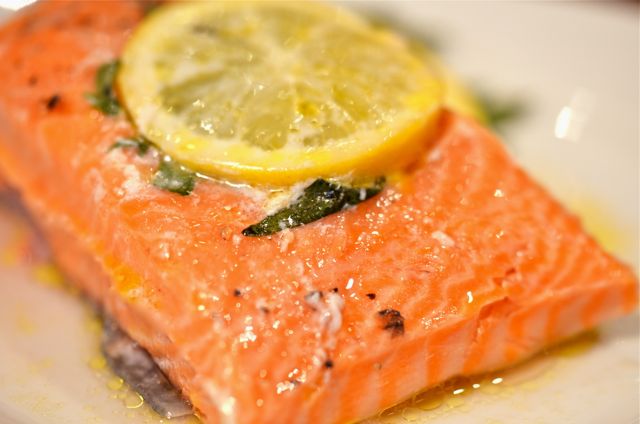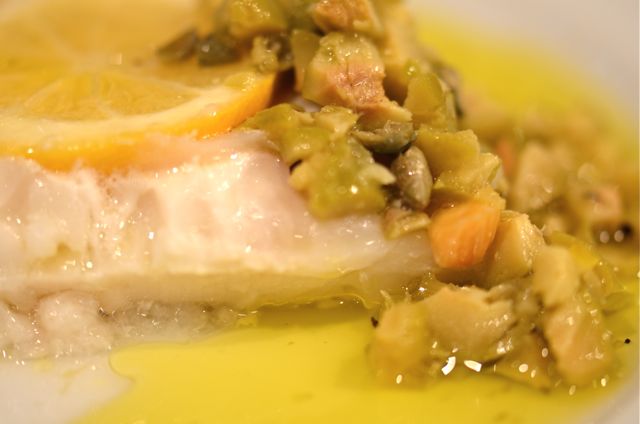
• Green Olive-Lemon Relish (With Sous-Vide Halibut)

    Green Olive-Lemon Relish With Sous-Vide Halibut.

    Please pardon the somewhat strange title. Usually we would lead with the fish, but this dish really is all about the relish.

    We are big fans of salsa verde here at the farm, it works on veggies, chicken and fish- particularly during the summer. But we are always looking to branch out and discover new flavors, and we happened to find this recipe for green olive-lemon relish from Judy Rodgers of the Zuni Cafe in San Francisco. And Judy Rodgers notes that this relish works on fish, chicken, pork and grilled vegetables and is easy to make. So we gave it a try.
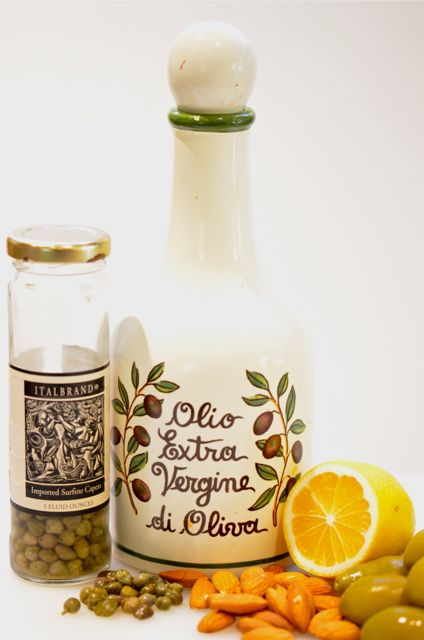
    Few ingredients, but lots of flavor.

    And we are glad we did. This relish is a simple mix of firm green olives (Lucques or Ceregnola are good), diced lemon, chopped almonds, a touch of capers, lemon juice and olive oil. The flavor profile is very similar to salsa verde but the olives, almonds and lemon pieces give the relish more body and heft. The relish has a nice balance of sour and briny notes from the olives, lemon and capers, while the almond and olive oil add nutty and sweet notes.

    We served the relish with sous-vide halibut at 122 degrees using our basic method for sous-vide fish (here is a link to a good oven-based method) and it was a lovely summer meal. This relish would work very well with any firm white fish- so we suggest you use whatever cooking method you like and then simply add the relish. And if you grill eggplant, squash or zucchini, this relish will be a great partner.
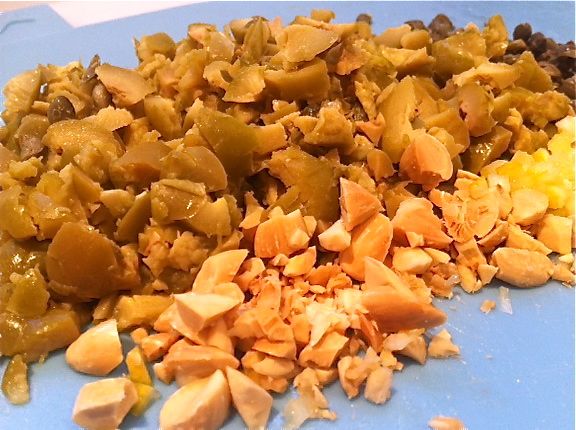
    Pit and chop the olives. Add chopped lemon, almonds and capers.
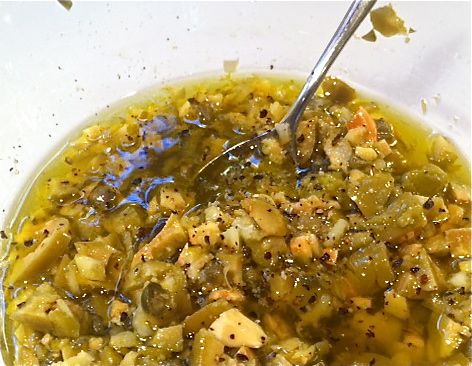
    Combine with olive oil and lemon juice.
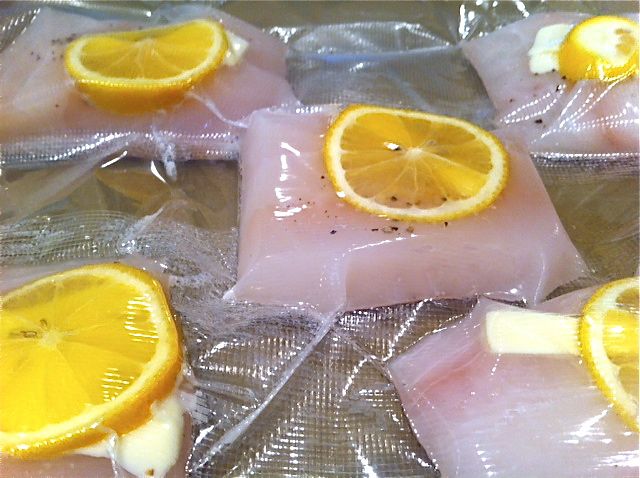
    The relish goes with fish, chicken, pork or grilled vegetables. We made sous-vide halibut.

    Making the relish couldn’t be easier. Skin, roast and chop some almonds (or use store-bought roasted almonds, unsalted Marconas would be very good), dice 1/4 of a lemon, pit and chop the olives, add some capers and a bit of extra lemon juice and then add the olive oil. A neat trick here is that you can add varying amounts of olive oil and still have a good relish. If you want the relish chunky, add less oil, if you want to use it more like a sauce (good with fish) add a little more oil. Both versions taste great. So if you like salsa verde in your summer meals, give this relish a try, it will be a very tasty change of pace (you might even like it better than salsa verde).
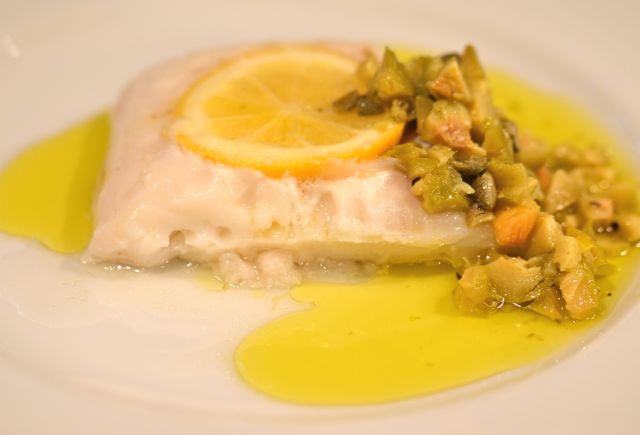
    Green Olive-Lemon Relish:

    (Adapted from Judy Rodgers’ Zuni Cafe Cookbook)

    Notes Before You Start:

    • Rodgers suggests a few types of olives for the relish including Lucques, Ceregnola, Ascolane and Picholine. But she notes that if the Picholines (or any of the olives) seem extremely briny to blanche them for 2 minutes to soften their flavor.
    • If you want to skin and roast your almonds, simply blanche raw almonds in boiling water for 10-15 seconds, then cool and skin (the skin will come off easily). Then roast the almonds in a 300 degree oven for about 15 minutes, or until they color slightly. Make extra- freshly roasted almonds are very tasty on their own.

    What You Get: A bright, tasty relish for fish, chicken, pork or vegetables.

    What You Need: No special equipment required.

    How Long? 5-10 minutes of chopping. And extra 15 minutes if roasting your own almonds. Anytime dish.

    Ingredients:

    (Makes about 1 – 1 and 1/2 cups)

    • 12 roasted, skinned almonds (see above if you want to DIY)
    • 1 cup good green olives like Lucques, Ceregnola, Ascolane or Picholine
    • 1/4 of a lemon
    • 2 tablespoons capers, rinsed
    • 1-2 tablespoons fresh lemon juice
    • 1/4 to 1/2 cup of good olive oil
    • Salt and pepper
    Continue reading

  • Chocolate Cake For A Crowd

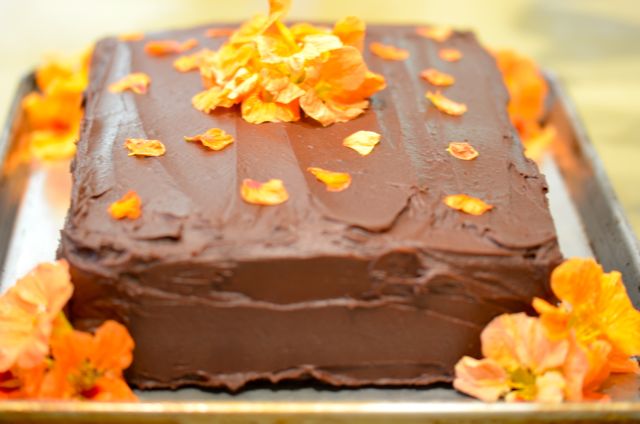
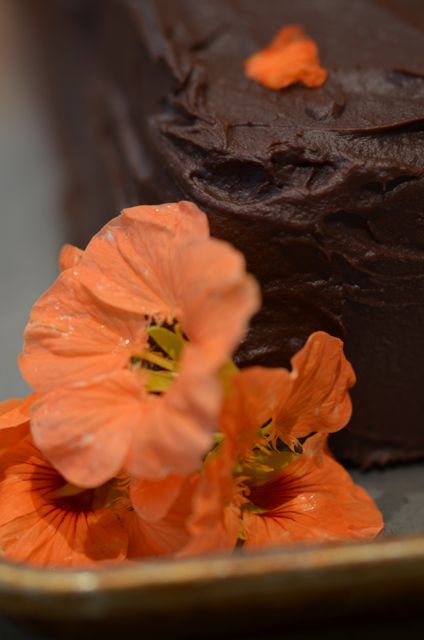
    Big chocolate cake.

    How big? It will feed over 20 people.

    Now you may wonder, what do I do with a cake that big? And what does a small family do with all of these baked goods? Well, in our case the answer is little league baseball. The season just ended, but we just spent a full spring feeding 12 hungry boys. They eat a lot.

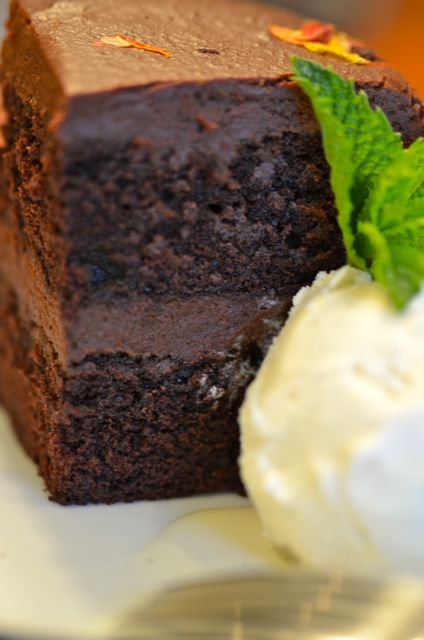
    Happily, this is a real labor of love. After each game a few of the families cooked for the team, coaches and parents. As the weather got warmer and everyone got to know each other the meals morphed from take-out pizza to full 3-course spreads. By the end of the season we brought pre-made margaritas and corpse reviver #2’s to weekend games (the parents often had more fun than the kids ;-). We made pulled pork and brisket, which was a hit. But the big winner was Carolyn’s chocolate cake. This cake is “chocolatey”, moist, rich and delicious. The kids (and parents) loved it and kept asking for the cake and the bigger she made it, the more they ate. Sometimes it’s good to be 12 and eat all the cake you want. Sometimes it would be nice to be “X” and eat all the cake you want…

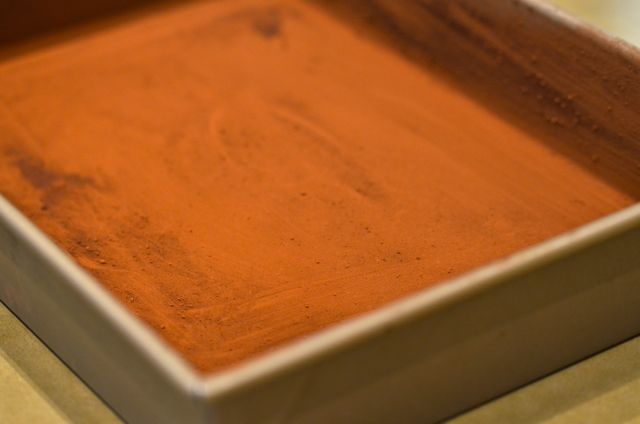
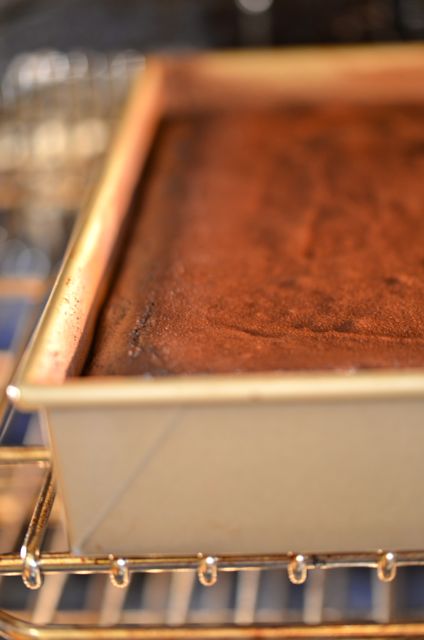
    Grease and dust your pans with cocoa.

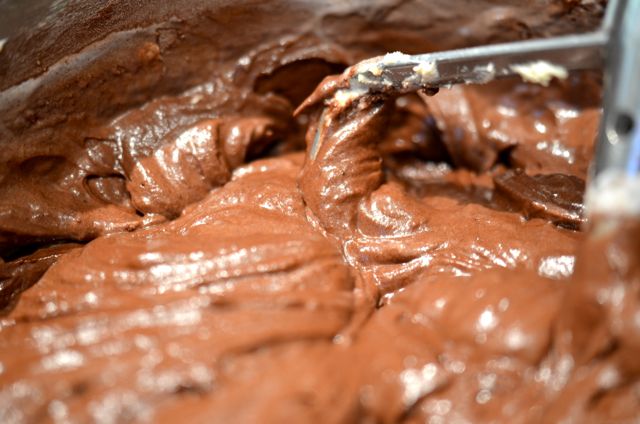
    Mix your batter.

    Bake the cakes.

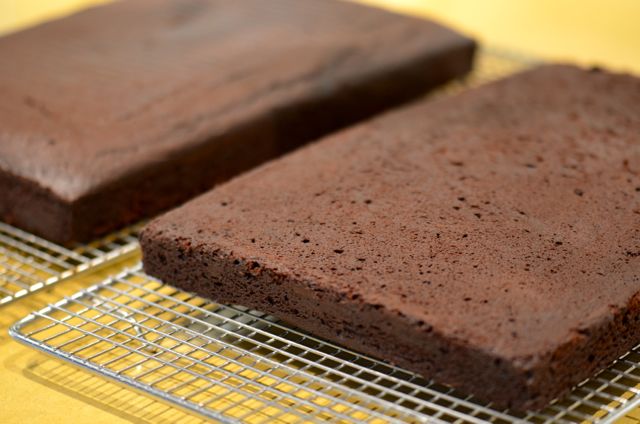
    Let cakes cool completely.

    The recipe for the cake and frosting comes from many sources, Carolyn makes this often enough to adapt the recipe on her own. The recipe isn’t complex, but like most baking it does require that you follow some specific steps. The bonus with this recipe is that you get an extra dessert as well (more on that later). This recipe is for 20+ big servings, but you can halve the recipe, if you like.

    As for the recipe itself, it is mostly standard cake making. The chocolate all comes from cocoa powder (a lot) and the moist texture from a combination of buttermilk and sour cream. And, of course, a touch of coffee that amplifies the chocolate flavor. The frosting is simply a lot of high quality chocolate, butter, sugar, milk and a pinch of salt. And as with all baking, the better the ingredients, the better the flavor.

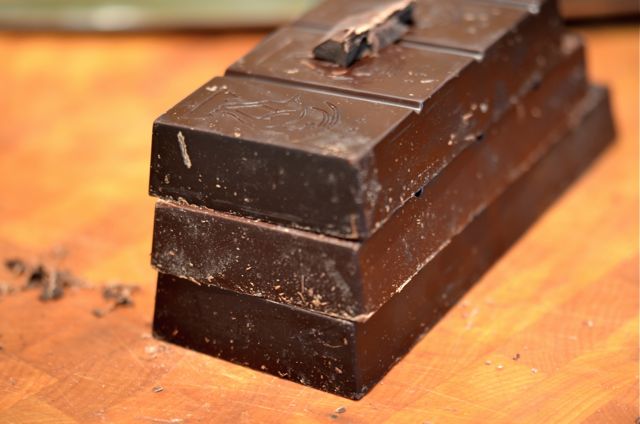
    Chocolate for frosting. Continue reading

  • Simple Garden Recipes With Cherries And Berries

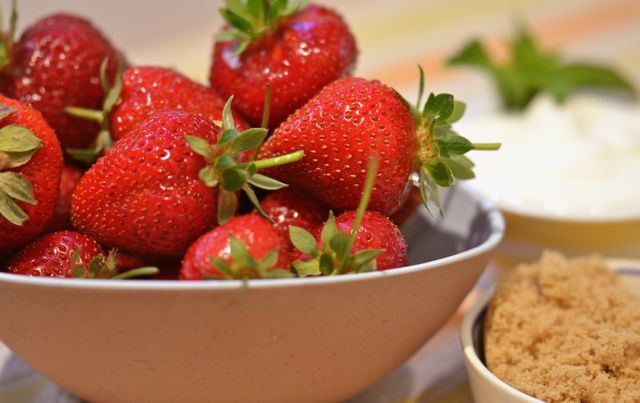
    Strawberries with sour cream and brown sugar.

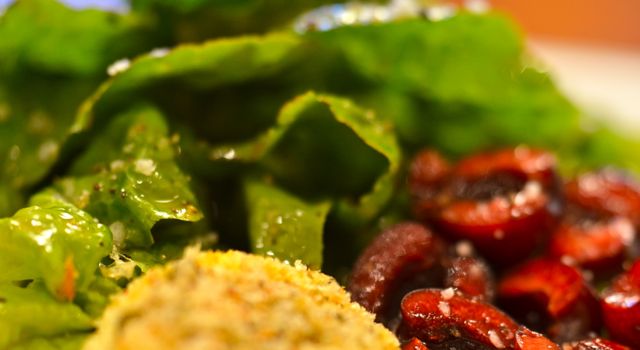
    Baked goat cheese and lettuce salad with cherries.

    When eating seasonally, the garden often dictates our menu. Right now we have cherries, strawberries and lettuces in full swing, and while we will preserve some of the fruit, we try to eat it at its peak. We also try not to do much with the main ingredient, if we grew lettuces or berries, that what we want to enjoy. So with that in mind, here are the first of a series of quick, simple recipes that highlight fresh produce straight from the garden or farmers market. This is also what we tend to have for lunch these days.

    Our first recipe is a simple combination of strawberries, sour cream and brown sugar. That’s all. You just clean the strawberries and put out some sour cream and light brown sugar. Just dip the strawberry in a bit of sour cream and then the brown sugar. The flavor is sweet, sour and tangy- with just a touch of molasses from the brown sugar. Instant dessert. And pretty, too.

    Simple, but very tasty.

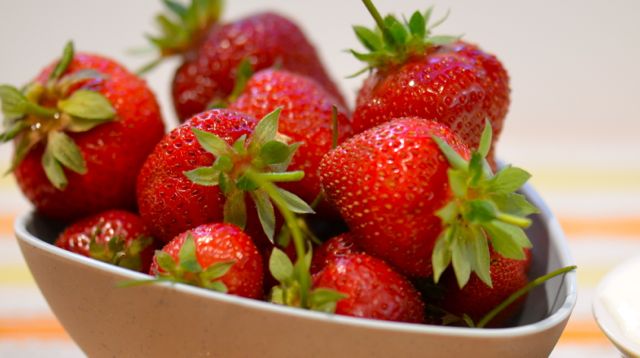
    It is worth noting that this is our second crop of strawberries this season. And we do see a pattern emerging. The first crop is tasty, but often somewhat aesthetically challenged, with misshapen fruit. The second crop comes in with more consistent shape and color- so these kind of easy preparations look very appealing at the table. We put these strawberries out and they get eaten, quickly.

    Some strawberries from our second crop, these look better than the first crop.

    Our other simple recipe is a baked goat cheese, lettuce and cherry salad. Baked goat cheese salads have been around for a while, but they are still a great lunch or starter salad and a lovely meat-free dish. And the same basic recipe applies to most stone fruit or berries. If you have strawberries or blackberries or even peaches, you can use this recipe. One key is to taste your goat cheese and then select the fruit that best matches the flavor. Goat cheese ranges widely from creamy to chalky and sweet to very tart. Tart cheese tastes good with sweet stone fruits, while sweeter cheese tastes best with tart strawberries or blackberries (to us, at least). But these are fun experiments, try what you like. In this case we used a creamy, but tart, local goat cheese from Harley Farms to match our very sweet cherries, and it was delicious.

    Ingredients for baked goat cheese, lettuce and cherry salad.

    Baking the goat cheese and breadcrumbs.

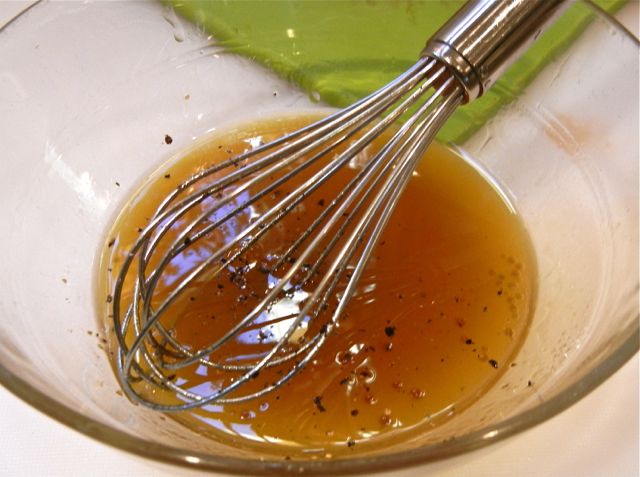
    As for making the salad, it is easy, but has a few steps. Firstly cut the cheese into disks and sprinkle with fresh herbs and olive oil. Then make (or buy) some breadcrumbs and lightly coat the cheese with the breadcrumbs. Then bake in a 400 degree oven for 5-6 minutes. Meanwhile wash and dry your greens (remember the dryer the greens, the better the salad), make a quick vinaigrette and prepare your fruit. When ready to serve, dress the salad and then arrange greens, a disk or two of the cheese and some fruit on a salad plate. Simple, tasty and beautiful. There’s a reason you see this dish at restaurants, it works.

    Make a quick, flavorful vinaigrette.

    Arrange on the plate, season and serve.

    Continue reading

  • Weekly Cocktail #18: The Upside-Down Martini

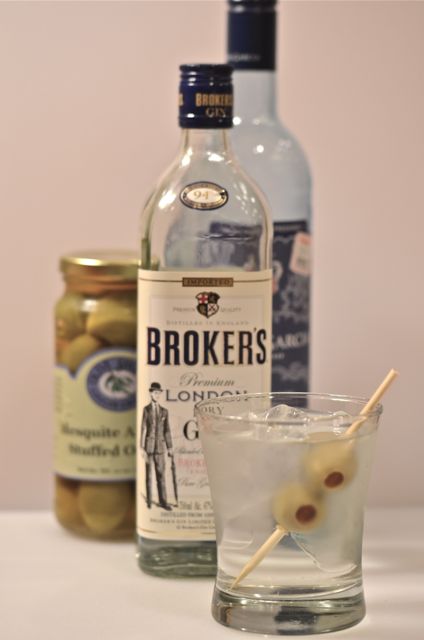
    Upside-down martini using vinho verde instead of vermouth.

    One of the cool things about the cocktail renaissance is that inspiration comes from pretty much anywhere. And while there are always a few mixologists, enthusiasts and bartenders with “attitude”, cocktails tend to live in a welcoming, open and happy place. After all, it is just fun with booze and friends. Why mess with it? If somethings sounds good, give it a try.

    And we bring this up because rather than try and hide it, we will ‘fess up and admit this cocktail comes directly from Martha Stewart (or at least her magazine). Martha probably doesn’t rate very cool in urban cocktail circles, but we are in the sticks country out here and will take whatever inspiration we can get ;-). To be fair, the upside-down martini has been around for quite a while. Basically a martini that is 3-1 vermouth-to-gin vs. 3-1 gin to vermouth, the upside-down martini is an attempt to lighten what is a very boozy, but excellent, drink. But even with a good dry vermouth like Dolin, the upside-down martini can sometimes be a bit cloying and lack character. However, Martha (or her drinks editor) adapted the traditional recipe to include white vinho verde, rather than dry vermouth, and suddenly you get a very good summer cocktail.

    So what is vinho verde? Vinho verde is light, young Portugese wine that translates into “green wine”. And that is a very good description. Vino verde is usually less than one year old, overtly tart with citrus notes, slightly fizzy, low-alcohol (usually 8%-10%) and cheap (less than $10 per bottle). Vino verde is a very tasty summer wine by itself, but when combined with a touch of gin and a few olives, you get something altogether different, and better.

    The trick with this cocktail is that you get a very light drink that still tastes like a martini. The vinho verde’s “green” flavors go well with the juniper of the gin and the briny notes of the olives, but the overall body of drink is very light from the low-alcohol and slight fizz of the wine. And if you are a martini drinker, this is a very good thing. Martinis rock, but as Dorothy Parker says…”two at the very most”. Summer is about long, lovely days- but regular dry martinis can make for short, blotto tipsy nights. The upside-down martini with vino verde is a great way to turn a martini into a light, “long”, refreshing drink. If you are not a fan of typical “fruity” summer drinks, this version of the upside-down martini may be for you. And if you are a gin-and-tonic fan, the upside-down martini is a fun diversion.

    Upside-down martini and ingredients.

    As for the recipe, we suggest a 3-1 ratio of vinho verde to London dry gin. Even if you don’t normally like the juniper in gin, we bet you will find it is a good foil for the citrus and tang of the vinho verde. We also suggest including olives or some other briny garnish. The touch of brine melds well with the drink, it will lack an extra dimension if you omit the olives (we also tried cornichons, and they worked quite well). We tried the recipe with just a lemon twist, but most vinho verde has overt lemony flavors and the twist gets lost. The olives do make a difference in this cocktail.

    So if you, or a friend, prefer traditional or classic cocktails more than the normal citrus-and-sugar drinks of summer, then the upside-down martini is worth a look. And if you just want a light summer cocktail, that also looks pretty cool,  then the upside-down martini with vinho verde certainly fits the bill. Thanks Martha!

    The Upside-Down Martini:

    (Adapted from Martha Stewart

    Ingredients:

    • 3 oz. vinho verde (we like Casal Garcia- tasty and cheap)
    • 1 oz. dry gin
    • Olives, caper berries or cornichons, for garnish

    Assemble:

    1. In a medium lowball (or highball, if you like) glass add the gin and vinho verde. Add ice to fill glass, stir until well-chilled. Add olives, stir a bit more and serve.
  • Cherry Clafoutis

    Cherry clafoutis.

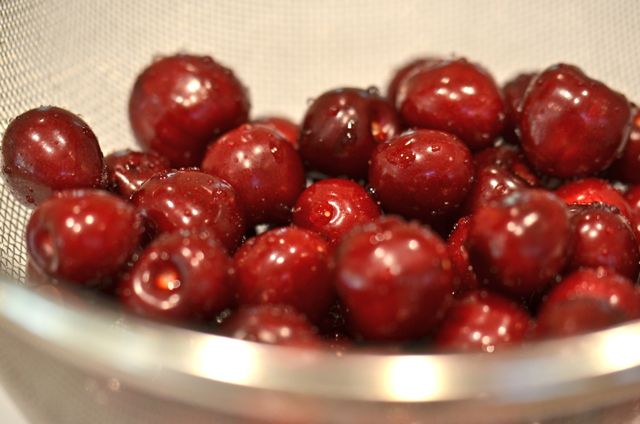
    Nothing makes us happier than growing, cooking, eating and sharing our own food. But there is a slight tyranny to the seasons. If you have cherries, you are cooking with cherries, period. And our Bing cherries are at their peak, so we picked them all. One small tree gave us four large bowls of cherries…all at once. Happily, cherries lend themselves to all sorts of dishes and cocktails (and we do seem to like eating and drinking). So this week you may see cherries in all sorts of dishes. But for now, let’s start with a classic cherry dessert, clafoutis.

    Fresh Bing cherries form our orchard.

    Clafoutis is a French dessert that combines cherries baked in a light batter, often with some added almond flavor. Think of the batter as “flan-meets-pancake” and you can get an idea of the light, yet rich, texture that rightfully lets the cherries star in the dish. Originally clafoutis featured sour or black cherries with the pits still in. Supposedly the pits add extra almond-like flavor, but as we have Bing cherries and like our teeth, we put pitted Bing cherries and almond extract in our clafoutis. You can also use this basic recipe with other stone fruits or berries, but if you want to be technical it would then be a flaugnarde, but feel free to call it a clafoutis- we won’t tell anyone.

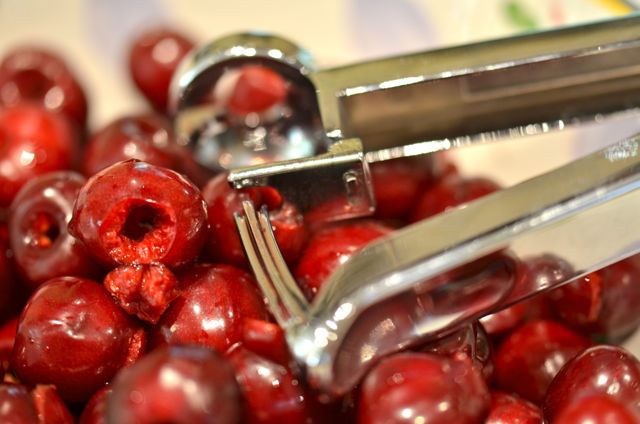
    A cherry-pitter is a useful tool if you like cherries as much as we do.

    As for the recipe, clafoutis is a classic dish and there are many recipes out there. We chose to adapt an Alice Waters recipe that adds a few extra steps, but also adds extra flavor. In this case we season and pre-bake the cherries before we add them to the clafoutis. The extra cooking improves the flavor and texture of the cherries, but also leaves behind the base of a syrup you can reduce and drizzle on top of the clafoutis at service. Good stuff. We also prefer to cook clafoutis (and many desserts) in individual ramekins, we think it looks good and makes leftovers easier to handle, but a large baking dish works for this recipe as well.

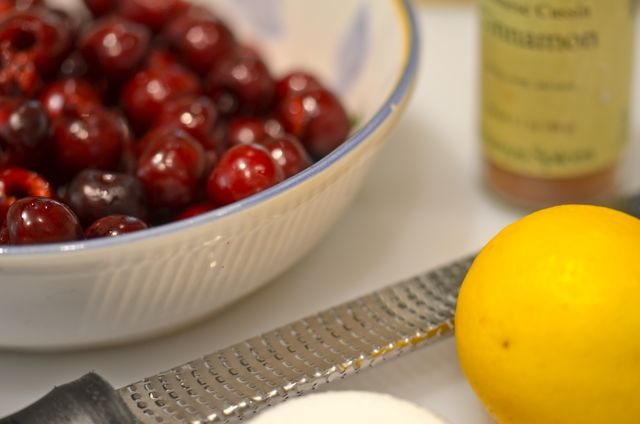
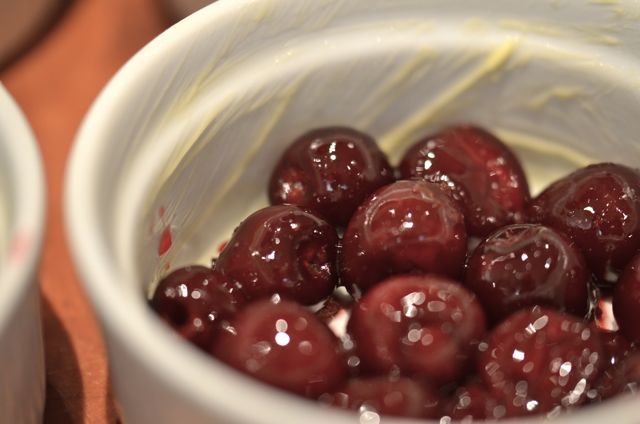
    Season the cherries for pre-baking.

    Extra cooking for more flavor and better texture- plus you get cherry juice for a sauce.

    Place a layer of cherries in the ramekins or baking dish.

    Assembling the clafoutis is a pretty easy affair. Pre-cook the cherries, save the syrup, butter your baking dish(es), place the fruit in the dishes, make and add the batter and bake. The batter is the only part of the recipe that requires some extra effort, you need to whip egg whites and then fold them into the batter for the right texture. The clafoutis bakes for about 20 minutes at 375 degrees. While the clafoutis bakes, reduce your cherry syrup for a tasty and pretty sauce. When the clafoutis is done, add the sauce, dust with powdered sugar and serve.

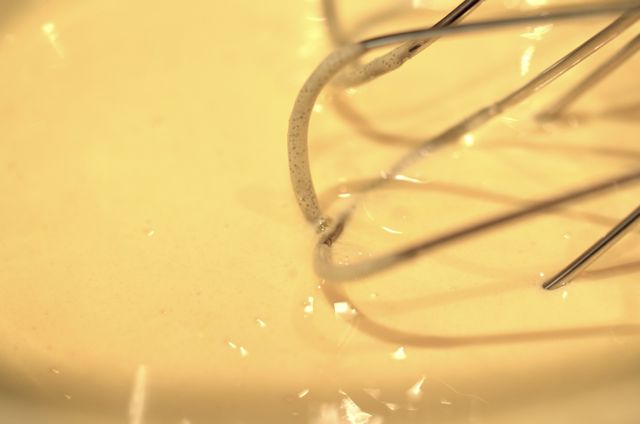
    Make the batter.

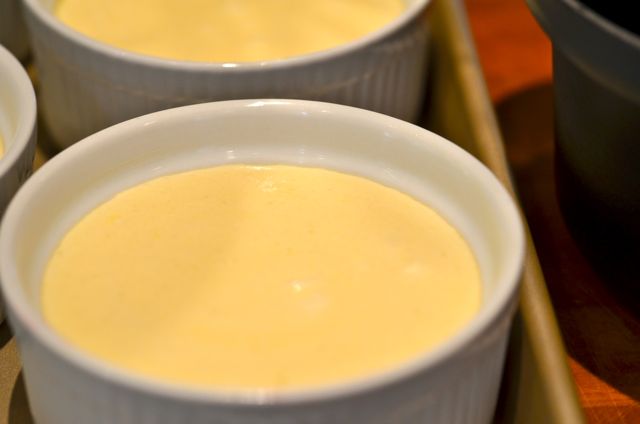
    Pour batter over the cherries.

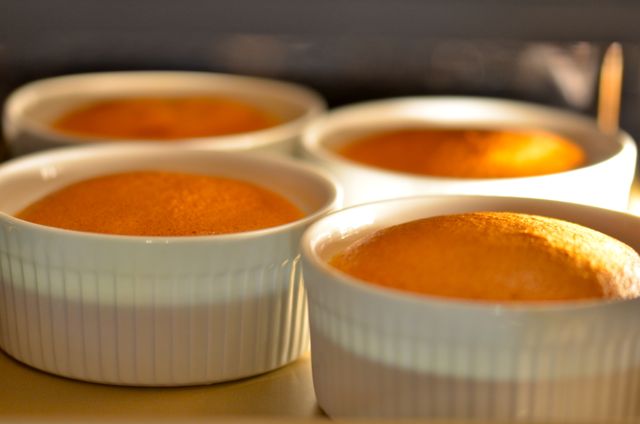
    Bake until browned and puffed. Continue reading

  • King Salmon With Tarragon-Chive Butter (Sous-vide or Baked)

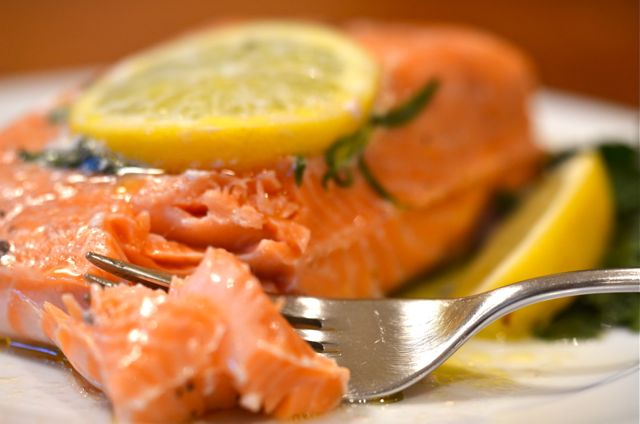
    Sous-vide king salmon with tarragon-chive butter.

    After an enforced absence of a few years, king salmon fishing is back along the California coast. Regardless of the sometimes difficult politics and economics of fishery management, it is always encouraging to see a natural fishery recover when it gets some time. And one thing we see here on the farm (and all over the world) is that nature often rewards patience and comes roaring back, if given the chance. And now our local community is reaping the benefits of its patience and we get to eat our local king salmon straight from Monterey or Half Moon Bays. And there are few fish as tasty, or pretty, as fresh wild king salmon.

    Wild king salmon has a beautiful color and deep rich flavor that, at least to local tastes, surpasses most wild and all farmed salmon. The wild salmon’s high fat/oil content and varied diet makes for big flavor and meaty texture, yet is still healthy (depending on how much butter you add to the dish ;-). The king salmon also lends itself to many different styles of cooking. You can serve king salmon as sushi or crudo, poach, roast, bake or grill it and even the crispy skin is a tasty treat. Great stuff, but with one caveat, the fresh wild salmon does not come cheap. It is best to make the most of the fish, so in this case we decided to cook our king salmon using our sous-vide cooker. (But there is a good oven-based method, so please read-on).

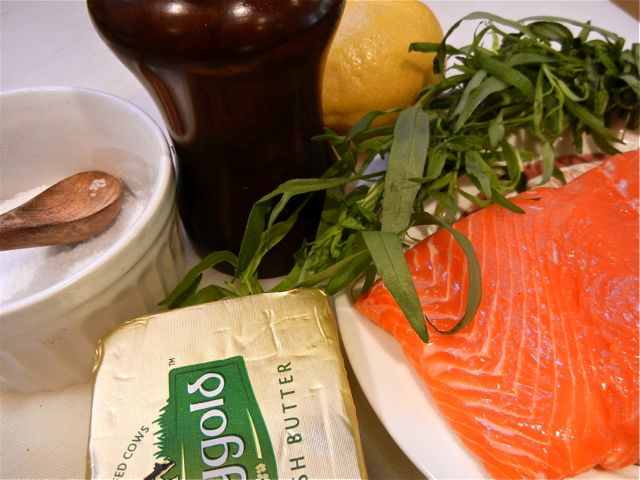
    Simple ingredients, but big flavor.

    As we mentioned in an earlier post, sous-vide cooking involves sealing fish, meat or veggies in a vacuum bag and cooking in a temperature-controlled water bath. It is a very popular cooking method in high-end restaurants, but you can buy sous-vide cookers and vacuum sealers for the home. Our inspiration for sous-vide cooking came from Stefan’s Gourmet Blog– and he has a great introduction and many good sous-vide recipes here. We cook sous-vide regularly with both meat and fish, but particularly like cooking fish in this way. The temperature control and doneness of the fish are quite exact and you can “build” a sauce in the bag while you cook the fish.

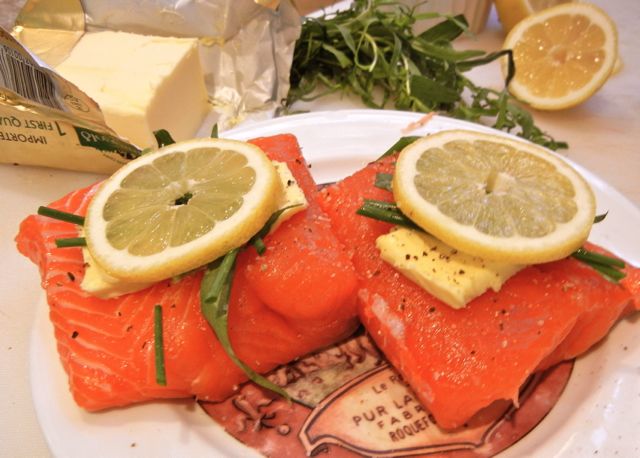
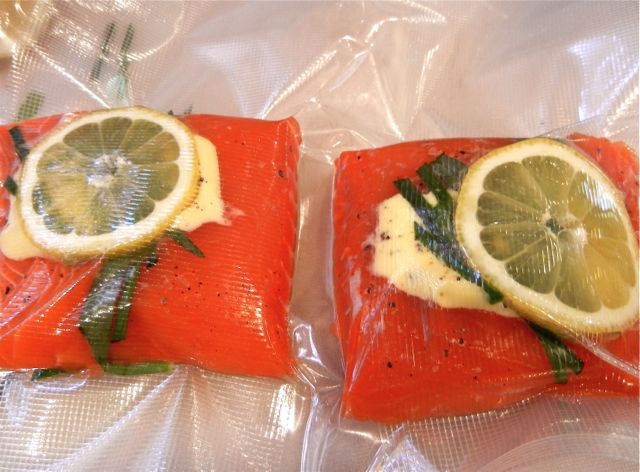
    As for the recipe itself, we simply adapted our basic oven-baked fish recipe to sous-vide cooking. Our approach is to season the fish filets, layer on a generous dollop of herbs and butter per filet and top with a slice of lemon. As the fish cooks, it bastes in the lemon/butter/herb mixture, and that mixture becomes the basis for a quick sauce. In the oven, we cook the prepared filets in a greased baking dish with a splash of wine at 425 degrees for about 10-12 minutes depending on the thickness of the filets and desired doneness. In the case of sous-vide, we simply seal the prepared filets in their bags and cook in the water bath for 30 minutes at our desired temperature. (Note: One drawback of sous-vide cooking is difficulty sealing liquids into the vacuum bag along with the fish. Using “solid” ingredients like cold butter, lemon and herbs solves this issue.)

    Simply season the filets then add the herbs and butter and cover with lemon slices.

    Cook sous-vide or in the oven. These filetes are vacuum-sealed for sous-vide cooking.

    While this is a simple dish to prepare with either cooking method, you get a lot of big flavors. The richness of the salmon and butter is matched by lemon notes and bright, vegetal herbs. If you cook the salmon rare to medium-rare the texture will be soft and juicy, if you cook to medium the texture will be flaky but still rich from the high fat content of the salmon. And here is where personal judgement comes into play. Many cooks will serve salmon rare at 109 or 110 degrees, medium rare in the mid-120 degree range and medium at 130 degrees. Tastes vary and we prefer rare to medium rare fish, but to be fully “cooked” many references suggest cooking fish to at least 130 degrees and even up to 145 degrees. Again, use your judgement based on tastes and the freshness of your fish. And a digital thermometer is a big help if cooking in the oven.

    Some of the best California has to offer…

    As the local king salmon season is short, we enjoyed this dish a few times in the last week or so. We can’t get enough of the salmon, and our kids love it. We take every chance to make sure our kids enjoy eating good fresh fish (think of it as selling healthy eating habits). And the king salmon is more than good, it’s a real treat. Sometimes patience truly is rewarded. Let’s hope we have another good season next year.

    King Salmon With Tarragon-Chive Butter:

    Notes Before You Start:

    • If you don’t have California king salmon, a trip to California is in order…;-) Otherwise substitute your fresh local salmon or other firm fish filets. This basic recipe works for most fish.
    • Salmon usually has small pin-bones you can remove with tweezers or pliers. Remove them before cooking or ask your fishmonger to do it for you.

    Continue reading