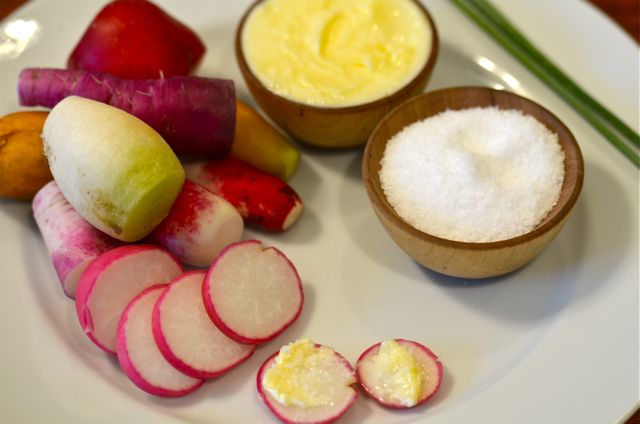
• Radishes With Butter And Salt (And Moments Of Perfection)

    Radishes with butter and salt, a perfect trio.

    Late post today. Our eldest and I went to the Giants game last night and stayed late to watch Matt Cain pitch the franchise’s first perfect game in 130 years. As we occasionally hint in the blog, all of us are lifelong Giants fans. We have seen Bonds’ home runs, All-Star games, Timmy’s Cy Youngs, World Series losses and (glorious) victory and everything in between. And there was nothing quite like the perfect game. Everything comes together in one game. A brief, brilliant spark of pure joy and surprise. And for the players it was the moment when the orchestra is perfectly in tune and the conductor is at his best. A sweet reward for a lifetime of effort.

    But in baseball, it is a lifetime of effort that is always filled with failure. Even the best baseball players fail, in some way, in almost every game. The best learn to accept failure and build more towards a lifetime body of work. That is what makes perfect games or championships so special. Not simply that you were the best on “X” day, but because the players must overcome failure to get there. Success is all the sweeter when reached through failure. You grow, you improve, you build.
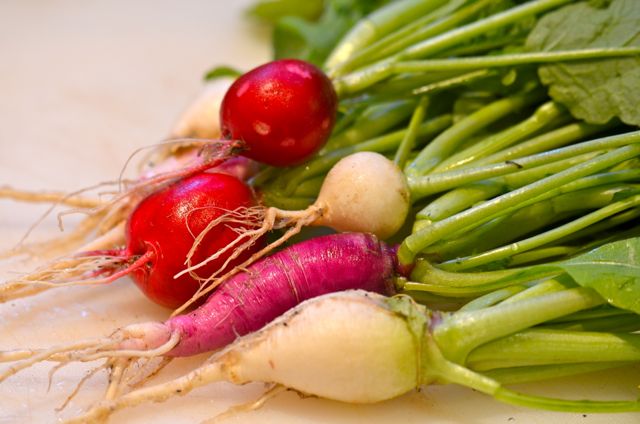
    Mixed radishes, fresh from our garden.

    If you garden or cook (or simply raise a family) this should ring true. While you may not toil in the spotlight, gardening and cooking are a lifetime of successes and failures. And some you simply cannot control. The beds were perfect, you checked the soil, picked the right seeds and watered on time. But the blight or frost came anyway. Green became brown. Fail. You picked the perfect recipe, shopped on time, did your prep and cooked like a pro. But the guests came late, one of the kids sprained an ankle and the roast stayed in the oven too long. Medium-burnt. Fail.

    But after a few well-placed “words”, you start again. There is always the next meal, day, week, season and year. And when the successes come they are sweet, and they are shared with those you love. When the cocktail is tasty and the guests are happily chatting, the kids eat the (perfect) fish and the dessert made from the fruit that you grew has been totally devoured, then you have it. A perfect meal, a perfect day, a perfect moment. And well-earned. And well-remembered. Think of those moments, and we bet you have a few that stick with you, and those you love, to this day. Brief, brilliant sparks of love, joy and content. The glow from those sparks lasts a long time.
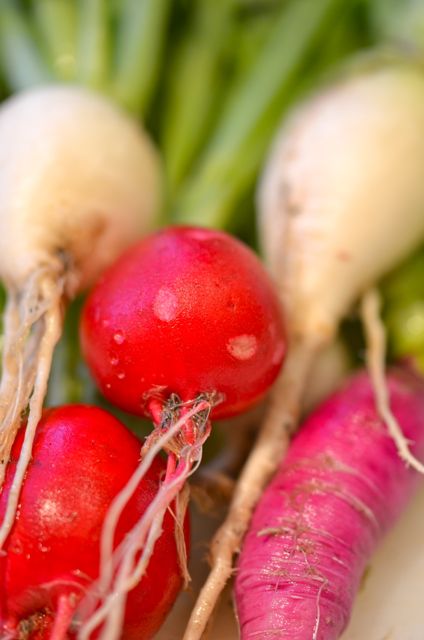
    In the garden, harvest is often that special moment. This week we have cherries, berries and radishes. More on the fruit soon, but as for the radishes we will give you a “perfect” recipe to enjoy any time. Fresh radishes with butter and salt. How do we know it’s perfect? Because pretty much every celebrity cook, cookbook author and blogger has posted a version of this recipe at some time or other. But since we actually grew these radishes, we (selfishly) think we can post on it too. And it is a very tasty, and easy, dish.

    And we are big fans of radishes, both as cooks and gardeners. In the home garden radishes are a great crop. They grow to harvest in 3-4 weeks (the name comes from the Greek Raphanus meaning “quickly appearing”), work in many climates and compliment many cuisines. Radishes grow in spring and fall, so we stagger our crop over a few weeks to get radishes though most of both seasons. And, frankly, they are hard to mess up. While gardening is filled with failures, crops like zucchini and radishes do offer the opportunity for a few “quick wins”- and there is absolutely nothing wrong with that.

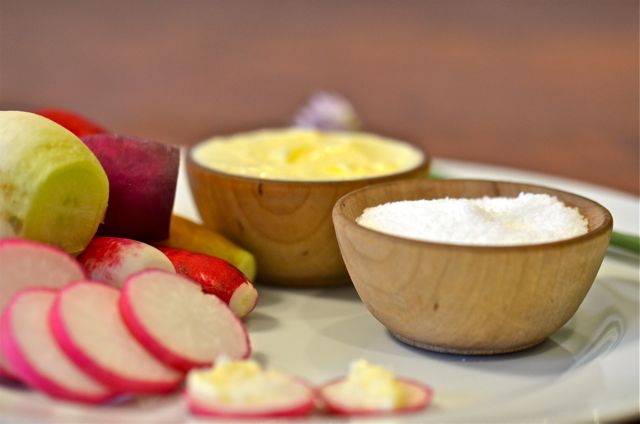
    While we like quick-pickling radishes or using them for crunch and heat in salads, we usually just eat them out of hand. We enjoy their crunch and light, peppery heat (the kids like them too, so that is a big bonus). Serving radishes with butter and salt simply creates a more balanced dish. The sweet, creamy butter and the salt add more dimension to the radish. And all you need to do is slice some radishes and put some butter and salt into a few bowls and serve. This is a great summer dish- easy, but full of flavor.
    Continue reading

  • Orchard Update: The Cherry Harvest, Day #1

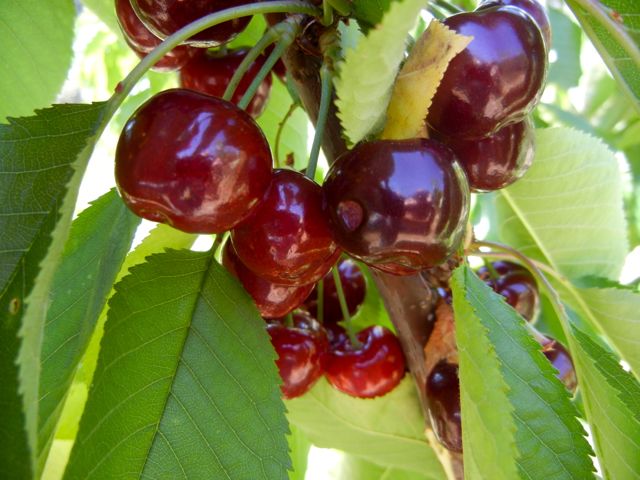
    Van cherries before harvest.

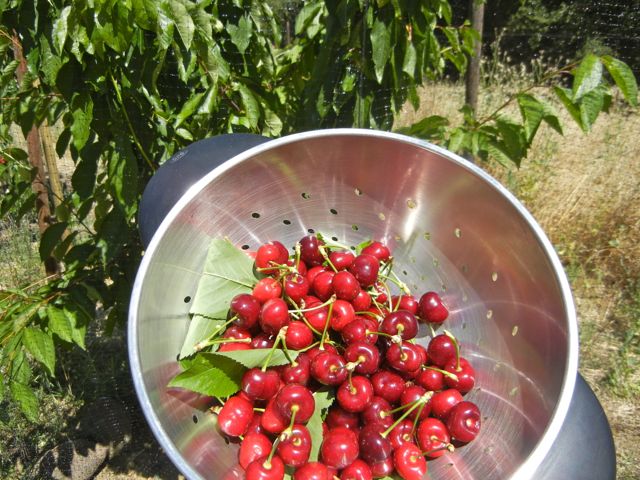
    Well after a longer wait than we expected, the cherry harvest is here! We are very, very excited, as this is the first real cherry harvest from our orchard. We netted the trees a few weeks ago and the extra work paid off. While the ants got a few of the cherries, the birds, wood rats and squirrels were kept at bay.

    Harvesting cherries is still a low-tech affair…

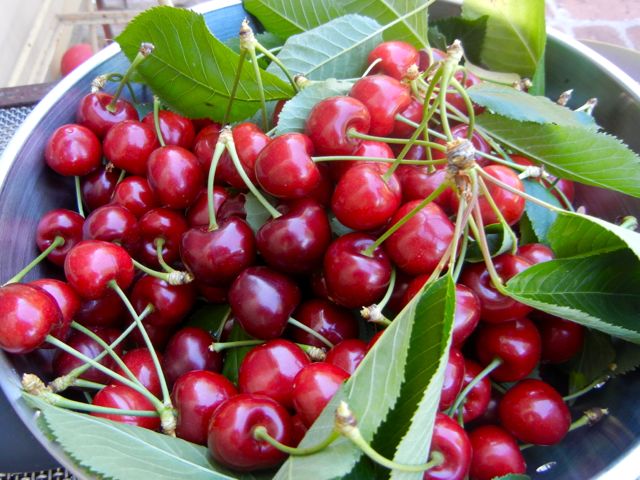
    Most of this day’s harvest was from the Van and Black Tartarian grafted tree. The cherries are mostly Vans. We planted the Van / Tartarian tree to pollinate the Bing cherry tree, but the bonus is another crop of cherries. The Vans look like Bings, but are smaller with slightly lighter color skin and flesh. They are sweet, but not too sweet, with a pleasant crunch.  We had a smaller crop of the Black Tartarians and they are really, really good. The Tartarians, not surprisingly, have deep purple color and flesh. The cherries are very sweet and incredibly juicy. The Tartarians are a pleasant surprise, the only bummer is that few made it out of the orchard- they were enjoyed straight from the tree. We will aim for more next year (perhaps another tree).

    Day 1: Vans, Bings and Black Tartarians.

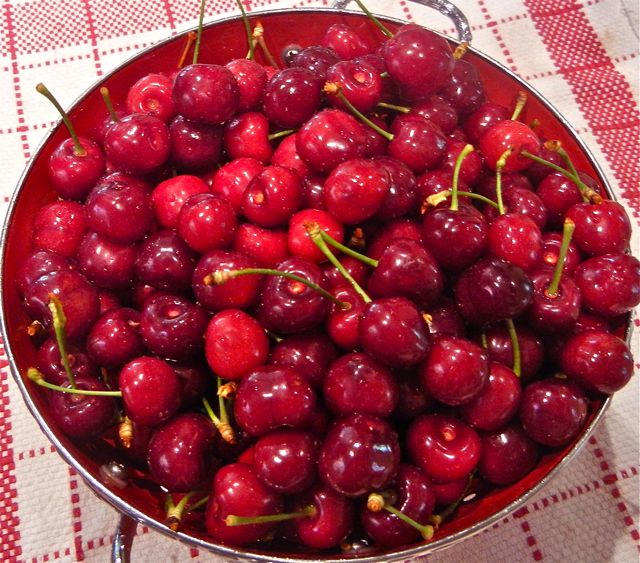
    We also started on the Bing tree, which is dense with fruit on almost every branch. The cherries are ripening somewhat unevenly, so we will work the tree over the next few days. The Bings are a delight. There is a reason they are the most popular fresh cherry. They are big and sweet and one of the closest things to “natural” candy you can get. The kids think they are better than candy, and that says a lot. We had some off-season rain and concerns that it would cause the Bings to crack, but luckily all the fruit is in great shape. We will have fun picking the cherries for the next few days.

    Ready to eat. The Vans have the lighter color.

    While researching how to cultivate our Bings we ran across an interesting piece of history worth sharing. From Wikipedia:

    The cultivar was created as a crossbred graft from the Republican cherry in 1875 by Oregon horticulturist Seth Lewelling and hisManchurian Chinese foreman Ah Bing, for whom the cultivar is named.

    Ah Bing was reportedly born in China and immigrated to the U.S. in about 1855. He worked as a foreman in the Lewelling family fruit orchards in Milwaukie for about 35 years, supervising other workers and caring for trees. He went back to China in 1889 for a visit. Due to the restrictions of the Chinese Exclusion Act of 1882 he never returned to the United States. Sources disagree as to whether Ah Bing was responsible for developing the cultivar, or whether it was developed by Lewelling and named in Bing’s honor due to his long service as orchard foreman.

    It seems a little bittersweet to us that Ah Bing was not allowed to return to the US. And regardless of who crossbred the cherry, it gives us a smile that Ah Bing’s work in the orchard survives and is enjoyed every summer.

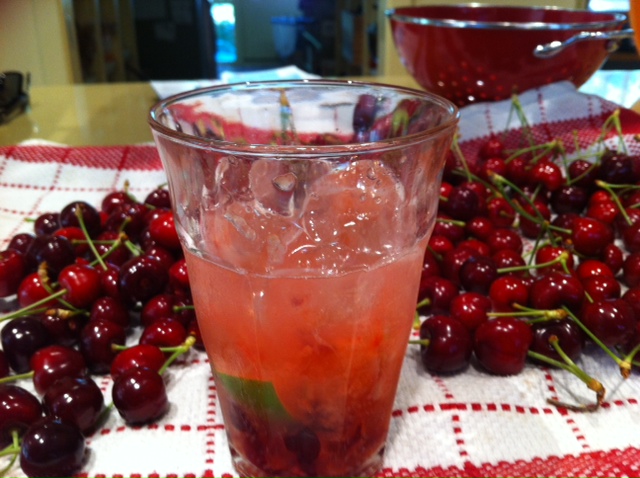
    Eat out of hand, or make a cocktail. Cherry-lime Caipirinha, pretty good.

    Once we got the cherries in the house, they got a quick clean and rinse. We laid them out on the counter and ate quite a few. The kids enjoyed them and I even made a cherry-lime Caipirinha. Yum. For the next few days we will be enjoying the cherries in baked goods, perhaps ice cream, drinks and even a savory dish or two. Recipes soon.

  • Bonus Cocktail: The Aviation

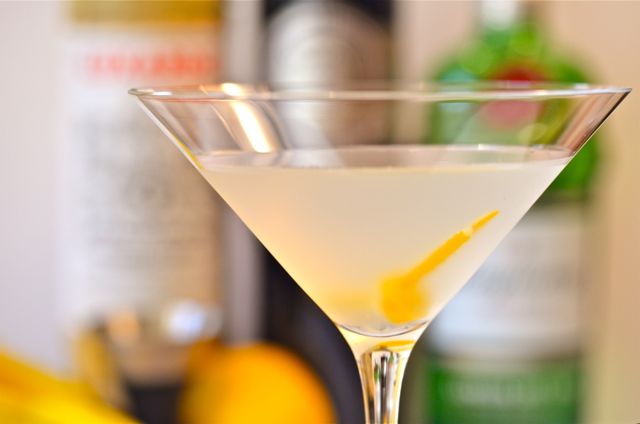
    Aviation Cocktail.

    This week’s bonus cocktail is a surprise to us. The drink itself is not a surprise, the Aviation is a classic cocktail. But we are surprised it took us so long to post it. We enjoy Aviations as one of our “go to” cocktails at home, and one of our local bars makes a great one. So I guess familiarity bred a touch of contempt.

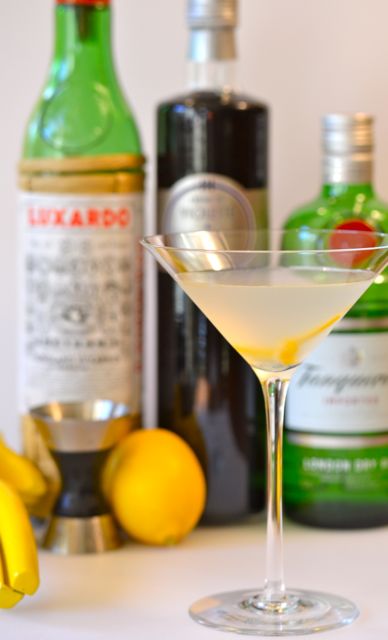
    But there is nothing contemptible about the Aviation. One of the true masterpieces of pre-prohibition mixology, the Aviation combines dry gin, lemon juice, maraschino liqueur and (sometimes) Creme de Violette, a violet liqueur. The drink is the creation of Hugo Ensslin, a bartender at the Hotel Wallick in New York. He first published the recipe in 1916 in the book “Recipes for Mixed Drinks”. And the recipe has been published, and tweaked, ever since.

    Aviation cocktail and ingredients.

    The basics of the recipe, dry gin, lemon juice and maraschino have been constant, but the ratios vary. And then there is the issue of the Creme de Violette. Creme de Violette is a violet liqueur that tastes a lot like violet candies. If you remember violet candy, you may also remember that some people love them, and some hate them. “This tastes like soap” being a common refrain for those in the “hate” category. For a while, this was a non-issue as Creme de Violette was almost impossible to find in the US. But our friends at Haus Alpenz, revivers of all forgotten liqueurs brought it back to life with Rothman & Winter Creme de Violette (remember the Allspice Dram in the Ancient Mariner). And this “new” Creme de Violette is good, sweet, floral and depending on your point of view, perhaps a bit “perfumey” or just downright soapy.

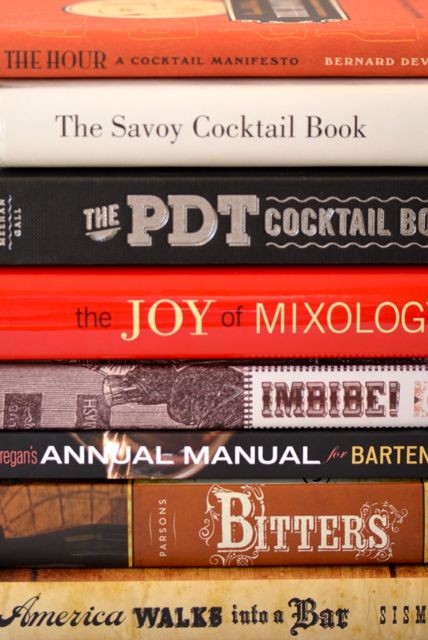
    The attraction of using the Creme de Violette is both the flavor and the light blue color it lends to the drink, if you use enough of it. The name of the drink, it is believed, comes from the pale sky-blue color that was so enticing in the early days of aviation. But this is where many mixologists differ.  The Savoy Cocktail book, David Wondrich and Gary Regan go without the Violette, the PDT cocktail book includes it. Paul Clarke suggests you simply make the Creme de Violette optional. As it is, we suggest you use the Creme de Violette very sparingly (just a dash, you will still taste it) or omit it altogether.

    Required summer reading.

    As a practical matter, very few people have access to Creme de Violette and there is no need to run out and buy it (of course, we did- but we are geeky that way). First, try the recipe without the Violette. You will lose the lovely color, but the botanical flavors of the gin, the bright, sour lemon juice and the sweet, earthy maraschino are a great combination on their own. This is a very tasty cocktail that works in any season and for almost any occasion. And most home bars have gin and lemon juice- and you should have Maraschino (Luxardo is fine) in your bar, as it is an ingredient in literally dozens of classic cocktails. So before you get the Violette, make sure you have maraschino liqueur.

    If you do have the Creme de Violette, you can add up to 1/4 ounce to the drink and the color will be quite beautiful. But unless you really like floral and perfumed flavors the drink might be soapy unpalatable. But a dash or two will add some pleasant flavor and aroma, if you like violets. One other note on the booze- the recipe specifically calls for dry gin. If you use a “modern” gin that features floral botanicals, like Nolet’s, the flavors may not play well together. Traditional London dry gin like Tanqueray, Beefeater or Gordon’s are the best choices for this drink.

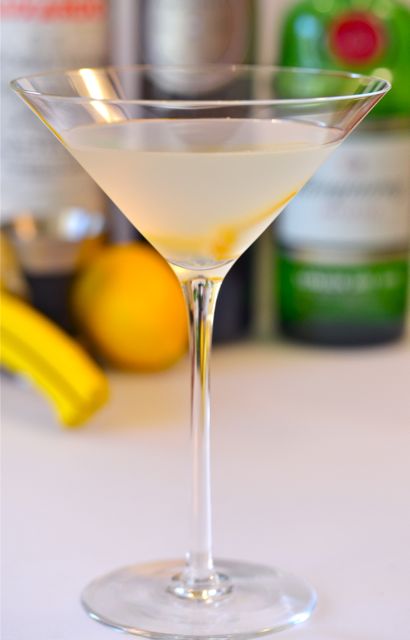
    Few drinks look better in a cocktail glass than the Aviation.

    Continue reading

  • Morels With Asparagus and Cream (and Bacon)

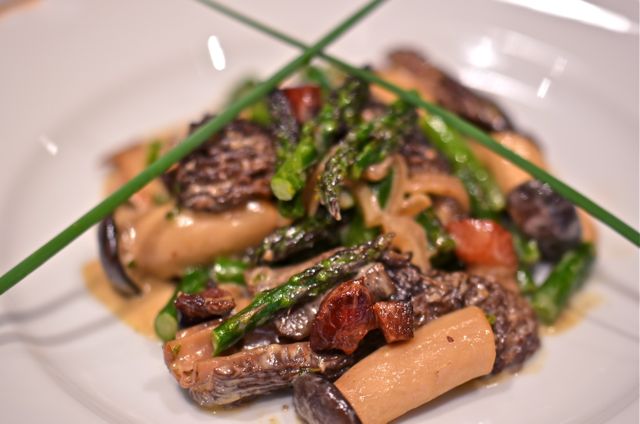
    Morels with asparagus and cream (and bacon).

    This is a very good dish, but no need to avoid the obvious, this is not a particularly healthy dish. The photo says it all. Morels and asparagus bathed in a sauce of cream and bacon. We do offer some notes on how to make a lighter version of the recipe, but we view morels as “special occasion” food around here. When we get them, we don’t hold back. We just love morels. And rather than try to explain the flavor profile in great detail, we will share a description from our eldest child; “ooh, morels, yum- they taste like meat”. Yup, they do. Rich, and indeed “meaty” in flavor, morels have a great texture when cooked and taste like the umami-bombs they are.

    Morels are from the Morchella genus of mushrooms and are common in the United States and enjoyed in Europe and Asia. Morels are found in many forest environments, but on the west coast the Gray Morels are most associated with wildfires. The morels thrive in forest areas after a burn and in areas of “controlled burns”. As controlled burns and wildfires are common throughout the west in most years, we get our share of morels. Most go to restaurants or are dried for sale, but we do get fresh morels at the farmers market- and when we do, we grab them. But even in good years they are not cheap. Dried morels are a more affordable (and off-season) substitute.

    Ingredients, note the mix of morels and king trumpet mushrooms.

    As for the morels themselves, they are usually 1-3 inches in size and have a unique “sponge-like” cap and a hollow core. This makes cleaning the morels a challenge. Frankly, morels are dirty, buggy mushrooms. And as they often come from pine forests, a few pine needles may be stuck in there as well. While it may sound like sacrilege to purists, we suggest that morels be cut in half and thoroughly rinsed in water. The water will cook out with some extra time in the pan, but no one likes mud, bugs and pine needles in their food. It is also a good idea to inspect and clean each morel by hand before you cook them. This is time-consuming work, but since morels will be a special treat for most, it is worth the extra effort.

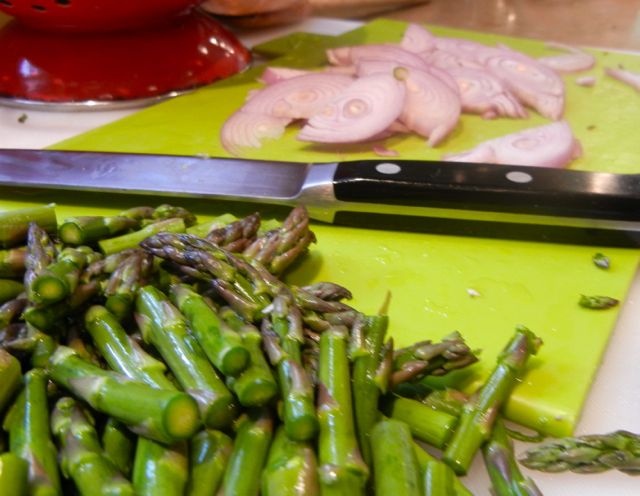
    Prepare your veggies.

    Now some will say that the morels should be served simply, with minimal additions, and that is great. But the morels play very well with other flavors, particularly earthy, sweet green vegetables like asparagus (fiddleheads are also good, if you can get them). And why not add some home-cured bacon, a touch of shallot, cream and some fresh thyme? And morels are really expensive, so we add some other meaty mushrooms (we use king trumpets) to the recipe to as well. And in a pinch, you can just use other mushrooms altogether. The flavors will still be good.

    Wash the mushrooms, you will be much happier.

    Bacon adds extra flavor, but you can substitute olive oil.

    Reserve the bacon pieces, but cook the mushrooms in the bacon fat.

    Making this dish is a simple one-pan operation. Most of the work is in prep. Clean and slice the mushrooms, asparagus and shallots and set aside. Cut some bacon into cubes or strips and brown, remove the bacon pieces and reserve, but keep the bacon fat in the pan. (You could skip the bacon and just use olive oil). Add the shallots and mushrooms and cook until they give up their liquid and it is mostly reduced. Add the thyme, then deglaze with some white wine and then add the asparagus. Cook the asparagus for a few minutes then add the cream, reduce for another minute, add the bacon and then check seasoning. Adjust seasoning as needed and serve. Continue reading

  • Weekly Cocktail #15: The Nouvelle Fleur

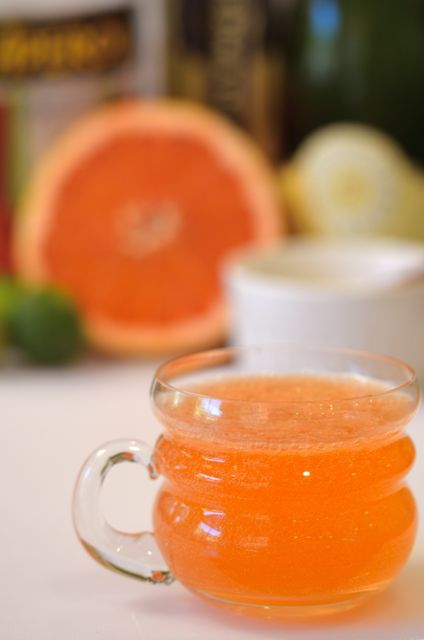
    Nouvelle Fleur Cocktail.

    We generally try to make our weekly cocktails out of readily available ingredients (we have the bonus posts for the crazy stuff), but this week we need to make an exception. The Nouvelle Fleur is a drink that will send many of you to the liquor store, but it really is worth the trip. The reason is that the Nouvelle Fleur is not only a good cocktail, but a recipe that easily becomes a great summer punch. So we think a punch that pleases a dozen guests is worth the extra effort.

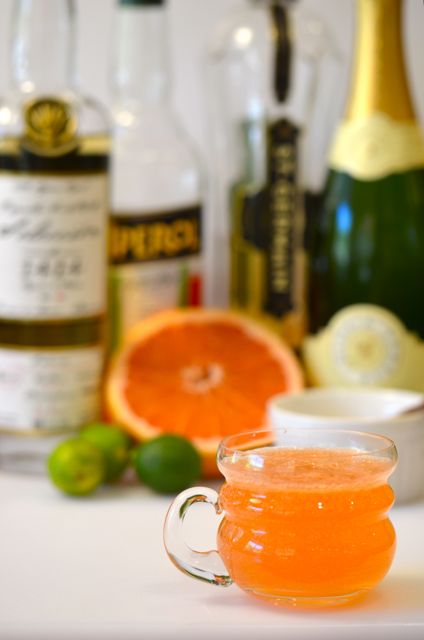
    The extra effort comes from a somewhat long list of ingredients. The Nouvelle Fleur combines St. Germain, blanco tequila, Aperol, lime juice, grapefruit juice, a pinch of salt and is topped by sparking wine. Now many people will not have St. Germain or Aperol in their bar, but both are worthy additions. St. Germain is a low-proof elderflower liqueur that is sweet with floral and pear notes. St. Germain is a popular ingredient with mixologists and is often used as a more floral substitute for Cointreau or triple-sec in cocktails. Aperol is an Italian apéritif that is similar to Campari, but much less bitter and with lower alcohol. Aperol has pleasant citrus, bitter and herbal notes (maybe even rhubarb) that add depth to many cocktails without the outright dominance of Campari. Aperol plays very well with tequila, as we noted earlier with the Chica Facil.

    The overall combination of aromas and flavors in the Nouvelle Fleur truly stand out. The aroma is mostly, and pleasantly, grapefruit with a bit of floral from the St. Germain. As for the flavor, the sweetness of the St. Germain is matched by the citrus of the lime and grapefruit juice. The Aperol and grapefruit lend bitter and herbal notes and the champagne keeps the drink light and refreshing. The salt provides a subtle kick that keeps you coming back. Everyone who tries this drink loves it, particularly for summer.

    Nouvelle Fleur and ingredients.

    And there is another summer bonus. The Nouvelle Fleur isn’t a boozy drink, only the tequila is a high-proof spirit and there’s only 1/2 ounce in the recipe. Otherwise all the ingredients are under 20% alcohol. This lends really well to making a light summer punch. Simply add the same proportion of ingredients to a punch bowl, top with champagne or sparking wine and add a big block of ice. Now you have a tasty punch for a crowd that packs plenty of flavor, but won’t have them falling in the pool….

    As for the actual recipe, it comes from the Eastern Standard, a restaurant in Boston. We are far from Boston, but since we are avid readers of Cocktail Virgin Slut, we get the scoops, and this recipe, from one of the best cocktail towns in the country. Sometimes you just have to love the internet. But the Nouvelle Fleur is such a good drink, we may need to visit Eastern Standard in person and sample the rest of their cocktails….Maybe we will catch a game at Fenway as well.

    The Nouvelle Fleur:

    Ingredients:

    • 1 oz. St. Germain
    • 1/2 oz. blanco tequila
    • 1/2 oz. Aperol
    • 1/2 oz. fresh lime juice
    • 1/2 oz. fresh pink grapefruit juice
    • 1 pinch of salt
    • 2 oz. Champagne or sparking wine

    Assemble:

    1. Combine all the ingredients, except the Champagne, in a cocktail shaker with ice and shake thoroughly. Strain into a cocktail glass, flute or coupé.
    2. Top with the Champagne and serve. No garnish.
  • Cooking Sous-Vide At The Farm

    Sous-vide cooker for the home. It works.

    The more we cook, the more we understand that time and temperature are the keys to good cooking. And it has always been this way in the kitchen. For generations good cooks understood that, for many dishes, low-and-slow transforms even the lowliest ingredients into the best meals. And we use our dutch oven, slow cooker and smoker in many meals to take advantage of low-and-slow, particularly for larger, tougher cuts of meat. We do like our beef brisket and pork shoulder.

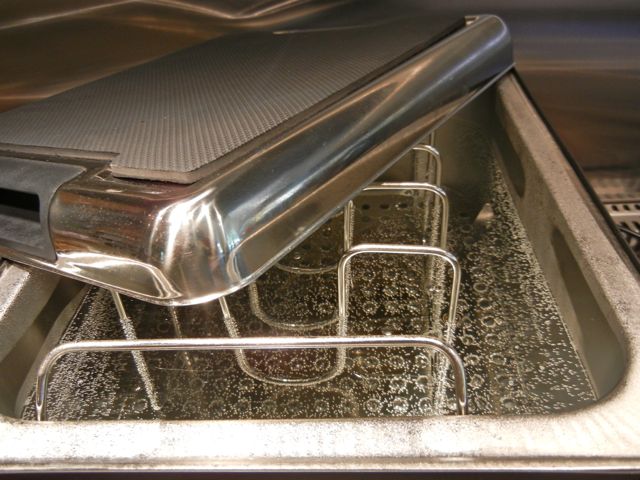
    Temperature-controlled water bath with racks to manage space.

    But when cooking steaks, chicken pieces or fish, the slow cooker or smoker are usually not practical options. Most of these meats are fried, seared or roasted in the pan and/or oven, or grilled on the barbecue. The problem with these high-heat methods is that the heat is applied unevenly on the meat. So even with good technique  you get a well-done exterior that moves towards the desired doneness in the center of the meat (assuming you don’t overcook the whole thing). The only real bonus of high-heat cooking is the extra flavor you get from browning / caramelizing. Most traditional cooking methods can’t fully overcome a fundamental challenge- how do we cook and brown this irregularly shaped food without overcooking it?

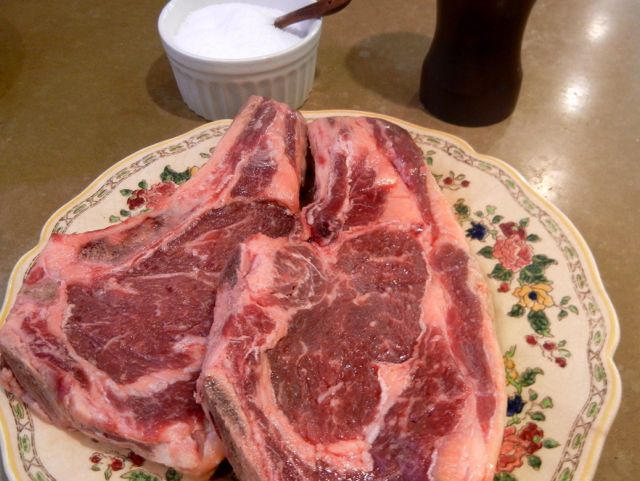
    Grass-fed ribeye steaks. These are real good- best not to screw it up.

    Sous-vide (French for “under vacuum”) cooking is a solution to this challenge. Basically a slow-cooker for individual cuts of meat, fish and poultry, sous-vide cooking gives the home cook exact control of cooking temperature that’s applied uniformly to the meat. And it works pretty much every time- as long as you have the time. The approach here is pretty simple, a water bath is heated to a specific temperature and the protein (or vegetable) is vacuum-sealed into a bag and the bag is placed in the water. The bag keeps the meat from leaking juices or breaking apart into the water bath. The proteins slowly, and uniformly, cook to the temperature in the water bath. Once done, the protein can be briefly seared to add the tasty browned flavors and improve appearance. It is a neat trick and it really works. If you ever wonder how busy high-end restaurants get their steaks or fish right every time, sous-vide is often the answer.

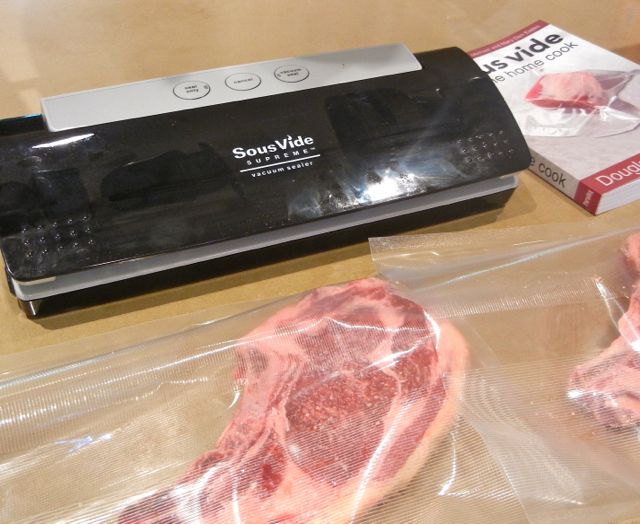
    Vacuum-sealing the steaks. This takes less than a minute.

    We’ve been reading Stefan’s Gourmet Blog and his results cooking sous-vide always looked great. And as we recently purchased 1/4 of a grass-fed cow from Stemple Creek Ranch, we wanted a cooking method that made the most of the flavor of the beef. So we took the plunge and bought a sous-vide cooker (we got one on sale, but expect the setup to run somewhere between $350 – $500, so it’s not cheap). So far we have tried cooking halibut, salmon and Stefan’s cod recipe. All were perfectly cooked.

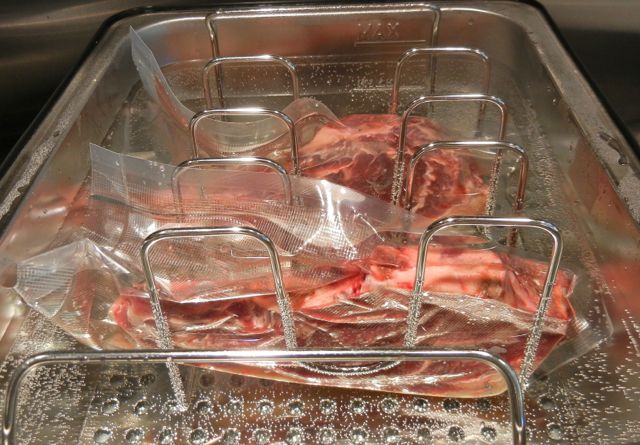
    Cook for 1.5 – 2 hours at 125 degrees.

    The next thing we tried was making a good steak using sous-vide. Not ones to be cautious, we went right to making ribeye steaks. We followed the new procedure, sous-vide cook at desired temperature (in this case 125 degrees for rare-to – medium rare) for 2 hours and then sear the meat briefly to brown the surface. Frankly, the meat, while perfectly cooked, is very unattractive unless you brown it. You can use a hot skillet, grill or even a blowtorch, but we just went with a rocket-hot cast-iron skillet. This browning method worked with just 30-45 seconds of searing on each side. Then we rested the meat for a few minutes and cut it into slices to serve. The first thing we noticed was that the meat was seared on the outside but then the same pink color all the way through, no gray layer, just perfectly cooked meat. So we found the sous-vide approach to cooking steaks was a real success, as long as you have the extra time. Our standard cooking method is here, and that takes 20 minutes. But with expensive, high-quality steaks, we think the extra time is worth it. And if you are entertaining, you can hold the meat at the perfect temperature and then sear just before serving, so sous-vide is a good tool when cooking for a group. Continue reading