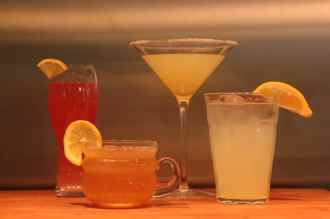
L to R: Meyer 75, California Artillery Punch, Meyer Lemondrop, Meyer Lemonade
Lets face it, if you like seasonal food winter can really suck. We like kale and parsnips as much as the next guy, but they get old pretty quick. By the time February rolls around, we have already made numerous roasts, soups, stews and bean dishes, awesome food, but still very “wintery”. At this point in winter we often crave some brighter flavors.
Happily, we do get citrus in the winter and in California that often means Meyer lemons. Meyers are thought to be a hybrid of lemons and oranges or mandarins. Meyers tend to be sweeter and less acidic than the standard supermarket Eureka lemon. It is this sweetness and low acidity that makes Meyer lemons a great lead element in lemonade and cocktails (nothing brightens winter like a cocktail;-). While the Meyer is still very much a lemon, the softer flavors are often more full and “citrusy” than simply sour. This can make for more accessible and inviting lemon-based drinks. So if you (or a friend) think lemon-based drinks are too sour, try it with Meyer lemons and you may be pleasantly surprised.
Like many Californians, we have our own Meyer lemon trees and they are very productive. Like all seasonal ingredients, this means when you get something you often get a lot at once. The Meyer lemons will ripen over a few months in winter but every week or so we pick a batch. Meyers are also easy to find at farmers markets and many gourmet groceries at this time of year.
So what to do with a dozen Meyer lemons? We make Meyer lemon syrup as a base for lemonade and cocktails. This syrup is easy to make and has deeper flavor from the oils in the zest. There is no water in this syrup, just lemon juice, lemon peels and sugar. We will start with the Meyer lemon syrup and then move to a few drink recipes:
Meyer Lemon Syrup:
What you get: An easy and flavorful lemon-based syrup for lemonade and cocktails (sours, punches, collins, etc.). The extra muddling step extracts oils from the lemon zest for a much richer, fuller flavor. It is worth the time. This syrup features Meyer lemons, but all lemon varieties can be used.
What you need: Special tools can include a juicer or lemon reamer. These are not required but will get you more juice in less time. A good peeler will help get the zest without too much pith, but a sharp knife (and practice) will also work.
How long? Peeling and juicing will take 5-10 minutes. 1 hour of inactive time. The syrup will keep for a week, covered, in the fridge.
Notes before you start:
– You are aiming for 16 oz. of juice. Usually this is 8-10 medium Meyer lemons, adjust the amount of lemons by the size. If you come up short on juice- simply match the volume of sugar to the volume of juice.
– If you don’t have superfine sugar, process a pound of regular sugar in the food processor for 60 seconds- presto, superfine sugar. Without superfine sugar, the sugar will not dissolve in the juice. If you can’t get superfine sugar, you can heat the mixture at low heat in a saucepan to dissolve.
– When juicing the lemons (or any citrus) with a juicer or reamer do not overdo it and press too hard on the fruit- you will start grinding bitter pith into the juice. This may seem a bit obsessive, but it makes a big difference in flavor. Take it easy.
Ingredients:
(makes 24-32 oz. of syrup)
– 8-10 Meyer lemons (16 oz. juice), peeled with as little white pith as possible.
– 1 Pound of superfine sugar
Assemble:
- Place the sugar and lemon peels in a large bowl. Muddle with a muddler or heavy spoon to extract oils from the peels. Let sit for an hour and muddle again.
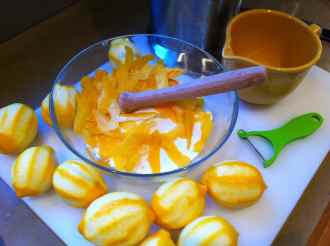
- Juice or squeeze 16 oz. of lemon juice.
- Add lemon juice to sugar mixture. Stir and then let sit as sugar dissolves. Once dissolved, strain out peels. You now have Meyer lemon syrup
Once you have the Meyer-lemon syrup you can easily make some great drinks. Let’s start with lemonade, either sparking or still:
—-
Meyer Lemonade: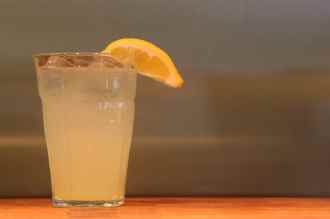
What you get: Ass-kicking lemonade with fuller flavor due to the oils from the zest that end up in the syrup. Cooks Illustrated has a similar approach to their “best” lemonade recipe. This lemonade does not disappoint.
What you need: No special tools required.
How long?: If you have made the lemon syrup, 1-2 minutes. You can build a single drink or a pitcher in the same timeframe.
Ingredients:
(use this basic ratio for any amount)
– 1 Part Meyer lemon syrup
– 3 Parts still or sparkling water
Assemble:
- Mix lemon syrup and water. Stir. Adjust for sweetness if you like.
- Add ice. Think summer. Give this to your kids for extra smiles.
——
As for cocktails, you now basically have an awesome sour mix that can be used in sours and collins drinks. But here, we will offer a few cocktails and a punch using Meyer lemons instead of Eurekas. The cocktails are a Meyer 75, based on the French 75 and a Meyer Lemondrop. The punch is California Artillery Punch, adapted from Chatham Artillery Punch.
Meyer 75 Cocktail: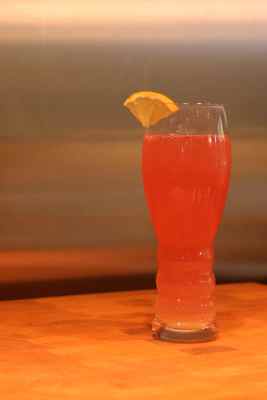
The Meyer 75 is an adaptation of the French 75 (it is a “75” if you use gin, a “76” if you use vodka). The sweeter Meyer lemon juice plays really well with the gin and the tartness of the Champagne.
What you get: A slightly strong but refreshing cocktail with a full range of flavors and elegant presentation. Easy to assemble.
What you need: Meyer lemon syrup (see above). No special tools. Champagne flutes are a nice presentation option.
How long? If you have made the lemon syrup, this is a fast drink to make and a great way to impress guests with minimal effort. Assume 1-2 minutes to make the cocktail. If serving a large group, simply multiply the gin and lemon syrup mixture, pour into multiple flutes and then top each flute with champagne.
Ingredients:
(makes 1 drink)
– 1.5 Oz Meyer lemon syrup
– 1.5 Oz gin
– 3 Oz Champagne or sparking wine (try brut rose’ for a new color, if you like)
– Lemon peel for garnish
– Ice cubes
Assemble:
- Combine lemon syrup, gin and ice in a cocktail shaker or tall glass and shake/stir until very cold. Strain mixture into a champagne flute.
- Slowly top flute with the champagne. Garnish with lemon peel. Serve immediately.
——-
Meyer Lemondrop: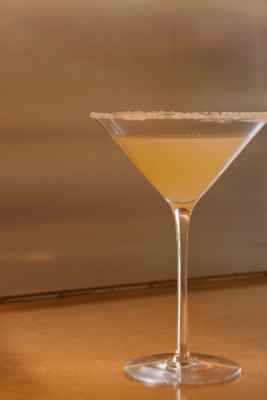
What you get: An attractive, very lemon-forward cocktail that is a good substitute for a Cosmo.
What you need: Meyer lemon syrup (see above). No special tools. Martini glass is traditional
How long? This is a another fast drink that will impress guests. Assume 1-2 minutes to make the cocktail.
Ingredients:
(makes 1 drink)
– 2 Oz Meyer lemon syrup
– 2 Oz vodka
– Ice cubes
– A few tablespoons of superfine sugar
– Lemon wedge for rim of glass
– Lemon peel for garnish
Assemble:
- Wet edge of glass with the lemon wedge and dip the rim of the glass into the sugar.
- Combine lemon syrup, vodka and ice in a cocktail shaker or tall glass and shake/stir until very cold. Strain mixture into glass
- Garnish with lemon peel, if you like. Serve immediately.
——
California Artillery Punch: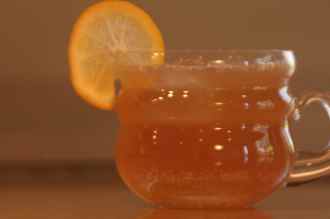
(Adapted from David Wondrich)
This is a great punch with deep, deep flavors- but it is strong stuff. Think of it as Long Island Iced Tea meets Meyer lemons. These will sneak up on you. This is the punch recipe, but we often make this drink as a cocktail using the same basic proportions- it works very well.
What you get: Drunk, if not careful. But you will also a great punch with complex flavor from the four different types of booze, fruit and spice. Despite all the booze, the citrus flavors and nutmeg will shine through. This is a great warm-up drink for holidays and parties.
What you need: A big bowl. Cups. A ride home.
How long? If you have made the lemon syrup this is a quick assembly. Ice, pour, mix, serve. 5 Minutes.
Ingredients:
(makes 30-60 drinks, depending on the cups you use.)
– 1 full recipe of Meyer lemon syrup (see recipe above- this will be 24-32 oz. syrup)
– 750 ml cognac
– 750 ml rye or bourbon
– 750 ml dark Jamaican rum
– 3 Bottles of Champagne or sparkling wine
– Nutmeg
Assemble:
- Fill your bowl with ice cubes (make sure you can still fit the punch)
- Pour in lemon syrup, cognac, bourbon and rum. Mix well.
- Add champagne and (gently) stir.
- Grate nutmeg over the top, to taste, and serve.
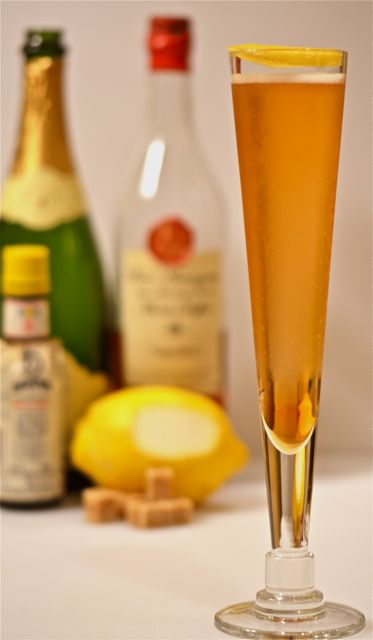
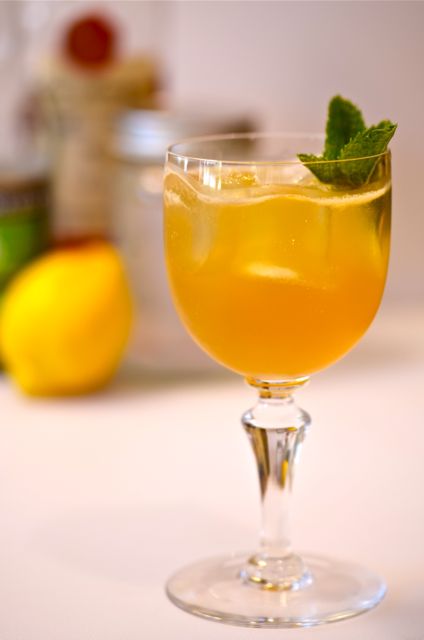
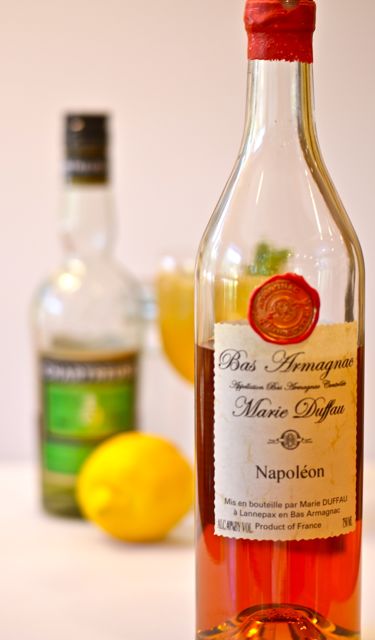
 And while we already like a basic Champagne cocktail, this version with good brandy was something altogether different, and very much better. The aroma, with the combination of citrus from the twist, the tart yeasty note of the champagne, spice from the bitters and sweet floral / fruity notes of the Armagnac is outstanding. You will be happy simply smelling this drink. And magically, as the Champagne bubbles keep the drink “active”, the aroma persists from beginning to end. This cocktail is a reminder that adding a twist to a drink can be very, very important to the result. As for flavor, the Champagne still rules the drink, but with much more depth of flavor and just a touch of pleasant heat from the brandy. We love this drink, it is good anytime / anywhere.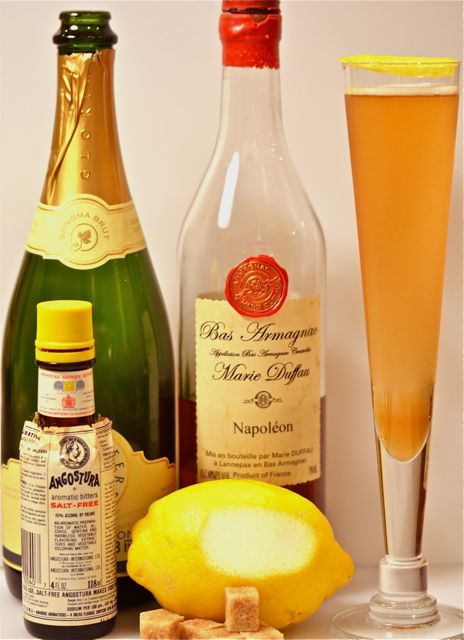



 Putney Farm