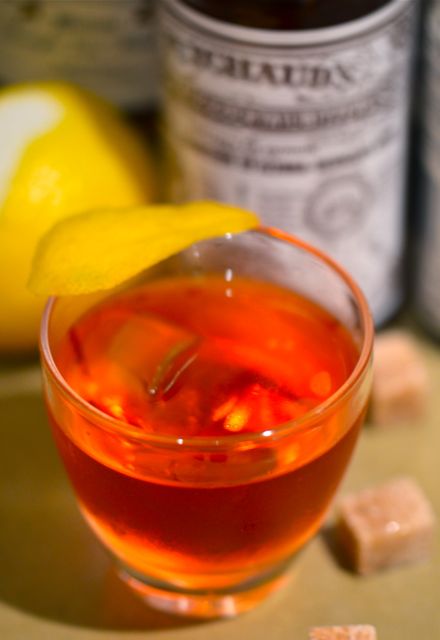
The Sazerac Cocktail.
As we noted all week, fall is almost here. And for us, fall means we get to break out the “brown” drinks. And we don’t mean to be derisive, but these are darker, heavier, and often sweeter, than most cocktails. Perfect for fall and winter, but perhaps a bit heavy for spring and summer. But as the weather starts to change, we occasionally crave a good brown drink; Old Fashioned, Manhattan, Vieux Carre’ and the Sazerac.
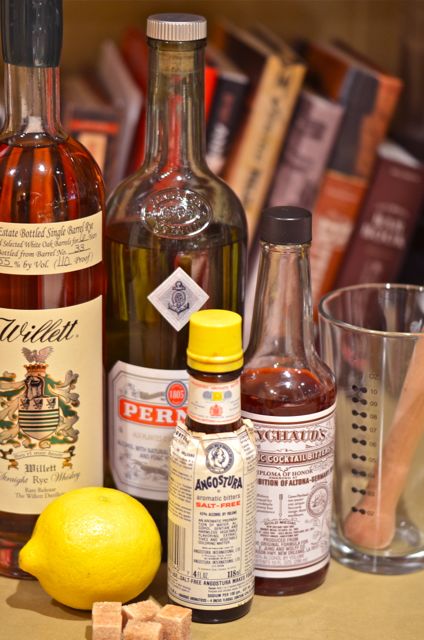 And if we are drinking a strong whiskey cocktail, it’s very likely the Sazerac, the classic cocktail of New Orléans. The Sazerac combines rye whiskey (yes we are on a rye kick), sugar, Peychaud’s and Angostura bitters with a touch of ice, served in an absinthe-rinsed glass and a lemon twist. We think of the Sazerac as an old-time Whiskey Cocktail (whiskey, sugar, bitters ice/water) with a few extra touches. Those extra touches include more bitters (some recipes use only Peychaud’s, we like using both), an absinthe rinse for the glass and the lemon twist. It may not sound like much, but these small changes make for a big difference. Nothing tastes quite like a Sazerac. Sweet, spicy and herbal, the Sazerac is a cocktail you can linger over and enjoy.
 In fact, many versions of the Sazerac suggest using little or no ice. And this makes some sense, as the drink comes from New Orleans in the mid 1800’s and ice wasn’t always readily available. And even if the cocktail were chilled, it would get warm fast-best to have a cocktail that tastes good cold or at room temperature. And while the Sazerac will taste good without much chill, we still prefer it cold.
 As for the history of the Sazerac, it was “invented” at the Merchant’s Exchange Coffee House in the 1800’s. At the time, the spirit was cognac (the name “Sazerac” comes from a brand of cognac), not whiskey, but the phylloxera outbreaks of the 19th century forced the move to whiskey. Some early recipes also use bitters other than Peychaud’s, but Peychaud’s is now standard ingredient (purists will not like the inclusion of Angostura). The absinthe (or herbsaint- a pastis from New Orléans) has been a constant part of the recipe. It is unclear when the lemon twist came into things- but it’s good- and was in the recipe when it was first published in the 1908 cocktail book, “The World’s Drinks and How to Mix Them“.
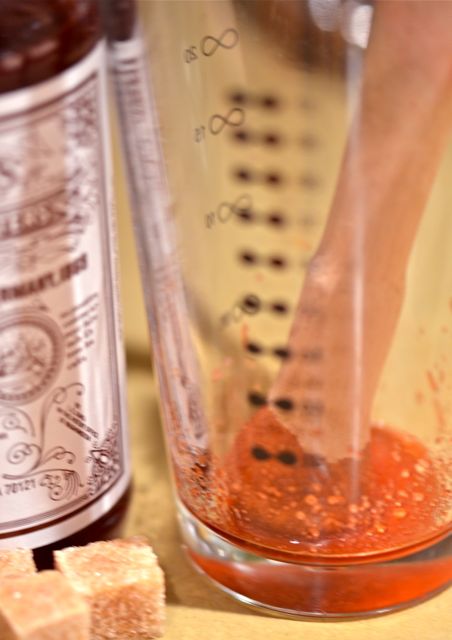
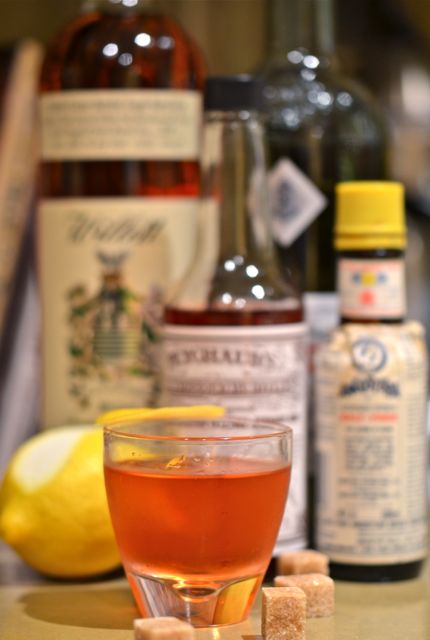 Finally, making the Sazerac does require a few extra steps, but they are worth it. You need to muddle a sugar cube (you can use simple syrup, too) and the bitters before adding the ice and Rye. And you need to rinse the serving glass with absinthe. This seems fussy, but it does seem to give you the perfect amount of absinthe- it won’t overpower the other ingredients. And finally you need to do a thorough job with the lemon twist and get all of those tasty oils in the drink. When you’re done, you get a lovely, complex sip. As we said “nothing tastes quite like a Sazerac”, and since there is no place quite like New Orléans, we think that fits.
The Sazerac:
- 2 oz. rye whiskey
- 1 sugar cube (Demerara sugar preferred)
- 3 dashes Peychaud’s bitters
- 2 dashes Angostura bitters
- 1 teaspoon absinthe or pastis, for rinse
- Lemon peel, for garnish
Assemble:
- Muddle the sugar cube and bitters in a mixing glass. Add the rye and ice. Stir to chill.
- Meanwhile, coat the inside of a lowball or old-fashioned glass with the absinthe. Pour off any excess. Add one large ice cube to the glass and pour in the cocktail. Twist the lemon peel directly over the drink to extract the oils. Discard the used lemon peel. Serve.
Related articles
- T.g.i.f. the Sazerac (socialcouture.typepad.com)
- Cocktail of the Week: Razercrac (esquire.com)
- Bonus Cocktail: The Scofflaw (putneyfarm.com)
- Weekly Cocktail #27: The Junior (and the Frisco Sour) (putneyfarm.com)
- Bonus Cocktail: Scott’s Manhattan (putneyfarm.com)
- Bonus Cocktail: The Orchard Moonraker (putneyfarm.com)











 Putney Farm