
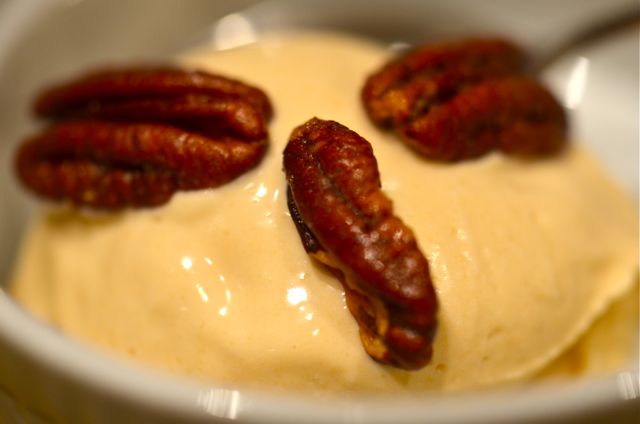
Maple Ice Cream With Salty, Buttered Pecans.
Winter is closing in (as much as it can in California), but we still like our ice cream. We never seem to tire of ice cream, regardless of time or place. We’ve read that the two foods that break the most diets are ice cream and bacon. And we are proud to produce both, in large quantities, here at the farm. And while we try to moderate our intake, we often find the best way to overcome temptation is to simply give some of our creations away (“free bacon and ice cream for all!”). But not this ice cream, we are keeping ate all of this one.

 And that wasn’t really a surprise, as this ice cream comes from Jeni Britton Bauer, of Jeni’s Splendid Ice Creams in Columbus Ohio. Jeni’s ice cream is some of the richest, creamiest and most flavorful we’ve tried anywhere. And you can sometimes find her ice cream at specialty stores across the country, it’s amazing, but ridiculously expensive. And since Jeni published “Jeni’s Splendid Ice Creams at Home“, the best option is to make it yourself. And once you understand Jeni’s methods, you are on your way to ice cream nirvana.


 The key to Jeni’s method is to minimize the formation of ice crystals (ice crystals make ice cream gritty) and maximize butterfat and flavor. But instead of using traditional ingredients like granulated sugar or egg yolks, she uses corn syrup to sweeten, a cream cheese base for fat and thickens the milk and cream with corn starch. This may seem odd, but the science (and texture and flavor) are on Jeni’s side. Corn syrup is glucose, rather than sucrose, and resists crystallization. Corn starch bonds with the milk and cream to further reduce crystal formation. Cream cheese (it doesn’t impact flavor) mixed with a milk and cream mixture provides fat without extra water. Along with a rapid chill of the ice cream base, this method gives you creamy, silky ice cream that beats almost anything you can buy.
 Jeni’s cookbook has recipes for all sorts of exotic ice cream flavors like Queen City Cayenne, Blackstrap Praline, Goat Cheese with Roasted Red Cherries and Chamomile Chardonnay. But she also has new riffs on classics like dark chocolate, vanilla, mint, salted caramel and this maple ice cream. We simply love rich, sweet maple syrup and maple sugar candy is one of our favorite holiday treats. This ice cream tastes like creamy maple sugar candy, and combined with the buttery salted pecans, it’s heavenly. Like we said, we aren’t sharing this one. Go make some of your own… 😉











 Putney Farm
