 It may sound a bit contrived, but we do seem to have something about traveling to the end of the road. If there is a road that ends in a sunset, or a sunrise, we seem to find ourselves there. The beaches of Kauai or the East End of Long Island call to us almost every summer (that they are both about the same distance from Norcal is just a coincidence). Other than a clean horizon, these two places don’t have a lot in common….expect maybe for surf (another um….coincidence) and incredibly fresh fish.

 And while we love the striped bass of Long Island (do we ever), the fresh ahi, also known as yellowfin tuna, of Kauai is our favorite treat. But, to be fair, there is great ahi and bluefin tuna in Long Island and our experience with this recipe started in East Hampton. Our friend Chad makes something between a tuna tartare and a Hawaiian poke’ every summer in Long Island, and now that recipe makes the trip to Kauai along with us.

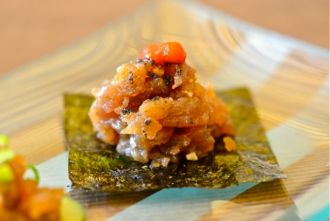
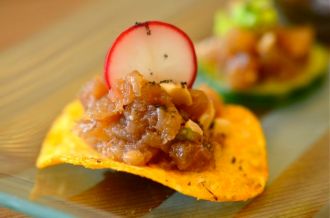
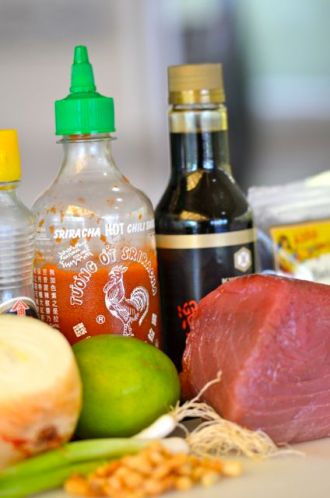
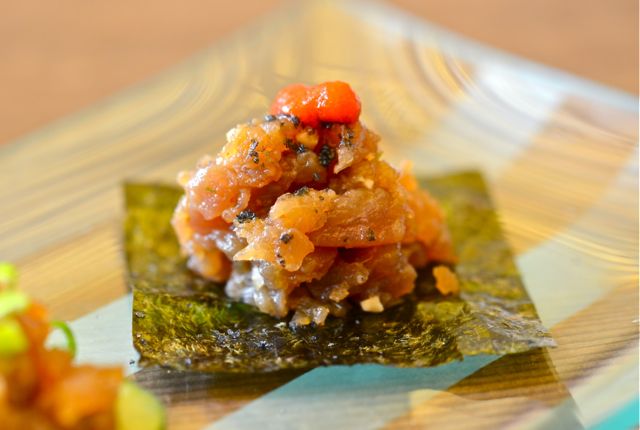
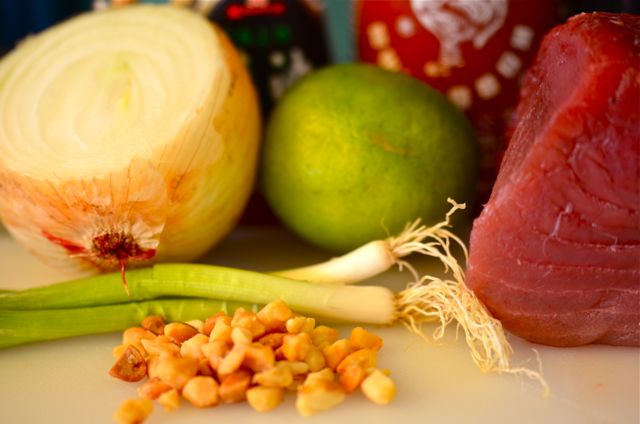
 We call this dish a tartar in respect for Chad, but it is pretty close to poke’, the Hawaiian staple of chopped raw fish, seaweed, salt, soy sauce, sesame oil and roasted nuts. Chad’s version omits the seaweed (we serve on nori) and adds finely diced sweet onion or shallot and a big pinch of lime zest that adds a bright citrus note that makes the dish truly sing. And depending on what’s available, some hot chili paste, Sriracha or wasabi add a nice kick.

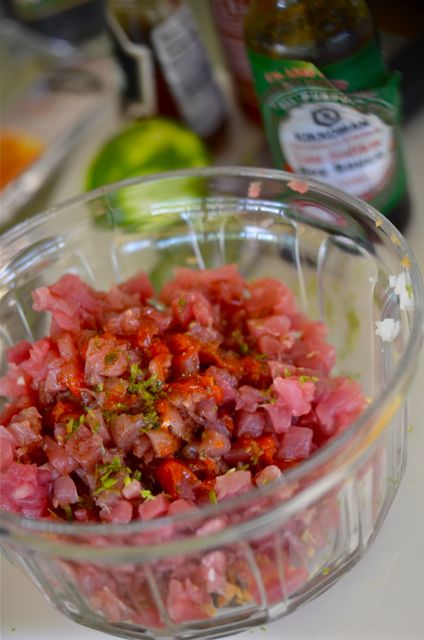
 This is an easy recipe to adjust as you make it, so just start with small amounts of the seasonings and tune / taste as you go. The key here is the ahi. Firstly, the ahi must be very fresh. It is best to make this dish in the place the fish was caught, or to get a piece of sashimi-grade ahi from a fish monger you trust. Once you have the ahi, you need to get it very cold (firming it up in the freezer for an hour is OK) and cut into small cubes of 1/2 to 1/4 inch. This takes a sharp knife, time and patience, but your efforts will be rewarded. You will also need to remove any white sinew you get while slicing, it is nearly inedible and will ruin the texture of the tartare. Then just take your chopped ahi, mix in the other ingredients and tune for your tastes. Fun.
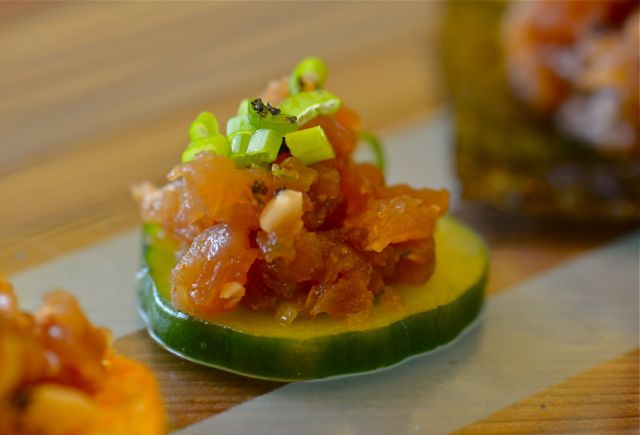
 As for serving the tartare, you have a few options. The easiest / fastest way is just to serve it with some crackers (Triscuits and rice crackers both work very well). But we prefer a trifecta of nori squares, quick pickled cucumber slices and potato chips. The tartare will keep a few days in the fridge, so serving it over rice as a main course is also a very tasty option. Usually, however, leftovers are not an issue.
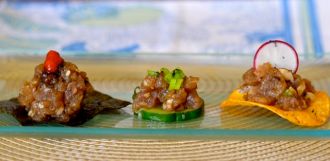 Chad’s Ahi Tuna Tartare:
Notes Before You Start:
- You can use other sashimi-grade tuna like bigeye or bluefin as a substitute for the ahi. Very fresh sushi-grade salmon also works very well.
- If you don’t have macadamia nuts, roasted peanuts are a decent substitute.
- Black or red Hawaiian sea salt makes for attractive presentation.
What You Get: One of the best fish dishes you can find. Healthy, too.
What You Need: A very sharp knife.
How Long? About 20-30 minutes. It all depends on your knife skills.
Continue reading →
 We rarely complain about too much sun, and certainly won’t now. On a recent trip to Kauai (the





 Putney Farm