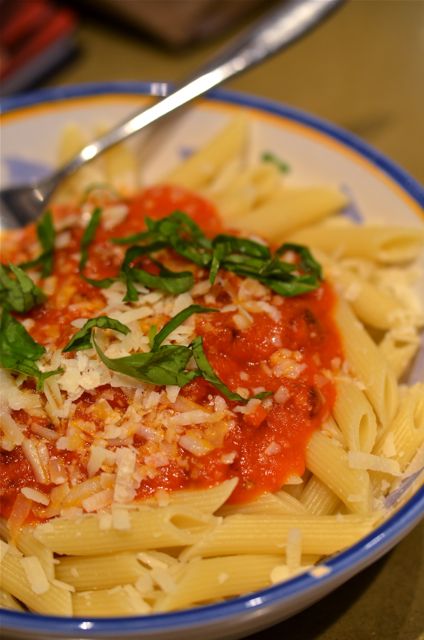
Oven-roasted tomato sauce.
Sometimes when we say “simple”, we really mean it. Ripe tomatoes, a little onion, some olive oil (bacon fat, if you like), salt and pepper. And some time (mostly inactive). What do you get? Sweet and tasty tomato sauce. And what about herbs and other seasonings? We’ll get there, bear with us….
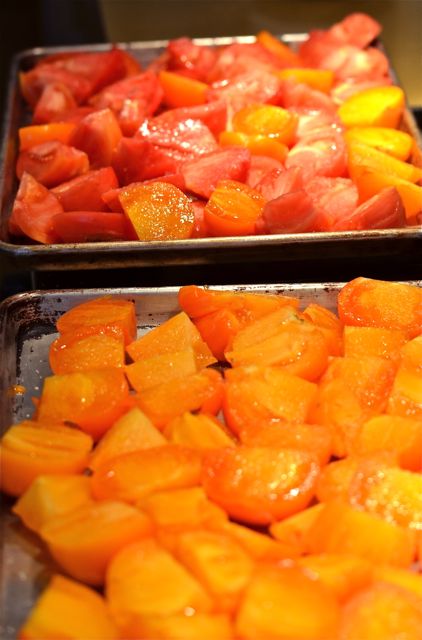
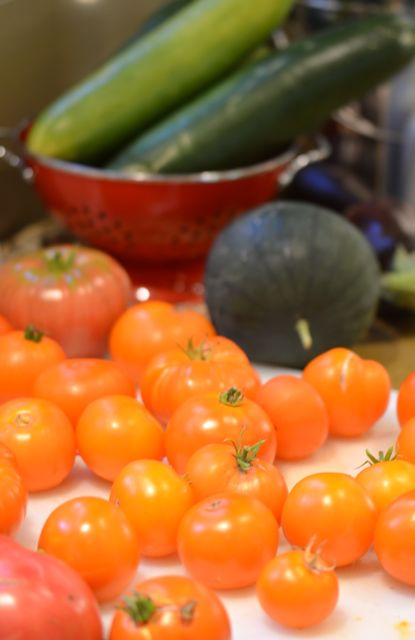
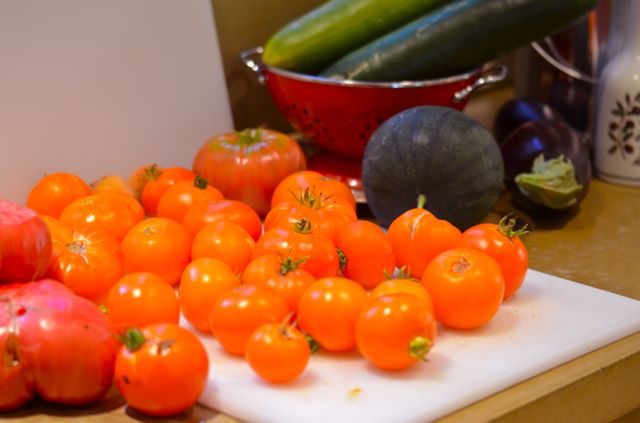
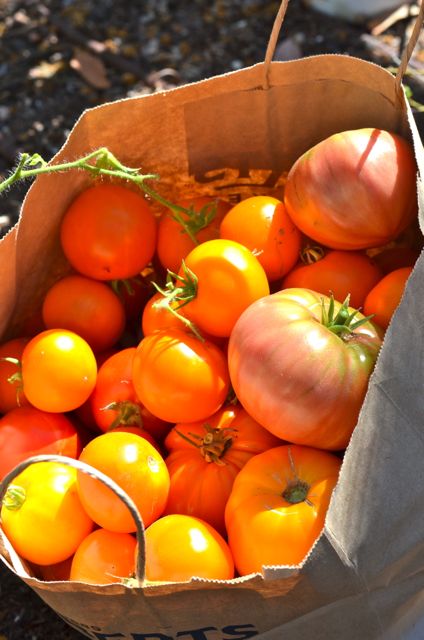
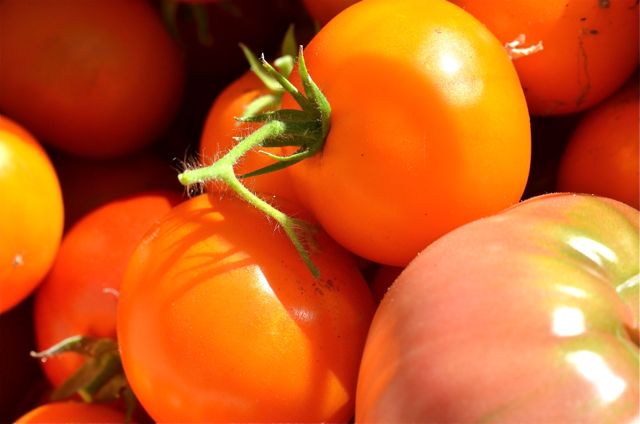
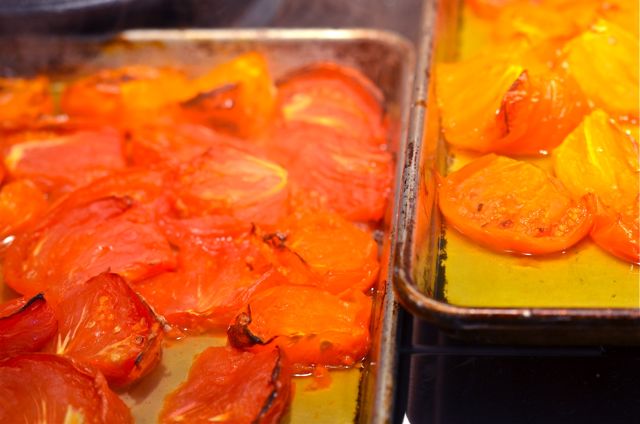 One of the keys for this sauce is taking the time to roast the tomatoes in the oven before you simmer them in the pot. The roasting caramelizes the tomatoes and adds more sweetness and complexity to the final sauce. The other key is using very ripe, even slightly overripe tomatoes- we just happen to have a bunch of our tomatoes and we need to use them. But many farmer’s markets will have late-season tomatoes, ask for their sweetest, ripe tomatoes. And go ahead and buy the ugly tomatoes- it’s all going into sauce anyway.
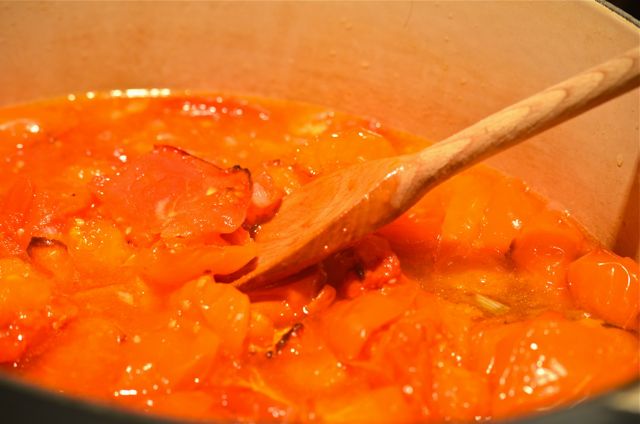
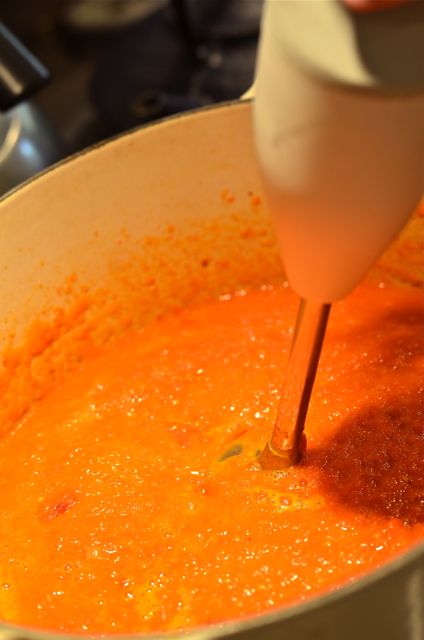
Not necessary, but gets you a smooth texture.
Making the sauce, as we noted, is easy. Roast the tomatoes (a lot of them). Meanwhile, add some olive oil and/or bacon fat to a big pot and sweat about half an onion. When the tomatoes roast and start to brown, remove them from the oven and add them (and any liquid) to the pot. Simmer at low heat for an hour, add a touch of water if the consistency gets too dry (don’t worry about dilution, plenty of flavor here). Season with salt and pepper, to taste.
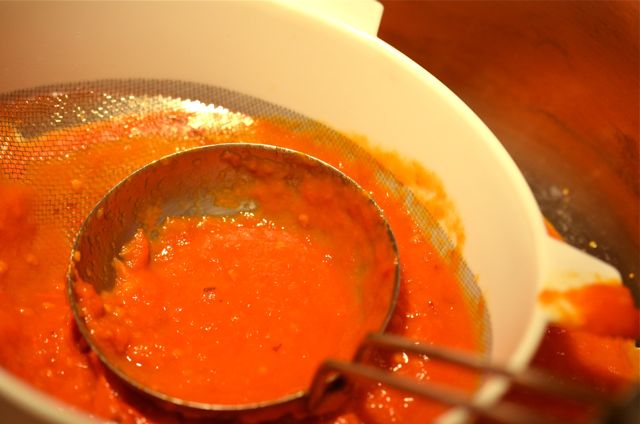
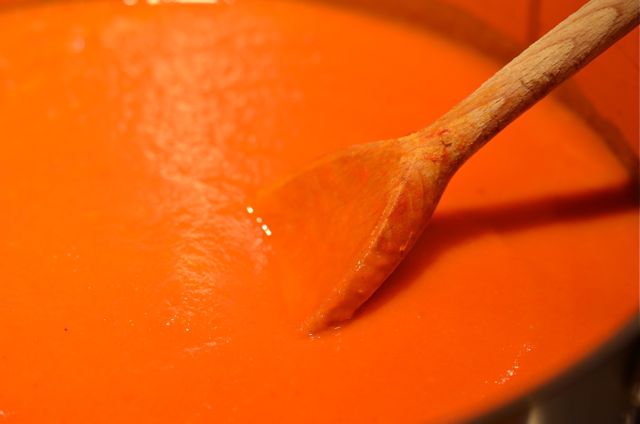 At this stage you have a choice. If you like a more “rustic” sauce with skins and seeds, just mash-up any large chunks with a wooden spoon and you’re done. If, like us, you like a smooth consistency there is a bit more work to do. We take an immersion blender to the sauce for a few seconds (a potato masher also works really well) and then strain the sauce through a mesh strainer to remove skins and seeds. We use a ladle to mash the sauce into the strainer to get as much sauce as we can. This sounds fussy, but it only takes 2-3 minutes and you do a get a smooth, glossy sauce. Your choice.
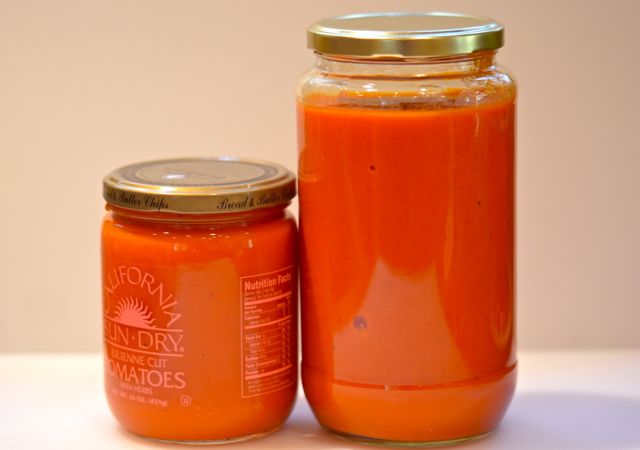
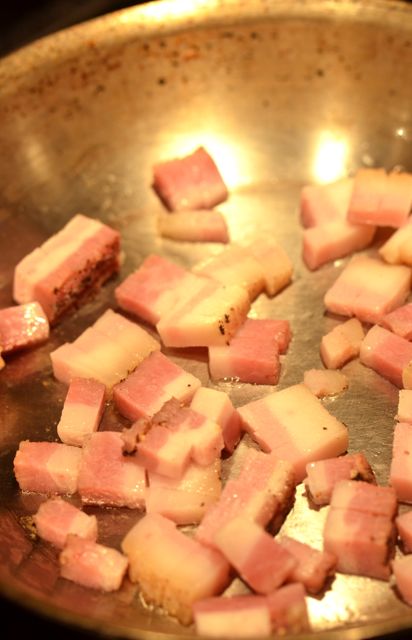
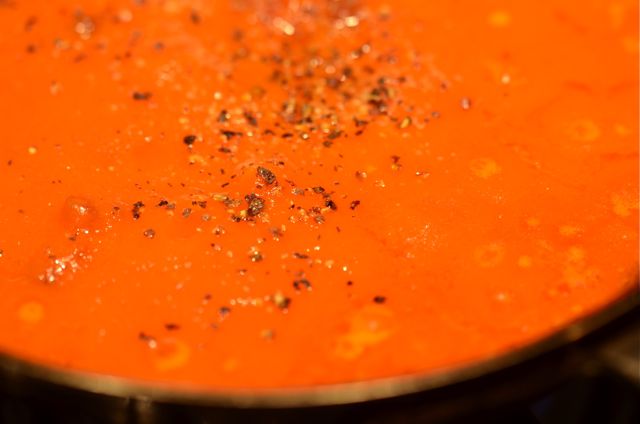 Finally, how do we serve the sauce? This is where the sauce really shines. We use this sauce as a base and then do a quick cook with any other flavors we want to add, just before service. This time we browned a bit of home-cured bacon, added the sauce, a bit more pepper and a chiffonade of basil at the end. Yum. But a bit of garlic, thyme, oregano and olive oil would be great. Some Italian sausage? Excellent. You get the idea. So make this sauce and then add whatever you like, the sweet tomatoes are a great foundation to work from.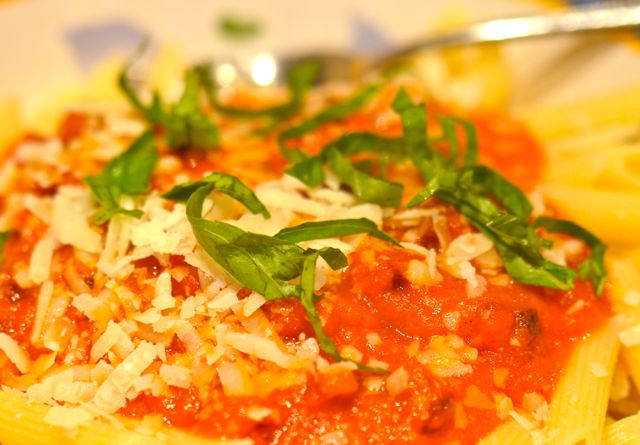


























 Putney Farm