• Morels With Asparagus and Cream (and Bacon)

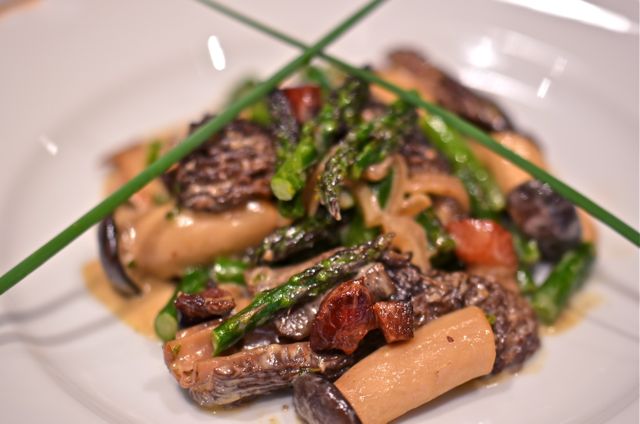
    Morels with asparagus and cream (and bacon).

    This is a very good dish, but no need to avoid the obvious, this is not a particularly healthy dish. The photo says it all. Morels and asparagus bathed in a sauce of cream and bacon. We do offer some notes on how to make a lighter version of the recipe, but we view morels as “special occasion” food around here. When we get them, we don’t hold back. We just love morels. And rather than try to explain the flavor profile in great detail, we will share a description from our eldest child; “ooh, morels, yum- they taste like meat”. Yup, they do. Rich, and indeed “meaty” in flavor, morels have a great texture when cooked and taste like the umami-bombs they are.

    Morels are from the Morchella genus of mushrooms and are common in the United States and enjoyed in Europe and Asia. Morels are found in many forest environments, but on the west coast the Gray Morels are most associated with wildfires. The morels thrive in forest areas after a burn and in areas of “controlled burns”. As controlled burns and wildfires are common throughout the west in most years, we get our share of morels. Most go to restaurants or are dried for sale, but we do get fresh morels at the farmers market- and when we do, we grab them. But even in good years they are not cheap. Dried morels are a more affordable (and off-season) substitute.

    Ingredients, note the mix of morels and king trumpet mushrooms.

    As for the morels themselves, they are usually 1-3 inches in size and have a unique “sponge-like” cap and a hollow core. This makes cleaning the morels a challenge. Frankly, morels are dirty, buggy mushrooms. And as they often come from pine forests, a few pine needles may be stuck in there as well. While it may sound like sacrilege to purists, we suggest that morels be cut in half and thoroughly rinsed in water. The water will cook out with some extra time in the pan, but no one likes mud, bugs and pine needles in their food. It is also a good idea to inspect and clean each morel by hand before you cook them. This is time-consuming work, but since morels will be a special treat for most, it is worth the extra effort.
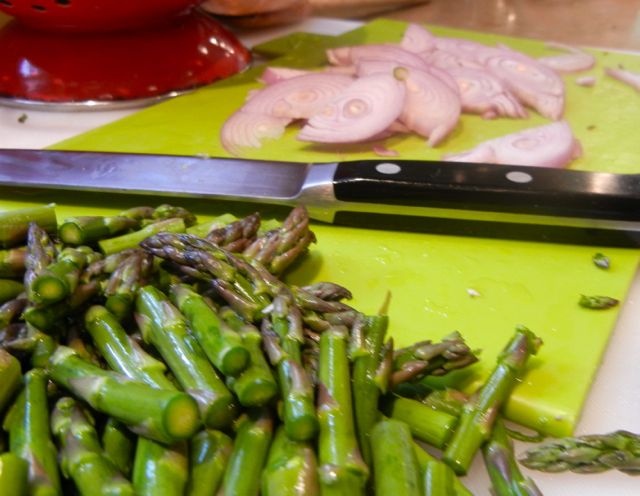
    Prepare your veggies.

    Now some will say that the morels should be served simply, with minimal additions, and that is great. But the morels play very well with other flavors, particularly earthy, sweet green vegetables like asparagus (fiddleheads are also good, if you can get them). And why not add some home-cured bacon, a touch of shallot, cream and some fresh thyme? And morels are really expensive, so we add some other meaty mushrooms (we use king trumpets) to the recipe to as well. And in a pinch, you can just use other mushrooms altogether. The flavors will still be good.

    Wash the mushrooms, you will be much happier.

    Bacon adds extra flavor, but you can substitute olive oil.

    Reserve the bacon pieces, but cook the mushrooms in the bacon fat.

    Making this dish is a simple one-pan operation. Most of the work is in prep. Clean and slice the mushrooms, asparagus and shallots and set aside. Cut some bacon into cubes or strips and brown, remove the bacon pieces and reserve, but keep the bacon fat in the pan. (You could skip the bacon and just use olive oil). Add the shallots and mushrooms and cook until they give up their liquid and it is mostly reduced. Add the thyme, then deglaze with some white wine and then add the asparagus. Cook the asparagus for a few minutes then add the cream, reduce for another minute, add the bacon and then check seasoning. Adjust seasoning as needed and serve. Continue reading

  • Versatile Blogger Award

    We are very grateful to be nominated for a Versatile Blogger Award by one of our favorite blogs, wifemeetslife.

    So here are the rules:

    • Thank the blogger who nominated you.
    • Nominate seven other blogs that you think are amazing.
    • Tell the blogging world seven things about yourself.

    Wifemeetslife features good recipes, gardening and a hedgehog. Yes, a hedgehog. IMHO, if the hedgehog makes the blog, you need to check it out…;-). Thanks Alison!

    As for the seven other blogs we like, the only problem is that there are way more than seven. One of the great surprises of blogging is how much we enjoy reading other blogs. Our cooking, gardening and bartending are much better, and the sheer volume of amazing photos out there is truly remarkable. As it is, here are seven blogs we love:

    • Promenade Plantings: A simply lovely gardening and cooking blog with a generous spirit. This may not be their first nomination, but still well-deserved.
    • The Boo Lion: Well-written, passionate cocktail blog all the way from Taiwan. And the drinks are good. We don’t miss a post.
    • Stefan’s Gourmet Blog: Great cooking and eating blog. Detailed, well-written recipes.  Stefan’s posts convinced us to get a sous-vide cooker. A good decision, it turns out.
    • Life in The Foothills: A blog about life in the country and a genuine appreciation for the land and where you live. Recipes, wildlife photos and scenes from the Sierra foothills, plus a fruit-stealing fox. Cool.
    • Sybarite Sauvage: Irreverent, funny writing that happens to include good wine reviews. Always gives you a smile, even if you don’t drink wine (oh, but we do…;-)
    • MaggiesOneButtKitchen: Great, and we mean great, baking blog. Amazing what she can do.
    • Mike’s Look On Life: Mike is a photographer with an eye for austere beauty that is unique and, at times, heartrending. Our guess is that his work will extend beyond the blogosphere, should he so choose.

    Oleander from the pasture. The quail like to hang out underneath.

    And seven things about Putney Farm:

    1. The blog truly is “us”. The parents both cook, bake, garden, mix drinks, write and take photos. The kids give “unfiltered” feedback…and plenty of it. The dog and cat try to keep the varmints in check, albeit with mixed results. A true team effort.
    2. We are proud (and sometimes tortured) fans of the San Francisco Giants.
    3. We love good, hand-made cocktails but still sometimes enjoy frozen margaritas from a machine. We are unashamed.
    4. We do make about 10 pounds of home-cured bacon every 2 weeks and share with friends. It goes pretty quick.
    5. Our kitchen is more than just a kitchen. Our garden is more than just a garden.
    6. We try to be grateful for every day. Sometimes we get caught in the weeds. Times with family and friends get us to open pastures.
    7. And we always like to leave you with a few photos….in this case a few from our pastures:

    Due south.

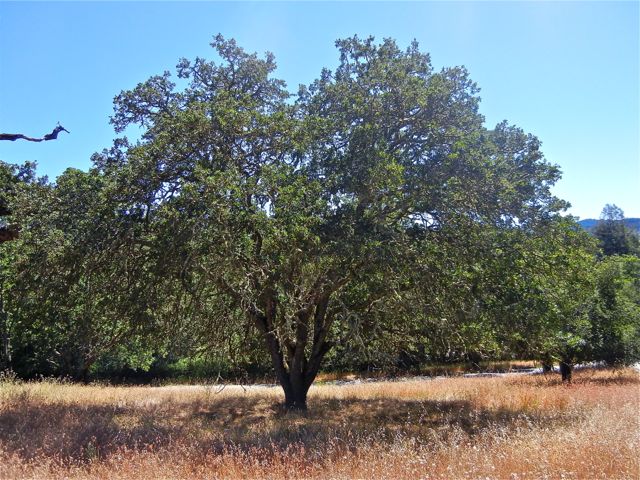
    One of many oaks.

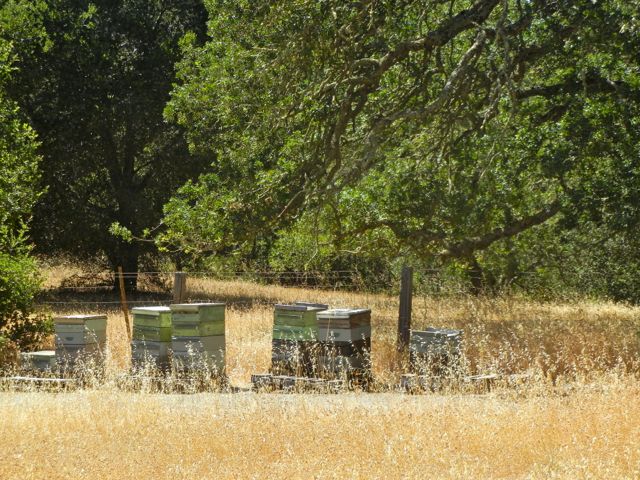
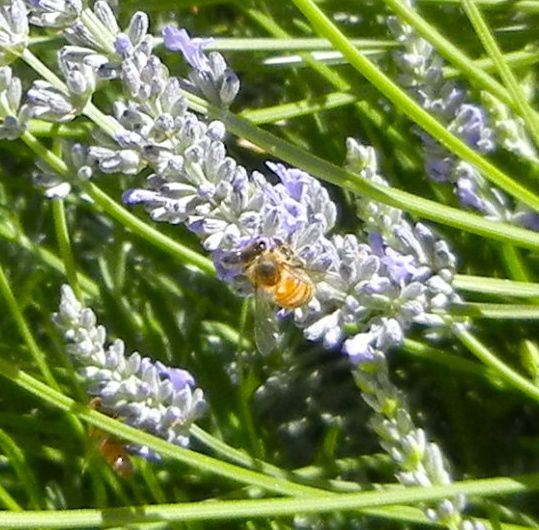
    The bee boxes. Busy and happy with the heat.

    Flotsam and jetsam.

  • Cooking Sous-Vide At The Farm

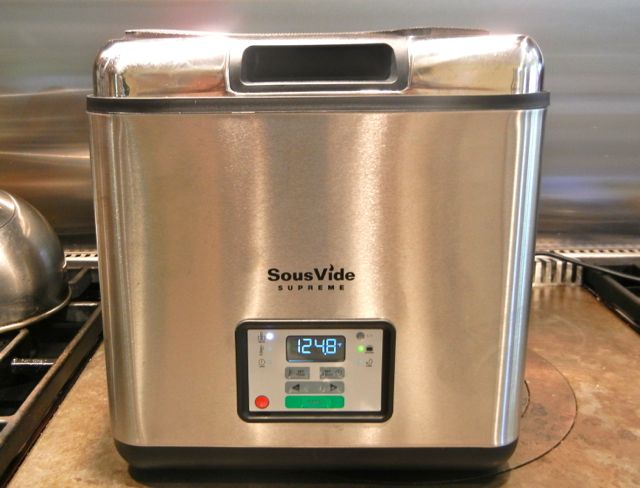
    Sous-vide cooker for the home. It works.

    The more we cook, the more we understand that time and temperature are the keys to good cooking. And it has always been this way in the kitchen. For generations good cooks understood that, for many dishes, low-and-slow transforms even the lowliest ingredients into the best meals. And we use our dutch oven, slow cooker and smoker in many meals to take advantage of low-and-slow, particularly for larger, tougher cuts of meat. We do like our beef brisket and pork shoulder.

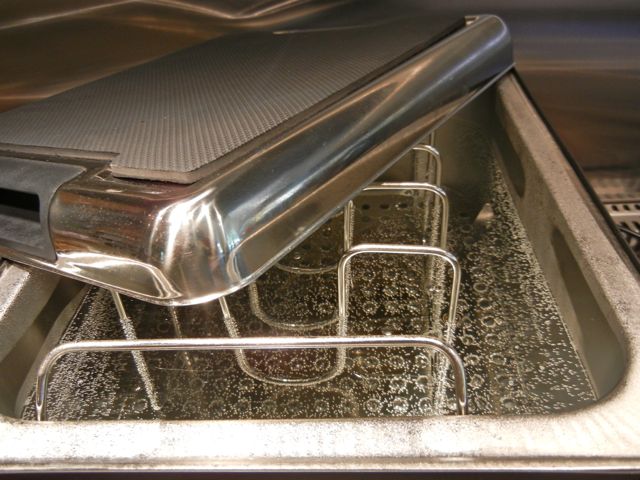
    Temperature-controlled water bath with racks to manage space.

    But when cooking steaks, chicken pieces or fish, the slow cooker or smoker are usually not practical options. Most of these meats are fried, seared or roasted in the pan and/or oven, or grilled on the barbecue. The problem with these high-heat methods is that the heat is applied unevenly on the meat. So even with good technique  you get a well-done exterior that moves towards the desired doneness in the center of the meat (assuming you don’t overcook the whole thing). The only real bonus of high-heat cooking is the extra flavor you get from browning / caramelizing. Most traditional cooking methods can’t fully overcome a fundamental challenge- how do we cook and brown this irregularly shaped food without overcooking it?

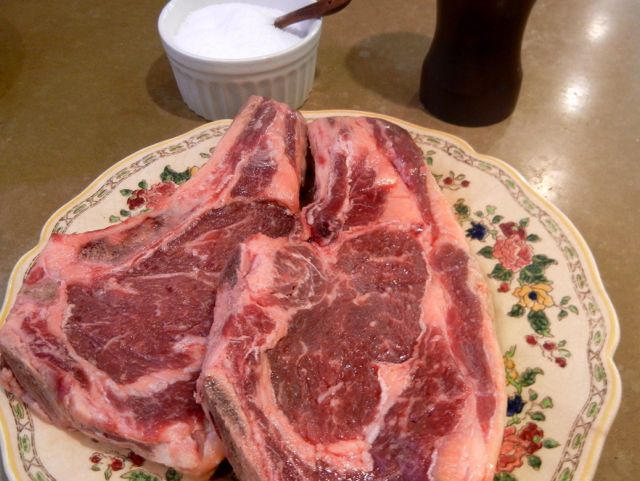
    Grass-fed ribeye steaks. These are real good- best not to screw it up.

    Sous-vide (French for “under vacuum”) cooking is a solution to this challenge. Basically a slow-cooker for individual cuts of meat, fish and poultry, sous-vide cooking gives the home cook exact control of cooking temperature that’s applied uniformly to the meat. And it works pretty much every time- as long as you have the time. The approach here is pretty simple, a water bath is heated to a specific temperature and the protein (or vegetable) is vacuum-sealed into a bag and the bag is placed in the water. The bag keeps the meat from leaking juices or breaking apart into the water bath. The proteins slowly, and uniformly, cook to the temperature in the water bath. Once done, the protein can be briefly seared to add the tasty browned flavors and improve appearance. It is a neat trick and it really works. If you ever wonder how busy high-end restaurants get their steaks or fish right every time, sous-vide is often the answer.

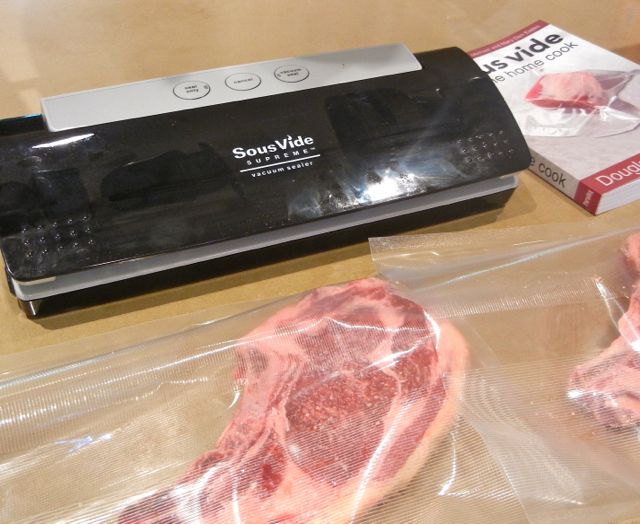
    Vacuum-sealing the steaks. This takes less than a minute.

    We’ve been reading Stefan’s Gourmet Blog and his results cooking sous-vide always looked great. And as we recently purchased 1/4 of a grass-fed cow from Stemple Creek Ranch, we wanted a cooking method that made the most of the flavor of the beef. So we took the plunge and bought a sous-vide cooker (we got one on sale, but expect the setup to run somewhere between $350 – $500, so it’s not cheap). So far we have tried cooking halibut, salmon and Stefan’s cod recipe. All were perfectly cooked.

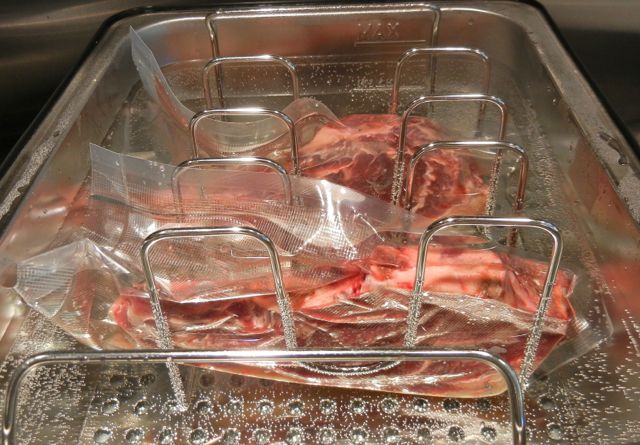
    Cook for 1.5 – 2 hours at 125 degrees.

    The next thing we tried was making a good steak using sous-vide. Not ones to be cautious, we went right to making ribeye steaks. We followed the new procedure, sous-vide cook at desired temperature (in this case 125 degrees for rare-to – medium rare) for 2 hours and then sear the meat briefly to brown the surface. Frankly, the meat, while perfectly cooked, is very unattractive unless you brown it. You can use a hot skillet, grill or even a blowtorch, but we just went with a rocket-hot cast-iron skillet. This browning method worked with just 30-45 seconds of searing on each side. Then we rested the meat for a few minutes and cut it into slices to serve. The first thing we noticed was that the meat was seared on the outside but then the same pink color all the way through, no gray layer, just perfectly cooked meat. So we found the sous-vide approach to cooking steaks was a real success, as long as you have the extra time. Our standard cooking method is here, and that takes 20 minutes. But with expensive, high-quality steaks, we think the extra time is worth it. And if you are entertaining, you can hold the meat at the perfect temperature and then sear just before serving, so sous-vide is a good tool when cooking for a group. Continue reading
  • Blueberry Slump: It’s No Slouch

    Blueberry slump with vanilla ice cream.

    Ok, I cop to the hokey title, couldn’t resist. Or you could call it a “grunt”, “cobbler” or even a “sonker”, but we will get to that later…

    We are in full berry season here at the farm and the blueberries are in their prime.  Two of the bushes are at their peak and we pick 2-4 cups of berries a day. In a week or two, it may be even more, as our slower bushes will catch up. Happy times at the farm. The only problem is what to do with all the berries. These are good problems to have.

    There are a few ways to deal with an abundance of berries; eat them (duh), share them, freeze them or cook/bake with them. We do them all. It is particularly worth noting that blueberries freeze well. One of the problems with trying to cook with freshly picked blueberries is having the volume to make big desserts like the slump. But if you freeze the berries you can build up some inventory, and with almost no loss of quality. To freeze blueberries simply place them on a sheet pan and put them in the freezer for a day (they don’t stick together this way). Then put the berries in a container in the freezer. They will keep for months. In this recipe we ended up using 1/2 fresh and 1/2 frozen berries and it was great.

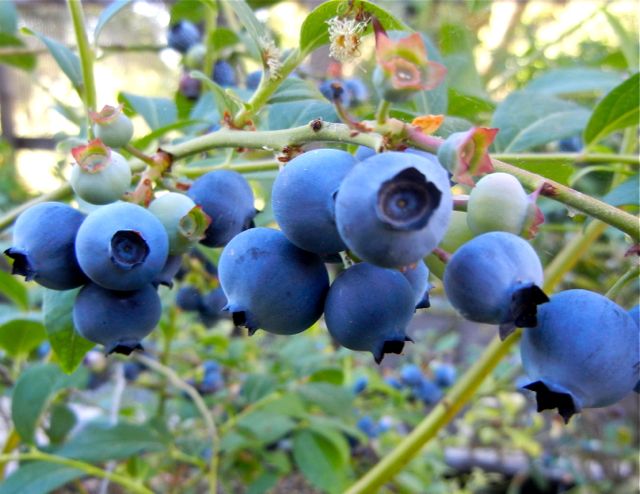
    We have lots of blueberries, times are good.

    As for cooking and baking with blueberries, we have a pretty constant supply of blueberry muffins and pancakes but Carolyn likes to make other blueberry desserts, and this gets us to the blueberry slump. We recently saw an article on blueberries in Saveur and it included a recipe. You could say we adapted the recipe, but it really was just a reminder. Carolyn makes slumps and cobblers often in summer, as they are an easy way to enjoy fruit in a dessert.

    Making a slump is about as easy as dessert baking gets (Carolyn thinks the “Lazy Daisy” is the easiest dessert- recipe soon). Basically you heat the fruit in a skillet with some sugar and juice, then top it all with a quick biscuit dough and bake in the oven. The whole thing takes less than an hour, and only 10-15 minutes of active time, and you use one bowl and one skillet. You can even make the biscuit dough ahead of time. And the slump tastes great. As it should. Pretty much everyone likes fruit, sugar and biscuits. Add some ice cream and you start getting close to dessert nirvana.

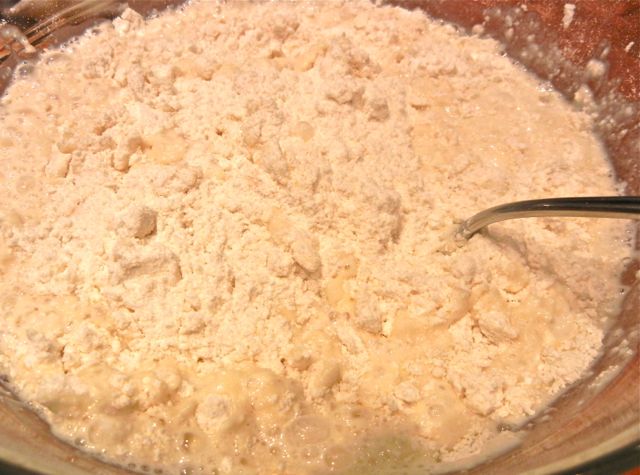
    Make some quick biscuit dough.

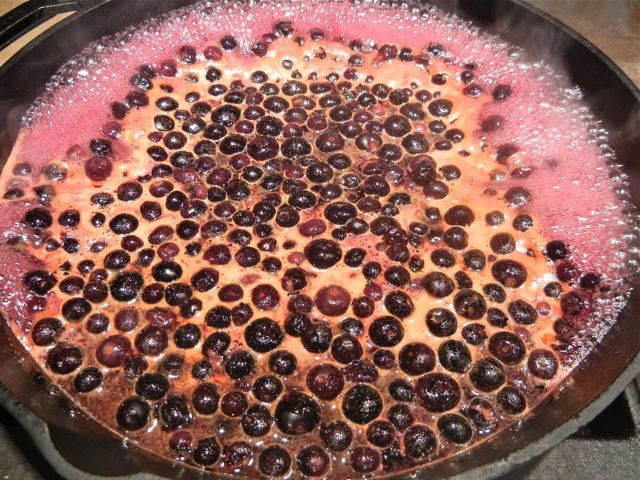
    Boil berries, citrus juice, sugar and salt to dissolve the sugar.

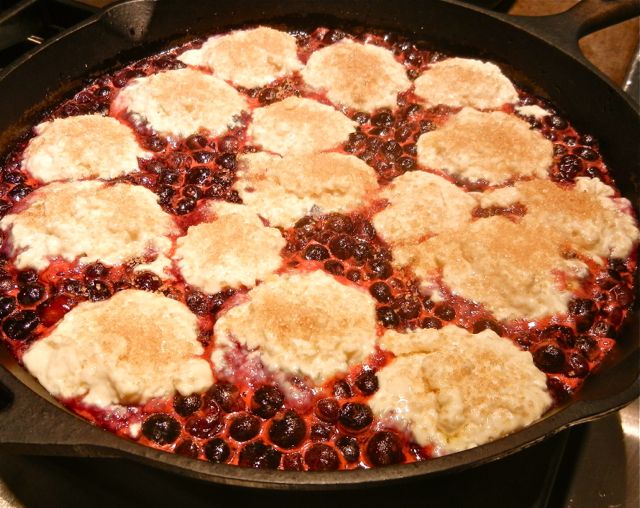
    Top the berry mixture with the biscuit dough and sprinkle sugar on top.

    Bake in the oven for 25 minutes.

    Continue reading