• Weekly Cocktail #18: The Upside-Down Martini

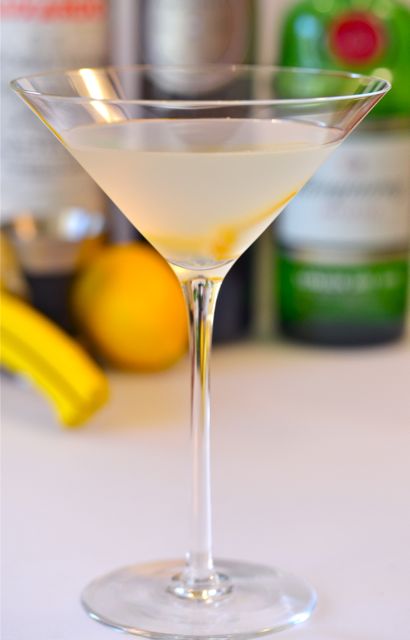
    Upside-down martini using vinho verde instead of vermouth.

    One of the cool things about the cocktail renaissance is that inspiration comes from pretty much anywhere. And while there are always a few mixologists, enthusiasts and bartenders with “attitude”, cocktails tend to live in a welcoming, open and happy place. After all, it is just fun with booze and friends. Why mess with it? If somethings sounds good, give it a try.

    And we bring this up because rather than try and hide it, we will ‘fess up and admit this cocktail comes directly from Martha Stewart (or at least her magazine). Martha probably doesn’t rate very cool in urban cocktail circles, but we are in the sticks country out here and will take whatever inspiration we can get ;-). To be fair, the upside-down martini has been around for quite a while. Basically a martini that is 3-1 vermouth-to-gin vs. 3-1 gin to vermouth, the upside-down martini is an attempt to lighten what is a very boozy, but excellent, drink. But even with a good dry vermouth like Dolin, the upside-down martini can sometimes be a bit cloying and lack character. However, Martha (or her drinks editor) adapted the traditional recipe to include white vinho verde, rather than dry vermouth, and suddenly you get a very good summer cocktail.

    So what is vinho verde? Vinho verde is light, young Portugese wine that translates into “green wine”. And that is a very good description. Vino verde is usually less than one year old, overtly tart with citrus notes, slightly fizzy, low-alcohol (usually 8%-10%) and cheap (less than $10 per bottle). Vino verde is a very tasty summer wine by itself, but when combined with a touch of gin and a few olives, you get something altogether different, and better.

    The trick with this cocktail is that you get a very light drink that still tastes like a martini. The vinho verde’s “green” flavors go well with the juniper of the gin and the briny notes of the olives, but the overall body of drink is very light from the low-alcohol and slight fizz of the wine. And if you are a martini drinker, this is a very good thing. Martinis rock, but as Dorothy Parker says…”two at the very most”. Summer is about long, lovely days- but regular dry martinis can make for short, blotto tipsy nights. The upside-down martini with vino verde is a great way to turn a martini into a light, “long”, refreshing drink. If you are not a fan of typical “fruity” summer drinks, this version of the upside-down martini may be for you. And if you are a gin-and-tonic fan, the upside-down martini is a fun diversion.
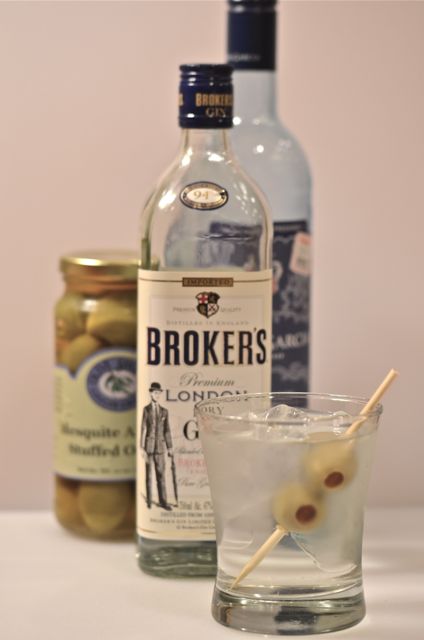
    Upside-down martini and ingredients.

    As for the recipe, we suggest a 3-1 ratio of vinho verde to London dry gin. Even if you don’t normally like the juniper in gin, we bet you will find it is a good foil for the citrus and tang of the vinho verde. We also suggest including olives or some other briny garnish. The touch of brine melds well with the drink, it will lack an extra dimension if you omit the olives (we also tried cornichons, and they worked quite well). We tried the recipe with just a lemon twist, but most vinho verde has overt lemony flavors and the twist gets lost. The olives do make a difference in this cocktail.

    So if you, or a friend, prefer traditional or classic cocktails more than the normal citrus-and-sugar drinks of summer, then the upside-down martini is worth a look. And if you just want a light summer cocktail, that also looks pretty cool,  then the upside-down martini with vinho verde certainly fits the bill. Thanks Martha!

    The Upside-Down Martini:

    (Adapted from Martha Stewart

    Ingredients:

    • 3 oz. vinho verde (we like Casal Garcia- tasty and cheap)
    • 1 oz. dry gin
    • Olives, caper berries or cornichons, for garnish

    Assemble:

    1. In a medium lowball (or highball, if you like) glass add the gin and vinho verde. Add ice to fill glass, stir until well-chilled. Add olives, stir a bit more and serve.
  • Weekly Cocktail #17: The Tahitian Postcard

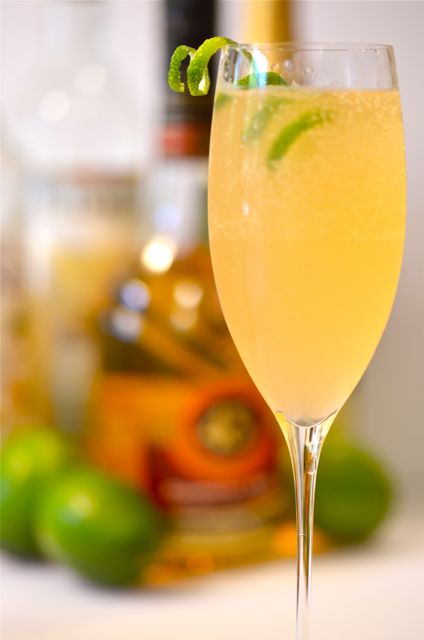
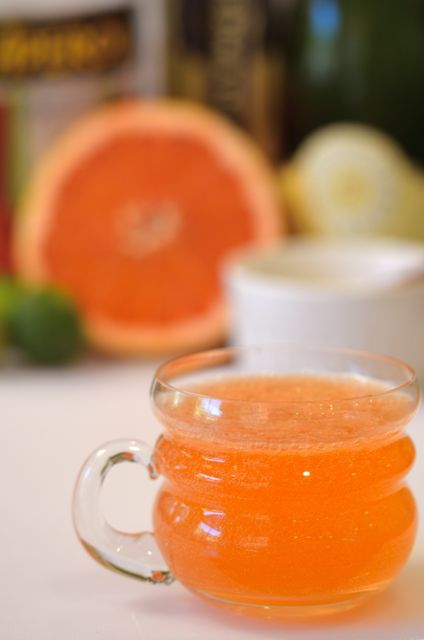
    Tahitian Postcard cocktail.

    A delightful week here at the farm. We were lucky enough to have our post on the El Diablo cocktail featured on Freshly Pressed, the Huffington Post Kitchen Notes featured the Rose Pearl cocktail and then Debra Samuels, the cookbook author commented on our adaptation of her Sushi Balls recipe. Her words were so kind and gracious. We are so grateful to everyone who reads our blog and shares their blogs and comments with us. Food, drink and the garden really do build the soul and connect you with others.

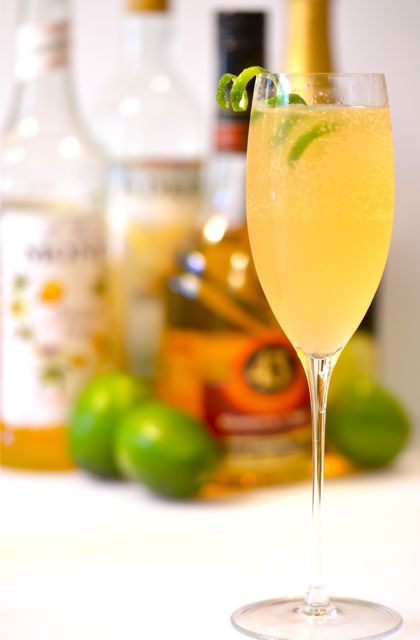
    Food and drink also take you, at least temporarily, all over the world. And this week’s cocktail, The Tahitian Postcard, certainly takes us to another place. The Tahitian Postcard is our creation and is another “sparkling” cocktail for summer (can’t resist, sorry). It combines rum, lime juice, passion fruit syrup and champagne or sparkling wine. We also include Licor 43, a Spanish liqueur with citrus and pronounced vanilla notes, as an optional ingredient. The recipe itself is an adaptation of the Airmail Cocktail (rum, lime, champagne and honey syrup), but we use the passion fruit and Licor 43 to give a touch of “tiki” to the drink.

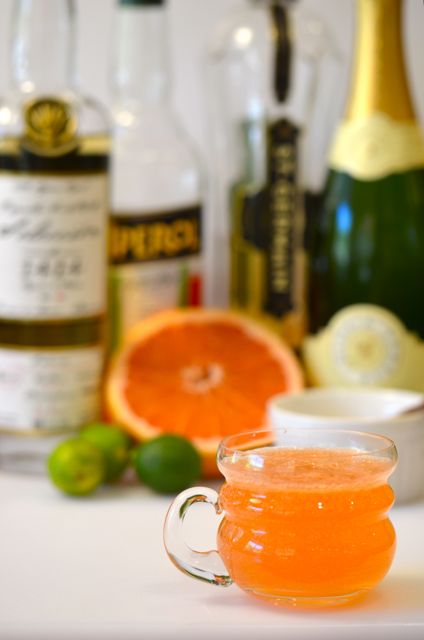
    Tahitian postcard and ingredients.

    The key here is a “touch” of tiki…just a touch. The passion fruit syrup, Licor 43 and the rum can all drown out the champagne and lime, so we use relatively small amounts for a balanced, lighter drink without any cloying sweetness. The end result is a bright, sweet and sour cocktail with light body from the champagne. Our friend Roger tried the drink, liked it quite a bit, but noted that he liked the passion fruit “because I couldn’t tell it was passion fruit” and that is the point, a light touch helps with this style of drink. A good tiki drink leaves you wondering what all the ingredients are, and we hope the Tahitian Postcard fits that description.

    As for the ingredients, passion fruit syrup is cheap and widely available. It is also a common tiki drink flavor and worth buying, if you like tiki drinks. The Licor 43 is an occasional tiki ingredient that, as we noted earlier, has pronounced vanilla flavor. The Licor 43 is optional in this recipe. We use a scant amount of the Licor 43 and you could substitute a dash of vanilla syrup or use a golden rum that has vanilla notes and get a similar flavor impact.

    Finally, if you are curious about the name of the cocktail, Tahiti is famous for its vanilla and tropical fruit. About 17 years ago, Carolyn and I were returning from our Tahitian honeymoon. We loved the islands, but have yet to return. With this cocktail we sent ourselves a postcard, and it bought us back, at least for a moment.

    The Tahitian Postcard:

    Ingredients:

    • 3/4 oz. white or golden rum (we use white Demerara rum)
    • 1/2 oz. lime juice
    • 1/3 oz. passion fruit syrup (1/4 oz. if you like drinks less sweet)
    • 2 dashes Licor 43 or vanilla syrup (optional)
    • 5 oz. champagne or sparkling wine
    • Lime twist, for garnish

    Assemble:

    1. Comine the rum, lime juice, passion fruit syrup and Licor 43 (if using) in a cocktail shaker with ice. Shake thoroughly and strain into a chilled flute, cocktail glass or coupe.
    2. Top with the champagne and add the lime twist. Serve.
  • Bonus Cocktail: El Diablo

    El Diablo cocktail.

    Some good summer cocktail karma here at the farm. First we get cherries to play with, and then we stumble on a classic recipe and just happen to have all the ingredients and the drink turns out to be very, very good. And the cocktail, of course, is the El Diablo. The El Diablo is a combination of tequila, lime, crème de cassis and ginger beer served on the rocks.  The El Diablo packs a lot of flavor with the sour lime, sweet Cassis and the spice of the ginger beer, but it has a light body and is quite refreshing. And the color speaks for itself (and for the name of the drink).

    Surprisingly, the El Diablo is a creation of “Trader Vic” Bergeron, who is mostly known for tiki drinks. But Vic published this recipe in 1946, so it predates the Moscow Mule, a similar ginger beer-based cocktail. It is also something of a surprise to us that the El Diablo is not more popular, but not everyone has crème de cassis or ginger beer hanging around the house. But both ingredients are worthy additions to your bar.

    If you are unfamiliar with creme de cassis, it is a sweet blackcurrant liqueur that is most commonly used in the Kir (white wine and a dash of Cassis) and the Kir Royale (Champagne and a dash of Cassis). Kirs are very tasty drinks, and are still popular in France as a pre-dinner apéritif. We drink Kir Royales occasionally, particularly when we want to spruce up average champagne or sparkling wine. And that red color will show through in almost any drink, as will the deep, sweet fruit of the Cassis. Good stuff, and a little goes a long way, one bottle can last for years.

    El Diablo and ingredients.

    As for ginger beer, it is basically the original ginger ale. It tends to be spicier and less sweet than mass-market ginger ale. A few years ago, ginger beer was hard to find. But as the Dark ‘n Stormy and Moscow Mule have reemerged with the cocktail renaissance, so has ginger beer. Ginger beer is available in most supermarkets and liquors stores and is a good substitute for ginger ale in most recipes.

    Trader Vic wasn’t just about rum.

    We became aware of the El Diablo in a Serious Eats slideshow about the drinks at KASK, a bar in Portland. Here is their cocktail menu. (I think a trip to Portland is in order.) After some more research, we found that mixologists have played with the original recipe for years- so while the base flavors of ginger, lime and Cassis are in all recipes, the ratios can vary widely. We like a little more lime and ginger, but other recipes go heavier with the Cassis. The one constant is using 1.5- 2 oz. of blanco tequila. But feel free to play around, these are fun experiments for summer and the flavors play very well together.

    The El Diablo:

    Ingredients:

    • 1 and 1/2 oz. blanco tequila
    • 3/4 oz. lime juice
    • 1/2 oz. crème de cassis
    • 3-4 oz. ginger beer (or ginger ale)
    • Lime wedge or wheel, for garnish.

    Assemble:

    1. Place tequila, lime juice and Cassis in a cocktail shaker with ice. Shake thoroughly. Strain into a highball glass filled with ice. Add ginger beer, stir lightly. Garnish with lime wedge and serve.
  • Weekly Cocktail #16: The Caipirinha / Cherry-Lime Caipirinha

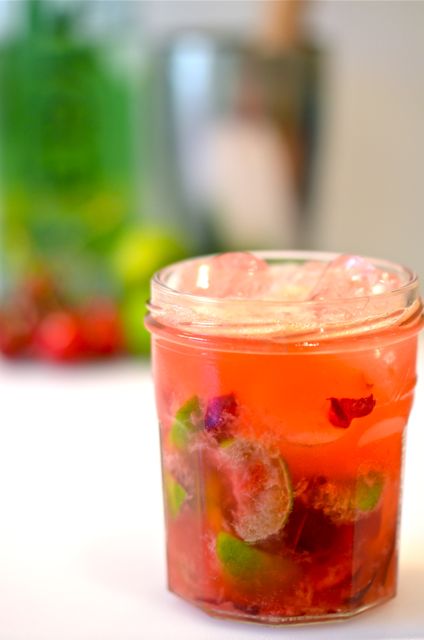
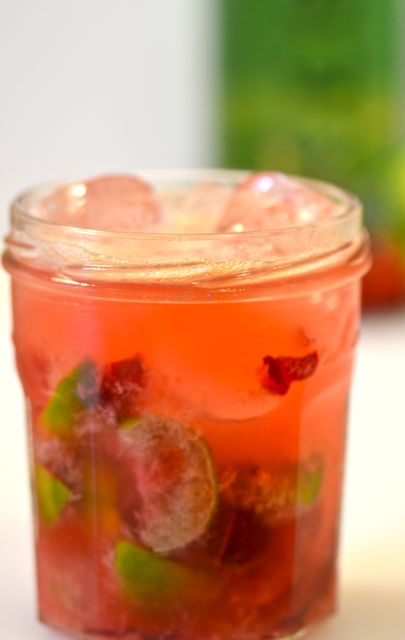
    Cherry-lime caipirinha.

    Our friend Alicia over at Boozed + Infused (a great blog on homemade booze) recently posted on the concept of “gartending”. As you might expect, gartending means you are making cocktails with ingredients from your garden. So now that it has a name, we can say that we have been happily gartending for some time. One reason we like cocktails as much as we do is that we can quickly enjoy the fruit and herbs from the garden in drinks. It is always fun to enjoy the fruits of your labor, and if you get to add a bit of booze…so much the better.

    As we noted earlier this week, we are happily harvesting cherries. We are eating them out of hand, mostly, and will be baking this weekend, but once we picked them our thoughts went to cocktails. And we made a cherry-lime caipirinha. And it was good. Very good. Good enough that we decided to post the recipe.

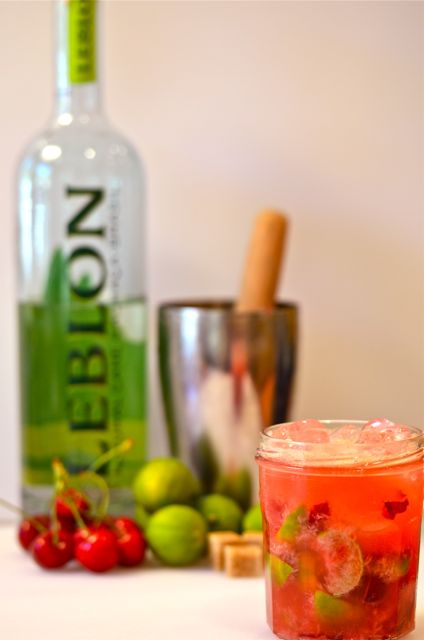
    Cherry-lime caipirinha and ingredients.

    The caipirinha is the national drink of Brazil. It is a simple, but delightful, combination of cachaca, limes and sugar. You simply muddle about 1/2 a lime with a few teaspoons of sugar to get the juice and oils from the limes and then add cachaca and ice. While the process is simple, you get a very tasty, complex cocktail that is perfect for summer. And keeping in the spirit of Brazil, there are few rules with the Caipirinha. It is quite acceptable to add in or change the fruit or even the base spirit and still call the drink a caipirinha. And since we had cherries and we like them with limes, the cherry-lime caipirinha was not far behind.

    If you are unfamiliar with cachaca, it is basically “Brazilian rum” but it is made from sugar cane juice rather than molasses (rum agricole, made from cane syrup is somewhere between cachaca and rum). Cachaca has an overt sugar cane flavor with some heat from the alcohol and what most would call “musty” and grassy notes. That may not sound all that good, but it works well in cocktails, particularly with fruit-driven recipes. We enjoy cachaca in cocktails like the Rose Pearl, but it does mostly end up in caipirinhas during the summer.

    As for the caipirinha, the name itself loosely translates to “country-bumpkin” or “hillbilly”. And if you have a few of these your behavior certainly might “deteriorate” somewhat. The caipirinha is a great drink, the only real downside is that it is mostly booze, but goes down very, very easy. Sometimes you want to enjoy a caipirinha but not act like one, if you know what we mean…;-) Consider yourself warned and happy Friday!

    The Caipirinha / Cherry-Lime Caipirinha

    Ingredients:

    • 1/2 large lime, cut into quarters
    • 4 cherries, pitted and cut in half (optional)
    • 2 teaspoons, or more, granulated sugar
    • 2 or 3 oz. cachaca
    • Ice

    Assemble:

    1. Muddle the fruit and sugar in a cocktail glass. Add the cachaca and stir. Pour the mixture into a lowball glass and add a lot of ice. Mix and serve.
  • Bonus Cocktail: The Aviation

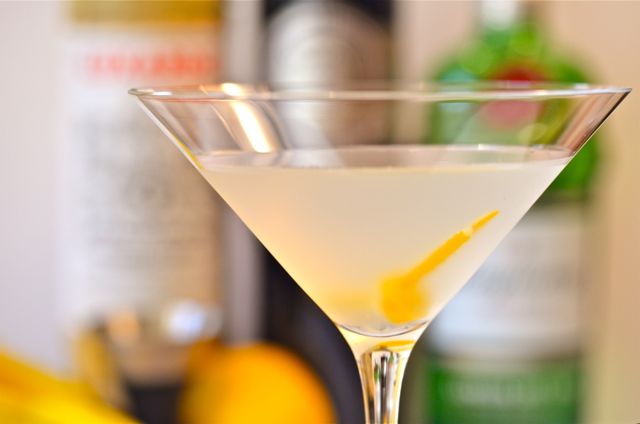
    Aviation Cocktail.

    This week’s bonus cocktail is a surprise to us. The drink itself is not a surprise, the Aviation is a classic cocktail. But we are surprised it took us so long to post it. We enjoy Aviations as one of our “go to” cocktails at home, and one of our local bars makes a great one. So I guess familiarity bred a touch of contempt.

    But there is nothing contemptible about the Aviation. One of the true masterpieces of pre-prohibition mixology, the Aviation combines dry gin, lemon juice, maraschino liqueur and (sometimes) Creme de Violette, a violet liqueur. The drink is the creation of Hugo Ensslin, a bartender at the Hotel Wallick in New York. He first published the recipe in 1916 in the book “Recipes for Mixed Drinks”. And the recipe has been published, and tweaked, ever since.

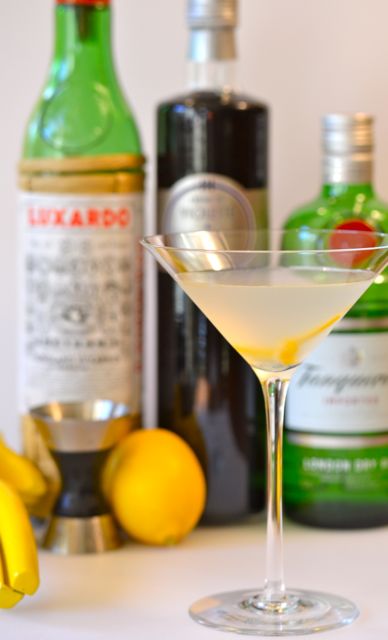
    Aviation cocktail and ingredients.

    The basics of the recipe, dry gin, lemon juice and maraschino have been constant, but the ratios vary. And then there is the issue of the Creme de Violette. Creme de Violette is a violet liqueur that tastes a lot like violet candies. If you remember violet candy, you may also remember that some people love them, and some hate them. “This tastes like soap” being a common refrain for those in the “hate” category. For a while, this was a non-issue as Creme de Violette was almost impossible to find in the US. But our friends at Haus Alpenz, revivers of all forgotten liqueurs brought it back to life with Rothman & Winter Creme de Violette (remember the Allspice Dram in the Ancient Mariner). And this “new” Creme de Violette is good, sweet, floral and depending on your point of view, perhaps a bit “perfumey” or just downright soapy.

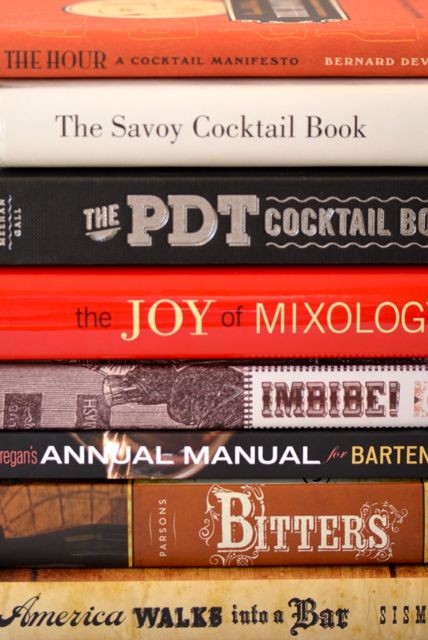
    The attraction of using the Creme de Violette is both the flavor and the light blue color it lends to the drink, if you use enough of it. The name of the drink, it is believed, comes from the pale sky-blue color that was so enticing in the early days of aviation. But this is where many mixologists differ.  The Savoy Cocktail book, David Wondrich and Gary Regan go without the Violette, the PDT cocktail book includes it. Paul Clarke suggests you simply make the Creme de Violette optional. As it is, we suggest you use the Creme de Violette very sparingly (just a dash, you will still taste it) or omit it altogether.

    Required summer reading.

    As a practical matter, very few people have access to Creme de Violette and there is no need to run out and buy it (of course, we did- but we are geeky that way). First, try the recipe without the Violette. You will lose the lovely color, but the botanical flavors of the gin, the bright, sour lemon juice and the sweet, earthy maraschino are a great combination on their own. This is a very tasty cocktail that works in any season and for almost any occasion. And most home bars have gin and lemon juice- and you should have Maraschino (Luxardo is fine) in your bar, as it is an ingredient in literally dozens of classic cocktails. So before you get the Violette, make sure you have maraschino liqueur.

    If you do have the Creme de Violette, you can add up to 1/4 ounce to the drink and the color will be quite beautiful. But unless you really like floral and perfumed flavors the drink might be soapy unpalatable. But a dash or two will add some pleasant flavor and aroma, if you like violets. One other note on the booze- the recipe specifically calls for dry gin. If you use a “modern” gin that features floral botanicals, like Nolet’s, the flavors may not play well together. Traditional London dry gin like Tanqueray, Beefeater or Gordon’s are the best choices for this drink.

    Few drinks look better in a cocktail glass than the Aviation.

    Continue reading

  • Weekly Cocktail #15: The Nouvelle Fleur

    Nouvelle Fleur Cocktail.

    We generally try to make our weekly cocktails out of readily available ingredients (we have the bonus posts for the crazy stuff), but this week we need to make an exception. The Nouvelle Fleur is a drink that will send many of you to the liquor store, but it really is worth the trip. The reason is that the Nouvelle Fleur is not only a good cocktail, but a recipe that easily becomes a great summer punch. So we think a punch that pleases a dozen guests is worth the extra effort.

    The extra effort comes from a somewhat long list of ingredients. The Nouvelle Fleur combines St. Germain, blanco tequila, Aperol, lime juice, grapefruit juice, a pinch of salt and is topped by sparking wine. Now many people will not have St. Germain or Aperol in their bar, but both are worthy additions. St. Germain is a low-proof elderflower liqueur that is sweet with floral and pear notes. St. Germain is a popular ingredient with mixologists and is often used as a more floral substitute for Cointreau or triple-sec in cocktails. Aperol is an Italian apéritif that is similar to Campari, but much less bitter and with lower alcohol. Aperol has pleasant citrus, bitter and herbal notes (maybe even rhubarb) that add depth to many cocktails without the outright dominance of Campari. Aperol plays very well with tequila, as we noted earlier with the Chica Facil.

    The overall combination of aromas and flavors in the Nouvelle Fleur truly stand out. The aroma is mostly, and pleasantly, grapefruit with a bit of floral from the St. Germain. As for the flavor, the sweetness of the St. Germain is matched by the citrus of the lime and grapefruit juice. The Aperol and grapefruit lend bitter and herbal notes and the champagne keeps the drink light and refreshing. The salt provides a subtle kick that keeps you coming back. Everyone who tries this drink loves it, particularly for summer.

    Nouvelle Fleur and ingredients.

    And there is another summer bonus. The Nouvelle Fleur isn’t a boozy drink, only the tequila is a high-proof spirit and there’s only 1/2 ounce in the recipe. Otherwise all the ingredients are under 20% alcohol. This lends really well to making a light summer punch. Simply add the same proportion of ingredients to a punch bowl, top with champagne or sparking wine and add a big block of ice. Now you have a tasty punch for a crowd that packs plenty of flavor, but won’t have them falling in the pool….

    As for the actual recipe, it comes from the Eastern Standard, a restaurant in Boston. We are far from Boston, but since we are avid readers of Cocktail Virgin Slut, we get the scoops, and this recipe, from one of the best cocktail towns in the country. Sometimes you just have to love the internet. But the Nouvelle Fleur is such a good drink, we may need to visit Eastern Standard in person and sample the rest of their cocktails….Maybe we will catch a game at Fenway as well.

    The Nouvelle Fleur:

    Ingredients:

    • 1 oz. St. Germain
    • 1/2 oz. blanco tequila
    • 1/2 oz. Aperol
    • 1/2 oz. fresh lime juice
    • 1/2 oz. fresh pink grapefruit juice
    • 1 pinch of salt
    • 2 oz. Champagne or sparking wine

    Assemble:

    1. Combine all the ingredients, except the Champagne, in a cocktail shaker with ice and shake thoroughly. Strain into a cocktail glass, flute or coupé.
    2. Top with the Champagne and serve. No garnish.