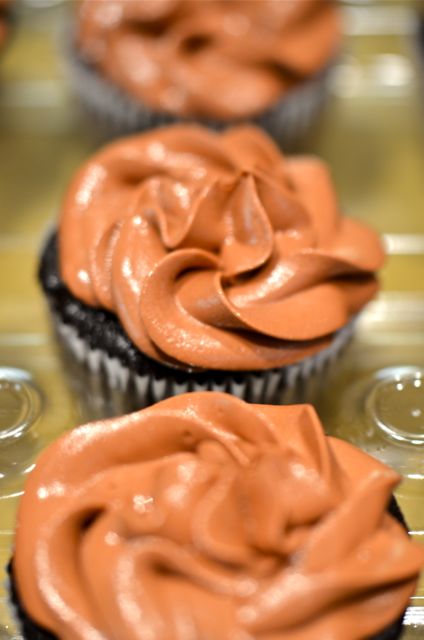
Double-Chocolate Cupcakes.
Regardless of whether your candidate won or lost, you deserve a cupcake. A double-chocolate cupcake. With buttery chocolate frosting. The cupcake can be a celebration, or a consolation. Either way, this cupcake will be tasty and you will sigh and smile. Perhaps one more might be even better…you deserve it.
 And this is no ordinary cupcake. This is a killer cupcake. Moist, sweet and with a wallop of dark chocolate, this is the kind of cupcake you get at the best bakeries (after you waited in line). And that is where the recipe comes from. The recipe is Carolyn’s adaptation of a cake recipe from the Miette cookbook. Miette is a small chain of bay area bakeries that features world-class cakes, cupcakes and confections. The Miette cookbook is a favorite in our kitchen, not only for the recipes, but some of the techniques that make for moist and flavorful cakes. The “Cake-Baking Essentials” section of the book should be required reading for bakers who want to take their cakes to the next level. Some of the “essentials” are a bit fussy and exacting, but with baking, “fussy” is what often makes the difference.
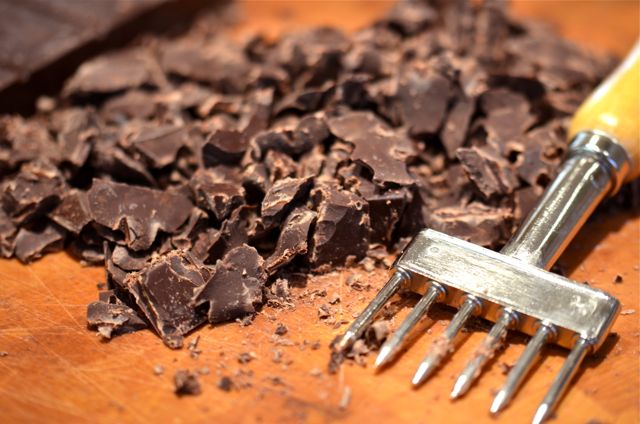
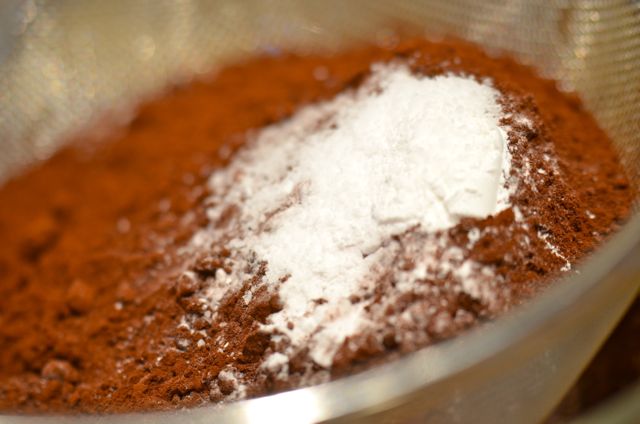 And this recipe uses a few of these techniques for a better cupcake. The recipe uses oil instead of butter, as butter has extra water content that evaporates and makes for a dry, crumbly texture (we love butter, but it is better for crispy, rather than tender baked goods). Oil keeps the cupcake moist. The recipe uses both melted chocolate and cocoa power for deep chocolate flavor. And the recipe has you sift dry ingredients, very lightly mix the batter and then strain the batter through a mesh strainer to avoid lumps, and minimize mixing and gluten formation. In the end, you have a little extra work, but a very moist and flavorful cupcake.
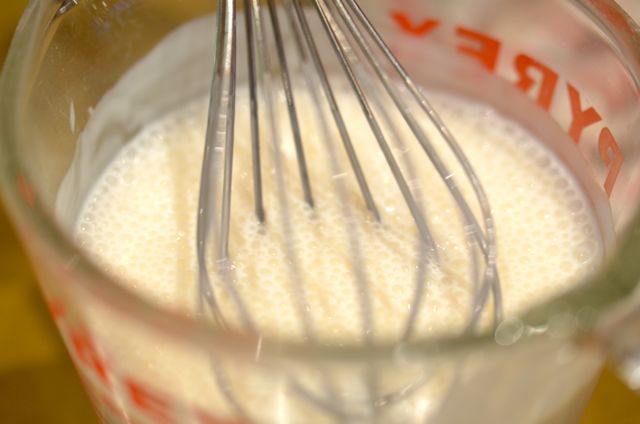
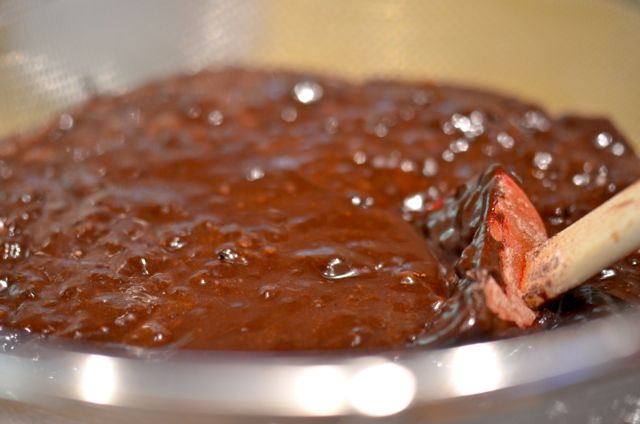
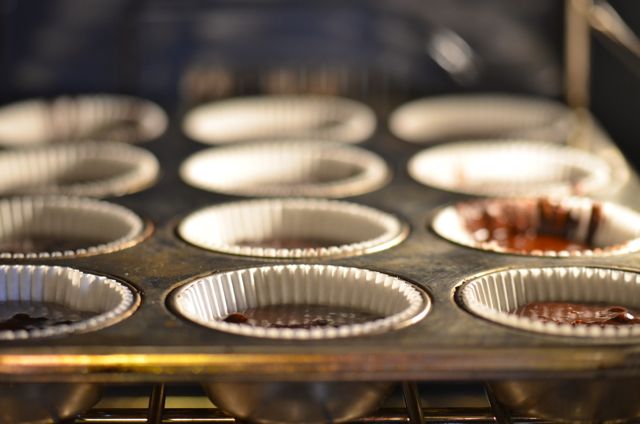
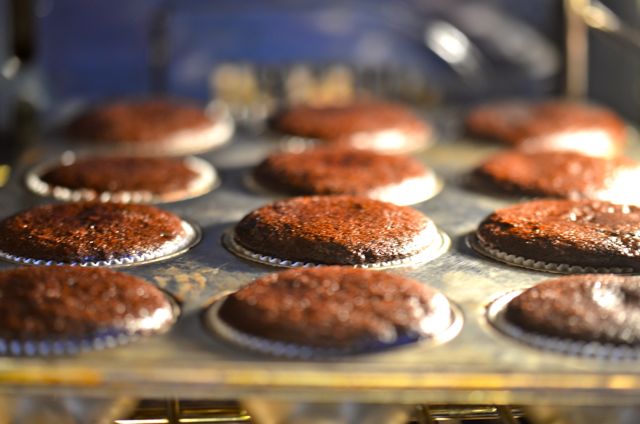 Otherwise, the basic steps for making the cupcakes are familiar. Line your muffin tin with cake cups and preheat the oven. Sift and mix the dry ingredients. Melt the chocolate and prepare the wet ingredients. Whip the eggs in a mixer, then add the oil, chocolate and other wet ingredients. Add the dry ingredients, mix lightly and run the batter through the mesh strainer. Then put the batter in the cake cups and bake. After about twenty to twenty-five minutes you will have cupcakes. Then you have to wait for them to cool…and those minutes can be painfully slow.










 Putney Farm