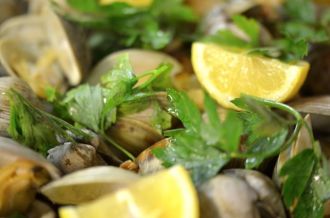
Steamed littleneck clams.
We will cook many recipes during our time at the beach, but this dish will be served at most of our meals. Appetizer, starter, main dish- no matter, just good stuff. Littleneck clams, with a touch of cured pork, onion, herbs, bacon and wine might be the most tasty, and easy, summer dish we make. And if you have good hardshell clams, you need to make this dish, just invite some friends.
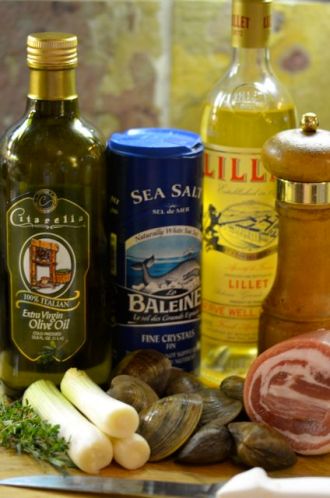
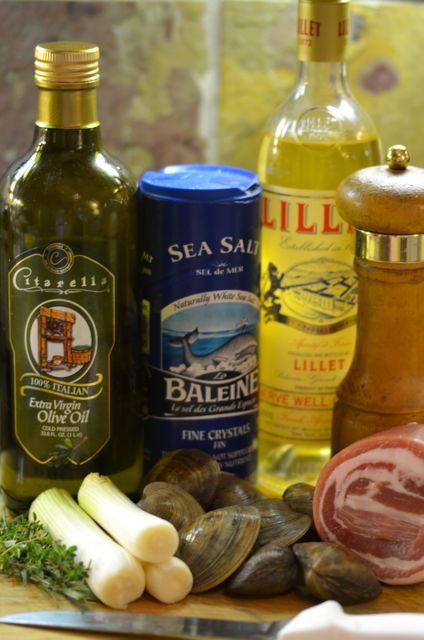
Just a few ingredients.
The key to this dish, like many seasonal recipes is what you don’t add, rather than any extra ingredients or technique. It is very, very simple- and sometimes (most of the time?) simple is good. Brown some tasty cured pork (bacon, pancetta, chorizo if you like spicy, etc.) then add some sweet onion and herbs, add some seasoning to taste and soften the onion. It will smell good. Then add some wine, bring to a boil and add the clams and cover the pot. Shake the pot every few minutes. It will smell even better. You will find yourself popular. Steam the clams until they open (or if uneven size, remove the clams from the pot as they open). Remove from the pot, garnish with lemon and parsley and serve. The whole thing will take 10-15 minutes.
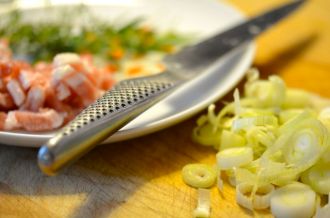
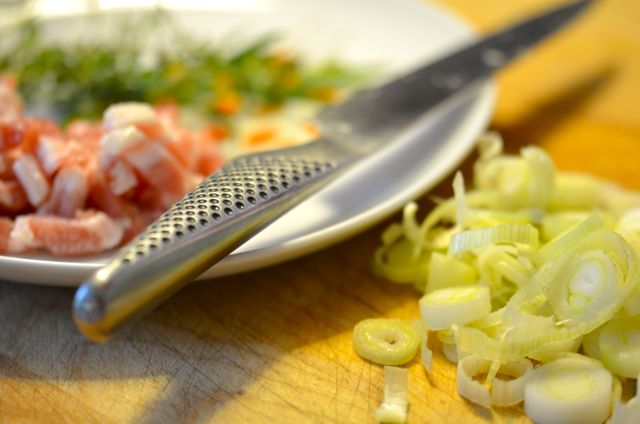
Chop your bacon and onions.
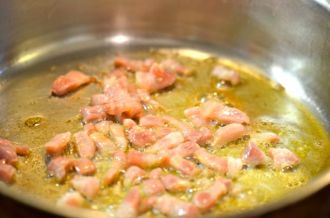
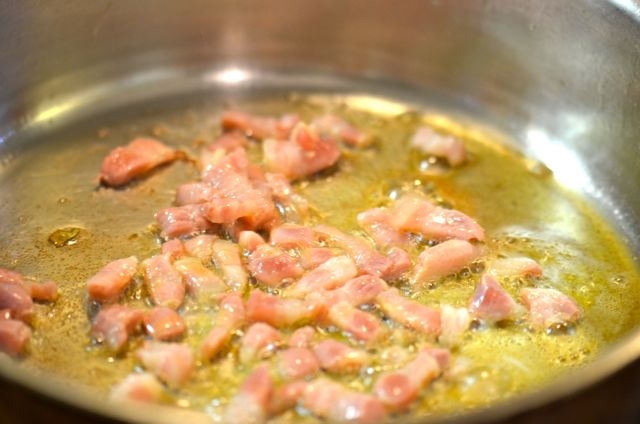
Brown your bacon.
It may almost seem like cop-out to say this is a world-class dish, but it is. There are only so many fresh clams in the world. A good cook lets them shine. You may want to add some cherry tomatoes, breadcrumbs, or red-pepper flake, but go easy. The clams do the work for you. Briny and meaty, but tender (if you pull them from the heat when they open) the clams are a treat. And they even give you a tasty broth for bread-dipping. Nice.
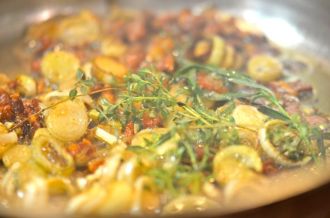
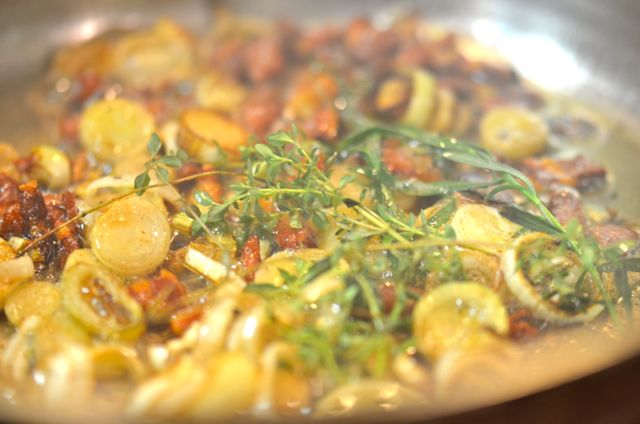
Add onions and herbs. Soften the onion.
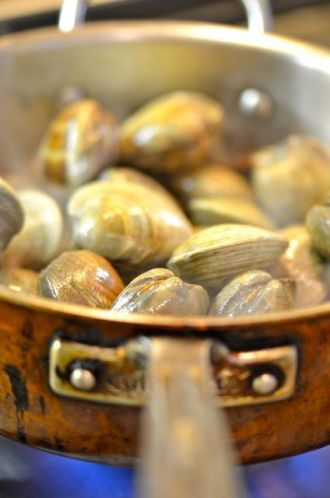
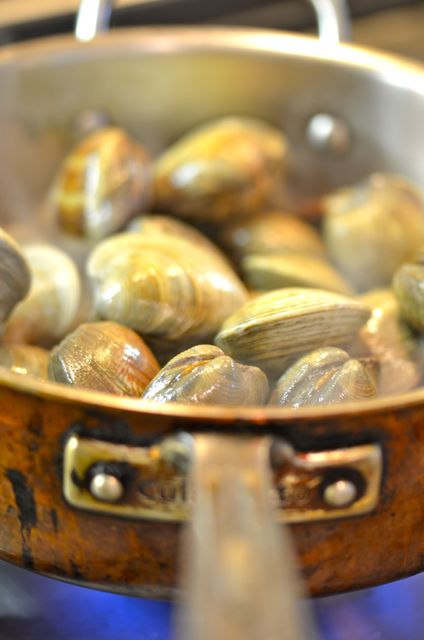
Add wine and clams. Steam the clams.
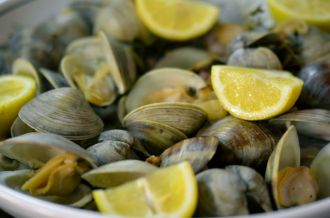
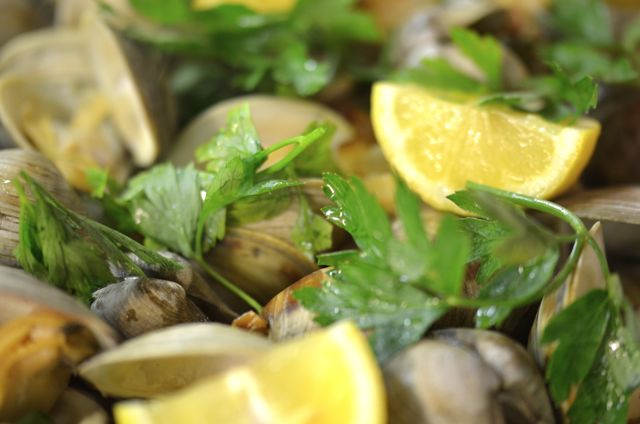
When the clams open, they are done.
We use littlenecks because they are small enough to cook quickly and are more tender than larger cherrystones and chowder clams. We serve 4-6 clams per person as a starter and 8-12 per person as a main course. Everything cooks in one pot (and you can even serve from the pot, if you like) so this is a great dish when entertaining. So if you have access to some good clams, try this dish out and be ready to make a few new friends…
Steamed Littleneck Clams:
Notes Before You Start:
- Make sure to use fresh clams and get them from a trusted source. All clams have tags that show when and where they were harvested, if you have any doubts ask to see the tag.
- Clams open when they are cooked. Remove them from the pot when they open to get tender clams. It is just a bit of extra work.
What You Get: An easy, but incredibly tasty seafood dish that works at almost any meal (except breakfast, I guess).
What You Need: No special equipment required.
How Long? 15-20 minutes. Anytime dish.
Ingredients:
(serves 4 as a starter)
- 2 dozen littleneck clams, rinsed of sand or dirt
- 2 tablespoons olive oil (or butter, if you prefer)
- 2-3 slices of bacon, cut into lardons
- 1/2 cup chopped sweet onion
- 2 tablespoons of chopped fresh herbs like thyme or tarragon
- 1/2 cup dry white wine
- Salt and pepper
- 1 lemon, cut into wedges, for garnish
- 6-8 sprigs Italian parsley, form garnish
Assemble:
- Rinse the clams. Chop the onion and herbs. Slice the bacon into lardons.
- Heat a large pot over medium-high heat. Add olive oil and then add the bacon. Brown the bacon until crisp, about 2-3 minutes. Add the onion, herbs and a touch salt and pepper. Cook until the onion is soft, another 2-3 minutes.
- Add the wine and allow it to come to a boil, then add the clams. Stir the clams in the wine and then cover. Steam the clams until they open, about 8-10 minutes. If some clams open early, remove them from the pot and place them in a separate bowl. Taste broth and season, as needed. Discard any clams that don’t open.
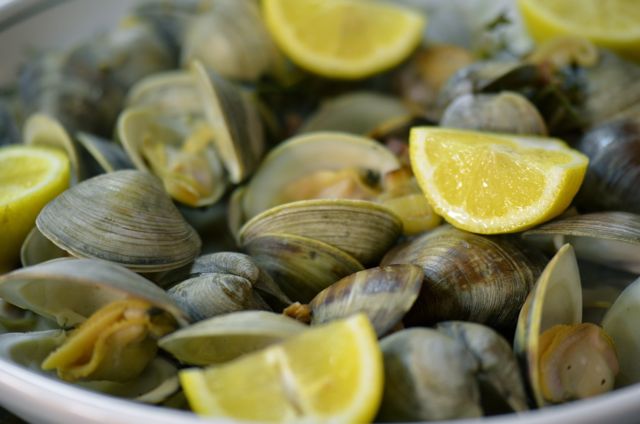
- When clams are done, pour clams and broth to a serving bowl. Garnish with lemon wedges and parsley. Serve with crust bread, if you like.
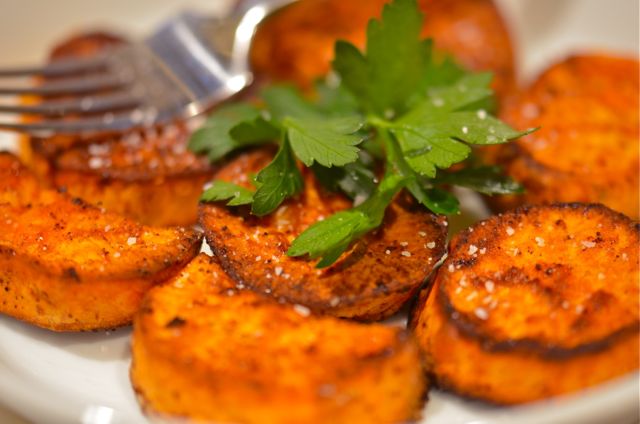
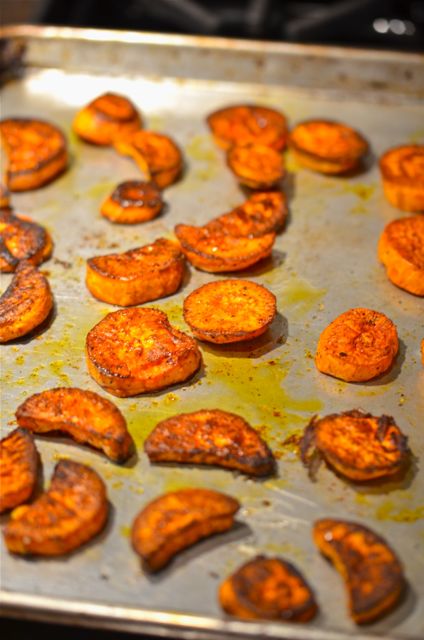 Sometimes even the best cookbooks say things that make the home cook laugh out loud. And while we really like this recipe and the cookbook it came from, this recipe has an instruction that’s one of the silliest we have ever seen, “be sure to choose yams of even thickness from end to end”. (Oh, and please go find Bigfoot while you’re at it.) We have yet to find an evenly shaped yam, and don’t expect to any time soon, neither should you. But happily, this is a delicious recipe and is pretty good for you, too. So even if you can’t find a perfectly shaped yam, this recipe is worth making.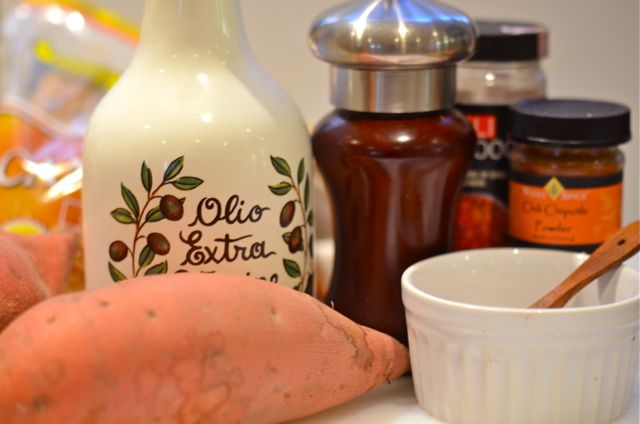
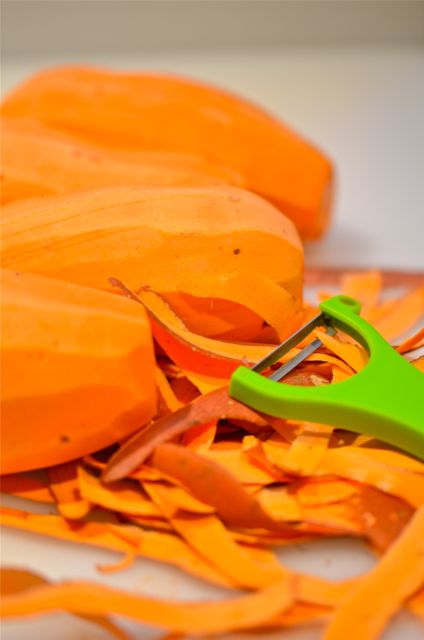 And by “yam” we really mean the orange, soft sweet potatoes of the United States. The true yam is an African crop, usually with lighter colored flesh (here is a good link to explain the differences and terminology). But for whatever reason, we call some sweet potatoes “yams” and so does this recipe. Go figure (or don’t, this stuff can make your head hurt). But meanwhile, look for large, orange-fleshed yams / sweet potatoes at your grocery store or farmer’s market. Yams are cheap, nutritious and versatile. And their sweet flavor is a good way to sneak some extra veggies into your kids.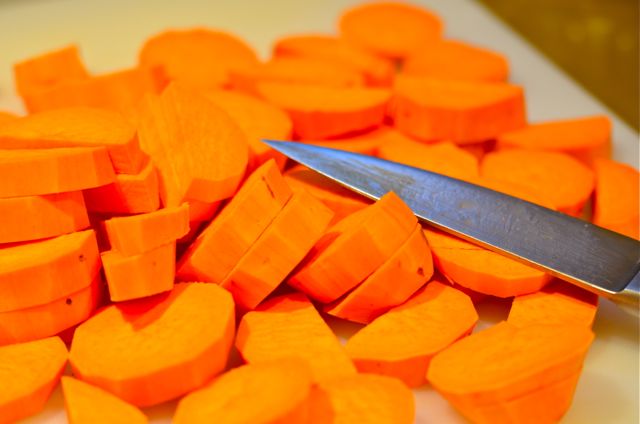
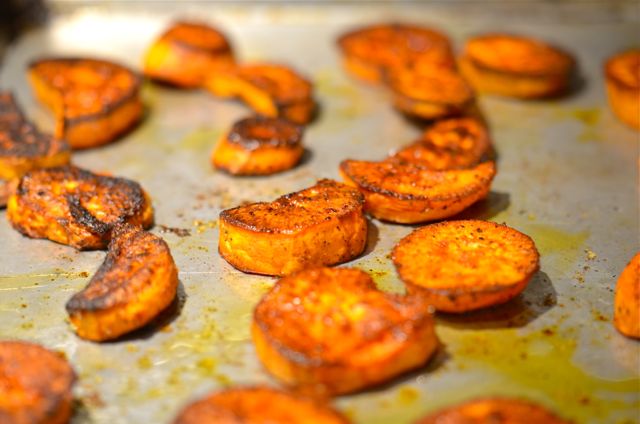
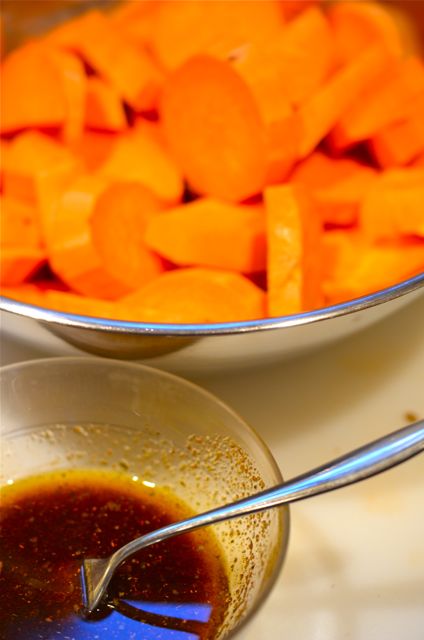 This recipe is adapted from “Ripe, A Fresh, Colorful Approach to Fruits and Vegetables” from Cheryl Sternman Rule. And the recipe is a real winner, and quite easy to make. You simply peel and slice the yams, make a paste of salt, pepper, brown sugar, chili powder and oil, coat the yam slices and bake in the oven for an hour, flipping them over halfway. But the recipe does have one more (albeit smaller) laugher, when it says, “cook all the yams for an hour, don’t pull them out earlier”. And we guess if we had “even-thickness” yams, that advice might work. But we don’t, so the smaller pieces need to come out of the oven a bit early, and not burn.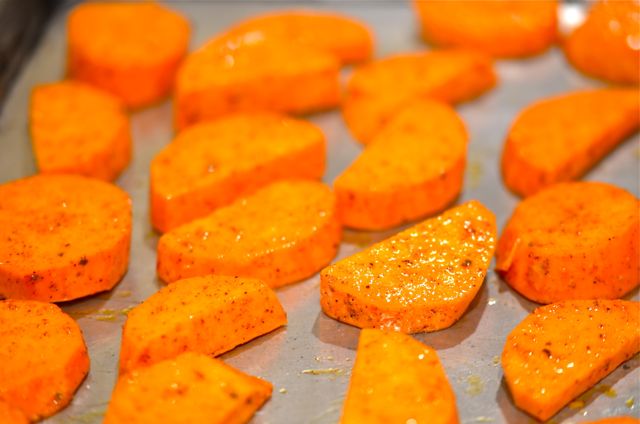












 Putney Farm