• Cherry Clafoutis

    Cherry clafoutis.

    Nothing makes us happier than growing, cooking, eating and sharing our own food. But there is a slight tyranny to the seasons. If you have cherries, you are cooking with cherries, period. And our Bing cherries are at their peak, so we picked them all. One small tree gave us four large bowls of cherries…all at once. Happily, cherries lend themselves to all sorts of dishes and cocktails (and we do seem to like eating and drinking). So this week you may see cherries in all sorts of dishes. But for now, let’s start with a classic cherry dessert, clafoutis.
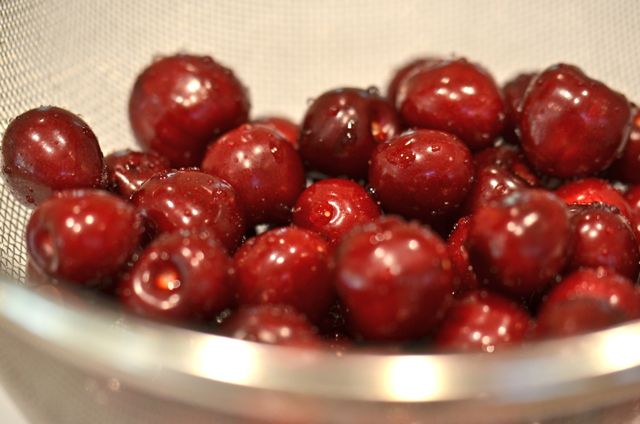
    Fresh Bing cherries form our orchard.

    Clafoutis is a French dessert that combines cherries baked in a light batter, often with some added almond flavor. Think of the batter as “flan-meets-pancake” and you can get an idea of the light, yet rich, texture that rightfully lets the cherries star in the dish. Originally clafoutis featured sour or black cherries with the pits still in. Supposedly the pits add extra almond-like flavor, but as we have Bing cherries and like our teeth, we put pitted Bing cherries and almond extract in our clafoutis. You can also use this basic recipe with other stone fruits or berries, but if you want to be technical it would then be a flaugnarde, but feel free to call it a clafoutis- we won’t tell anyone.
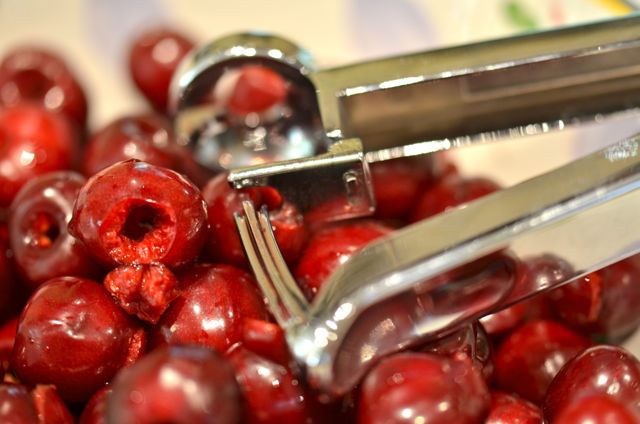
    A cherry-pitter is a useful tool if you like cherries as much as we do.

    As for the recipe, clafoutis is a classic dish and there are many recipes out there. We chose to adapt an Alice Waters recipe that adds a few extra steps, but also adds extra flavor. In this case we season and pre-bake the cherries before we add them to the clafoutis. The extra cooking improves the flavor and texture of the cherries, but also leaves behind the base of a syrup you can reduce and drizzle on top of the clafoutis at service. Good stuff. We also prefer to cook clafoutis (and many desserts) in individual ramekins, we think it looks good and makes leftovers easier to handle, but a large baking dish works for this recipe as well.
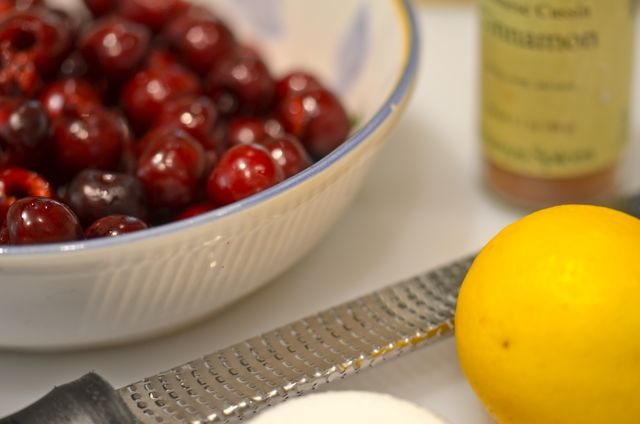
    Season the cherries for pre-baking.
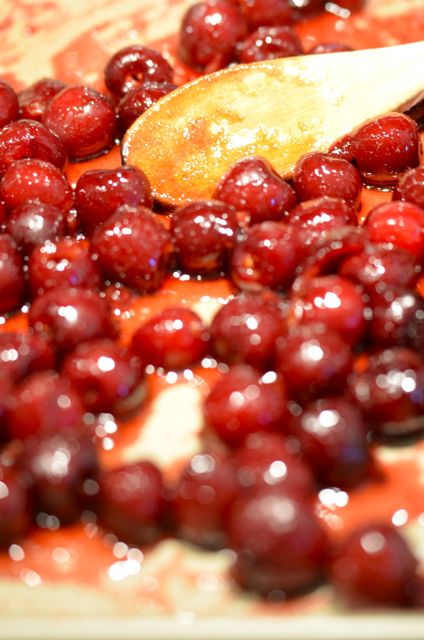
    Extra cooking for more flavor and better texture- plus you get cherry juice for a sauce.
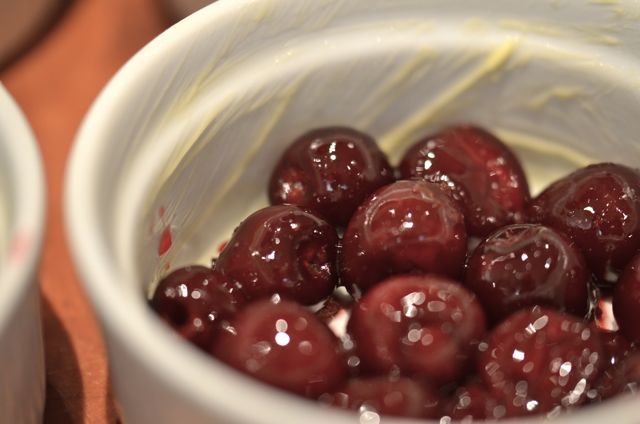
    Place a layer of cherries in the ramekins or baking dish.

    Assembling the clafoutis is a pretty easy affair. Pre-cook the cherries, save the syrup, butter your baking dish(es), place the fruit in the dishes, make and add the batter and bake. The batter is the only part of the recipe that requires some extra effort, you need to whip egg whites and then fold them into the batter for the right texture. The clafoutis bakes for about 20 minutes at 375 degrees. While the clafoutis bakes, reduce your cherry syrup for a tasty and pretty sauce. When the clafoutis is done, add the sauce, dust with powdered sugar and serve.
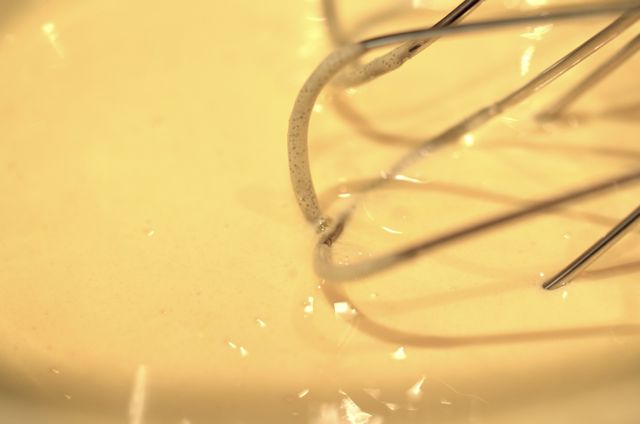
    Make the batter.
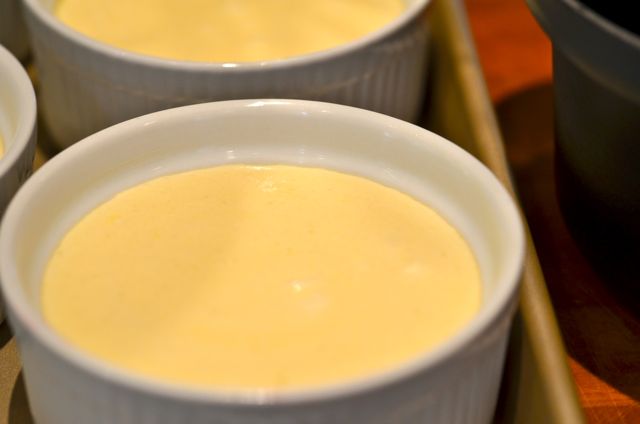
    Pour batter over the cherries.
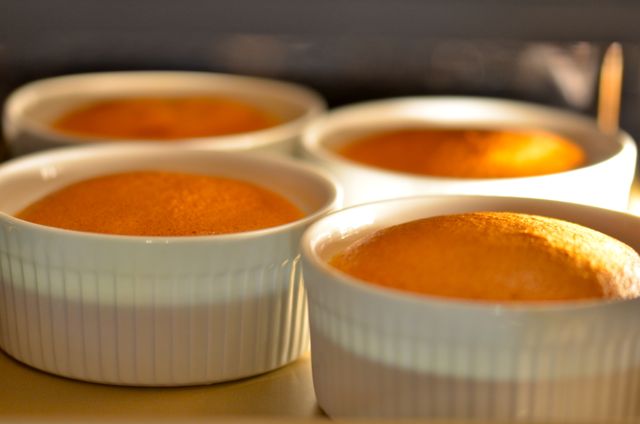
    Bake until browned and puffed. Continue reading
  • King Salmon With Tarragon-Chive Butter (Sous-vide or Baked)

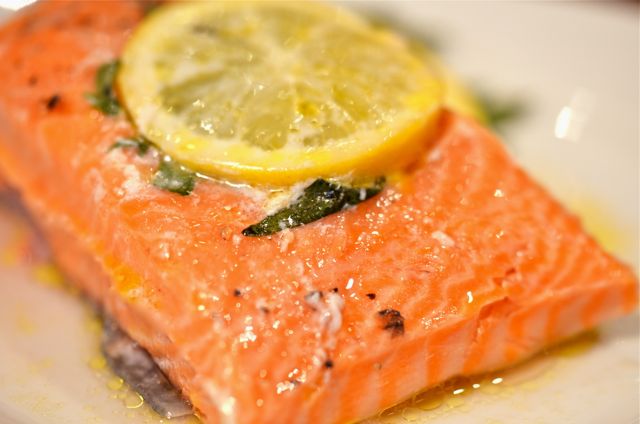
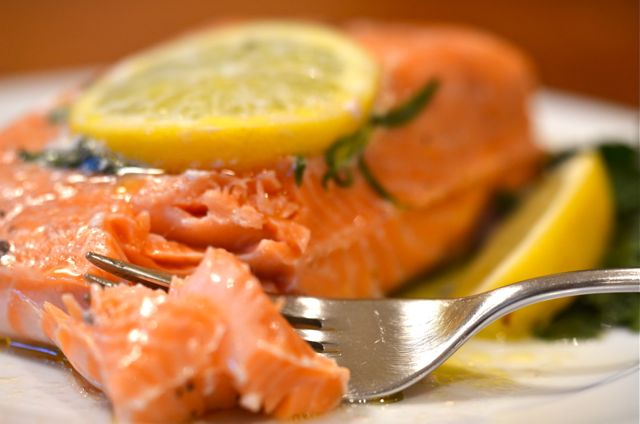
    Sous-vide king salmon with tarragon-chive butter.

    After an enforced absence of a few years, king salmon fishing is back along the California coast. Regardless of the sometimes difficult politics and economics of fishery management, it is always encouraging to see a natural fishery recover when it gets some time. And one thing we see here on the farm (and all over the world) is that nature often rewards patience and comes roaring back, if given the chance. And now our local community is reaping the benefits of its patience and we get to eat our local king salmon straight from Monterey or Half Moon Bays. And there are few fish as tasty, or pretty, as fresh wild king salmon.

    Wild king salmon has a beautiful color and deep rich flavor that, at least to local tastes, surpasses most wild and all farmed salmon. The wild salmon’s high fat/oil content and varied diet makes for big flavor and meaty texture, yet is still healthy (depending on how much butter you add to the dish ;-). The king salmon also lends itself to many different styles of cooking. You can serve king salmon as sushi or crudo, poach, roast, bake or grill it and even the crispy skin is a tasty treat. Great stuff, but with one caveat, the fresh wild salmon does not come cheap. It is best to make the most of the fish, so in this case we decided to cook our king salmon using our sous-vide cooker. (But there is a good oven-based method, so please read-on).

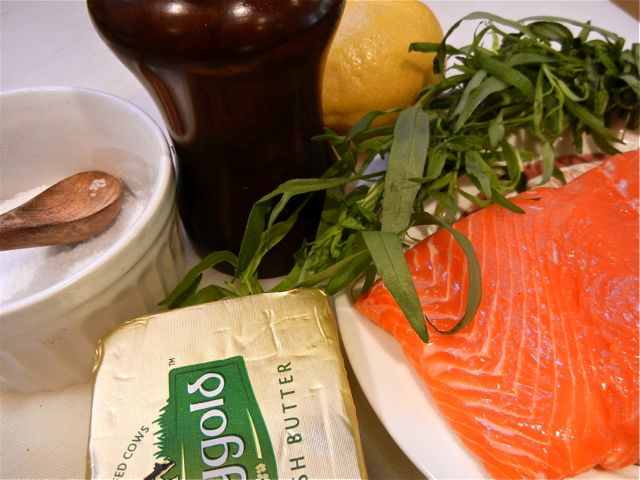
    Simple ingredients, but big flavor.

    As we mentioned in an earlier post, sous-vide cooking involves sealing fish, meat or veggies in a vacuum bag and cooking in a temperature-controlled water bath. It is a very popular cooking method in high-end restaurants, but you can buy sous-vide cookers and vacuum sealers for the home. Our inspiration for sous-vide cooking came from Stefan’s Gourmet Blog– and he has a great introduction and many good sous-vide recipes here. We cook sous-vide regularly with both meat and fish, but particularly like cooking fish in this way. The temperature control and doneness of the fish are quite exact and you can “build” a sauce in the bag while you cook the fish.

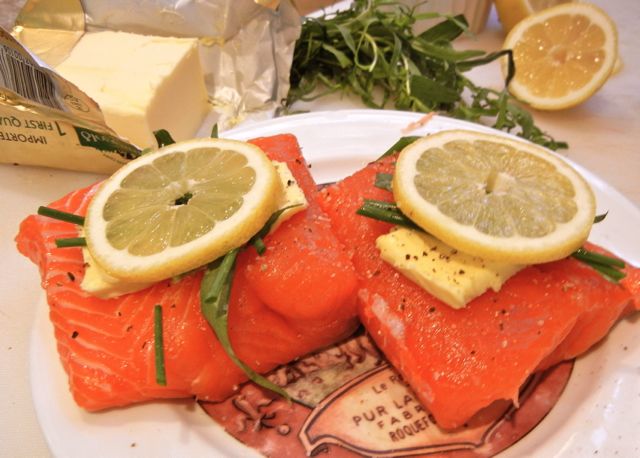
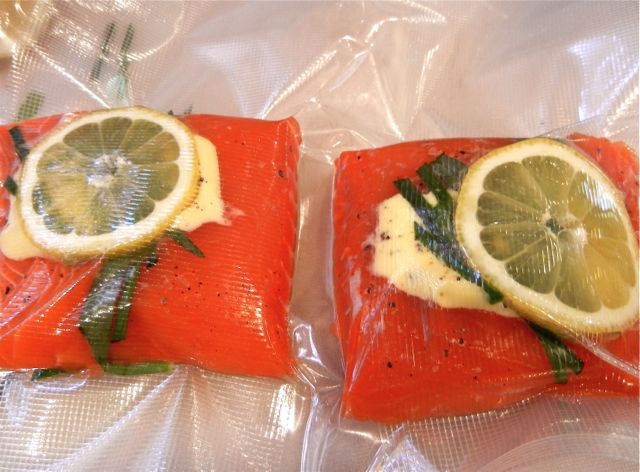
    As for the recipe itself, we simply adapted our basic oven-baked fish recipe to sous-vide cooking. Our approach is to season the fish filets, layer on a generous dollop of herbs and butter per filet and top with a slice of lemon. As the fish cooks, it bastes in the lemon/butter/herb mixture, and that mixture becomes the basis for a quick sauce. In the oven, we cook the prepared filets in a greased baking dish with a splash of wine at 425 degrees for about 10-12 minutes depending on the thickness of the filets and desired doneness. In the case of sous-vide, we simply seal the prepared filets in their bags and cook in the water bath for 30 minutes at our desired temperature. (Note: One drawback of sous-vide cooking is difficulty sealing liquids into the vacuum bag along with the fish. Using “solid” ingredients like cold butter, lemon and herbs solves this issue.)

    Simply season the filets then add the herbs and butter and cover with lemon slices.

    Cook sous-vide or in the oven. These filetes are vacuum-sealed for sous-vide cooking.

    While this is a simple dish to prepare with either cooking method, you get a lot of big flavors. The richness of the salmon and butter is matched by lemon notes and bright, vegetal herbs. If you cook the salmon rare to medium-rare the texture will be soft and juicy, if you cook to medium the texture will be flaky but still rich from the high fat content of the salmon. And here is where personal judgement comes into play. Many cooks will serve salmon rare at 109 or 110 degrees, medium rare in the mid-120 degree range and medium at 130 degrees. Tastes vary and we prefer rare to medium rare fish, but to be fully “cooked” many references suggest cooking fish to at least 130 degrees and even up to 145 degrees. Again, use your judgement based on tastes and the freshness of your fish. And a digital thermometer is a big help if cooking in the oven.

    Some of the best California has to offer…

    As the local king salmon season is short, we enjoyed this dish a few times in the last week or so. We can’t get enough of the salmon, and our kids love it. We take every chance to make sure our kids enjoy eating good fresh fish (think of it as selling healthy eating habits). And the king salmon is more than good, it’s a real treat. Sometimes patience truly is rewarded. Let’s hope we have another good season next year.

    King Salmon With Tarragon-Chive Butter:

    Notes Before You Start:

    • If you don’t have California king salmon, a trip to California is in order…;-) Otherwise substitute your fresh local salmon or other firm fish filets. This basic recipe works for most fish.
    • Salmon usually has small pin-bones you can remove with tweezers or pliers. Remove them before cooking or ask your fishmonger to do it for you.

    Continue reading
  • Weekly Cocktail #17: The Tahitian Postcard

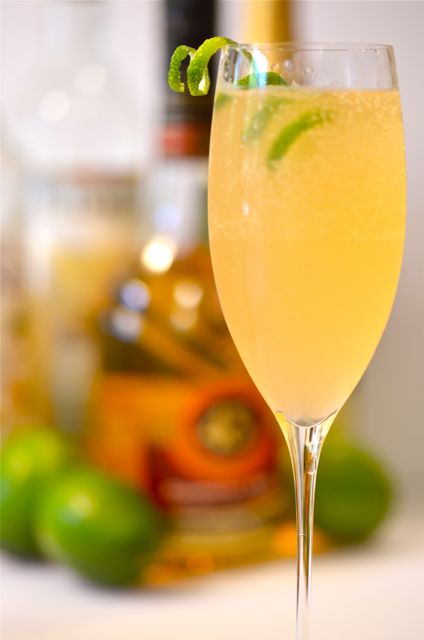
    Tahitian Postcard cocktail.

    A delightful week here at the farm. We were lucky enough to have our post on the El Diablo cocktail featured on Freshly Pressed, the Huffington Post Kitchen Notes featured the Rose Pearl cocktail and then Debra Samuels, the cookbook author commented on our adaptation of her Sushi Balls recipe. Her words were so kind and gracious. We are so grateful to everyone who reads our blog and shares their blogs and comments with us. Food, drink and the garden really do build the soul and connect you with others.

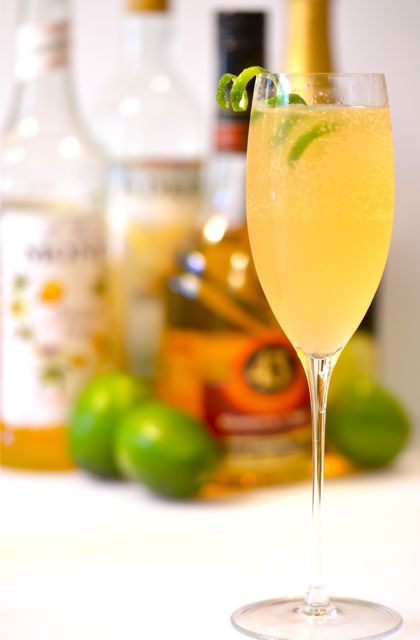
    Food and drink also take you, at least temporarily, all over the world. And this week’s cocktail, The Tahitian Postcard, certainly takes us to another place. The Tahitian Postcard is our creation and is another “sparkling” cocktail for summer (can’t resist, sorry). It combines rum, lime juice, passion fruit syrup and champagne or sparkling wine. We also include Licor 43, a Spanish liqueur with citrus and pronounced vanilla notes, as an optional ingredient. The recipe itself is an adaptation of the Airmail Cocktail (rum, lime, champagne and honey syrup), but we use the passion fruit and Licor 43 to give a touch of “tiki” to the drink.

    Tahitian postcard and ingredients.

    The key here is a “touch” of tiki…just a touch. The passion fruit syrup, Licor 43 and the rum can all drown out the champagne and lime, so we use relatively small amounts for a balanced, lighter drink without any cloying sweetness. The end result is a bright, sweet and sour cocktail with light body from the champagne. Our friend Roger tried the drink, liked it quite a bit, but noted that he liked the passion fruit “because I couldn’t tell it was passion fruit” and that is the point, a light touch helps with this style of drink. A good tiki drink leaves you wondering what all the ingredients are, and we hope the Tahitian Postcard fits that description.

    As for the ingredients, passion fruit syrup is cheap and widely available. It is also a common tiki drink flavor and worth buying, if you like tiki drinks. The Licor 43 is an occasional tiki ingredient that, as we noted earlier, has pronounced vanilla flavor. The Licor 43 is optional in this recipe. We use a scant amount of the Licor 43 and you could substitute a dash of vanilla syrup or use a golden rum that has vanilla notes and get a similar flavor impact.

    Finally, if you are curious about the name of the cocktail, Tahiti is famous for its vanilla and tropical fruit. About 17 years ago, Carolyn and I were returning from our Tahitian honeymoon. We loved the islands, but have yet to return. With this cocktail we sent ourselves a postcard, and it bought us back, at least for a moment.

    The Tahitian Postcard:

    Ingredients:

    • 3/4 oz. white or golden rum (we use white Demerara rum)
    • 1/2 oz. lime juice
    • 1/3 oz. passion fruit syrup (1/4 oz. if you like drinks less sweet)
    • 2 dashes Licor 43 or vanilla syrup (optional)
    • 5 oz. champagne or sparkling wine
    • Lime twist, for garnish

    Assemble:

    1. Comine the rum, lime juice, passion fruit syrup and Licor 43 (if using) in a cocktail shaker with ice. Shake thoroughly and strain into a chilled flute, cocktail glass or coupe.
    2. Top with the champagne and add the lime twist. Serve.
  • Grilled Eggplant With Salsa Verde (And A One Lovely Blog Award!)

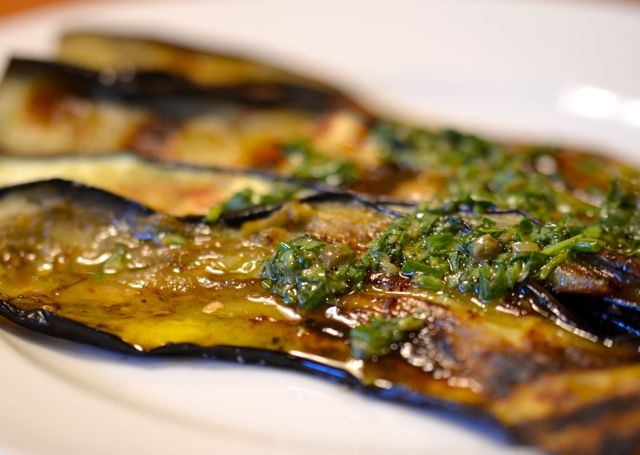
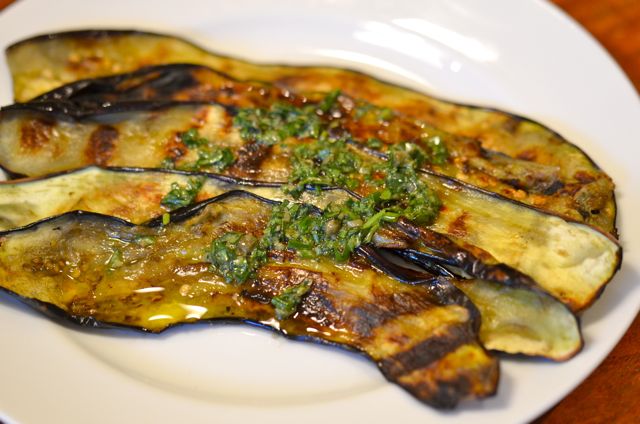
    Grilled eggplant with salsa verde.

    Recipe below, but please read on..

    We recently received a nomination for the One Lovely Blog award from our friend Erin at Erin’s DC Kitchen. We are big fans of Erin’s take on simple, tasty food and the overall positive spirit of her blog. Check out her site, it will be a pleasant visit. Thanks Erin!

    So now we must pass the award along to one lovely blogger and tell you seven things about ourselves (not sure there is much left, but we will try..;-). As for the nomination, we nominate Cooking in Sens, a blog about cooking and life in Burgundy. If we cook and take photos half as good, we would be thrilled. We love the blog and have made a few of the recipes with great success. Please check them out.

    So here are seven more things about us:

    1. We do read cookbooks for fun. And our kids are starting as well. Now we need to put them to work.
    2. As noted before, we have less success with zucchini than we should. Somewhat embarrassing.
    3. We buy too much kitchen gear, but are getting better…a little. Sort of. Maybe.
    4. Sometimes we cook simple food because we don’t want extra dishes.
    5. Once we got to 40, wine started giving us the occasional headache. Cocktails and beer took over at the farm.
    6. Sometimes there are so many gophers we (I) feel like Bill Murray in Caddyshack (and want to “solve” the problem with similar measures).
    7. We can’t wait for tomatoes and fresh corn…like it really bothers us it’s not here yet.

    Now back to cooking. The Grilled Eggplant with Salsa Verde recipe is a simple one, but worth sharing simply because it answers the question of what to do with eggplant. Such a beautiful vegetable (technically a berry, btw), but often many cooks just put it in Eggplant Parmesan or Baba Ghanoush. Both great dishes, but we like quick preparations and grilling the eggplant does the trick. As for extra flavor, salsa verde packs a big punch from the herbs and oil. It is great on many dishes and we use it often on fish, like this dish. But it is great on almost any grilled vegetable.

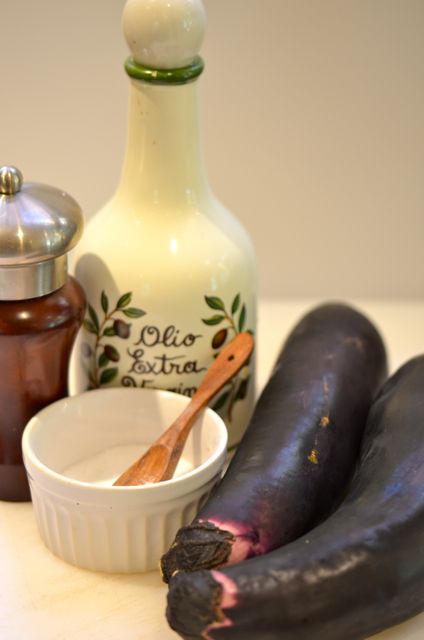
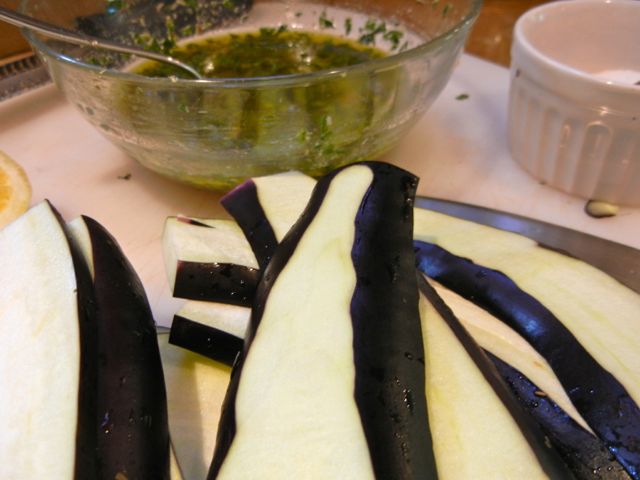
    Just a few ingredients for the eggplant.

    Make your salsa verde and slice the eggplant.

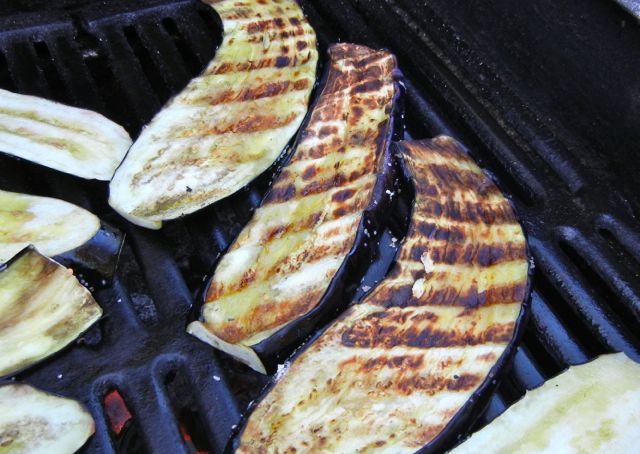
    Brush oil on the eggplant, sprinkle with salt and pepper and cook on a medium grill.

    Assembling and cooking this dish is as simple as it gets.  Most of the work with salsa verde is in chopping the herbs and then adding the oil and other ingredients. For the eggplant, simply slice it lengthwise into 1/4 inch slices and brush with olive oil and then sprinkle with salt and pepper. Cook on a medium grill until browned on the outside and soft in the center. The temperature here is key, if the fire is too hot the outside will burn before the center is soft. Lower the heat a bit and take your time. A grill pan indoors will also work, again use medium heat and take your time. You will still need less than 10 minutes. And then you can enjoy one lovely dish.

    Continue reading
  • Sushi Balls: Sushi At Home

    Sushi balls. Fun sushi at home.

    When we started writing this blog, one of the promises we made ourselves was to use the blog as motivation to cook new things at home. And so far we are making progress, but mostly with new tools like sous-vide and using “molecular gastronomy” ingredients in baking. But the next step was for us to explore new cuisines, and we went right for Japan.

    We love Japanese food and have a favorite local sushi bar and are even members in a Sake tasting club (great fun), but rarely cook anything other than tempura at home. But we decided that needed to change. So we bought Debra Samuels’ “My Japanese Table”, a cookbook with Japanese recipes adapted for the American kitchen. Samuels is a well-regarded food writer for the Boston Globe and lived /cooked in Japan for ten years, so we took the plunge. So far the cookbook is a good read, with plenty of simple recipes for Japanese basics like teriyaki and tempura. But we know what we wanted to do at home, sushi. And this recipe is why we bought the cookbook. Sushi balls are very pretty sushi that you can make at home. And its fun…really.

    Smoked salmon, salmon roe, seared ahi, shrimp, cucumber and shiitake mushroom.

    Usually the big issue with making sushi at home is actually constructing the rolls. Sushi rice is super-sticky and the shaping tools are uncommon for most home cooks. Without constant practice, home sushi can look like a train wreck. And while the flavor of the sushi can be good, the presentation is a big part of the dish. One way to handle this challenge is to simply prepare the rice and ingredients and then present them with nori as a buffet for hand-rolls. But with Sushi balls, anyone can make an attractive individual piece of sushi. You can even have fun and experiment with presentation.

    The trick is to simply place the fish or veggie on a square of plastic wrap, then place a tablespoon or so of rice on top (be sure to keep your hands moist with water when handling the rice).  Then bring up all the corners of the plastic wrap and twist tightly into a ball. When it unwinds, you have a well-shaped sushi ball. It only takes a few tries to get the hang of it, and then you can experiment with different combinations of ingredients. Samuels suggests cooked shrimp, lightly salted cucumbers and smoked salmon. We added some seared ahi, salmon roe and browned shiitake mushrooms. Cooked crab or scallops would also be very good additions. But feel free to experiment based on taste and budget (and this is an inexpensive dish).

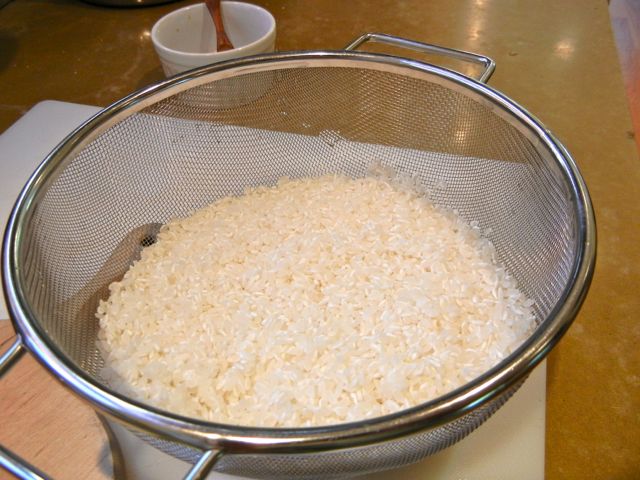
    Rinse the rice and drain.

    Ingredients for Sushi-zu seasoning

    Cooked rice, sprinkled with Sushi-zu seasoning.

    Now that shaping the sushi is less of a challenge, the real effort goes in making the sushi rice. While in sushi bars “mastering” the rice can take years, it is something you can do well at home- on the first try. The trick is to buy the correct rice and follow all of the steps. For the rice you need short grain japonica rice, which is available in most supermarkets. Don’t substitute long grain rice. As for the steps, you must rinse the rice and then either soak it for cooking or use a rice cooker- the recipe deals with both. While the rice is cooking you make the Sushi-zu seasoning of rice vinegar, sugar, salt and mirin. When the rice finishes cooking, you place it in a bowl and then gently sprinkle and mix the Sushi-zu seasoning with the rice. Then fan the rice to cool it down. The rice should stick together but not be mashed or “gluey”.  But if you use the right rice and follow each step you will get consistent, tasty, results.

    Slice cucumbers, sprinkle with salt, wait for 5 minutes and drain. Done. Continue reading
  • And Suddenly There Are Apples

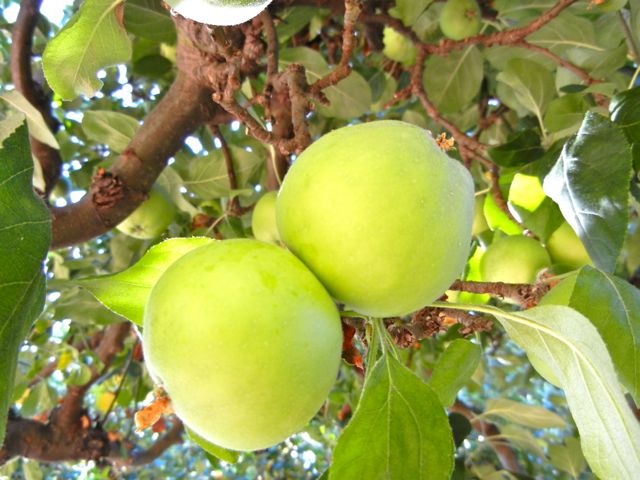
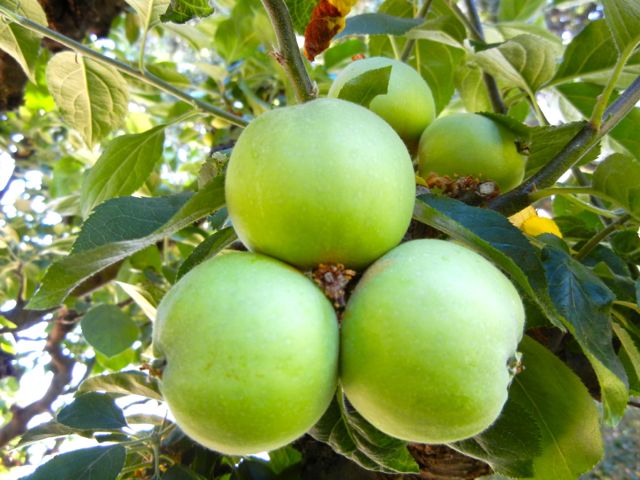
    Gravenstein apples.

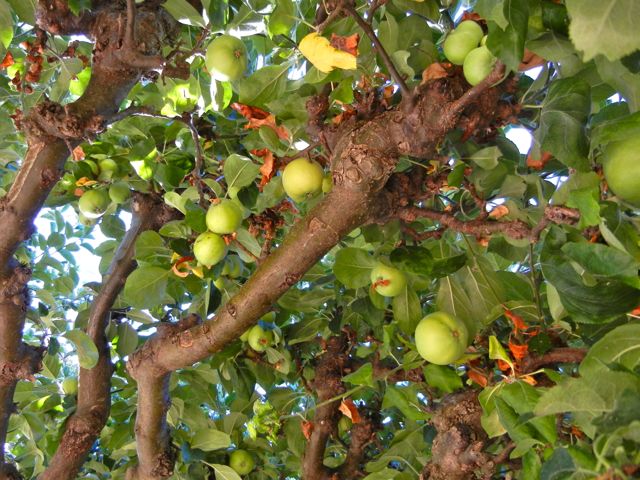
    Just two weeks ago, when it was still cool, our Gravenstein (or what we think are Gravenstein) apples were barely showing on the tree. But a few weeks of warmth and sun and the tree is thick with apples. Gravensteins are a “variable harvest” apple, which just means the fruit ripens unevenly. The apples will ripen and develop a slight red blush on top, but they are tart and tasty even before they fully ripen.

    Quite a few apples. These need to be thinned.

    The animals seem to think they are ready. The Deer love the apples and we throw the apples that drop early over the fence. The deer will congregate to that same spot every evening to see what fell from the trees. We will thin the apples this week to get a better crop later in the season- the deer will be extra-happy for a few days. Now they just need to stay on their side of the fence.

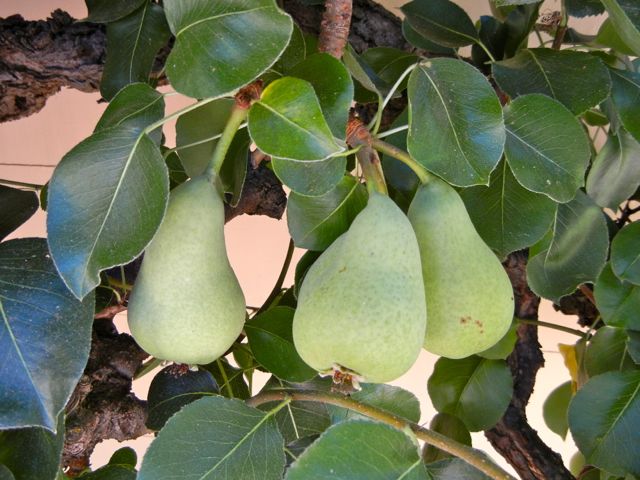
    Pears are also looking good.

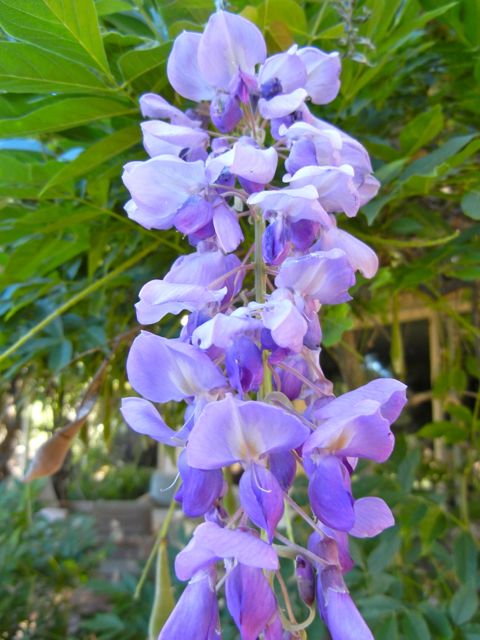
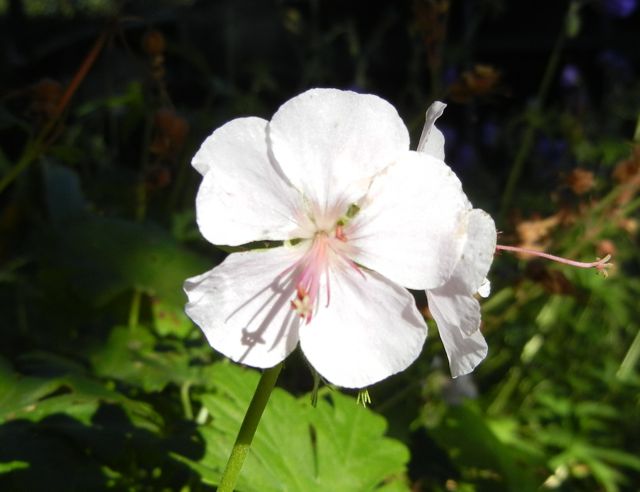
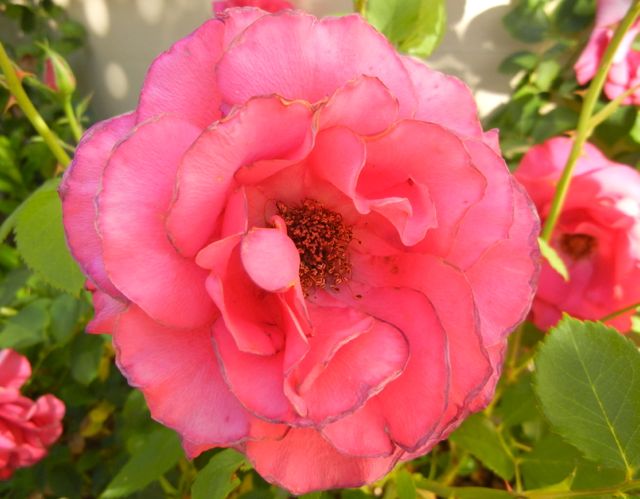
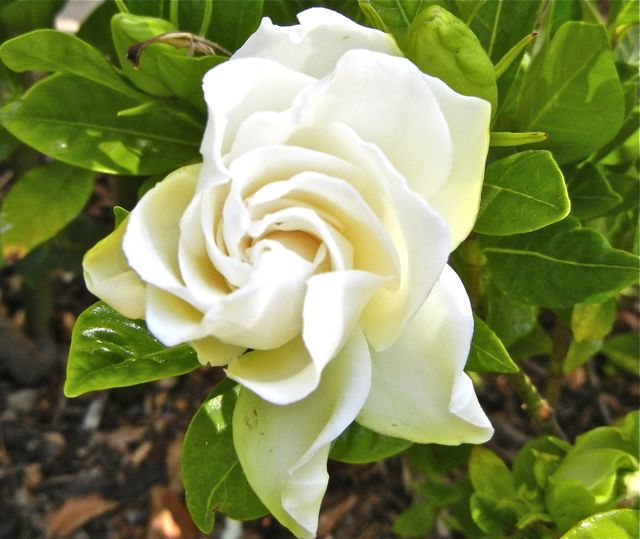
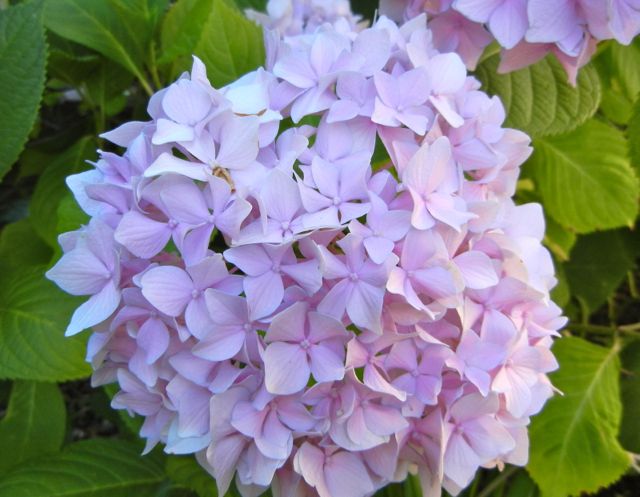
    Otherwise we leave you with flowers on a beautiful summer day. Surprise at the end…

    Last gasp of the wisteria.

    Continue reading