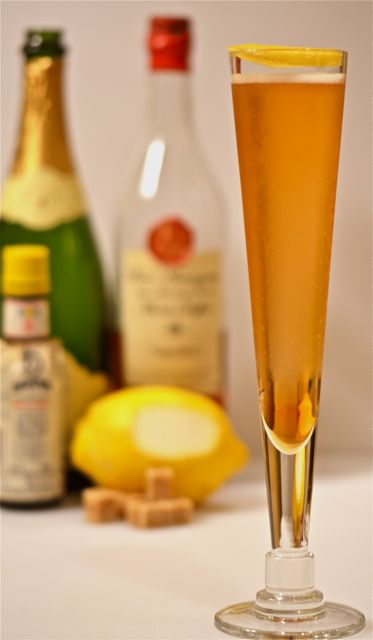
Classic Champagne Cocktail.
This recipe is another example of how building one successful cocktail often helps you discover (or rediscover) many more great drinks along the way. In this case, we were playing with cocktails using French Brandy (Cognac or Armagnac) and found the May Daisy. But as we did our research (reading books, cruising the web and trying drinks- a tough gig) we also found a note on the Champagne cocktail that piqued our interest.
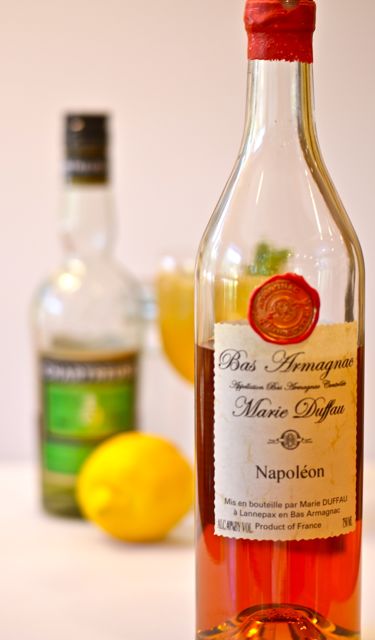
Now almost all Champagne cocktail recipes include Champagne (or good sparking wine), sugar, Angostura bitters and a lemon twist. But it turns out that many recipes for the Champagne cocktail include anywhere from 1/4 to 3/4 of an ounce of brandy, usually Cognac. These recipes also note that while you can use “OK” Champagne, you need good brandy to make a successful drink. And since we had a good, but affordable, Napoleon Armagnac, we were in business.
 And while we already like a basic Champagne cocktail, this version with good brandy was something altogether different, and very much better. The aroma, with the combination of citrus from the twist, the tart yeasty note of the champagne, spice from the bitters and sweet floral / fruity notes of the Armagnac is outstanding. You will be happy simply smelling this drink. And magically, as the Champagne bubbles keep the drink “active”, the aroma persists from beginning to end. This cocktail is a reminder that adding a twist to a drink can be very, very important to the result. As for flavor, the Champagne still rules the drink, but with much more depth of flavor and just a touch of pleasant heat from the brandy. We love this drink, it is good anytime / anywhere.
As for the ingredients, as we noted earlier, good brandy (VSOP or XO) is the way to go, but you can be more flexible on the Champagne or sparking wine. We use California sparkling wine in cocktails, our favorite brand is Gloria Ferrer, who makes great wine in the $15 – $20 per bottle range that is available in most liquor and grocery stores. Both the Brut and Brut Rose are worth seeking out. But if you have a bottle that you like, and it’s not too expensive, use it. The amount of brandy in the recipes varied, but we found 1/2 ounce to supply good flavor without drowning out the other players or being to boozy. For the bitters we use Angostura, some recipes suggest adding orange bitters, but we found this added more sweetness than we needed (but by all means try it if you like orange bitters). For sugar, most recipes suggest soaking a sugar cube in 3 dashes of the bitters and adding it to the drink. This will add some sweetness and extra bubbles. But if you don’t have sugar cubes (most of us don’t anymore), 1/4 of an ounce of simple syrup can replace the sugar cube. Lastly, a big, fresh lemon twist is essential to this cocktail. Many photos show long thin twists in the drink, but you need the oil from the twist in the drink. We cut a half-dollar size piece of the lemon zest and give it a good working-over above the drink and then add it in. You will pick up the aroma of the drink immediately, and it will be good.
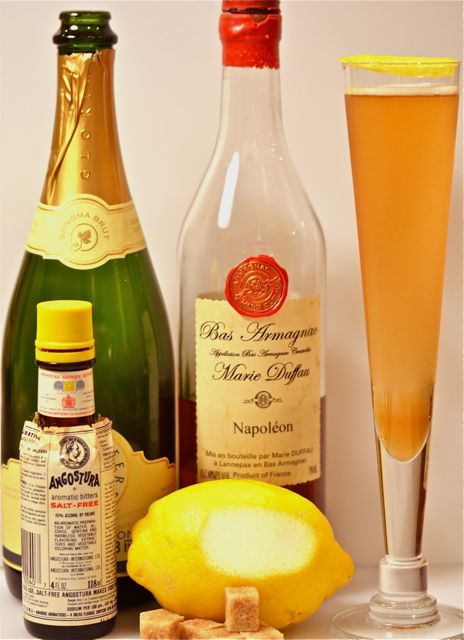
Classic Champagne Cocktail and Ingredients.




 Putney Farm