• Weekly Cocktail #25: Corn ‘n Oil

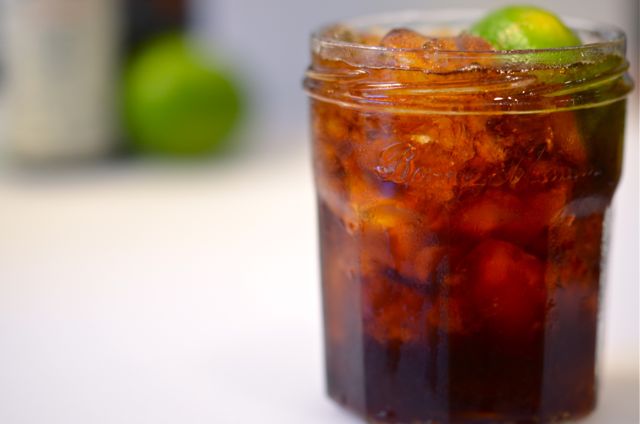
    Corn ‘n Oil cocktail.

    Let’s start by noting that this is not a drink that we expect many people to make at home. The Corn ‘n Oil is a very good cocktail, but perhaps a bit random “esoteric” for some. But since this week’s bonus cocktail was a Manhattan variant, we figured we could try something a bit different for our weekly post. And the Corn ‘n Oil certainly is “different”.

    Blackstrap rum and velvet falernum are not common ingredients, but are useful in plenty of cocktails.

    The Corn ‘n Oil combines blackstrap rum, velvet falernum, lime juice and Angostura bitters and is served on the rocks. And if you are unfamiliar with blackstrap rum and velvet falernum, you are not alone. To be honest, we only have them on hand because both are common accents in tiki drinks, and we do like our tiki drinks. Blackstrap rum is basically very dark rum. Cruzan is the blackstrap rum in tiki circles and in the Corn ‘n Oil. It has overt molasses and spice flavors with some clear bitter notes. On first sip, it seems unappealing, but somehow it grows on you. Many tiki drink aficionados use the Cruzan as the “float” instead of more common dark rums like Meyers. Cruzan Blackstrap rum is cheap ($15) and good stuff- so worth a try if you find it.

    As for velvet falernum, it is a sweet, spicy, lightly-alcoholic liqueur with lime notes. There are also non-alcoholic falernum syrups, Fee Brothers makes a version that’s widely available. You can also make your own. Falernum, along with Orgeat, is a popular sweetener in many tiki drinks. The only velvet falernum widely sold in the US is John D. Taylor’s from Barbados, the original home of falernum. It is inexpensive (under $20) and will last a long time, but it may be hard to find. In this recipe we suggest you use velvet falernum, but falernum syrup will work in a pinch.

    As for making the actual drink, like many cocktails, the recipes vary. Not surprisingly, the recipe on the back of the John D. Taylor Velvet Falernum bottle suggests a ratio of 3-1 falernum to rum. This is OK, but most current recipes suggest anywhere from a 50/50 split to 3-1 rum to falernum, particularly if using the Cruzan Blackstrap rum. Most recipes do agree that you need 1/4 to 1/3 of an ounce of fresh lime juice and some even suggest a splash of coke. We use a recipe from the cocktail book “Bitters” by Brad Parsons. We like the book and this recipe, but feel free to play around. We like just a bit more lime juice.
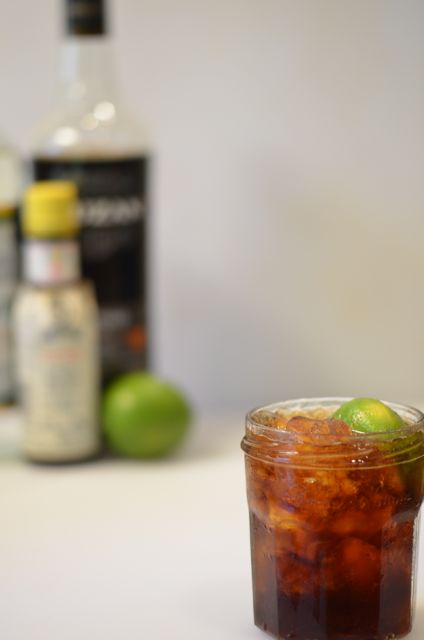
    Yes, it does look like old motor oil…but it tastes better.

    As for the flavor of the Corn ‘n Oil, it tastes like a much more flavorful version of a rum and coke. And this is a good thing. (C’mon, secretly most of us like a rum and coke every once in a while 😉 ) The blackstrap rum adds spice, bitterness and depth. The falernum adds clove and sweet lime notes that compliment the acidity of the fresh lime juice. The bitters add even more spice. Overall, there is a lot of good flavor in this drink. But there is one big caveat, the first sip is tough. The overt molasses flavor and bitterness from the blackstrap rum can be overwhelming. But then, suddenly with the next sip, it gets better. And as the ice melts into the drink, it gets good. Real good.

    As we noted earlier, we don’t expect that many people will have the ingredients to make this drink at home, but the next time you see this drink in a good bar, give it a try. If you get past the first sip and the odd name, you are in for a pleasant surprise.

    The Corn ‘n Oil:

    Ingredients:

    • 2 oz. blackstrap rum (preferably Cruzan)
    • 1/2 oz. John D. Taylor’s Velvet Falernum (or substitute falernum syrup)
    • 1/3 oz. fresh lime juice
    • 2-3 dashes Angostura bitters
    • Lime shell or wedge for garnish

    Assemble:

    1. Fill a lowball or old-fashioned glass with crushed ice. Add the rest of the ingredients and stir until well chilled. Add the lime garnish and serve.
  • Gratitude, Awards And Apologies!

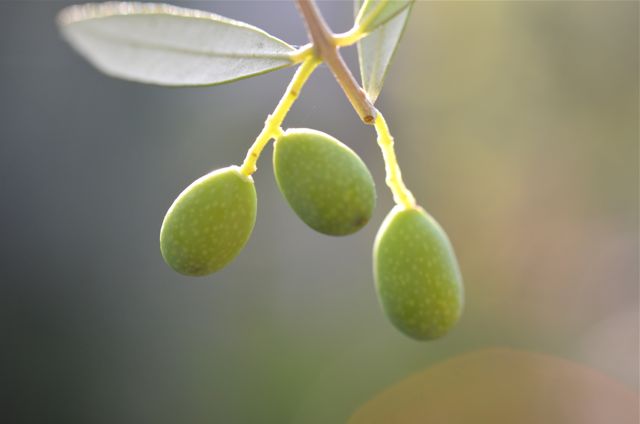
    Olives. Something to look forward to.

    A few years ago, our kids sang a song at a school event called “An Attitude of Gratitude”. It was the kind of semi-campy and non-offensive song you often get at school performances, and the basic chorus was “an attitude of gratitude will get you through the day”. And while it is tempting to roll one’s eyes a bit, the message does hold true. Every day we wake up, there is something we are grateful for. And we are very grateful for so many things, we look forward to every day.

    We are very grateful that so many of you visit us and read about our garden and kitchen (and bar). Your blogs, comments and insights have already made us much better gardeners, cooks and photographers. And these are lifetime interests- so we are happy (and grateful) to learn and improve. And the garden and kitchen can often be humbling places, so it is always good being part of a larger community.

    We are also lucky enough to be nominated for a few blogging awards. Thanks! And this is where the apology comes in. We both have what we call the “promptness gene”. We don’t like being slow to respond or simply be late with anything. But we are late in responding and apologize for being so slow. But better late, than never. As we have a few awards, we will bend the rules and mention the awards, tell you a few more things about ourselves and share some blogs we enjoy. And share some photos, just because we can.

    Here are the awards (Thanks again!):

    Beautiful Blogger by Fine Frugality: Good food and writing- recipes you will actually make.

    http://finefrugality.wordpress.com

    Inspiring Blog Award by Glitz Glamour Girl Guide: Fun, positive recipe and lifestyle blog.

    http://glitzgirlzglamourguide.com

    Versatile Blogger Award by Dockfam: This blog just supplies smiles…and smiles are good.

    http://dockfam.wordpress.com/

    Very Inspiring Blog by Sarah The Gardener: A great, honest gardening site- we wish we were this good.

    http://gardeningkiwi.wordpress.com/

    Stuff about us:

    • We do actually suffer from garden envy, even when ours is looking good. I guess we are greedy that way.
    • Same with kitchens.
    • We browse grocery stores, farmers markets and wine/liquor stores the way some folks shop at the mall. This drives our kids (somewhat rightfully) crazy.
    • We tried sausage making several times and have yet to crack it. Local suppliers and butchers do better than us- by a lot.
    • We still do OK with home-cured bacon, however. Some consolation.
    • We are starting to geek up on tea. This may go the way of cocktails and get a bit obsessive. Hmm.
    • We are really bummed and disappointed by Melky Cabrera. Ugh, this one hurts. Continue reading
  • Cherry Crumble Pie

    Cherry Crumble Pie with ice cream.

    Our cherry season never seems to end this year, but we are certainly not complaining. Not only did we get cherries here at the farm, but we enjoyed more on the east coast. And just when we thought it was over, a local farm had one last batch of tasty Bing cherries. We made plenty of cherry cocktails (a Cherry Fling, a Caipirinha and a Manhattan) and desserts like clafoutis, so now it’s time for cherry pie. Many recipes use sour cherries in pies, but they are very hard to find and we like the Bing cherries. It was just a matter of time before the Bing cherries ended up in a pie.

    Hard to wait for this to cool.

    For this pie, Carolyn combines elements from a number of recipes, so it is very much her creation. And it is a very, very good pie. The key, at least to our tastes, is the use of a crumbly, crunchy streusel topping instead of a full dough or lattice top. Not only is it easy, but the streusel adds extra crunch and flavor that, combined with smooth vanilla ice cream and bright, sweet Bing cherries, makes for an excellent dish. This pie was a hit with the kids and adults, and there was nothing left over.

    A food processor makes it easier to make good pie dough.

    Vodka, along with water, makes for a tender crust. It activates less gluten.

    Making the pie is, admittedly, a multi-step process. You must make the pie dough and the streusel and prepare the cherry filling. All of these steps are easy enough (particularly with a food processor), but they do require time. Most of the techniques are also familiar, but we will note the use of vodka along with water in the pie crust. While adding no flavor, the vodka moistens like water but does not activate the gluten in the flour. You get a more tender crust in the final pie- and the booze cooks out. While you do not have to use vodka, we use this recipe for almost all of our sweet pie dough and the texture is noticeably better. Certainly worth a try, and you can make this dough ahead of time.

    Form the dough into a disk, cover with plastic wrap and chill.

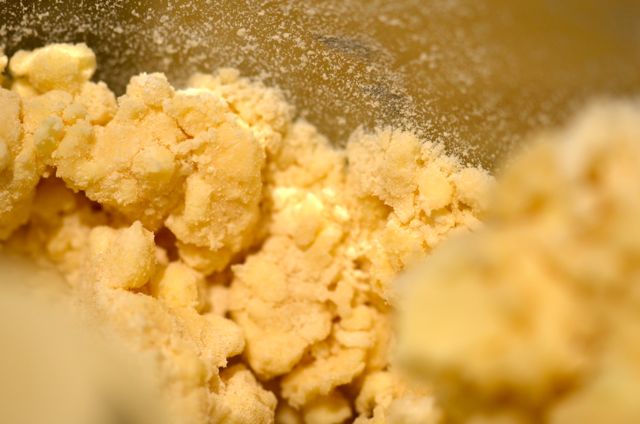
    Quickly combine dry ingredients and butter to make a streusel for the “crumble” topping.

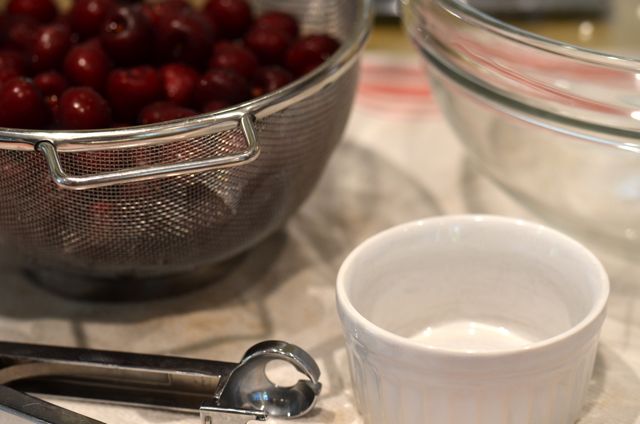
    Meanwhile, start making the cherry pie filling.

    Otherwise, making the pie is a straightforward process. Use the food processor to create the dough. Then chill it to make it easier to roll-out. Meanwhile assemble the streusel in a medium bowl, it requires no cooking and it’s quick. It does, however, take some time to make the filling. Pit the cherries and then combine a cup of the fruit with the sugar in a saucepan over medium heat. Cook the cherries and sugar to form a light syrup and thicken with a cornstarch mixture. Then add in the uncooked cherries along with nutmeg and melted butter. This may seem like extra effort, but it is worth the work. The filling ends up with deep flavor and a mix of textures. And since the cornstarch is cooked twice, there are no raw or starchy flavors in the filling. Good stuff.

    Combine cherries and sugar.

    Bring to a boil and thicken with cornstarch.

    Place the dough in the pie pan, add the filling and top with the streusel.

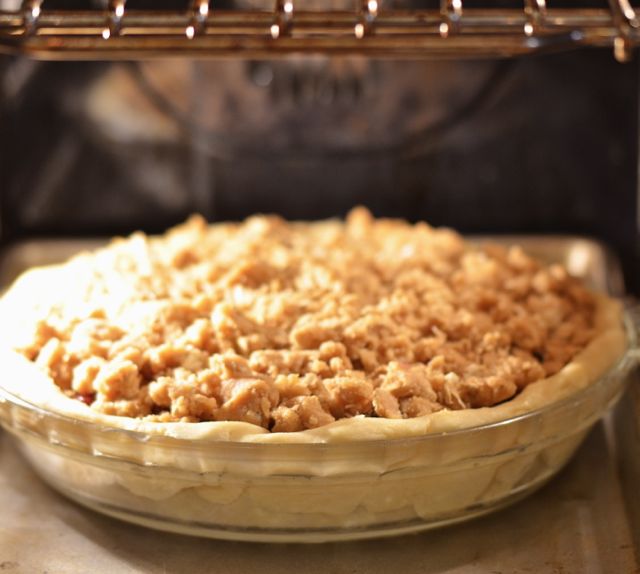
    Bake until well colored and the filling bubbles. Cool and serve.

    Continue reading

  • Bonus Cocktail: Scott’s Manhattan

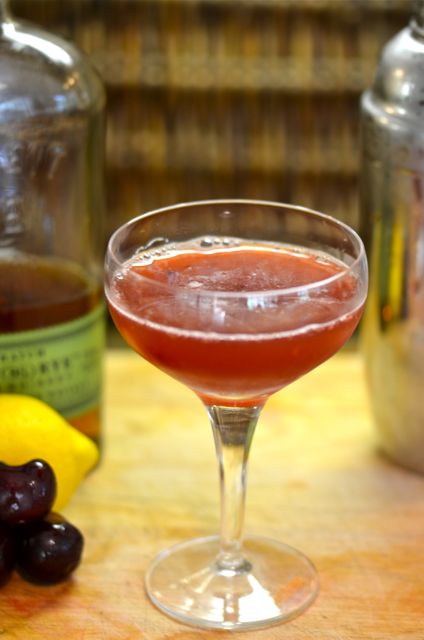
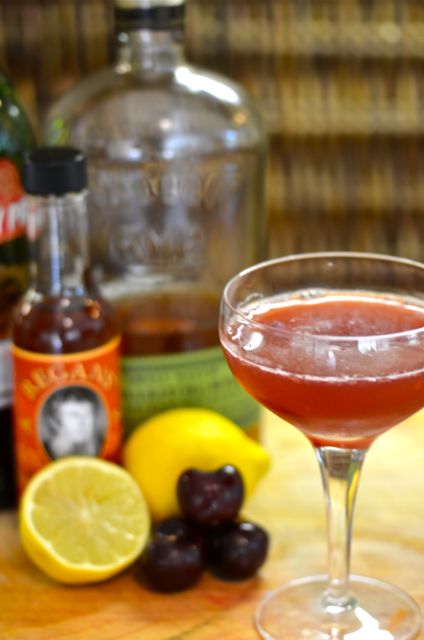
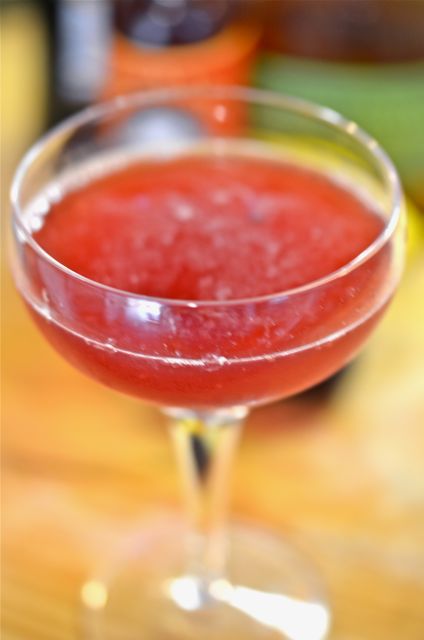
    Scott’s Manhattan.

    One of the best parts of enjoying cocktails with friends is that they share their favorites and personal creations with you. And sometimes, after a few drinks and/or a visit to the fruit stand, you can build and enjoy “new” drinks. We say “new” but as this cocktail is a variant of the Manhattan, one of the most tweaked cocktails in the world, someone has probably made this before. But a quick search of Cocktail DB didn’t come up with a name, so we will call this one “Scott’s Manhattan”, after our friend Scott who made this cocktail for us during our visit to Long Island.

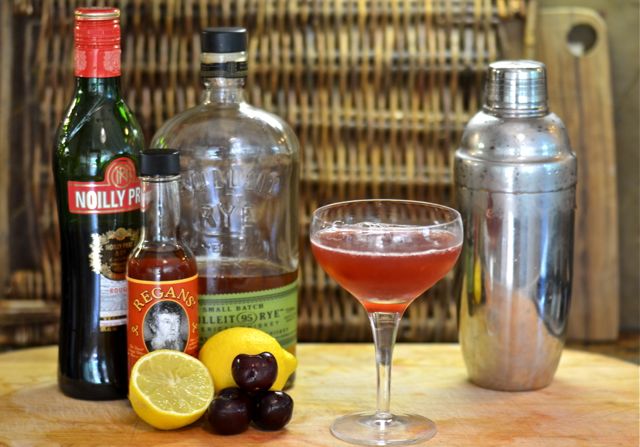
    A few more ingredients than a regular Manhattan.

    If you read our blog regularly, you will note that we sometimes avoid “brown drinks” like Manhattans, particularly in summer. But Scott is an avowed, and knowledgeable, fan of the Manhattan and made us a version that works in any season. His version includes two ounces of rye, one ounce of sweet vermouth, muddled cherries, a touch of lemon juice and orange bitters to create a bright and “summery” Manhattan. While anyone who likes Manhattans will recognize the whiskey and vermouth, Scott’s additions brighten the flavors and add a clean finish that works very well in warm weather. We all liked this drink and enjoyed quite a few in the last week. Usually whiskey stays near the back of our summer bar, but this drink changed our minds.

    Traditionally, a Manhattan is 2 parts bourbon or rye and one part sweet vermouth. Most recipes include bitters, usually Angostura, and often a cherry as garnish. A classic drink, but very sweet to our tastes, particularly if using bourbon. Scott’s version adds more spice by using rye and citrus notes from the orange bitters. The cherries add both sweetness and tang, and really amp up the color. The first sip of this cocktail is sweet and spicy, but then the citrus and cherries kick in for a lighter, fruitier finish than any traditional Manhattan. Purists may cringe, but we are all for seasonal experimentation and variation with our cocktails- it’s fun, and cocktails are all about fun.

    As for making the drink, it is pretty straightforward, with just a few extra steps. Place two fresh, pitted cherries, a lemon twist and a few drops of lemon juice to a cocktail shaker and muddle to extract the juice from the cherries and oil from the lemon peel. Add the rye, sweet vermouth, orange bitters (we use Regan’s for this version) and ice to the shaker. Shake until chilled and strain into a cocktail glass. For the rye, we like Bulleit and High West for cocktails, but most good rye will do. If using bourbon, the drink will usually be sweeter, so an extra drop of lemon or a touch less vermouth may help balance the drink. As for the sweet vermouth, we use Noilly Prat or Dolin, but we suggest you experiment with the sweet vermouth you prefer (and you do keep your vermouth in the fridge, right?). With the extra red color from the cherries and aroma from the lemon, we don’t think a garnish is necessary, but perhaps an orange twist will add extra dimension…. Again, feel free to experiment. Scott experimented, and we got a great drink….

    Scott’s Manhattan:

    Ingredients:

    • 2 oz. rye or bourbon
    • 1 oz. sweet vermouth
    • 2 sweet cherries, pitted
    • 1 lemon twist / peel (about the size of a quarter).
    • 2-3 drops lemon juice
    • 3 dashes orange bitters (Regan’s)

    Assemble:

    1. Place cherries, lemon peel and juice into a cocktail shaker and muddle to extract juice and oil.
    2. Add rye, sweet vermouth , bitters and ice to the shaker. Shake thoroughly and strain into a chilled cocktail glass or coupe’. Serve.
  • Weekly Cocktail #23: The Daiquiri

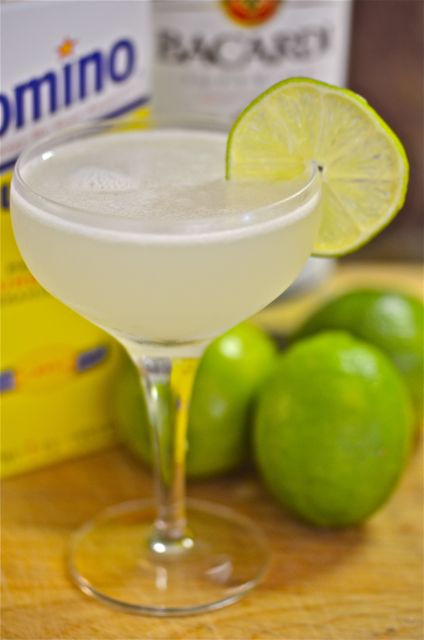
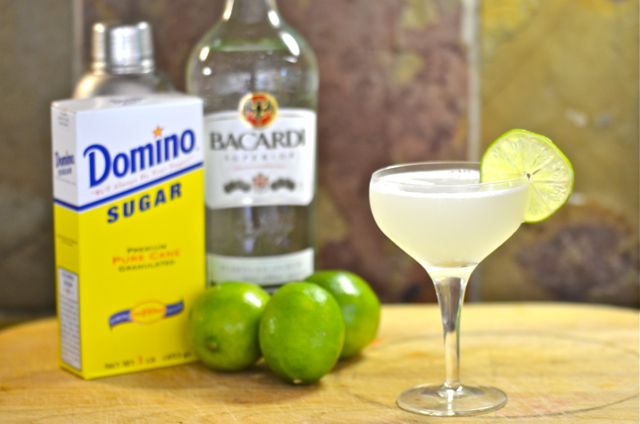
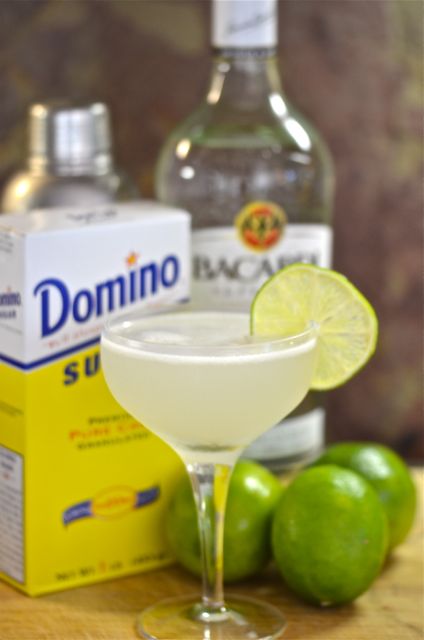
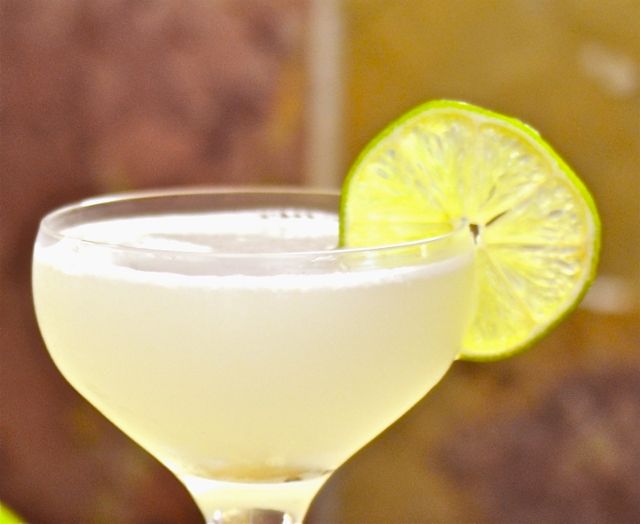
    The Daiquiri.

    If you are at the beach, and we are, there are few better flavor combinations than rum, limes and sugar. A simple trio, but one with many variables, and a canvas for almost endless experimentation. Rum comes in many styles, as does sugar, and it seems that almost all are used in some combination with lime to form an original cocktail. Rhum Agricole, cane syrup and lime gets you a Ti’ Punch. Cachaca, sugar and lime make a Caipirinha. Jamaican rum, lime and sugar (and sometimes bitters) forms a Planters Punch. And on it goes…

    Rum, lime sugar. Simple, but good.

    And if you start with white rum, add lime juice and a touch of simple syrup, you get the Daiquiri. The Daiquiri is probably the most famous of the rum/lime/sugar drinks, and perhaps rightfully so. While many will develop tastes that lean towards the funk of Cachaca or the richness of Jamaican rum, everyone must start somewhere- and the Daiquiri is a very good intro to this class of cocktails. Tasty, refreshing and simple to make, the Daiquiri is a perfect summer sip and an easy way to produce some smiles. Don’t take it from us, the Daiquiri was a favorite of both Hemingway and JFK. They knew how to party have a good time.

    As for the history of the Daiquiri, it is better documented than most cocktails. The Daiquiri is named after a beach in Cuba and was invented by Americans there after the Spanish-American war. The Daiquiri remained somewhat of a regional specialty until the late 1930’s, when it gained popularity in the states. The 1940’s brought more popularity for the Daiquiri, as rum was more available than many other spirits during the Second World War. And after the war the Daiquiri remained a cocktail staple.  (Note: There is a good recurring joke in the 1958 movie “Auntie Mame” about Daiquiris improperly made from honey. Lots of booze and bad judgement in that movie, if you like cocktails and parties it is worth renting 😉 .

    While the history of the Daiquiri is relatively well-known, there are some questions on how the make one. You would think it’s simple; white rum (Bacardi is a fine), lime juice and simple syrup (no honey, please), but the proportions are a challenge. Most recipes call for at least 2 oz. white rum, 1/2 – 3/4 oz. fresh lime juice and just a few dashes of simple syrup. While that may work for many, some (most?) will find the drink too sour. We suggest you play around until you find proportions you like. If you make your simple syrup in large batches, you will have plenty to experiment with. Our base recipe is 2 oz. white rum, 3/4 oz. lime juice and 1/2 oz. simple syrup (1:1 sugar to water), a bit sweeter than the traditional recipes, but the lime still leads the drink.

    And if you like the basic Daiquiri, there is plenty of room to experiment and expand. Different rums, liqueurs and sweeteners all make for easy variants of the Daiquiri, and many are very, very tasty. The Hemingway Daiquiri is also a very good cocktail (IMHO). So if you want an into to rum/lime/sugar drinks, or just a good summer sip, the Daiquiri is a great place to start.

    The Daiquiri:

    Note: To make simple syrup, combine 1 cup white sugar with 1 cup water and bring to a boil until sugar dissolves. Chill and store in the fridge. If you add 1/2 oz. of vodka to the syrup (off the stove) it will keep longer.

    Ingredients:

    • 2 oz. white rum
    • 3/4 oz. fresh lime juice
    • 1/2 oz. simple syrup (1:1 sugar to water)
    • Lime wheel, for garnish (optional)

    Assemble:

    1. Combine all the ingredients in a cocktail shaker with ice. Shake thoroughly and strain into a chilled cocktail glass or coupe’. Garnish with lime wheel, if you like. Serve.
  • The Farm At The Beach

    Breathe. Relax. Read a book.

    Well, we are back. Or at least settled. We are now at our “home-away-from-home” on the east end of Long Island. One of our favorite places in the world. I guess you can call it a “home” because we have plenty of friends and family here, and we pretty much know where everything is. That may seem simplistic, but part of being comfortable is familiarity. We cooked in three different kitchens in the last thee days but pretty much knew where everything was. Other people’s kitchens are a tough place to cook, but we know our way around. We can get back to business. But before we cooked, the first business was meeting the two newest members of our extended family. Beautiful babies and happy, if somewhat tired, parents. We can almost field a football team with all the cousins- which is very, very cool. We are so blessed and lucky, and the babies give us a reminder of just how good life is. And they are cute, too.

    Radishes are in season here, and very tasty.

    And we did get back to cooking. In many of our posts, we mention that certain dishes and drinks are good for a crowd. Well, we put a few to the test already. Most meals over the weekend fed groups of 15-20. So far, so good- but we do have a few notes and revisions. And, happily, mostly to the good. As for the actual food, we tend to have simply prepared fish and shellfish as our main courses. Seared ahi tuna, roasted striped bass, sea scallops and steamed clams made it to the table over the weekend, and will be part of almost every dinner this week. Most were caught within the last day or so. The fish is so fresh you don’t need to do much (just don’t screw them up), so we focused on sides that highlight the seafood or feature the local produce.

    The coconut rice goes well with the local fish. A big hit- we will make this throughout the trip.

    Firstly, we had fresh local radishes and served them with butter and salt. Always easy, always good. (My Dad also makes kick-ass guacamole every day, but that is another post). The biggest hit so far is the coconut rice. The rice went very well with the seared, rare ahi tuna (steaks almost 2 inches thick and sooo good). Served with a dash of soy and some cilantro chutney (working on that recipe), it was a perfect fit. A table of 16 were all very happy. One note here, we made the coconut rice with “Light” coconut milk, as the store was out of regular coconut milk. If anything, the light coconut milk gave the dish plenty of flavor, but perhaps a slightly lighter texture. Good to know that we can make a lower-calorie version of the original.

    We added fresh corn kernels to the Red Cat zucchini- it was great.

    Another surprise was how well the coconut rice went with the Red Cat zucchini. The dish comes from here, so everyone enjoyed it (the zucchini was right from the CSA), but as the dish is more Mediterranean, we are surprised how well the flavors meshed. Another note here- we added some fresh corn kernels to the zucchini and they added lovely texture and sweetness. If you have corn, give this a try. The next day we took the leftover coconut rice and combined it with the zucchini and corn. It made a delightful cold summer salad.

    As for the cocktails, we made fresh Tommy’s-style margaritas every day (2 oz. blanco tequila, 1 oz. gave nectar, 1 oz. lime juice). But the big hit was the Lani Honi. As predicted, everyone thought of it as a lemony summer punch with a little extra depth. We served a pitcher alongside the margaritas and the Lani Honi held its own. We had requests for more the next day. Very good.

    As expected, a perfect drink to make for a crowd.

    Lastly we made a punch-sized batch of the Nouvelle Fleur. The drink was a success, but did need some tweaking. In the original recipe we used ruby-red grapefruit and the flavors meshed very well. Out here, we used white grapefruit and the drink was way too sour. Happily, a little extra St. Germain and some agave nectar did the trick and the Nouvelle Fleur was a success, particularly with grapefruit fans. But a quick reminder that it pays to taste your drinks and adjust as necessary.

    A great punch, but we needed to adjust for more sour white greapefruit.

    Today we are off to the CSA garden and then looking for corn and stone fruits. And just wait until we start talking about the pies…oh my. We have new photos and recipes coming all week! It’s good to be back.