• Weekly Cocktail #21: The Bellini

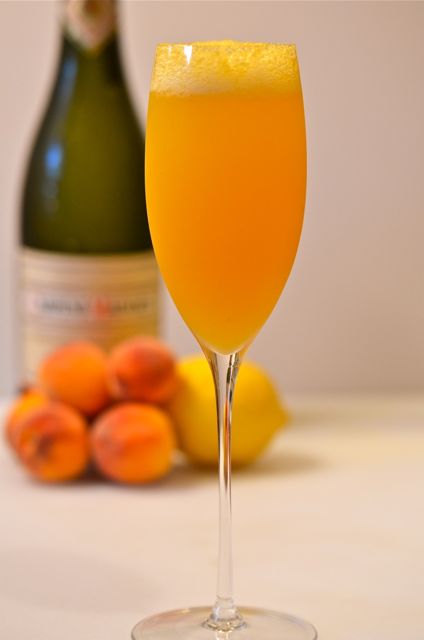
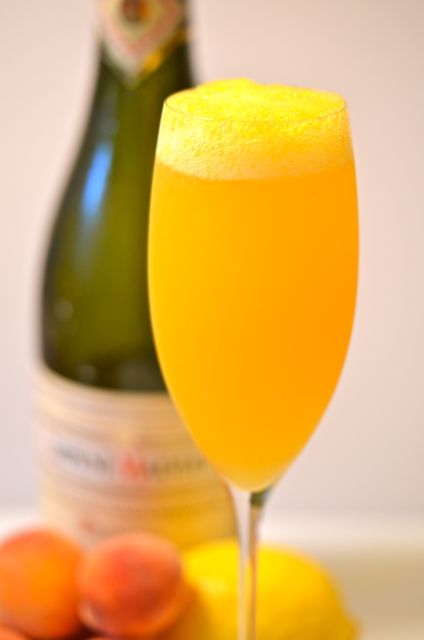
    The Bellini.

    It’s Red Haven peach season at Putney Farm, so now we need to use them. We made peach-lavender jam (recipe later today) and will be making peach preserves, peach butter and peach-vanilla ice cream. So we may as well make a cocktail. And if you have peaches, you might as well make Bellinis.

    To be fair, Bellinis typically combine white peach purée and prosecco (think Italian champagne, but sweeter and much less complex). We don’t have white peaches or nectarines (yet), so we are using our Red Haven peaches. But to our tastes, that is a good thing, as yellow peaches have more acidity than white peaches and/or nectarines. And while we like Bellinis with white peach purée, they can be cloying a bit sweet- so using more balanced yellow peaches improves the cocktail and provides a better color. But regardless of the peaches you have, the Bellini is a light, sweet and “long” drink that is good for summer brunch and afternoon parties. And we like cocktails at brunch and afternoon parties.

    Make the peach purée.

    As for the origins of the Bellini, the dates are bit hazy. But we do know that Giuseppe Cipriani, owner of Harry’s Bar in Venice, created the Bellini sometime in the late 1930’s or early 1940’s. He named it after Giovanni Bellini, a renowned 15th-century Italian renaissance painter. Bellini’s paintings, as with many works of his era, tended toward darker hues and somewhat bleak subject matter. So the connection to sweet peaches and sparkling wine seems a bit tenuous. At least the name sounds good.

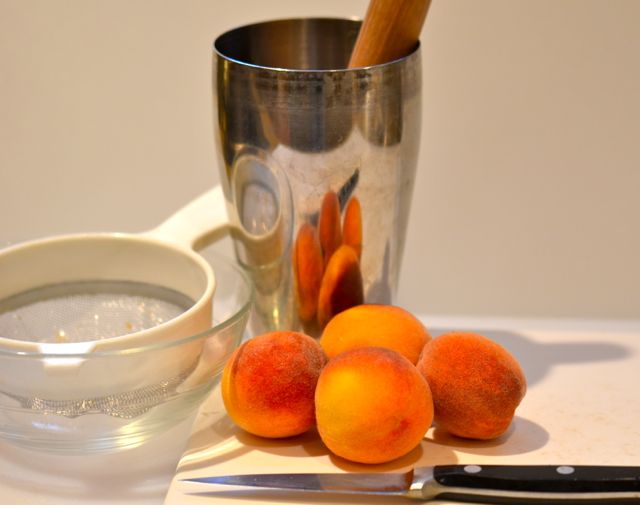
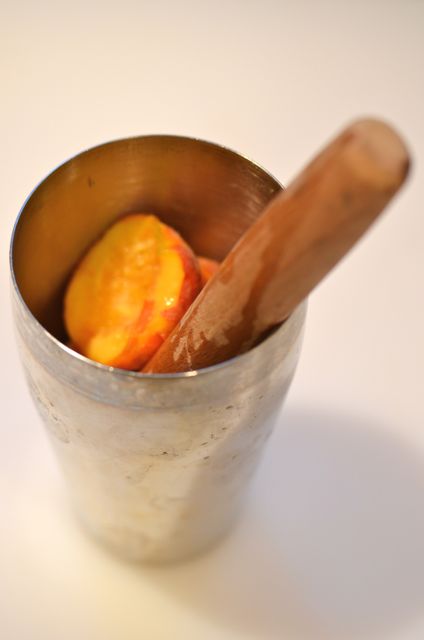
    Muddle your peaches.

    In any event, the Bellini was originally a seasonal cocktail to feature local white peaches, but someone figured out how to preserve peach purée and it became a year-round drink. And the recipe has become somewhat “fungible” over the last 70 years, and not always to the good. At one point the Ciprianis licensed the name and recipe to a company to mass-produce the Bellini and it was so terrible different they bought back the rights. And good for them, some things are only so “fungible”. In the end, if the peaches aren’t good, it might be best to make something else.

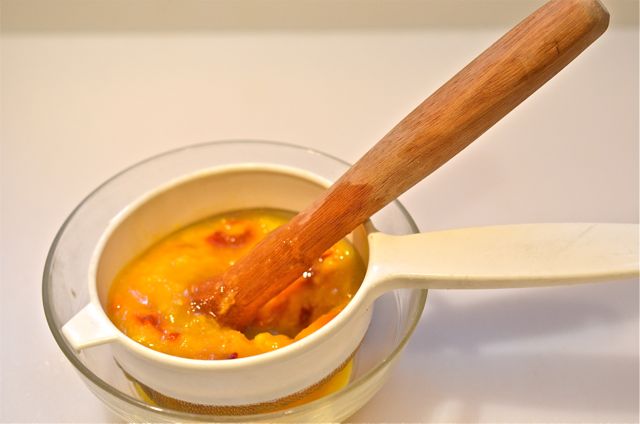
    Fine-strain the muddled peaches.

    But if you do have ripe peaches, then making a Bellini is worth the effort, but there are a few extra steps. Firstly, you need to make a peach purée. There are a few ways to do this. If you are making a big batch of Bellinis, you should skin (make an X on the bottom of the peach with a knife and then blanche for 20 seconds), pit and then puree the peaches in the blender. If making just a few, muddling and fine-straining the peaches will be faster (don’t worry about the skins). Then you need to taste your peach puree and your prosecco. If both are sweet, add a scant dash of lemon juice. If both are tart, a dash of simple syrup might be a good idea. And then you need to deal with the bubbles. Peach puree and prosecco create a lot of foam. And we mean a lot. It will take a few minutes to fill the flutes as the foam subsides. You just need to wait it out. Relax, eat a peach, maybe listen to the Allman Brothers.

    A final note, if using champagne (and we don’t recommend it) use extra-dry or demi-sec, both are sweeter than Brut and will work better. But as Prosecco is almost always cheaper than Champagne, it is the right call and is readily available at most supermarkets or liquor stores. And when a Bellini is just right, it is a very tasty sip, and worth making. After all, if you have peaches, you need to use them…why not drink them?

    The Bellini:

    Ingredients:

    • 2 oz. fresh peach puree
    • 4 oz. Prosecco (or sweeter champagne or sparkling wine)
    • Lemon juice (optional, to taste)
    • Simple syrup (optional, to taste)

    Assemble:

    1. To make puree, expect 3 small or 1 large peach per serving. Pit the peaches. Muddle and then fine-strain to extract the puree.
    2. Add the peach puree and a few ice cubes to a cocktail shaker and shake to chill. Strain the puree into a chilled flute. Slowly add the prosecco, letting the foam settle, until full. Serve.
  • Weekly Cocktail #20: The Otto’s Grotto

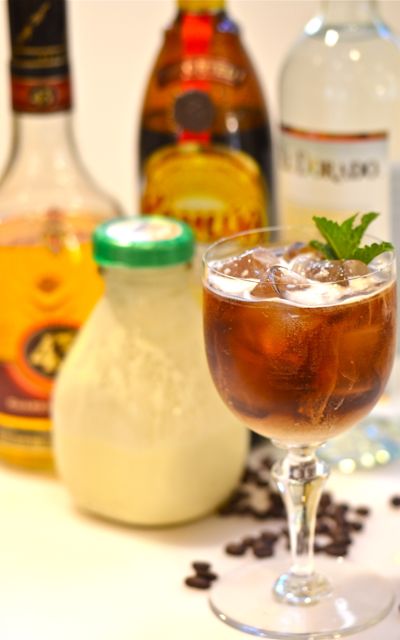
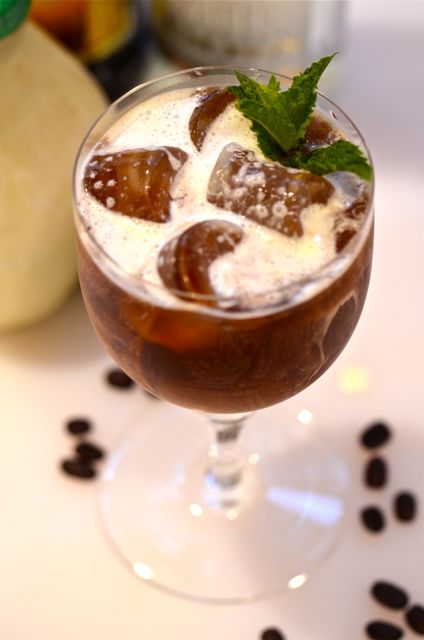
    Otto’s Grotto Cocktail.

    As we noted in our previous post, we recently hosted a small Hawaiian-themed dinner party for a close friend and made macadamia nut tart. The tart was great, but we wanted to be sure to have a cocktail to match, so we looked no further than Jeff “Beachbum” Berry, probably the world’s biggest expert on Tiki drinks. We happen to have his tiki drink iPhone App (so cool) and looked for a tiki cocktail that would go with dessert. We searched on the keyword “coffee” and after browsing a few results, the Otto’s Grotto almost jumped of the screen. It sounded like a perfect summer “dessert” cocktail. So we gave it a try (of course, we tested it before we served it to our friends.. ;-).

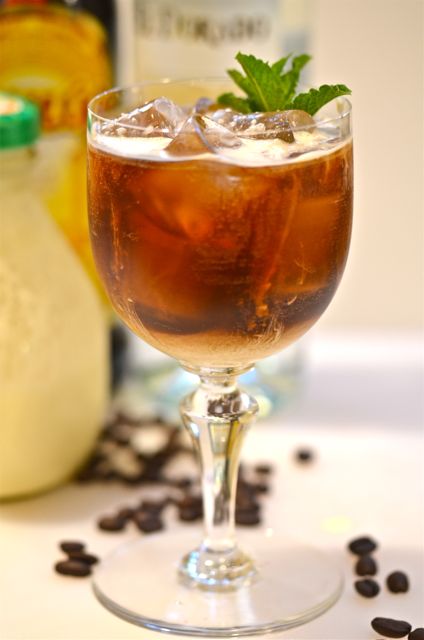
    The Otto’s Grotto is a cold drink that features coffee, white rum, coffee liqueur (Kahlua, Tia Maria or home-made), Licor 43 and a dash of heavy cream. But this is not a syrupy white/black russian, but more of an ice-coffee with a kick and some depth. Coffee is clearly the main ingredient, but the rum, coffee liqueur and Licor 43 all add extra flavor. The cream adds a smooth note and mellows the bitterness of the coffee. While we served the Otto’s Grotto for dessert, you could serve this cocktail almost any time of day and get a very welcome reception. It’s good.

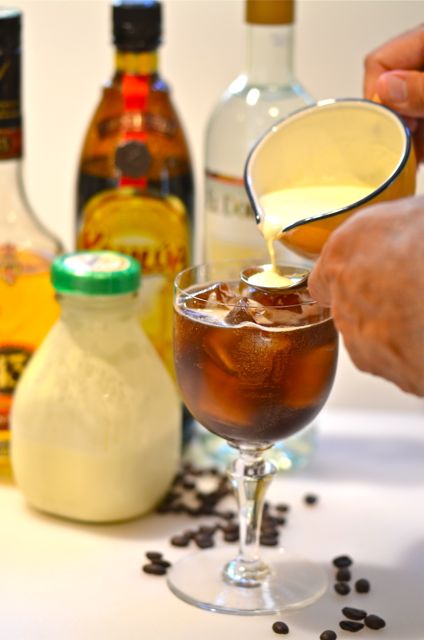
    Float cream on top for a good presentation.

    As for the ingredients, good coffee is the key here. Great coffee = great coffee cocktail, ’nuff said. As for the other ingredients, this is where you have some flexibility. And decent white rum will do, the alcohol will mainly boost the flavor of the coffee. As for the coffee liqueur, we use Kahlua (without shame), but Tia Maria will work. And coffee liqueur is one of the best DIY liqueurs you can make at home, here is a good article on the subject from Marcia Simmons at Serious Eats (they have some really good cocktail writers). Finally we have the Licor 43, a vanilla and citrus liqueur that is sometimes hard to find. We like it in the drink and it is worth having in your bar, but you could substitute Tuaca. And in a pinch, vanilla syrup and an extra dash of rum will work just fine.

    Iced coffee, just better.

    Building this drink is by no means difficult, but a few little steps will help. Firstly, when you mix the coffee and liqueurs, check for taste. Coffee is a highly variable ingredient, you may want to add an extra dash of coffee liqueur or Licor 43 to balance the flavors. And finally, when adding the heavy cream, it helps to drizzle it on a spoon just above the drink. This will help float the cream on top. While not a necessary step, it will look good. And if a drink tastes this good, you may as well rock the presentation. Happy Friday!

    Otto’s Grotto:

    (Adapted from Jeff “Beachbum” Berry)

    Ingredients:

    • 5 oz. iced coffee
    • 3/4 oz. coffee liqueur (we use Kahlua)
    • 3/4 oz. Licor 43
    • 1 and 1/2 oz. white rum
    • 1/4 oz. heavy cream
    • Mint, for garnish (optional)

    Assemble:

    1. Place all the ingredients, except the cream, and ice into a cocktail shaker. Shake thoroughly and pour unstrained into a highball glass or goblet. Float cream. Garnish with a sprig of mint, if you like. Serve.
  • Simple Garden Recipes: Apricot Shrub (And a Bonus Cocktail)

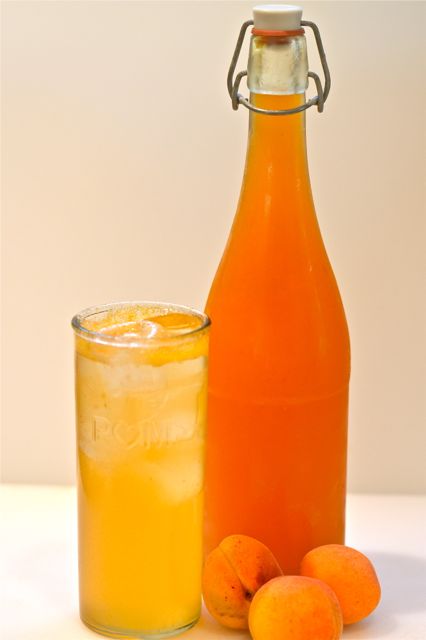
    Apricot shrub and apricot shrub soda.

    Last Apricot On Earth Cocktail using apricot shrub.

    Let’s get right to it, a fruit shrub is basically an equal mixture of fresh fruit, sugar and vinegar. Yes vinegar. But shrubs are better than you might think (actually quite tasty) and were a very popular way to preserve fruit in the days before refrigeration. And rather than tasting of vinegar, shrubs are sweet and very tangy. The vinegar acts as a flavor enhancer, somewhat like salt on savory foods- you don’t  know it’s there, but everything tastes better. A cool trick, and one that works with most summer fruits. And if you like cocktails or home-made soda, you should know about shrubs. But first a little “back story”…

    Blenheim apricots. Yum.

    Last week Carolyn and I traveled to wine country and then, ironically, started drinking cocktails. Happily both Napa and Sonoma have a number of restaurants and bars that feature world-class drinks, as well as excellent wine lists. One of the best places we visited was Bar Terra, an extension of the very well-regarded Terra in St. Helena. Bar Terra features a less formal and more “bar-driven” menu of smaller plates, wine and hand-crafted cocktails in a very welcoming atmosphere. The food and service were very good, but we did go for the drinks, and Bar Terra did not disappoint.

    The best cocktail we had at Bar Terra (and our entire trip) was a creation that is a riff on the Last Word, that just happens to have apricot shrub. If you are unfamiliar with the Last Word it is a roughly equal combination of gin, lime juice, maraschino liqueur and green Chartreuse. It sounds like a train wreck, but the Last Word is real alchemy, all the flavors blend into a well-balanced, refreshing cocktail. And the recipe invites mixologist to play around. We often ask good bartenders to make a Last Word variant, and the team at Bar Terra struck gold. Their version of the Last Word included dry gin, apricot shrub, maraschino liqueur and yellow Chartreuse (and maybe a touch of lemon juice). The drink was an absolute winner with the apricot shrub supplying both sweetness and tang, the gin and Chartreuse herbal notes and the maraschino liqueur some nutty flavors. And if you didn’t know a shrub has vinegar, you would never place the flavor, you would just notice a lovely, palate-pleasing “zing”. You can’t wait for another sip. We didn’t get a name for the cocktail, but we have an adapted recipe below, and in honor of Bar Terra we will call it the Last Apricot On Earth.

    Rinse your apricots.

    Pit and quarter the apricots.

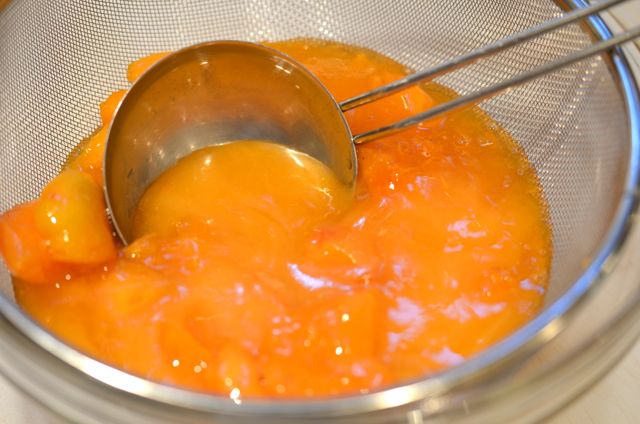
    We’ve known about fruit shrubs for some time, as they are popular in cocktail circles, but the cocktail at Bar Terra finally motivated us to make shrubs at home. And as we are near the end of apricot season, and there are Blenheim apricots available, we chose to make a “cold shrub” of the apricots before they were gone. Making the shrub is very easy. Simply mash and then macerate equal parts fruit and sugar, let a syrup form for a few days in the fridge and then strain and add an equal part of cider vinegar and mix. You can try the shrub immediately and it will be tasty, but it will “mature” and the flavors develop more with a few days / weeks. And it is not a vinegar, more like a preserved syrup. If you want a full breakdown on fruit shrubs Michael Dietsch of Serious Eats has a good article here.

    Macerate fruit with sugar in fridge for 12-48 hours. 48 hours is better.

    Strain fruit syrup and add the vinegar.

    Continue reading

  • Weekly Cocktail #19: The Blue Hawaii

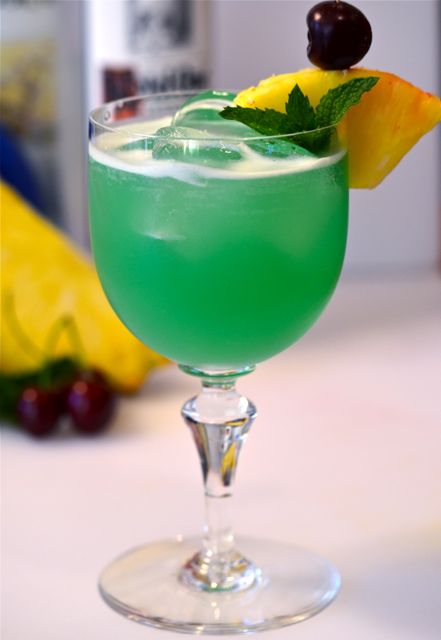
    Blue Hawaii cocktail.

    Oh yes we did!

    With the Fourth of July holiday coming we tend to see some “red, white and blue” themed drinks coming our way and last week Carolyn suddenly said, “I want a Blue Hawaii”. Ok then, time to buy some blue Curaçao.

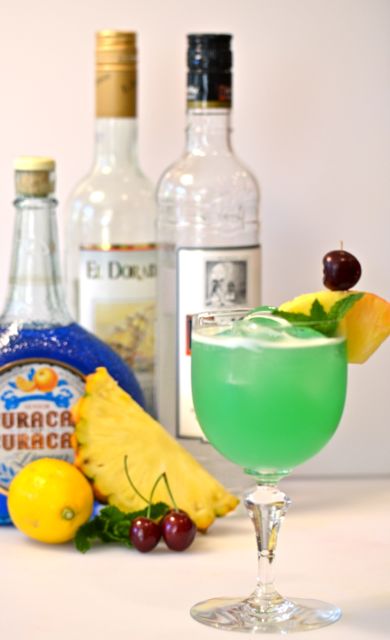
    For those of you unfamiliar with the drink, the Blue Hawaii combines pineapple juice, sweet and sour mix (lemon juice and simple syrup), rum, vodka, blue Curaçao and any garnish you want to come up with. When mixed, the final color is a blue/green that certainly stands out. And the drink, to be fair, is a pretty tasty summer sip. The white rum and the vodka let the pineapple juice lead in the drink, with the Curaçao and sweet and sour rounding out the flavors. But make no mistake, the blue Curaçao is mostly there for color.

    Blue Hawaii and ingredients.

    So what is blue Curaçao? Curaçao is a liqueur from the island of Curaçao in the Caribbean. Hundreds of years ago, European settlers brought Lahara citrus, similar to Valencia oranges, to the island with hopes of developing them as a crop. But it turned out that the soil and weather were unsuitable for sweet oranges and the fruit was very bitter, only the peel tasted like a regular orange. But when life gives you lemons, you make lemonade. Or if life gives you too much or too nasty fruit (or skins and seeds) you make booze. In the early 19th century locals began making a liqueur from the bitter orange peels and we get Curaçao. Add some (very) artificial color and you get blue Curacao. The blue color was/is supposed to help market the liqueur.

    In fact, according to “master of all things tiki” Jeff “Beachbum” Berry, the blue Hawaii was created specifically to help market blue Curaçao. In the 1950’s the Bols company had Harry K. Yee, the bartender at the Hawaiian Village Hotel in Waikiki invent the drink to build interest in blue Curaçao. It’s unclear how successful this campaign was in drumming up interest in blue Curaçao, but it is still around. You can buy blue Curaçao for $10-$20 and it will be gathering dust somewhere in most liquor stores.. 😉

    But the Blue Hawaii is a light, tasty drink and it is certainly worth making. Not only does it taste good, it starts conversations of the “remember when we went to X and did X” variety. And that is a good thing. Cocktails should evoke fun and conversation, and the Blue Hawaii will certainly provide some of both. Happy 4th!

    The Blue Hawaii:

    Ingredients:

    • 3 oz. pineapple juice
    • 1 oz. sweet and sour mix (2 parts lemon juice, 1 part simple syrup)
    • 1/2 oz. blue Curaçao
    • 3/4 oz. white rum
    • 3/4 oz. vodka
    • Pineapple wedge, lime wheel, orange wheel, mint or cherry for garnish.

    Assemble:

    1. Combine all liquid ingredients with plenty of ice in a cocktail shaker. Shake thoroughly and pour into a tall glass. Garnish with whatever fruit you have. Serve.